
One question that always comes up for pipeline engineers and procurement managers working on projects in hydrogen sulfide settings is: can API 5L X60 pipe safely handle bad service conditions? The simple answer is "yes," but there are some important caveats.
Standard X60 material needs to be changed and certified in certain ways in order to work consistently in settings with a lot of H2S. This pipe grade works well when bought as X60MS (Sour Service Grade M) or X60NS (Sour Service Grade N), which is in line with Annex H of API 5L and NACE MR0175/ISO 15156 standards. Normal X60 is now a strong option for sour uses in oil and gas transport systems around the world thanks to its controlled hardness levels, improved chemical makeup, and required testing procedures.
|
|
|
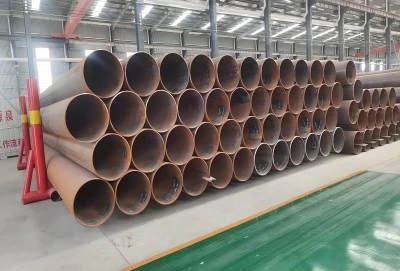
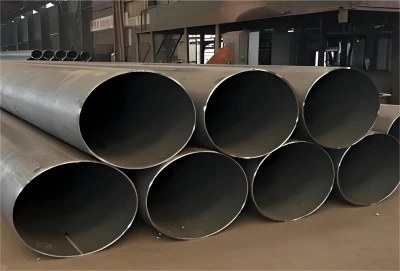
Sour Service Challenges
What Defines Sour Service Conditions
Sour service refers to working conditions where API 5L X60 pipes carry fluids that contain hydrogen sulfide gas, even in very small amounts. Standards in the industry usually say that places where the partial pressure of H2S is higher than 0.05 psi (0.3 kPa) are sour and need extra care with materials. These conditions happen a lot in oil and gas production, especially in places that process crude oil with a lot of sulfur or natural gas lines that are high in acidic parts.
Critical Failure Mechanisms in H2S Environments
Carbon steel is damaged by hydrogen sulfide in a number of ways. Sulfide stress cracking (SSC) happens when tensile loads meet H2S exposure, which leads to sudden, brittle cracks with no notice. Hydrogen-induced cracking (HIC) happens when atomic hydrogen created by corrosion processes gets stuck in the microstructure of steel and creates bubbles and step-by-step cracks inside. These processes have led to terrible pipeline failures that have caused environmental disasters, lost production, and safety events that show how important it is to choose the right materials.
Industry Standards Governing Sour Service Materials
The official standard for materials and manufacturing needs in H2S-containing oil and gas production settings is NACE MR0175/ISO 15156. This detailed document sets maximum hardness limits, accepted chemical compositions, and testing methods that must be followed. In addition to these standards, API 5L PSL2 specs include stricter chemical controls, required impact tests, and better tracking compared to PSL1 grades. It is possible to work safely and for a long time in aggressive sour settings as long as these standards are followed.
API 5L X60 Pipe Specifications and Chemical Composition Relevant to Sour Service
Chemical Composition Controls for Corrosion Resistance
Controlling the chemicals in API 5L X60 pipe material very carefully is very important for using it in sour situations. For bad service grades, the carbon content usually stays below 0.22%. This lowers the strength and raises the resistance to hydrogen embrittlement. The right amount of manganese is needed to make sure that the material is strong without becoming too hard. Sulfur and phosphorus are known to cause segregation and midline cracking, so they are limited to levels below 0.002% and 0.015%, respectively, in premium sour service grades.
Niobium, vanadium, and titanium are micro-alloying elements that improve grain fineness and precipitation strengthening while keeping the carbon values low. This method gets the necessary 60 ksi yield strength without hurting the ability to be tough or join. The controlled carbon equivalent (CE), which is usually less than 0.43% for sour service uses, makes sure that the material can still be welded without needing to be heated up a lot first. This makes building in rural areas easier.
Mechanical Properties and Fracture Toughness Requirements
In addition to chemistry, mechanical performance requirements have a direct effect on the dependability of bad service. The minimum yield strength of X60 material is 415 MPa, and the minimum tensile strength is 520 MPa. This means that it can handle pressure well. Charpy V-notch impact testing at certain temperatures confirms the material's fracture toughness, which makes sure it takes energy and doesn't break completely when dynamic loading happens. These impact tests are required by PSL2 standards, but not by PSL1 standards—this is an important difference for bad uses.
Controlling the hardness may be the most important technical factor for bad service. Across the pipe body, weld joint, and heat-affected zones, the hardest parts usually can't be harder than 250 HV10 (Vickers hardness). Higher hardness makes SSC much more likely to happen, so it is important to test the hardness of the whole pipe during quality control during production.
Manufacturing Process Impact on Sour Service Performance
The way something is made has a big effect on how regular the microstructure is and how well it resists rust. Longitudinally submerged arc welded (LSAW) pipes made by controlled rolling and normalizing heat treatment have better features through the length when compared to when they are just rolled. Longma Group's LSAW method uses double-sided submerged arc welding technology to make join microstructures that are regular and have little segregation. Our thermomechanically controlled process (TMCP) improves the structure of the grains, making the material tougher while keeping the right amount of strength for sour conditions.
ERW (Electric Resistance Welded) pipes that are meant to be used in sour environments need to be heated after the welding process to remove any remaining stresses and soften the microstructure of the weld seam. Together, this extra step in the process and the 100% ultrasonic checking of the weld lines make sure that the properties are always the same and meet NACE standards. The method chosen for production depends on the needs of the project. Seamless pipes have the most uniform microstructure, but they cost more for bigger diameters. Welded options are cheaper, but they need to be properly made and tested.
Practical Applications and Case Studies of API 5L X60 in Sour Service
Typical Deployment Scenarios
API 5L X60 pipe sour service grades are widely used in systems that receive production from wellheads that contain H2S. Over distances of a few hundred meters to several kilometers, these pipes work at mild pressures, usually less than 1000 psi. Because it is strong enough, doesn't rust when properly stated, and doesn't cost too much, X60 is the standard choice for this type of application in North American gas plays, Middle Eastern developments, and Southeast Asian offshore projects.
Another important use is for long-distance transmission lines that carry streams of sour gas. Projects that move natural gas from areas with a lot of sulfur to processing plants need pipes with a big diameter—often 24 to 48 inches—that can handle both high pressure and toxic materials. The mix of strength, toughness, and through-thickness qualities that these tough uses need are found in X60 PSL2 material made with LSAW processes.
Real-World Performance Data
In Western Australia, a large gas transport project used 42-inch X60MS pipe in 185 kilometers of pipelines that carried gas with 4% H2S content. The standard called for PSL2 material with a maximum hardness of 248 HV10, full-body ultrasonic testing, and HIC testing according to NACE TM0284. After eight years, studies done after installation showed that there were no corrosion-related events. Inline inspection data also showed that there were no signs of cracks or wall loss that was more than what was expected due to corrosion. This project shows that X60 material works consistently in real sour service situations when it is properly designed and produced.
Another useful example is a crude oil gathering system in the Middle East where standard X60 PSL1 pipe failed several times within 18 months of being put into service. An investigation showed that sulfur control wasn't good enough when steel was being made, and HIC testing wasn't done during quality control in production. To fix the system, all the pipes had to be replaced with approved X60MS material that met NACE standards. This cost more than 2.5 times what was spent on the original installation. This cautionary case shows how important it is to check sour service compliance instead of thinking that standard X60 specs are enough to protect you.
Conclusion
When made, defined, and tested according to the right standards, API 5L X60 pipe has been shown to work well and cost-effectively in sour service uses. The important part is not just the base name X60, but also the important extras like the PSL2 quality level, Annex H sour service provisions, chemistry optimization, hardness control, and full testing proof. Cutting costs on projects by not following PSL1 specs or not making sure suppliers are qualified enough run a big risk of failing early, which could have terrible effects on safety, the environment, and the economy. On the other hand, X60MS or X60NS material that is properly sourced from qualified makers will last for decades and work reliably in a wide range of situations, from gathering systems to long-distance transfer. The small extra cost of adding sour service specifications is a smart way to control risk that protects the integrity of the project and the interests of all stakeholders throughout the lifetime of the pipeline.
FAQs
Can standard API 5L X60 pipe be used directly in sour service without modifications?
Standard X60 material that only meets the most basic API 5L standards can't be used in bad service without a lot of risk. In H2S settings, certain rules must be followed, such as controlled chemistry with fewer impurities, maximum hardness limits usually below 250 HV10, and HIC testing proof that must be done. According to API 5L Annex H, projects must choose either X60MS or X60NS grades to make sure they meet the needs of NACE MR0175 and ISO 15156. If you use regular X60 in sour situations without these precautions, you could experience sulfide stress cracking and hydrogen-induced cracking fails.
What certifications should I verify when procuring X60 pipe for sour service?
Please make sure you have the following paperwork: API 5L PSL2 certification with Annex H for sour service compliance; full material test certificates showing chemical analysis and mechanical properties; Charpy impact test results at certain temperatures; hardness survey data across pipe cross-sections; and HIC testing results according to NACE TM0284. Manufacturers should offer ISO 9001 quality system approval and API logo license. Documentation that connects each piece of pipe to a specific heat number makes it possible to check and holds everyone responsible along the supply chain.
How do welding processes affect X60 pipe performance in sour environments?
The manufacturing method has a big effect on how reliable bad service is. LSAW pipes made by controlled rolling and regulating heat treatment have better microstructural consistency. ERW pipes need to be heated after the join to soften the weld areas and remove any remaining strains. Seamless lines have the most uniform architecture, but they are limited in size and price. No matter what kind of welding is used, the weld must still be inspected completely using ultrasound or radiographic methods. The strength of the weld metal and heat-affected areas must be checked to make sure they meet NACE maximum limits.
Partner with Longma Group for Certified Sour Service Solutions
If you choose a reputable API 5L X60 pipe supplier with experience in sour service uses, you can keep your project safe and avoid costly material failures. Since 2003, Longma Group has provided approved X60MS and X60NS pipe to major oil and gas projects in the Middle East, Southeast Asia, and Australia. They have a perfect track record of zero sour service failures in properly specified material. Our entire quality control infrastructure includes HIC testing facilities, modern heat treatment systems, and full traceability from where the raw materials come from to the final review.
We know that procurement managers need more than just materials that are legal. You need to be able to communicate quickly, keep all of your records in order, and be sure that deliveries happen on time so that projects stay on plan. Our technical team works directly with your engineers to go over specifications, suggest the best solutions that balance performance and cost, and give your stakeholders the full mill test results and compliance certificates they need. Our customer service experts can be reached at info@longma-group.com to talk about your unique project needs, make sure we're certified, and get reasonable prices for both standard and fast delivery times.








