
Although calling API 5L X70 pipe the only "primary" grade is oversimplifying a complex reality, it has become the most popular choice for national natural gas pipeline lines in the US and around the world. This high-strength line pipe strikes the perfect balance between mechanical performance, cost-effectiveness, and ease of construction. This makes it perfect for national gas transportation networks that work at pressures above 10 MPa.
Even though API X70 pipe is the standard grade for modern high-pressure gas infrastructure, pipeline engineers and procurement managers still look at things like operating pressures, environmental conditions, terrain challenges, and budget limits before deciding on final material specifications.
To understand why X70 pipe has become the standard for long-distance natural gas transmission, you need to look at its technical skills, compliance with regulations, and results in the field compared to other grades.
|
|
|
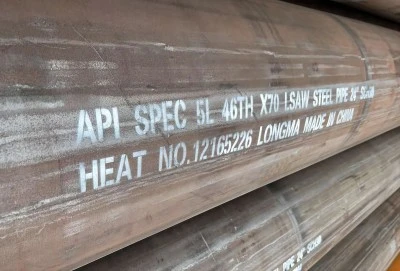
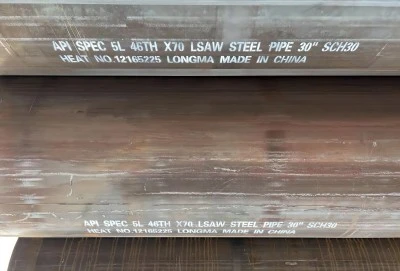
Is API 5L X70 the Primary Grade for National Natural Gas Pipelines?
Regulatory Framework and Grade Selection Criteria
In the US, the Department of Transportation sets basic safety guidelines for natural gas transmission infrastructure in 49 CFR Part 192, which is used to choose pipeline materials. The rules don't say which pipe types must be used, but they do say that the materials must be right for the pressures, temperatures, and surroundings where the pipes will be used. The process of choosing strikes a balance between the need for strength, safety, cost, and the ability to build.
API 5L X70 pipe is now the most popular choice for big interstate transmission lines because it's strong enough to allow for the best pipeline design. Engineers can request thinner wall sections compared to lower grades like X60 or X52 while keeping the same pressure values because of the higher yield strength. This thinner layer means big capital cost savings because of less steel tonnage, lower welding consumable amounts, lower shipping costs, and faster building timelines. These benefits add up to huge savings for pipeline projects that span thousands of kilometers.
Performance Advantages Driving X70 Adoption
A lot of national gas networks use API 5L X70 pipe grade because it has a lot of benefits that all work together. Strength-to-efficiency is very important. X70 pipe lets you have bigger inner sizes within the same outer measure range, which directly boosts the flow of volumetric gas. When it comes to high-volume transmission routes, where small increases in flow have big effects on income over decades of operation, this capacity advantage becomes economically decisive.
Another important benefit is that it is constructible. API 5L X70 pipe is in the best place where power benefits can still be gotten through normal welding methods without having to deal with the extra requirements that come with higher grades. Field welding uses low-hydrogen electrodes that are matched to strength levels, which are usually E9010 or E10018 grades, and the heating needs are doable. X80 grade, on the other hand, needs stricter welding controls, special tools, limited heat input parameters, and better post-weld heat treatment. These things make building more difficult and expensive, and they make it harder for contractors to get the work done.
Limitations and Situational Considerations
Decades of field service have shown that the API 5L X70 pipe is reliable, which gives people faith that the standard will continue. Major transmission systems, such as interstate pipes that go through a variety of landscapes and climates, have long operating records that show how durable X70 pipe is when subjected to changing temperatures, pressure loads, and ground movement. This record of success lowers the technical risk that people involved in the project, like engineering firms, government agencies, and financial institutions looking at building investments, think it has.
Even though API 5L X70 pipe has benefits, other materials may be better for some projects. Ultra-high-pressure uses may sometimes require X80 grade, even though it is more expensive and harder to work with, because the extra strength allows for unique design solutions. On the other hand, moderate-pressure area delivery systems may be able to use X60 or X65 grades instead of X70 pipe because they are cheaper and stronger than the latter in those specific contexts.
Comparison of API 5L X70 vs Alternative Pipe Grades
X70 Versus X65: Strength and Economic Trade-offs
When engineers compare API 5L X70 pipe to X65 (which has a minimum yield strength of 65 ksi or 448 MPa), it shows the choice process they use. As you can see, X65 is the grade right below X70 pipe in terms of power. It is a tried-and-true material that is easy to find and has reasonable prices. It might not seem like there is much of a difference in strength between these grades—about 8% more yield strength for X70 pipe—but this has important design effects.
API 5L X70 pipe lets you cut the wall thickness by about 8% compared to X65 while keeping the same pressure grade. This lowers the weight of the steel per linear meter and the costs that come with it. Engineers could also keep the wall thickness the same and raise the working pressure, which would increase the system's capacity without changing the width. When doing the economic break-even analysis, different types of steel prices, changes in building costs, capacity utilization factors, and project-specific limitations are all taken into account. API X70 pipe is usually better for high-volume transmission systems because it has more capacity. On the other hand, X65 may be fine for moderate-pressure uses and be cheaper.
X70 Versus X80: Balancing Performance and Complexity
The next level of strength above API 5L X70 pipe is the X80 grade, which has a minimum yield strength of 80 ksi or 555 MPa and a 14% higher yield strength. This improvement in performance lets the wall thickness be lowered or the pressure raised even more, which could continue the cost savings that make API X70 pipe better than X65. X80 usage, on the other hand, has been slowed by practical issues that have made it less widely used than X70 pipe.
Getting X80 is harder because there are fewer steel mills that offer approved production and wait times are longer than for X70 pipe, which is easy to get because it is a commodity. It gets a lot harder to weld because you have to follow very strict steps, use special high-strength materials, keep track of the heat input very carefully, and make sure the quality is better. Because of these problems, field building productivity goes down, which cancels out some of the cost benefits of lighter steel. It's hard to get parts because fittings, flanges, and valve connections that meet X80 standards need to be custom made instead of being bought off the box.
Alternative Materials: Stainless Steel and Specialty Alloys
Because of these things, API 5L X70 pipe is currently in the "sweet spot" when it comes to speed, availability, constructability, and cost, which is why it is used so much in major transmission systems. The X80 is used in some high-value jobs where its unique features make it worth the extra cost, but the X70 pipe is still the standard for most uses.
Some working conditions make it hard for any type of carbon steel to do its job, which is why stainless steel or nickel metals are being considered. In highly corrosive situations, like bad service with high H2S levels, high chloride surroundings, or high temperature settings, it may be worth it to use expensive materials, even though they cost a lot more. Specialty materials like these don't break down in the same ways that carbon steel coats and cathodic protection can't.
Procurement Considerations for API 5L X70 Pipe
Supplier Evaluation and Certification Requirements
To make sure that the materials are of good quality and that the API 5L X70 pipe is delivered on time, the suppliers must first go through a strict approval process. Pipeline engineers and purchasing managers should make sure that makers have up-to-date API 5L logo licenses, which show that they can make the products and that their quality systems are compliant with standards set by the American Petroleum Institute. Getting certified in the ISO 9001 Quality Management System is another way to make sure that production methods and quality control techniques are always the same.
A manufacturing capability review looks at things like production tools, testing facilities, the skills of quality staff, and how well the company has done on similar projects in the past. Our 230,000-square-meter industrial center at Longma Group has state-of-the-art LSAW and ERW production lines with built-in heat treatment systems. It also has a wide range of testing tools, such as automated ultrasonic inspection, X-ray systems, and mechanical testing labs. Our ability to produce more than 1,000,000 tons of goods every year and our track record of working with projects in 90 countries shows that we can meet the needs of large pipeline projects for both scale and dependability.
Pricing Dynamics and Cost Management
For engineering companies, evidence needs to include full material test certificates (MTCs) with chemical analysis, mechanical test results, heat treatment records, and non-destructive testing paperwork to make sure everything can be tracked. Inspection and Test Plans (ITP) and Manufacturing Procedure Specifications (MPS) spell out quality control steps and standards for approval, so a third party can check the work and the owner can confirm it. We offer full paperwork packages that meet international engineering standards. This makes it easier to finish projects smoothly and follow the rules.
The price of API 5L X70 pipe depends on many things, such as the cost of raw materials, the difficulty of making it, the number of orders, the time it takes to send them, and the state of the market. Prices for steel plate and coil change with the prices of other commodities around the world, which makes it important to think about when to buy them. The cost of making something depends on the requirements listed in the standard. For example, testing and paperwork for PSL2 adds to the cost compared to PSL1, and special requirements like sour service approval or improved low-temperature toughness make processing and proof more expensive.
Lead Times and Supply Chain Planning
The number of orders has a big effect on unit prices by making production more efficient and improving transportation. Large-diameter LSAW pipe production gets economies of scale when order volumes allow for dedicated production operations that minimize setup time and waste of materials. When you buy in bulk and combine several pipeline pieces or phases, you can get volume savings and lower shipping costs per unit. When planning material packages and negotiating with suppliers, project buying plans should keep these changes in mind.
Logistics of delivery have a big effect on foreign buying. Things like ocean freight, port handling, inland transfer, and clearing customs all take time and cost money. We have experience delivering global projects, including big ones like the MOBIL OIL AUSTRALIA project. This gives us the organizational know-how to make sure that projects stay on schedule by coordinating deliveries, processing paperwork, and combining ships.
Timelines for getting materials are important parts of pipeline project plans that need to be planned ahead of time to avoid building delays. Standard API 5L X70 pipe with standard sizes and specs usually takes 45 to 60 days to deliver from the time the order is placed, which includes getting the steel, making the pipe, checking it, finishing it, and moving it. We do, however, offer faster delivery choices, with the quickest delivery time being 7 days plus shipping, for urgent needs or situations where standard inventory specs match project needs.
Conclusion
API 5L X70 pipe has won its place as the most common material grade for natural gas pipeline infrastructure across the country. However, its "primary" standing is based on industry consensus rather than government regulation. Long-distance gas transmission systems can benefit greatly from X70 pipe's unique mix of high strength that allows for cost-effective pipeline design, proven field performance across a wide range of operating conditions, ease of construction using standard welding methods, and wide availability from qualified manufacturers. Different grades have different uses, like X65 for moderate-pressure systems, X80 for ultra-high-pressure projects, and corrosion-resistant alloys for harsh environments. However, 5L X70 pipe is the best grade for most transmission infrastructure because it balances performance, cost, and ease of construction. When pipeline engineers and purchasing managers look for materials for big gas systems, they always find that 5L X70 pipe standards meet their needs in terms of dependability, cost, and technical skill.
FAQ
What distinguishes PSL1 from PSL2 specification for X70 pipe?
As the right specification level for critical natural gas transmission, PSL2 requires stricter chemical composition controls for weldability, Charpy V-Notch impact testing to confirm low-temperature toughness, yield-to-tensile ratio limits to ensure predictable deformation behavior, and full documentation of all traces. Because PSL1 doesn't meet these standards, it can't be used for high-consequence pipeline uses, even though it's cheaper.
Can standard X70 pipe operate in sour service environments?
Standard API 5L X70 pipe specs don't cover bad service needs, and there is a chance of sulfide stress cracking in H2S conditions. For use in sour service uses, materials must be made according to API 5L Annex H standards. These standards include ultra-clean steel chemistry, calcium treatment to control the shape of inclusions, and proof through Hydrogen Induced Cracking and Sulfide Stress Corrosion Cracking tests.
How does X70 availability compare between seamless and welded manufacturing?
When making seamless API 5L X70 pipe, the sizes that can be used are up to about 20 to 24 inches, but the wall thickness is limited by the piercing and rolling methods. Large transmission pipes with diameters from 24 to 80 inches are made by welding, mostly LSAW for heavy-wall uses and ERW for moderate-wall needs. This method allows for almost endless length and consistent properties by controlling the temperature and force during processing.
What welding consumable classifications suit X70 field joining?
For API 5L X70 pipe field welding, you need low-hydrogen electrodes that are matched to the strength of the base material. For shielded metal arc welding, these are usually E9010 or E10018 types. For automated processes, you need solid wires with CO2 or mixed gas protection. The choice of consumables must be in line with qualified welding process specifications that have been proven to work through mechanical testing and are now allowed for use in production.
Source Quality API 5L X70 Pipe from Longma Group
For pipeline projects to stay on plan, they need materials that are supplied on time and meet strict specifications. Longma Group has been producing API 5L X70 pipe since 2003 and has a production scale of more than 1,000,000 tons per year. They also have quality systems that are approved to API 5L, ISO 9001, and strict management standards. Our LSAW and ERW production lines make 5L X70 pipe with diameters from 1/2 inch to 80 inches and wall thicknesses from SCH10 to SCH160. This pipe is offered in both PSL1 and PSL2 standards and can be delivered as quickly as 7 days plus shipping. We provide complete anti-corrosion services, such as 3LPE, FBE, and 2PP coatings, and get our premium steel from reputable domestic mills. We also offer total material solutions with full paperwork packages that include MTC, ITP, and MPS records. Talk to our technical team at info@longma-group.com about the details of your project and find out how working with a trusted X70 pipe supplier can make purchasing easier and guarantee the quality of the materials needed for a successful pipeline installation.