
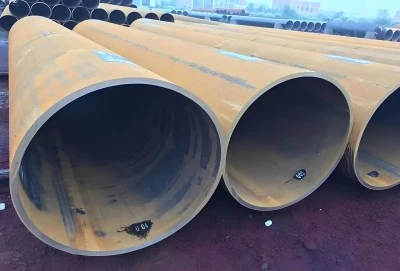
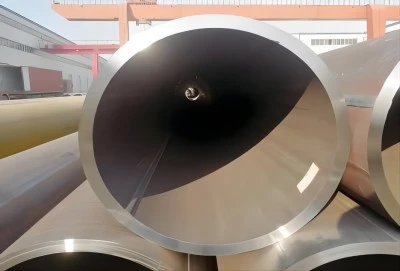
ASTM A672 C60 pipe is exclusively manufactured through electric fusion welding (EFW) processes, making it a welded product rather than seamless. This specification requires fabrication from premium carbon-manganese steel plate conforming to ASTM A516 Grade 60, which undergoes longitudinal welding before heat treatment. The welded construction allows production of large-diameter, heavy-wall piping that would be technically impossible or cost-prohibitive to manufacture through seamless extrusion methods, particularly for high-pressure applications demanding superior mechanical integrity and dimensional consistency.
|
|
|
Understanding ASTM A672 C60 Pipe: Specifications and Manufacturing Types
When purchasing and engineering teams look at pressure piping for important installations, it's important to know how it was made so the project goes smoothly. The ASTM A672 C60 pipe guideline is a well-thought-out way to bridge the gap between regular carbon steel pipes and high-alloy systems.
What Defines the C60 Grade Specification
The number "C60" in the ASTM A672 framework means that the plate is a Series C premium carbon-manganese base steel with higher purity levels than Series A and B options. With a minimum yield strength of 60 ksi (413.7 MPa), this grade is a strong choice for intermediate to high pressure work. The managed carbon content of the material ranges from 0.21% to 0.27% based on its thickness. Manganese levels range from 0.60% to 1.20%. This exact chemical balance makes sure that the metal can be welded well and stays tough even in a wide range of operating situations. The tensile strength ranges from 415 to 550 MPa, which gives it a lot of mechanical reserve for harsh industrial settings.
Manufacturing Process and Welded Construction
Electric fusion welding is the main method of production for this standard. The process starts with high-quality steel plate from approved mills. The edges are carefully prepared before the steel is joined longitudinally. When done right, submerged arc welding methods make joins that are as strong as those made of base metal. They do this by creating a continuous weld seam that runs the length of the pipe. With the welded method, diameters and wall thicknesses can be made that aren't possible with seamless manufacturing. This is especially true for sizes bigger than 24 inches, where seamless manufacturing isn't technically possible.
Different quality levels are set by the heat treatment steps that are done after welding. After being welded, Class 22 pipes are normalised, which improves the grain structure and gets rid of any leftover stresses that might affect their long-term performance. The ultra-clean steel plate base and managed trace particles create a finer internal grain structure that makes high-temperature creep resistance and oxidation resistance much better than Series A and B grades of the same strength.
Dimensional Capabilities and Tolerances
The welded manufacturing process gives manufacturers a lot of freedom when it comes to setting dimensions. The diameters that can be made range from 16 inches to more than 60 inches, and the wall thicknesses can be anything from normal schedules to heavy-wall builds above 2 inches. This range of sizes is used in places where seamless options aren't available, like in large-diameter pressure vessels and main steam pipe systems. Tolerance control is still very strict, and out-of-roundness requirements and wall thickness regularity are closely watched to make sure that the pipe is aligned correctly during welding and that the pressure ratings are the same along its length.
Technical Performance Comparison: Seamless vs Welded ASTM A672 C60 Pipes
There is a lot of disagreement among engineers about the differences between seamless and bonded construction for pressure pipes. Knowing the differences in performance helps teams make decisions based on facts that are in line with the needs of the project and the level of risk they are willing to take. Modern ASTM A672 C60 pipes produced via EFW technology have fundamentally altered the perception of reliability in high-pressure systems.
Mechanical Strength and Structural Integrity
Because they don't have any horizontal welds, seamless pipes have generally been thought to be more reliable. Modern EFW technology has changed this area in a big way. When proper fabrication controls and post-weld heat treatment are used, high-quality welded C60 pipes have mechanical properties that are the same as or better than seamless equivalents. The normalised Class 22 treatment makes the microstructure of the pipe body uniform, even in the weld zone. This makes the tensile properties consistent and the stress behaviour predictable.
These levels of success are backed up by testing methods. Transverse strain studies show that parts that are properly welded can reach the same level of strength as the base plate material. Guided-bend tests make sure that the material's flexibility meets strict standards, and Charpy V-notch impact tests make sure that it's tough across the whole range of operating temperatures. Series C material has a finer grain structure that keeps the impact toughness steady even after repeated thermal cycles. This eases worries about performance loss in service.
Corrosion Resistance and Metallurgical Characteristics
Metallurgical analysis shows that the way corrosion acts is mostly determined by the composition of the base material and not by the way it was made. Because the chemistry of C60 grade steel is managed, it resists rust the same way whether it is welded or not. The premium carbon-manganese mix prevents general corrosion in mild settings, and the lower levels of impurities make it less vulnerable to localised attack mechanisms.
Welded construction adds a heat-affected zone that needs to be taken into account during the purchase design. Through microstructural homogenisation, properly normalised pipes get rid of worries about preferred corrosion at weld gaps. The heat treatment smooths out the grain structure next to the weld, which makes the pipe's surface have the same electrochemical potential all the way across it. For projects that need better corrosion protection, extra requirements like hydrogen-induced cracking (HIC) tests and NACE MR0175/ISO 15156 compliance can be added. These requirements apply to both welded and non-welded products as long as the right materials are used and proper manufacturing controls are kept.
Heat Treatment Effects on Dimensional Accuracy
Heat treatment is a key quality factor that affects long-term performance and physical stability. For Class 22 lines to be normalised, they must be heated above the upper critical temperature and then cooled with controlled air. This thermal cycle relaxes any remaining pressures from cold forming and welding, which lowers the chance of measurement distortion during manufacturing or installation in the field.
Normalised heat treatment does a lot to improve the uniformity of wall thickness. The temperature cycle helps keep the qualities of a material the same all the way around, reducing differences that could cause stress concentrations or lower pressure ratings. Specifications for straightness and roundness stay within tight ranges, which makes alignment easier during field assembly and cuts down on installation time. Normalisation makes the pipe more thermally stable, which makes sure that the dimensions stay the same over its entire service life, even if it has to go through practical thermal cycles between room temperature and temperatures close to 425°C.
ASTM A672 C60 Pipe vs Competitive Pipe Grades for Heavy Wall Applications
To choose the best piping materials, you need to carefully compare different options based on factors that are specific to the job. When procurement teams know how ASTM A672 C60 pipes stack up against popular options, they can find the best mix between performance, availability, and cost.
Comparison with ASTM A106 and A53 Carbon Steel Pipes
ASTM A106 is the standard for seamless carbon steel that is often used in moderate-pressure applications. You can use A106 Grade B for many things because it is strong enough, but its minimum yield strength is smaller than C60's (about 35 ksi). Because of this difference in strength, C60 pipes can handle much higher pressures at the same wall thickness, or they can reach the same pressure ratings with thinner walls, which saves weight.
Carbon steel pipe for structural and pressure uses is covered by ASTM A53. It includes both seamless and soldered pipe. The most common type, Grade B, has mechanical properties similar to A106, which puts it below C60 in the strength hierarchy. The important difference comes up in large-diameter, heavy-wall situations where A53 and A106 continuous goods aren't available or are too expensive. This supply gap is filled by C60 welded construction, which offers better mechanical qualities while still being easy to make.
Performance Against API 5L X52 Line Pipe
API 5L X52 is the standard for oil and gas transportation pipes. It has a minimum yield strength of 52 ksi. The grade is easy to weld and has been tested and shown to work well in a variety of field conditions. When you compare C60 to X52, the extra 8 ksi of yield strength means that the pressure number goes up or the wall thickness goes down. The Series C material clarity of C60 makes it work better at high temperatures, so it's better for uses where the service temperature needs to be high and X52 might not be up to the task.
Because it's cheaper, the X52 is better for normal gearbox jobs where the C60's better features aren't being used enough. Because Series C steel plate requires more expensive raw materials, it should only be specified when better high-temperature properties, longer service life, or specific pressure ratings call for it. Power production and petrochemical procurement teams find that the C60's features closely match important system needs where reliability worries are more important than small cost differences.
Evaluation Against Stainless Steel and Alloy Alternatives
Compared to carbon steel grades, stainless steel pipes are better at resisting corrosion and can handle higher temperatures for longer periods of time. The price difference between C60 and stainless steel types (304, 316, or duplex grades) is usually between 300% and 500%. This means that stainless steel is only a good choice when it comes to cost when harsh environments or temperatures make carbon steel useless.
The highest temperature that the C60 grade can be used in constant service for a long time is 425°C, which is the highest range allowed by the ASTM A672 standard. When temperatures above this level are needed, low-alloy steels like ASTM A691 chromium-molybdenum grades must be used instead. When choosing between C60 and alloy options, lifetime cost analysis is key. This involves weighing the initial investment against the expected service life and the amount of upkeep that will be needed. For projects with moderate corrosion exposure and temperatures within the capability band of C60, specifying carbon steel gives the best value. Alloy materials should only be used for really tough service conditions.
Practical Applications and Industry Use Cases for ASTM A672 C60 Pipes
Figuring out the real-world uses for ASTM A672 C60 pipes that give the best value helps engineering teams find good design chances. The technical features that support this premium carbon steel grade are proven by how well it works in tough service conditions.
Power Generation Critical Systems
Thermal power plants are one of the main places where C60 welding pipe is used. The main steam pipe systems that move superheated steam from boilers to turbines usually work at temperatures close to 540°C and pressures of 1,800 to 2,400 psi. The better high-temperature creep protection of Series C material allows for longer service life in these tough situations, where lower grades would fail early due to stress rupture or dimensional creep.
The thermal stability and mechanical properties of C60 are also good for reheat steam piping systems. The constant thermal cycling that happens when the plant's load changes means that materials have to be able to keep their shape and mechanical integrity through many heating and cooling cycles. The good weldability makes it easier to build complicated pipe layouts with many branch connections in the field. The stable impact toughness across temperature ranges makes sure that the system stays safe during startup and stop transitions.
Petrochemical and Refining Applications
Pipes made of C60 are used in refinery process units to connect high-temperature reactors and for distillation columns where the temps and pressures are higher than what normal carbon steel can handle. The controlled chemistry and fine grain structure make it more resistant to cracking caused by hydrogen than other grades. This is important because hydrogen-rich environments are a major cause of failure. Hot oil circulation systems, catalytic cracker main fractionators, and coker unit pipes are all common places where C60's performance qualities meet service needs.
Conclusion
As an electric fusion welding option, ASTM A672 C60 pipe is designed for high-pressure, high-temperature work where seamless options aren't possible or aren't available. The Series C premium carbon-manganese steel foundation has a minimum yield strength of 60 ksi and strict heat treatment requirements. Its mechanical and metallurgical properties support important uses in power generation, petrochemical processing, and industrial manufacturing. If engineering and procurement professionals know how to weld, how this grade performs compared to other materials, and the best ways to buy things, they can safely select this grade when the needs of the project match its capabilities. Due to its ability to adapt to different sizes, lower cost compared to alloy alternatives, and strong track record in tough service conditions, C60 pipes are a good choice for heavy-wall pressure plumbing uses.
FAQ
1. Can ASTM A672 C60 pipe be manufactured as seamless product?
No, the ASTM A672 C60 pipe standard only talks about pipe that has been fused together using electricity. The standard says that the pressure vessel must be made by longitudinally welding steel plates that meet quality standards. Different standards would apply to seamless versions, like ASTM A106 for high-temperature carbon steel seamless pipe.
2. What does the Class 22 designation mean for procurement?
Class 22 means that the pipe is made from killed steel, that it has been normalised after welding, and that the lengthwise weld seam has been x-rayed 100% of the time. This class offers better quality control and is good for high-pressure situations where checking the soundness of the weld is important for safety and dependability.
3. How does C60 compare to C70 grade within ASTM A672?
Compared to C70, which is stronger, C60 is easier to weld, more flexible, and more resistant to pressure. The lower strength grade is better when avoiding brittle fracture is more important than maximising tensile strength, like when the temperature needs to change or when the working temperature is low.
Partner with Longma Group for Premium ASTM A672 C60 Pipe Supply
Longma Group is a top ASTM A672 C60 pipe maker that has been serving customers around the world for 20 years in the industrial, petroleum, and power generation sectors. Large-diameter, heavy-wall electric fusion-welded pipes are one of the things we can make. Our quality control systems are certified to ISO 9001, API 5L, and international standards for worker health and safety. We only buy premium steel plate from trustworthy domestic mills like Shagang, TISCO, BX Steel, and Bao Steel. This way, we can be sure of the quality of the steel from the raw materials to the finished product.
In addition to supplying pipes, we also offer fabrication services like welding, beveling, and end treatments, as well as anti-corrosion options like 3LPE coating to make things last longer. The strict needs of engineering contractors and project managers are met by complete documentation packages that include Material Test Certificates, Inspection and Test Plans, and Manufacturing Procedure Specifications. Contact our technical team at info@longma-group.com to talk about the specifics of your project and find out how our manufacturing skills, low prices, and reliable global delivery network can help you meet your procurement goals in a professional and efficient way.








