
ERW steel pipe is strong and dependable when it is made to a recognized standard and matched to the right job. Electric resistance welding joins the seam with high-frequency current, and grades such as ASTM A53 Grade B, ASTM A500, and API 5L X52 carry published strength limits. Wall thickness, weld inspection, and heat treatment then decide how the pipe performs in service. In this guide, I explain how ERW steel pipe is made, where it fits, and how you can check quality before you buy. I also share what we offer at Longma Group.
|
|
|
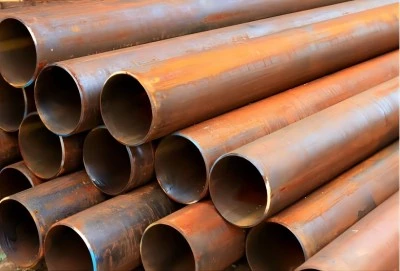
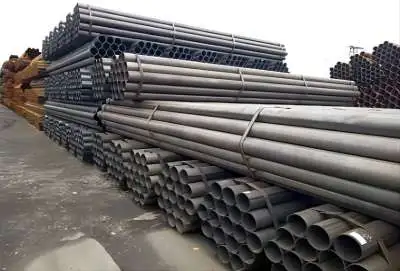
What Is ERW Steel Pipe and How Is It Made?
How Electric Resistance Welding Forms the Pipe
ERW steel pipe stands for "electric resistance welded." A mill splits a steel coil in half down the middle and rolls it into a tube. Rapid electricity warms up both edges until they can bend, and then rollers press them together. Extra metal has not been added. The mill then checks the tube, cuts it to length, and trims the weld bead. The line never stops, so a maker can make large volumes at once. This is one reason why ERW steel pipe is less expensive than pipe that is cut from a solid block. From 2003 to now, Longma Group has been making welded pipe. We will have made more than 1,000,000 tons of it every year by the end of 2023.
Black, Galvanized, and Carbon Steel Types
ERW refers to the way the seam is welded, not the finish. CO2 is used to make a lot of ERW steel pipe. There are two kinds: coated pipe, which has a zinc layer, and black pipe, which has a plain mill surface. Coating it is the next step in galvanizing. The pipe is still made the same way. Black pipe works well inside, when it's dry, or when it's painted. When it comes to fire sprinkler systems, ASTM A795 covers both black and galvanized pipe. Hot-dip galvanized pipe works well in wet surfaces or outside. Coatings such as FBE, 2PP, 3LPE, and 3PE are used to keep underground line pipes from rusting. Between hot-dip galvanizing and anti-corrosion, you can pick the finish that works best for the job site.
Why Weld Seam Quality Matters
It makes sense that people would want to know more about the weld gap. ERW steel pipe quality depends heavily on this detail. How good the weld is depends on how straight the edges are, how hot it is, and how much pressure is used. If the joint isn't right, it can crack or leak. After welding, mills heat treat the seam to even out the grain structure and make it as tough as the base steel again. The next step is inspection. A lot of the time, people check things by hydrostatic testing or non-destructive testing, such as ultrasonic or eddy-current methods. The API 5L PSL2 has stricter rules for chemistry, toughness, and testing than the API 5L PSL1. Heat treatment and testing tools are used to find flaws and make welds tougher. We also keep track of each pipe from the time it is made from raw materials to polished goods. If you do these things, the seam won't have to be the weak spot.
Is ERW Steel Pipe Strong Enough for Industrial Applications?
What Decides the Strength of ERW Steel Pipe
The strength of steel is based on its grade. It takes at least 35,000 psi to yield ASTM A53 Grade B, and it needs at least 60,000 psi to tensile it. For API 5L X52, the yield strength must be at least 52,000 psi. The next thing is how thick the walls are. SCH80 pipe is better than SCH40 pipe of the same thickness because it can handle more pressure and is less likely to dent or buckle. This is because its wall is stronger. It is also important that the steel is good. Our coil comes from mills in China, such as Shagang, TISCO, Bao Steel, and HBIS. For each pipe, we can trace it all the way back to the steel it came from. It will work as expected if the grade, wall, and coil quality are all good enough.
Where ERW Steel Pipe Performs Well
API 5L line pipe, foundation piles, water lines, fire sprinkler systems, and building frames are all good places to use ERW steel pipe. Because the steel is rolled into a strip, the wall thickness stays the same from one length to the next. It's easier to cut, join, and put things together on the job site when they are stable. The smooth surface of the pipes makes it easy to galvanize and coat them. A53 pipe for general use, A500 structural tubing, and standard-schedule line pipe are things that many of the stockists we work with buy a lot of. It's bad for your business and your reputation if the quality of your lots changes. Every week, companies further down the line buy them.
When Pierced-Billet Pipe May Fit Better
ERW steel pipe isn't always the best option. When engineers need to use pipe that has been cut from a solid billet, there is no weld. This is because pressure, temperature, or wear are all important. Before production can begin, both the buyer and the mill must agree on the tests and materials that will be used for sour service. It's simple: read the job brief first. Do what it says. It could say API 5L X52 or ASTM A53 Grade B. Make sure that all of those things are true about the ERW result. People who use your code are also taking a risk when you switch general-purpose pipes to a code-driven order.
ERW Steel Pipe Standards, Grades, and Sizes
Standards We Supply
Standards make it possible for buyers to communicate clearly. For our ERW steel pipe, we use API 5L, ASTM A53, ASTM A500, ASTM A252, and ASTM A795 as guides. Both PSL1 and PSL2 are part of API 5L. Welded pipes that meet ISO 3183, EN 10219, AS/NZS 1163, and other standards are also available. We have licenses for both API 5L and ISO 9001. The ASTM names will be known in the US. A53 is often used for general pipes. A500 is used for structural tubes, A252 is used for piles, and A795 is used to protect against fire. Check the version of the standard you're ordering because requirements can change from one version to the next.
How to Pick the Right Grade
Check to see if the score is right for the job. In general, ASTM A53 Grade B is good for water, air, gas, and steam lines. There are at least 42,000 and 46,000 psi of yield strength in round tubes made to ASTM A500 Grades B and C. These tubes can be used for frames and columns. For ASTM A252 Grades 1, 2, and 3, cover piles must have yields of at least 30,000, 35,000, and 45,000 psi. The number in EN 10219 that starts with S235, S275, or S355 shows the lowest yield strength in MPa for walls that are thinner. X42 in API 5L means a minimum yield of 42,000 psi. If the grade is too low, you could fail, and if it's too high, it would cost more and not add any value.
Sizes, Wall Thickness, and Weight
The inside walls of our ERW steel pipe are 1/4" to 20" thick, and the outside width is 1/4" to 20". You can use weight to build math and freight. The wall of an NPS 2 SCH40 pipe is 0.154" thick, and its outside diameter is 2.375". Each foot of it weighs about 3.65 pounds. The NPS 4 SCH40 weighs about 10.79 lb per foot, and the NPS 6 SCH40 weighs about 18.97 lb per foot. Please ask for a weight schedule so that you can plan your containers. Actual weights depend on the margins and finish. Our fastest shipping takes up to seven days, but it depends on the item and how many of them you order. This lets you quickly get more of the most-wanted sizes.
How to Choose and Verify ERW Steel Pipe
Build the Order Around Your Customers' Needs
Work backward from what you want to do. Later on, talk to the buyer about the standard, pressure, load, and environment that are needed. Then choose the wall's width, length, coat, grade, thickness, and end finish. When you buy ERW steel pipe to sell it again, pay attention to the specs that sell the fastest in your area. Standard sizes for these are A53 Grade B and A500. Before you agree to a quote, make sure you know how long it is good for and how you can pay for it. This is because steel prices change all the time. Don't just look at the unit price; look at the whole cost. It costs a lot to coat, inspect, ship, pay taxes, and have a package turned down. Please send us your size mix. We will tell you how many to order and how long it will take.
Documents and Tests to Request
The pipe is shown on the paper. Get a Material Test Certificate (MTC) that gives the heat number, chemical make-up, and mechanical results of the pipe and shows its marks. Then check to see if they match. Make sure you have the correct type of EN 10204. Type 3.1 is a certificate that has been checked by an authorized agent of the maker who is not involved in production. For project work, we also give you an Inspection and Test Plan (ITP) and a Manufacturing Procedure Specification (MPS). A lot of the time, ultrasound or eddy-current weld checking is done along with hydrostatic pressure, tension, flattening, and bend tests. That way, you can be sure that every batch is the same. The records show why two numbers are not the same.
Checks for Choosing a Supplier
A good seller backs up what they say with facts. Longma Group has been making welded steel pipe since 2003. There are people from more than 90 countries who buy from the 230,000-square-meter plant. For health and safety at work, we have API 5L, ISO 9001, ISO 14001, and 18001 certificates, as well as Factory Production Control (FPC) certificates. Check each coupon to make sure it works and covers the thing you want to buy. As a wholesaler, you should also find out how they handle packing for export, making claims, and getting return orders. They depend on repeat business after all. We have engineering workers, stockists, and import traders as customers. Our papers and the fact that we can keep track of them help all of them.
Recommended ERW Steel Pipe Applications
Construction and Structural Projects
ASTM A500 and EN 10219 tubing hold weight in place in scaffolding, frames, columns, braces, and guardrails. While round hollow sections are less likely to twist, angles and other open shapes are. This is because they don't spread stress as evenly. ASTM A252 pipe is used as support piles for buildings, bridges, and docks. It is pushed or drilled into the ground and then concrete is poured into it. The wall width and grade should be based on the engineer's plan, not what's on hand. When builders buy our ERW steel pipe in these sizes, they can cut and join stable pieces that look good on the job site. Crews don't have to wait because of this.
Water, Fire Protection, and Utility Systems
For their water, air, gas, and steam lines, some people pick ASTM A53 Grade B. People who work with building safety need to know about ASTM A795 because it talks about black and hot-dipped galvanized pipe for fire protection systems. For things that will be wet or buried, hot-dip galvanizing or coatings like FBE and 3LPE will slow rust and make them last longer. Check with the project engineer to make sure the test pressure is right and that the coating works with both soil and air. Along with fabrication work, we can do end treatments like welding, perforating, expanding, and more so that connections fit together. This saves your customer a step on-site.
Oil, Gas, and Mechanical Uses
Transmission and gathering lines on land can use ERW steel pipe made to API 5L as long as the grade, PSL, and test plan are in line with the project code. Our pipe comes in both PSL1 and PSL2 sizes, and we have an API 5L license. If these orders are for everyday pipe, don't switch it out without getting written permission first. ERW steel pipe is cut into machine frames, rollers, and other parts that aren't used in the energy sector by mechanical and OEM users. For many of these buyers, the most important things are a stable diameter and wall thickness. This is because it's easy to machine things the same way every time. Tell us the use, the standard, the size, and the amount, and we'll let you know what we can do.
Conclusion
It is safe and strong to use ERW steel pipe if the grade, wall thickness, and weld quality all meet a standard. A53, A500, A252, and API 5L all have minimums that are open to the public. This shows that strength is not just a matter of opinion but can be measured. People who want to buy something are most interested in the seam where the two pieces join, so heat treatment, hydrostatic testing, and non-destructive inspection all check it. Pipe made from a solid cast is still the best choice for work that involves high temperatures, high pressures, or wear and tear. This should depend on the needs of the project. With Material Test Certificates, heat numbers, and seller certifications, buyers don't have to guess about the quality of the goods; they can double-check it. If you are clear about what you want, an ERW product will work well and cost less for many applications in water, fire protection, building, industry, and pipes.
FAQ
Can ERW steel pipe match the strength of pierced-billet pipe?
Yes, for many jobs. Minimum strengths are set by ASTM A53, A500, and API 5L. These strengths depend on the grade and the thickness of the wall. There are times when high pressure or temperature still call for pierced-billet pipe.
Is the weld seam a weak point?
Not when the mill is in charge. One way to check the quality of the seam is to use ultrasonic or eddy-current checking. Another way is to heat treat the seam and test it hydrostatically.
Is galvanizing a different way to make pipe?
In fact, galvanizing is a zinc layer that is put on finished pipe. The pipe is still ERW.
What should I include in a quote request?
Type, grade, outside diameter, wall thickness or schedule, length, number, coating, where the item is going, and when it needs to be shipped should all be written down.
Request ERW Steel Pipe from Longma Group
Want to buy ERW steel pipes from a company that can quickly replace common sizes? Longma Group has been making welded pipe since 2003 and has an API 5L certificate. They sell ERW pipe with outside diameters ranging from 1/4" to 20" and SCH10 to SCH160. It takes 7 days to get your order. Email info@longma-group.com with your standard, size, quantity, and where you want the package to go. Longma-group.com is another place to learn more. The people on our team will get back to you with a clear idea and a price quote.