
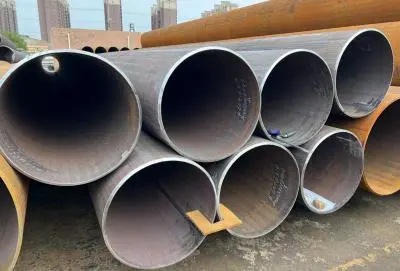
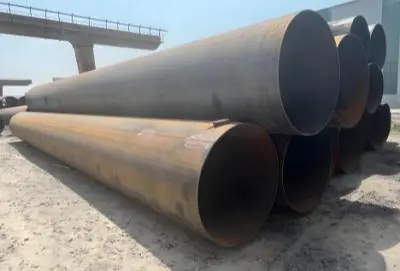
Choosing the right steel type for line pipe for high-pressure gas transfer is very important for making sure that your project meets safety standards, stays on budget, and works well for many years. This is ISO 3183 L450 pipe, a medium-strength line pipe grade with a minimum yield strength of 450 MPa and a tensile strength of 570 MPa. It is made for oil and gas pipeline transportation. This grade is the most commonly used specification for onshore gas trunk lines around the world because it strikes the best balance between mechanical performance and cost-effectiveness. Even though 3183 L450 pipe works great in many situations, procurement managers and pipeline engineers can make better decisions that meet the needs of each project when they know about its pressure capacity, environmental limitations, and comparative advantages.
|
|
|
Introduction to ISO 3183 L450 in Pipeline Systems
For modern energy systems to work, the materials used must be able to mix being strong and cheap. When building a pipeline that goes hundreds of kilometres, from desert routes in the Middle East to coastal sites in Southeast Asia, the type of line pipe used has a direct effect on how long it takes to build, how well it welds, and how much it costs to maintain over time. As an international standard, ISO 3183 L450 pipe was created and harmonised with API 5L X65. This gave global procurement teams a single specification that made it easier to source goods across borders while still maintaining high quality standards.
More and more pressure is being put on pipeline engineers and project procurement managers to make systems that are safer and cost less over their whole life. You can't just say "yes" or "no" to the question of whether ISO 3183 L450 pipe is good for high-pressure gas uses. Instead, we need to look at its mechanical features, how well it works in different environments, and how it stacks up against other types. This guide gives you the technical information and real-world advice you need to make smart purchasing choices in tricky business-to-business situations.
Suitability of ISO 3183 L450 for High-Pressure Gas Pipelines
Pressure Rating Analysis and Safety Margins
To find out if ISO 3183 L450 pipe can handle high-pressure gas gearbox, you need to use recognised design codes to figure out the maximum allowed working pressure (MAOP). The Barlow formula, MAOP = (2 × S × t × E × F) / D, takes into account the minimum yield strength (S), the wall thickness (t), the design factor (F), the outside diameter (D), and the efficiency of the weld joint (E). Using conservative design factors required by rules like ASME B31.8 on a typical 36-inch diameter ISO 3183 L450 pipe with a 0.5-inch wall thickness, the calculated MAOP is well above 1,000 psi, making it suitable for many high-pressure gas applications.
However, "high pressure" can mean different things depending on the subject. ISO 3183 L450 pipe gives urban distribution networks that work at 500 to 800 psi a lot of safety margins. At pressures between 1,200 and 1,400 psi, onshore trunk lines are the best place for 3183 L450 pipe's strength-to-cost ratio. If your project needs pressures of at least 1,600 psi, you should look at the L485 or L555 grades. They have more capacity without needing walls that are too thick, which raises the cost of materials and welds.
Environmental Compatibility and Corrosion Resistance
How materials react to fluids being moved and their surroundings affects how long a pipeline lasts. PSL2 grade ISO 3183 L450 pipe can be changed to work in mild sour service situations with low H₂S levels, which eliminates worries about hydrogen-induced cracking that affect lower steel grades. This feature makes it easier to buy parts for oilfield gathering systems where natural gas streams contain small amounts of hydrogen sulphide.
Temperature performance determines where the 3183 L450 pipe works well. Charpy's impact resistance stays stable from room temperature to -40°C thanks to its high low-temperature toughness, which is achieved through ME (as-rolled) and QE (quenched and tempered) delivery conditions. This range includes most land environments, such as areas with permanent frost in northern Canada, Siberia, and Alaska, where gas pipelines must be able to withstand cracking during the cold winter months. For projects that will be exposed to temperatures below -45°C, you need special grades or extra heat treatment.
The built-in properties of ISO 3183 L450 pipe work well with external protection systems. Fusion Bonded Epoxy (FBE) and three-layer polyethylene (3PE) coatings can be put on the pipe's surface to keep it from rusting on the ground. Internal coats that reduce drag can be used to improve flow efficiency and lower pumping costs over the life of the pipeline. This coating compatibility is useful during buying because it makes it easier for pipe sellers and specialised coating applicators to work together.
Performance Validation Through Testing and Case Studies
Real-world performance data gives us confidence that properties found in the lab will work reliably in the field. Drop Weight Tear Testing (DWTT) checks a material's crack arrest capability, which is its ability to stop cracks from spreading and breaking things in terrible ways. ISO 3183 L450 pipe always meets the requirements for onshore installations, which is why it is used in so many big projects, like China's West-East Gas Pipeline, which moves natural gas over thousands of kilometres of different landscapes and climates.
Engineers who have worked on projects like the MOBIL OIL AUSTRALIA sites have written about how well the 3183 L450 pipe works in high-pressure gas gathering systems. These case studies show benefits that go beyond what is written in specifications. For example, they show lower rates of welding defects because the carbon equivalent values are better, faster construction progress is possible because welding consumables are more advanced, and inspection costs are lower than with higher-strength options that need more advanced non-destructive examination methods.
Best Practices for Procuring and Inspecting ISO 3183 L450 Pipes
Supplier Qualification and Selection Criteria
Assessing suppliers is the first step in a successful procurement process. Initial screening is done by looking for manufacturers with API 5L licenses, ISO 9001 quality management certifications, and other relevant occupational health and safety credentials. Longma Group has many certifications, such as API 5L, ISO 9001:2016, ISO 14001 for environmental management, and OHSAS 18001 for occupational safety systems. These show that we have strong management skills that lower the risks of procurement.
Verification of manufacturing capability goes beyond licenses. Site visits or audits by a third party show how production really works, how well equipment is maintained, and how quality control is put into place. Check to see if the company gets its raw materials from reputable mills. If the materials can be tracked back to steelmakers like TISCO, Shougang, or Bao Steel, you can be sure that they are consistent. Find out what kinds of heat treatments they offer, how advanced their testing equipment is, and how qualified their staff is. These operational factors decide whether the performance that was promised matches the performance that was actually achieved for ISO 3183 L450 pipe.
Logistics and following the rules are affected by where the goods are sourced. Chinese manufacturers offer competitive prices because their supply chains are well-connected and they have a lot of production capacity. When buying from China for projects in the Middle East, Southeast Asia, or Australia, make sure the manufacturer knows what the destination market needs. This includes knowing about certification bodies like ASME, inspection agencies, and the types of paperwork that engineering contractors expect. Longma Group has worked with clients in over 90 countries, so we know how to handle these differences without any problems.
Inspection Protocols and Quality Verification
Setting review standards during the quotation process stops disagreements and makes sure you get quality that has been checked. Make it clear if you need third-party inspections by companies like SGS, Bureau Veritas, or TÜV, and make it clear if the inspections happen at the factory or at the port of arrival. Full inspection and test plans (ITPs) should include acceptance criteria for checking sizes, performing mechanical tests, performing non-destructive tests, and checking the condition of the surface.
Chemical composition analysis makes sure that materials meet the requirements for certain grades. Carbon equivalent calculations based on real chemistry can predict how welding will work, which lets you plan the right way to weld ISO 3183 L450 pipe. Yield strength, tensile strength, and elongation are all checked mechanically to make sure they meet minimum standards. For PSL2 orders, extra impact testing is done to make sure the toughness is valid at service temperatures. These test results are included in Material Test Certificates (MTCs), which are sent with shipments and give engineering contractors and regulatory authorities the proof they need for tracking.
The standards for non-destructive testing depend on how important the product is. For large-diameter LSAW pipes, it is standard practice to test the pipe body with ultrasound and look at the weld gaps on x-rays. For important uses, extra magnetic particle testing of pipe ends or ultrasonic shear wave testing of weld zones may be needed. At Longma Group, we have automatic ultrasonic systems and digital radiography tools in-house for testing. This makes sure that everything is checked carefully without taking longer than planned for delivery.
Conclusion
ISO 3183 L450 pipe is the main part of the world's medium- to high-pressure gas transmission system. It has been shown to work well in a wide range of conditions. It is the most cost-effective choice for coastal trunk lines, urban distribution networks, and oilfield gathering systems that work at temperatures as low as -40°C and pressures up to about 1,400 psi because it has a yield strength of 450 MPa and is easy to connect. Even though ISO 3183 L450 pipe isn't good for ultra-high pressure applications, deep subsea environments, or extreme arctic conditions below -45°C, it meets the needs of most gas pipelines and has the best cost-performance ratio. To be successful in procurement, you need to choose manufacturers whose production methods are certified and who offer full documentation, quality control, and quick technical support throughout the project.
FAQs
Does ISO 3183 L450 Work in Sour Gas Environments?
PSL2 grade ISO 3183 L450 pipe can be changed to fit mild sour services with low H₂ levels. This is done by manufacturers using controlled chemistry to limit the elements that cause hydrogen-induced splitting and sulphide stress corrosion cracking. If you need ISO 3183 L450 pipe for a sour application, make sure the material you get is certified to NACE MR0175/ISO 15156 standards and that it has hardness limits that stop cracking.
What Distinguishes L450 from L415 Grade?
The primary difference is the yield strength, which is 450 MPa vs. 415 MPa. This affects the pressure capacity and the thickness of the wall that needs to be used. When the pressures are the same, ISO 3183 L450 pipe lets the walls be thinner, which lowers the cost of materials and weight. Since both grades are pretty much the same in terms of how well they weld and how tough they are, the choice comes down to cost, depending on your specific pressure needs and the supply of materials in your sourcing area.
How Can I Verify Pipe Authenticity and Certification?
Real ISO 3183 L450 pipe has mill marks that show the maker, specification, grade, and heat number. Ask for Material Test Certificates that include these markings and list the testing lab's accreditation. Independent proof is provided by third-party inspection during production. Reputable makers, such as Longma Group, keep API licenses and ISO certifications that are audited on a regular basis to make sure they always meet the requirements that were set.
Partner with Longma Group for Certified ISO 3183 L450 Pipe Supply
Choosing a trustworthy ISO 3183 L450 pipe manufacturer is important for making sure that your gas transfer project meets its safety, scheduling, and cost goals. Longma Group has been making specialised goods for more than 20 years, can make more than 1,000,000 tonnes of goods every year, and has many certifications, such as API 5L, ISO 9001:2016, and OHSAS 18001. We get high-quality raw materials from trustworthy steel mills in China, use cutting-edge ERW and LSAW production methods, and keep up-to-date quality control systems to make sure every pipe meets your needs.
Our focus on the customer helps engineering workers, procurement managers, and project creators in more than 90 countries with full solutions that go beyond just supplying pipes. We offer fabrication services like beveling and end preparation, as well as anti-corrosion coatings from FBE to 3LPE and full documentation packages with ITP, MPS, and MTC certificates. Whether your project needs large-diameter trunk line pipe for installations in the Middle East or specialised grades for offshore sites in Australia, our expert team is available to help you from the first question to the final delivery. Get in touch with our expert team at info@longma-group.com to talk about your specific needs and get competitive quotes that show why smart buyers choose Longma Group as their reliable ISO 3183 L450 pipe supplier.