
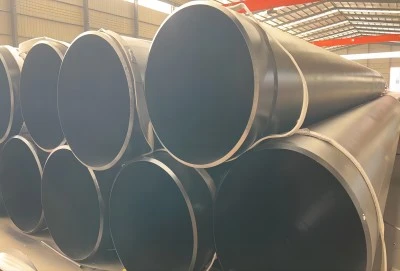
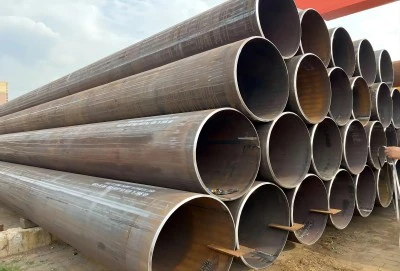
Procurement managers have to ask themselves a very important question when planning big pipeline projects: does buying longitudinally welded API 5L X70 pipe really save money? The simple answer is yes, especially for oil and gas, water supply systems, and offshore projects that use high-pressure transfer. Longitudinally welded X70 pipe has a high yield strength (at least 485 MPa) and is produced in a way that lowers the cost per unit when bought in bulk. The production method, whether it's LSAW or ERW, allows for faster turnaround times and consistent dimensions across thousands of meters. This makes it the best choice for projects that need to maximize both performance and budget.
|
|
|
Understanding API 5L X70 Longitudinally Welded Pipes
Technical Specifications and Industry Standards
API 5L X70 pipe is a high-strength line pipe grade that follows the rules set by the American Petroleum Institute for pipeline transportation systems. The "X70" name means that it has a minimum yield strength of 70,300 psi (485 MPa), which makes it a reliable material for transmission conditions that are tough. There are two Product Specification Levels for this grade. PSL1 has the normal quality factors, while PSL2 has tighter chemical composition limits, Charpy V-notch impact tests, and controlled yield-to-tensile ratios that can't be higher than 0.93. Most procurement requirements for vital infrastructure need PSL2 to make sure that the material can be welded and won't break easily.
The success depends on the chemicals that make it up. Carbon equivalent values stay below 0.43% so that welding can be done in the field without any problems with preheating. Micro-alloying elements like niobium, vanadium, and titanium smooth out the grain structure, giving the material the strength it needs through thermomechanical rolling instead of having too much carbon content, which would make it less flexible. The tensile strength of api 5l x70 pipe is between 570 MPa and 760 MPa, which gives enough safety gaps for pressure spikes and temperature changes that might happen during operation.
Manufacturing Process: Longitudinal Welding vs. Seamless Production
There are two main ways to make longitudinally welded pipes: LSAW (Longitudinal Submerged Arc Welding) and ERW (Electric Resistance Welding). For LSAW, steel plates are shaped into cylinders and then the seam is welded using submerged arc methods that make the weld go deep and leave few flaws. This method works well for trunk transmission lines because it can handle big widths (16 inches to 80 inches) and thick walls (SCH10 to SCH160).
High-frequency induction is used in ERW manufacturing to join the ends of steel coils that are being made constantly. This method works for diameters from 1/2 inch to 24 inches and has the fastest output speed for needs with middling diameters. Both ways go through strict quality control procedures. 100% ultrasonic testing checks weld lines for lack of fusion or inclusions, and hydrostatic testing makes sure the pipe is strong enough to withstand pressures higher than its minimum yield strength.
For seamless pipe production, on the other hand, solid billets must be pierced at high temperatures. This is a slower, more expensive process that can only be used for smaller sizes (usually less than 24 inches). There are choices for smooth materials that don't have weld seams, but they cost more than rotary piercing because they are harder to make and waste more material. This makes them less cost-effective for large orders.
Is Longitudinally Welded API 5L X70 Pipe Cost-Effective for Mass Procurement?
Material Costs and Production Efficiencies
Buying api 5l x70 pipe in bulk lets you take advantage of a number of cost-saving strategies that small-order buyers can't use. When you buy more than 500 tons of raw materials from integrated steel mills like HBIS, Shagang, and Baosteel, you can get bulk savings. Longitudinally welded production lines get economies of scale by running all the time: an LSAW mill can make 300–400 tons of steel every day, while an ERW line can make 150–200 tons every shift. When compared to batch-oriented smooth production, these flow rates cut the cost of making a meter by 18–25%.
These saves are increased by efficiency gains related to welding. When joining seamless pipe pieces in the field, LSAW pipes need circular welds to join them together, but LSAW pipes only need a single longitudinal seam. Each field weld that isn't used saves two to four hours of crew time, cuts down on inspections, and lowers the number of places where leaks could happen. This means that for a 50-kilometer pipeline project, the plan can be sped up by weeks and big labor costs can be avoided.
Supply Chain Considerations and Negotiation Leverage
Project delays are less likely to happen when you have reliable providers with a lot of supplies. When api 5l x70 pipe manufacturers keep between 5,000 and 10,000 tons of ready stock on hand, they can meet pressing needs within seven to fourteen days instead of the eight to twelve weeks that are usual for made-to-order seamless pipe. Logistics costs are also lower when factories are close by. Using domestic providers cuts down on import taxes, currency exchange risks, and the hassle of making complicated international shipping paperwork.
The size of the purchase has a direct effect on the price power. Orders over 1,000 tons usually get 8–12% off the normal price, as well as good payment terms like 30–60 day net plans. Suppliers also cover costs like beveling, hydrotesting, and surface cleaning that would normally show up as line items. One contractor in the Middle East said that they saved 22% on the total cost of a 2,500-ton order by buying from a single manufacturer that offered combined services like FBE coating and port transport.
Maximizing the Value of Your API 5L X70 Pipe Procurement
Application-Specific Recommendations
By matching pipe specs to operating needs, both under-engineering and cost overruns can be avoided. Transcontinental gas transmission lines that work above 10 MPa benefit from api 5l x70 pipe's high strength, which lets wall thickness optimization that cuts steel tonnage by 12–18% compared to X60 options. When offshore risers and underwater flowlines are hit by external hydrostatic collapse pressure, they need LSAW heavy-wall pipe that has been tested for crack toughness at temperatures as low as -45°C.
In the Arctic, API 5L Annex G must be followed for low-temperature service, and impact tests must be done at -60°C to avoid brittle breakage. Annex H materials that have been shown to be resistant to hydrogen-induced cracking and sulfur stress cracking are needed for sour service uses that contain hydrogen sulfide. By making these requirements clear from the start, rather than finding out later that they weren't met during a check, you can avoid costly reorders and schedule delays.
Avoiding Common Procurement Pitfalls
Suppliers who don't meet standards pose risks that go beyond saving money right away. Manufacturers who aren't certified may use lower-quality steel, change mill test results, or skip testing methods that are required by law. In one case, a seller delivered X52-grade pipe that was mistakenly marked as api 5l x70 pipe. This wasn't found out until hydrostatic testing failed during installation, which meant that the whole pipeline had to be replaced, which cost more than $3 million.
Delays in the supply chain are often caused by bad planning for production. When steel mills have backlogs of orders, suppliers who don't have enough raw materials on hand have to wait longer to get their goods. As part of the deal, buyers should ask for production plans, confirmations of when raw materials will be delivered, and goals for progress inspections. Stop-work orders from regulators can be issued if compliance mistakes are made, especially when it comes to ASME B31.4 or B31.8 code standards. These legal issues can be kept to a minimum by hiring suppliers who have experience with similar projects and countries.
Conclusion
Longitudinally welded API 5L X70 pipe offers quantifiable cost savings for bulk purchases thanks to a number of value drivers, including improved strength-to-weight ratios that cut down on material use, production improvements that lower per-unit costs, and supply chain benefits that are only available at scale. The grade has been used for decades and has been shown to work well in harsh environments, international transfer, and offshore building. This makes it a safe choice. To successfully buy something, you need to carefully evaluate suppliers by giving certifications, manufacturing capacity, and value-added services the most weight. You also need to be very clear about PSL levels, testing standards, and environmental scores. Procurement managers can regularly get 15–25% lower lifetime costs compared to other materials or grades by avoiding common mistakes and using their negotiating power to buy in bulk.
FAQ
What distinguishes longitudinally welded from seamless X70 pipe?
Longitudinally welded pipe has a single seam that goes all the way along the pipe. This seam can be made using LSAW or ERW methods. This makes it possible to make heavy walls and big diameters (24 to 80 inches) faster than with seamless making. When solid billets are pierced to make seamless pipe, the weld line is eliminated. However, seamless pipe is only available in smaller sizes (usually less than 24 inches) and costs 25 to 40 percent more because it is harder to make.
Can X70 pipe serve sour service applications?
Standard X70 pipe can't be used in places where hydrogen sulfide is present without being specially modified. For sour service, you need materials that are made according to API 5L Annex H. These materials must be made from ultra-clean steel that has been treated with calcium and have a low sulfur content. They must also be resistant to hydrogen-induced breaking, which has been proven through NACE TM0284 testing. When buying something that could expose you to H2S, you should always include Annex H compliance.
How does chemical composition affect procurement decisions?
Carbon equivalent values below 0.43% make it possible to weld with normal electrodes and with little need for preheating, which lowers the cost of installation in the field. Niobium, vanadium, and titanium are micro-alloying elements that add strength without adding carbon. They do this by finely grinding the grains, which keeps the material flexible and tough against impact. Looking over mill test results for these factors stops problems with welding and makes sure that the project's welding process specifications are followed.
Partner with a Trusted API 5L X70 Pipe Manufacturer for Your Next Project
Since 2003, Longma Group has sent more than a million tons of high-quality longitudinally welded pipe to big projects in over 90 countries, such as those in the Middle East, Australia, and Southeast Asia. Our LSAW and ERW production facilities keep up with API 5L, ISO 9001, and other foreign standards. This makes sure that every order meets PSL2 requirements and comes with full paperwork for tracking. We only get our raw materials from Shagang, HBIS, and Baosteel, which are three of China's best mills. We also offer a full range of services, such as FBE coating, 3LPE application, beveling, and special manufacturing. We can meet tight project deadlines without sacrificing quality because we have more than 5,000 tons of ready stock and can deliver in as little as seven days. Get in touch with our team at info@longma-group.com to talk about your api 5l x70 pipe needs and get a full quote that fits your mass buying needs.