
Sourcing the right ISO 3183 L245 pipe for an oil and gas pipeline project demands more than comparing price tags. EPC procurement teams operating across the Middle East, Southeast Asia, and South America face stringent owner specifications, tight milestones, and third-party audit requirements that leave no margin for supplier error. This guide breaks down the essential specifications, compares key pipe grades, and outlines what separates a reliable L245 line pipe supplier from one that will cost you the project. Whether you are evaluating vendors for a first-time RFQ or consolidating your supply chain across parallel projects, the information here will help you move from specification sheet to signed contract with confidence.
|
|
|
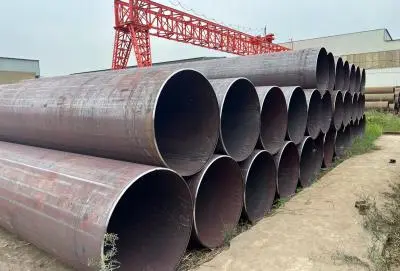
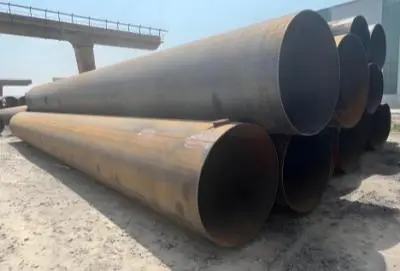
Understanding ISO 3183 L245 Pipe Specifications and Applications
Chemical Composition and Mechanical Properties
The highest amount of carbon in ISO 3183 L245 pipe is 0.28%, and the highest amount of manganese is 1.20%. It is a plain carbon steel line pipe. The low carbon equivalent gives gathering-line contractors the great field weldability they need without adding any expensive microalloys. This keeps the cost of the raw materials at the lowest level among ISO 3183 grades.
The pipe has a minimum yield strength of 245 MPa, a minimum tensile strength of 415 MPa, and a minimum extension of 22% at the PSL 1 baseline. The limits are much smaller in PSL 2. It has a controlled yield-to-tensile ratio, low-temperature Charpy V-notch impact testing, a hardness ceiling of 250 HV, and a yield strength range of 245–440 MPa and a tensile strength range of 415–655 MPa. For projects that need full material traceability and fracture-toughness documentation, like those that are audited by the owner, PSL 2 with EN 10204 3.1 or 3.2 mill test certificates is what you need.
Key Service Applications
The ISO 3183 L245 pipe is great at light-duty tasks like gathering and distributing things. Because it is so flexible, it is easy to do cold bending on-site, and field welding with GMAW or SAW can be done without long preheating steps. But because it isn't as strong, the wall thickness has to be raised to make up for it in areas with higher pressure, which changes how material tonnage calculations are done.
Here are the main deployment situations where L245 line pipe always proves useful:
- Oilfield gathering branch lines: Moving raw crude from wellheads to separation facilities, where fluid mixtures and small changes in temperature are common and seal integrity must be maintained at all times.
- Oilfield water injection and produced-water pipelines: For low-pressure, high-volume service in oilfields, cost-effectiveness and the ability to weld are more important than the need for high strength.
- Short-distance urban low-pressure gas distribution: Municipal and regional networks that must handle changes in pressure and outside soil loads without affecting joint integrity.
As a result, these uses make up a big part of the upstream and midstream capital expenditures on EPC projects in the MENA and Southeast Asian regions. This means that ensuring a steady supply of L245 should be a top priority when buying this commodity.
Comparing ISO 3183 L245 Pipe vs Other Pipe Grades
L245 vs L290 and L360
From ISO 3183 L245 pipe to L290, the minimum yield strength goes up by about 18%. From L290 to L360, it goes up by almost 47%. That extra strength makes the higher alloy content and processing costs worth it. L290 or L360 must be used for long-distance trunk lines that work at design pressures above 7 MPa. If the design pressure stays below 4 MPa in gathering branch networks, specifying L290 will only raise the unit cost and not improve the project's safety margins.
L245 vs API 5L Grade B
Both API 5L Grade B and ISO 3183 L245 pipe have a minimum yield stress of 245 MPa and a minimum tensile stress of 415 MPa. There is a difference based on jurisdiction: ISO 3183 is the metric international standard used in most European, Asian, and international bid papers, while API 5L is still the standard for projects controlled by the American Petroleum Institute. A lot of certified makers have both licenses at the same time, which means they can stamp either standard on the same heat of steel, based on the project's rules.
ERW vs LSAW for L245 Applications
ERW (Electric Resistance Welded) pipe is most common in ISO 3183 L245 pipe service for small to medium sizes (usually up to 24 inches). It is easier to make, cheaper, and strong enough for gathering-line pressure classes. Longitudinal Submerged Arc Welded (LSAW) pipe is the best choice for sizes over 24 inches or wall thicknesses over 20 mm. The double-sided weld geometry and post-weld heat treatment give owner engineers the confidence they need that the pipe will not break. When buying teams know this line, they don't have to define too much LSAW for small-bore runs where ERW can do the same job for less money.
How to Choose and Source ISO 3183 L245 Pipes: Procurement Insights?
Evaluating Supplier Credentials
For audit-sensitive EPC contracts, you can't go without a certified manufacturer for ISO 3183 L245 pipes. A valid API 5L license (check the API Monogram database for the license number and expiration date), ISO 9001 quality management certification, and the ability to issue EN 10204 3.1 or 3.2 MTCs should be the bare minimum of credentials. Suppliers who can also help with third-party inspection by SGS or Bureau Veritas during production, not just when the product is finished, give QA/QC managers the visibility they need to keep an eye on things that owner representatives want.
Price Drivers and Lead Time Realities
The four main sources of cost are the price of the steel sheet, the wall thickness, the diameter, and the order number. Mills that are well-funded and have enough finished goods in stock can offer a 7-day ex-works lead time on stocked ERW sizes. Large-diameter LSAW orders usually need 4–8 weeks to be made after the raw materials are confirmed. Frame deals that lock in price tiers and reserve mill capacity help procurement teams that are working on multiple projects at the same time. This makes them less vulnerable to spot-market volatility between the time a project is awarded and when it is delivered.
Installation, Welding, and Maintenance Guidelines for ISO 3183 L245 Pipes
Welding Best Practices
The low carbon equivalent of ISO 3183 L245 pipe makes it easier to qualify a welding procedure. Most people who follow standard SMAW, GMAW, and SAW methods can get this score. In normal conditions, preheating is not needed for wall thicknesses below 19 mm. However, if the temperature at the site is below 5°C, preheating to 50°C is recommended as a safety measure. A 100% ultrasonic or radiographic inspection should be done on all welds on PSL 2 pipe, as stated in the project's ITP.
Maintaining proper joint alignment and staying away from too many root gaps can help stop the incomplete fusion problems that usually lead to owner rejection during third-party audits. For L245 in non-sour service, post-weld heat treatment of field joints is not standard, but the owner may ask for it if the soil is certain.
Corrosion Protection and Inspection Protocols
For underground service, 3LPE, FBE, or 2PP anti-corrosion systems are usually put on L245 pipe. The standard way to keep pipelines in good shape over their 25–30 year design life is to do an annual smart-pig check or regular cathodic protection studies. To avoid logistics problems, procurement teams should make sure that their seller can send pipe that has already been coated or work with a third party to do the coating.
Why Partner with Certified L245 Line Pipe Manufacturers?
The difference between a trustworthy partner and a transactional vendor is the level of supply and consistency of certification for ISO 3183 L245 pipes. Since 2003, Hebei Longma Group Limited has been making ERW and LSAW steel pipes in 230,000 square meters of production space, turning out more than 1,000,000 tons of steel each year. Longma has a current API 5L license that covers PSL 1 and PSL 2 grades from B to X80. They also have ISO 9001, ISO 14001, and ISO 45001 qualifications.
Only certified domestic mills, like Baosteel, HBIS, Shougang, Shagang, and TISCO, provide raw materials. This way, all heat can be tracked from the coil to the finished pipe. A full set of paperwork, including ITP, MPS, MTC, and third-party inspection records, is sent with every order. Longma delivers to more than 90 countries around the world, and owner-witness inspections at the mill are a normal part of the business, not an extra.
Conclusion
Choosing an ISO 3183 L245 pipe seller for an EPC job is mainly about how to handle risks. Any cheap unit price doesn't matter if the API certificate has expired, the LSAW weld fails RT when it gets there, or the delivery date goes past the project milestone window. This framework—check credentials, match grade to service conditions, align lead time to project schedule, and audit the mill before committing—gives procurement teams a supplier qualification process that they can defend. Longma Group is a good choice for EPC teams looking for ISO 3183 L245 pipe in any part of the world because it has a large production capacity, a wide range of certifications, and allows third-party inspections.
FAQ
What is the difference between ISO 3183 L245 and API 5L Grade B?
The minimum yield strength is set at 245 MPa, and the minimum tensile strength is set at 415 MPa. Most bids from countries other than the United States use ISO 3183 as their foreign measure standard for ISO 3183 L245 pipe. The American Petroleum Institute uses API 5L. A lot of mills have licenses for both, so they can certify the same pipe under either standard.
Is L245 pipe suitable for sour gas service?
Standard L245 isn't made to work in H₂S conditions. The pipe for sour service has to meet the standards in ISO 3183 Annex H and have a "S" after the number (for example, L245NS), along with extra controls for roughness and chemistry according to NACE MR0175/ISO 15156.
What PSL level should EPC projects specify?
Owner third-party checks or low-temperature working conditions should make sure that PSL 2 is specified. This requires impact testing, tighter chemistry controls, and full recording of all traces.
What is the typical lead time for L245 ERW pipe?
Sizes that are in stock can be sent out within 7 days from the factory. Large-diameter or non-stocked LSAW orders usually take 4–8 weeks from the time the raw materials are confirmed.
Does Longma Group support owner witness inspection?
Yes. As a normal service, mill witness checks by owner representatives or third-party agencies like SGS and Bureau Veritas can be set up.
Request a Quote from Longma Group — Your Trusted ISO 3183 L245 Pipe Manufacturer
Longma Group offers ISO 3183 L245 pipe that is approved by API 5L. The pipe comes with full PSL 1/PSL 2 paperwork, 100% UT/RT inspection, and EN 10204 3.1/3.2 MTCs. There are owner witness inspections at our mill, and we ship to more than 90 countries. To get a competitive price today, email info@longma-group.com with the details of your job or go to longma-group.com.








