
In oil and gas EPC pipeline projects, the selection of line pipe grades is a core decision that balances technical compliance, construction feasibility and total project cost. Engineering and procurement teams frequently choose between cost-effective ISO 3183 L245 pipe and high-performance API 5L premium-grade pipe. While both standards apply to hydrocarbon transmission and distribution pipelines, they differ substantially in pressure resistance, manufacturing specifications, regional applicability and economic performance. This article restructures and systematically elaborates on the technical differences, application boundaries and scientific selection principles of the two standards, providing standardized, audit-ready technical guidance for global pipeline project specification formulation and supplier evaluation.
|
|
|
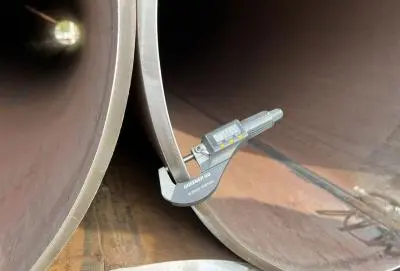
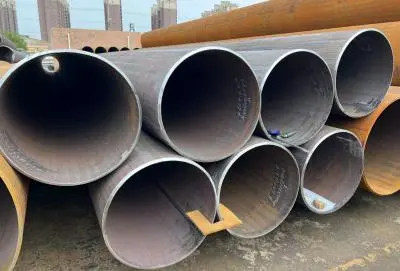
Core Overview of Two Pipeline Standards
Definition and Fundamental Attributes of ISO 3183 L245 Pipe
ISO 3183 is the globally recognized unified standard for steel pipelines used in petroleum and natural gas transportation systems. As the foundational grade of this standard, ISO 3183 L245 pipe features a minimum yield strength of 245 MPa, with mechanical properties fully equivalent to API 5L Grade B. It is the preferred baseline material for conventional low-pressure onshore and offshore oil and gas pipeline projects worldwide, serving as the most widely adopted general-service line pipe in global midstream and upstream pipeline construction.
Chemical Composition and Weldability of ISO 3183 L245 Pipe
This low-carbon plain carbon steel grade adopts a simple and stable metallurgical composition. For PSL 1-grade products, the maximum carbon content is limited to 0.28% and manganese content to 1.20%. The microalloy-free design maintains a low carbon equivalent, endowing the pipe with excellent inherent weldability. Conventional field welding can be implemented without mandatory preheating, greatly simplifying on-site construction processes and reducing technical construction barriers. In general hydrocarbon service conditions, PSL 1-grade L245 pipe delivers a minimum tensile strength of 415 MPa and a minimum elongation of 22%, ensuring stable structural ductility and long-term operational reliability.
PSL 2 Performance Upgrade for ISO 3183 L245 Pipe
PSL 2 specification further upgrades the quality control and performance threshold for critical service scenarios. It optimizes the yield strength fluctuation range to 245–440 MPa, defines the maximum yield-to-tensile strength ratio, mandates Charpy V-notch impact toughness testing, and limits the maximum hardness to 250 HV. These rigorous constraints effectively avoid brittle fracture risks caused by temperature fluctuations and cyclic load changes, ensuring the safety and stability of high-value pipeline assets using ISO 3183 L245 pipe under complex operating conditions.
API 5L Standard: Full-Spectrum Industrial Pipeline Specification
Released by the American Petroleum Institute, API 5L is the most authoritative and widely adopted industry specification for oil and gas transmission line pipes, covering a complete strength grade system from basic Grade B to high-strength X80. Higher X-series grades achieve higher yield and tensile strength through precise chemical composition optimization and standardized manufacturing control, which are specially designed for high-pressure, long-distance cross-regional trunk pipeline transmission scenarios.
Consistent with the ISO 3183 system, API 5L adopts a dual PSL (Product Specification Level) grading mechanism. PSL 2 certification imposes strict requirements on material fracture toughness verification and full lifecycle traceability. Its core technical indicators are highly aligned with ISO 3183 PSL 2, realizing cross-standard compatibility. This high degree of universality makes API 5L the mainstream specification for large-scale international EPC pipeline projects.
In-Depth Technical and Commercial Comparative Analysis
Based on unified basic engineering principles, ISO 3183 and API 5L form differentiated technical and economic systems, which directly determine pipe grade selection, construction difficulty and overall project capital investment. This chapter conducts a dimensional comparison to clarify the respective advantages and applicable boundaries of the two standards.
Baseline Mechanical Performance of ISO 3183 L245 Pipe
It shares identical baseline mechanical parameters with API 5L Grade B, including a 245 MPa minimum yield strength and 415 MPa minimum tensile strength, establishing the industry-standard low-pressure performance baseline for general pipeline service. In comparison, premium API 5L X-series grades (X52–X80) deliver yield strengths above 555 MPa, enabling thinner-wall designs for high-pressure trunk lines. For conventional low-to-medium pressure layouts, ISO 3183 L245 pipe provides sufficiently stable structural performance with cost-effective wall thickness configurations.
Weldability Advantages of ISO 3183 L245 Pipe in Field Construction
Thanks to its low-carbon, microalloy-free metallurgical structure, this baseline grade delivers superior field weldability compared with high-strength API 5L X-series pipes. It requires no mandatory preheating during conventional field welding, simplifying site procedures, shortening construction cycles and lowering operational costs. High-grade API 5L pipes rely on niobium, vanadium and titanium microalloys to boost strength and low-temperature toughness, which demands strict welding qualification and preheating. With simpler fabrication requirements, ISO 3183 L245 pipe is far more adaptable for large-scale field laying projects.
Anti-Corrosion Limitations and Upgraded Grade of L245 Pipe
The standard grade offers no inherent resistance to hydrogen sulfide corrosion and is not qualified for sour gas service. For projects with H₂S contamination, full compliance with NACE MR0175 / ISO 15156 is mandatory, requiring the upgraded L245NS variant. This specialized sour-service grade enforces tighter hardness limits and qualified sulfide stress corrosion testing, solving the environmental adaptability limitation of ISO 3183 L245 pipe in high-sulfur oilfield environments.
Quality Inspection and Compliance Documentation
Standard Compliance Certification for L245 Pipe
General-service pipeline projects widely accept EN 10204 3.1 factory test certificates for this grade and standard API 5L products. For high-specification GCC region projects, owners typically require upgraded EN 10204 3.2 third-party witnessed certification. Qualified suppliers provide fully traceable, independently verified documentation for ISO 3183 L245 pipe to meet strict audit and project handover compliance standards.
Cost Advantage Analysis of L245 Pipe
It represents one of the most cost-effective mainstream line pipe solutions on the market. Its microalloy-free composition eliminates premium material costs, while compatibility with high-efficiency ERW manufacturing supports large-scale cost optimization. Under identical diameter and wall thickness specifications, this pipe is 8–15% cheaper than API 5L X52 grades, and ISO 3183 L245 pipe delivers significant cumulative savings for extensive pipeline network developments.
Standard Application Scenarios and Grade Selection Rules
Core Application Fields of ISO 3183 L245 Pipe
Featuring reliable weldability, stable mechanical performance and distinct economic advantages, this baseline grade is the preferred material for low-to-medium pressure oil and gas gathering and distribution systems. Its excellent ductility and flexible on-site constructability, including cold bending and field tie-in capability, make ISO 3183 L245 pipe highly suitable for remote, logistically challenging oilfield regions such as Central Asia and Indonesia.
Typical Project Cases for ISO 3183 L245 Pipe
It is extensively applied in oilfield water injection lines, produced water disposal pipelines, urban low-pressure gas distribution networks, and low-pressure crude gathering branch lines connecting wellhead pads to central processing facilities. Within its certified low-pressure design envelope, L245 pipe satisfies all structural requirements with optimized wall thickness, maximizing economic returns for projects requiring massive pipe spools and fittings.
Performance Gap Between High-Pressure Working Conditions and L245 Pipe
Long-distance, high-pressure hydrocarbon trunk pipelines require high-strength API 5L X-series grades (X52–X70) to sustain continuous elevated operating pressure. For large-bore pipelines with high design pressure (e.g., 36-inch, 100 bar), conventional baseline grades require impractically thick wall sections, resulting in poor constructability and uneconomical investment. ASME B31.8 and B31.4 design codes specify API 5L X65/X70 for high-pressure trunk infrastructure, effectively covering the performance limitations of ISO 3183 L245 pipe in heavy-duty transmission scenarios.
Scientific Grade Selection Criteria for Projects
Design Pressure Judgment for L245 Pipe Adoption
Client-provided technical specifications serve as the primary compliance benchmark for pipe grade selection. For projects with flexible design margins, multi-dimensional evaluation ensures balanced technical feasibility and commercial efficiency. In all conventional low-pressure gathering and distribution designs, ISO 3183 L245 pipe acts as the standard baseline grade to avoid over-specification and unnecessary project costs.
Pressure Envelope Matching for L245 Pipe
Design Pressure Envelope: Calculate minimum pipeline wall thickness per ASME B31.4 and B31.8 codes. If the baseline grade meets wall thickness criteria and design factor limits without excessive structural weight or construction obstacles, it delivers the optimal cost-performance balance. When required wall thickness becomes impractical for manufacturing or on-site installation, upgrade to high-strength API 5L X-series grades to replace ISO 3183 L245 pipe.
Service Environment Adaptability of ISO 3183 L245 Pipe
Field Service Environment: This baseline grade is engineered for standard non-sour, ambient-temperature, low-to-medium pressure service, covering conventional oilfield gathering and municipal gas distribution. H₂S-containing environments require upgraded L245NS variants derived from standard specifications. Low-temperature or high-cycle fatigue conditions mandate PSL 2-certified L245 pipe with qualified Charpy impact toughness.
Supply Chain and Schedule Advantages of ISO 3183 L245 Pipe
Supply Chain and Project Schedule: Small and medium-diameter baseline line pipes feature global standardization, abundant spot inventory and mature supply chains, offering prominent lead-time advantages. Reliable manufacturers can expedite product delivery significantly faster than high-grade API products. Complete supporting documentation, including EN 10204 3.1/3.2 certificates and third-party SGS/BV verification, enables full project compliance and audit readiness for ISO 3183 L245 pipe shipments.
Conclusion
ISO 3183 L245 pipe and API 5L series standards form a complementary pipeline material system for differentiated working conditions. Mechanically equivalent to API 5L Grade B, this baseline grade relies on high weldability and low cost to become the optimal solution for low-pressure gathering pipelines, water injection systems and urban gas distribution networks. High-grade API 5L X-series pipes make up for its performance shortcomings, meeting the high-strength and high-pressure service requirements of long-distance trunk transmission pipelines.
Reasonable pipe grade selection must be based on code-based accurate calculation and comprehensive evaluation of field working conditions. Selecting qualified baseline materials for applicable low-pressure scenarios avoids unnecessary capital waste caused by over-specification, while correct grade matching prevents potential structural and operational safety hazards from under-specification, both of which are critical for standardized and audit-controlled EPC pipeline projects. Accurate application of ISO 3183 L245 pipe and high-grade API pipes can effectively balance structural safety, regulatory compliance and project profitability.
FAQ
Q: Are ISO 3183 L245 and API 5L Grade B completely identical?
A: The two grades are mechanically interchangeable with exactly the same yield strength, tensile strength and elongation. The core difference lies in the standard jurisdiction and application system: ISO 3183 is a global general metric standard, while API 5L is a professional specification for the US petroleum industry. Most international owners recognize dual-certified products, and suppliers need to confirm the validity of dual-standard certification before quotation.
Q: Can standard L245 pipe be used for sour gas service?
A: Standard L245 pipes have no anti-sulfur corrosion capability and are not applicable to H₂S-containing sour service environments. Projects subject to NACE MR0175 / ISO 15156 regulations must use special sour-service grades L245NS or API 5L Grade B-S with professional anti-corrosion testing and strict hardness control.
Q: What NDT inspection items are required for L245 PSL 2 pipes?
A: L245 PSL 2 pipes require full-item quality inspection, including ultrasonic or radiographic weld seam detection, temperature-calibrated Charpy V-notch impact testing, hydrostatic pressure testing and dimensional accuracy verification. Formal suppliers can provide EN 10204 3.2 third-party witnessed test reports to realize full lifecycle product traceability.
Q: What delivery states are available for L245 pipes?
A: L245 pipes can be supplied in as-rolled, normalizing-rolled or TMCP thermomechanical controlled processing states. The specific delivery state is matched according to pipe diameter, wall thickness and PSL grade requirements. It is necessary to verify the compatibility between the material delivery state and on-site welding process before ordering.
Professional Pipe Supplier: Longma Group
Founded in 2003, Longma Group is a professional global manufacturer of ERW and LSAW line pipes, with an annual production capacity of over one million tons, serving more than 90 countries and regions worldwide. The company supports full-range PSL 1/PSL 2 customized manufacturing, complete ISO 3183 & API 5L dual certification, and standardized EN 10204 3.1/3.2 inspection documents. All products undergo 100% UT/RT weld seam inspection and independent third-party verification by SGS, BV and other authoritative institutions.
Longma Group selects high-quality raw materials from well-known domestic steel mills such as Baosteel, HBIS and Shagang to ensure stable batch quality and full project compliance. We provide customized technical quotation and professional pipeline engineering support for global clients. For business cooperation, please contact our team via info@longma-group.com or visit the official website longma-group.com.








