
It can save you time and money to know the differences between ISO 3183 L245 pipe and API 5L Grade B when choosing line pipe for oil and gas projects. Both ISO 3183 L245 pipe and API 5L Grade B have almost the same mechanical qualities, with a minimum yield strength of 245 MPa and a minimum tensile strength of 415 MPa. The main difference is the rules that guide them. In global projects, ISO 3183 is the chosen international metric-based specification, while in North American markets, API 5L is the standard that is usually used. Both are great for low- to medium-pressure pipeline uses and are very cost-effective.
|
|
|
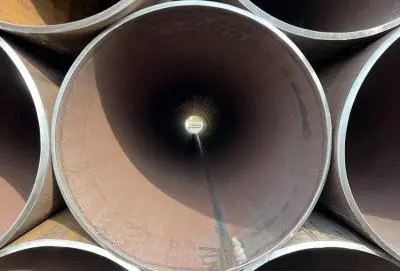
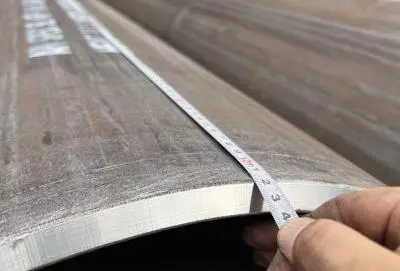
Overview of ISO 3183 L245 and API 5L Grade B Pipes
When buying steel pipe across foreign lines, pipeline engineers and procurement managers often have to deal with a lot of different standards. The international metric system for pipeline specifications, called ISO 3183 L245 pipe, was created by the International Organization for Standardization. This standard sets the rules for pipeline shipping systems mostly used by the oil and gas industries. It provides a single design that makes it easier to buy things across borders and follow the rules.
In contrast, API 5L Grade B comes from the American Petroleum Institute and has been the market leader in North America since its creation. Both standards cover similar technical needs for line pipe uses, but the way they certify products depends on the rules in each area. For API 5L certification, third-party checks are usually done by API-licensed inspectors. For ISO 3183 certification, methods for checking conformity are used that are accepted by international accreditation groups.
Industry Applications Across Global Markets
Both types of pipes are used a lot in low-pressure oil and gas gathering systems, water injection networks in oil fields, and gas transport structures in cities. For projects in the Middle East and Southeast Asia, where metric measurements are common and ISO certification is required for foreign bids, ISO 3183 L245 pipe has become the standard. In the UAE and Indonesia, projects like pipeline expansions and gas distribution networks often use ISO 3183 to make sure they are in line with local building standards and make it easier for equipment to be swapped out.
API 5L Grade B is still used a lot in shale plays in North America, oil sands operations in Canada, and projects where American engineering companies are the major contractors. The standard is widely used in the US, which means that contractors working in the US or on projects that use American engineering methods will have easy access to many suppliers and streamlined buying channels.
Certification Frameworks and International Acceptance
The landscape of licensing has real-world effects on buying teams. When testing labs around the world are authorized to give ISO 3183 approval, it is automatically recognized in markets in Europe, Asia, and the Middle East. This widespread acceptance cuts down on red tape when moving goods across customs lines and meets a wide range of legal needs with a single certification package.
Even though API 5L certification is most common in the Americas, materials that go into places where ISO standards are used may need extra paperwork or a second review. Smart procurement managers working on international projects often ask for dual certification, which means that products are tested and certified to both ISO 3183 and API 5L at the same time. This gives them the most options and keeps project delays to a minimum due to compliance problems.
Chemical and Mechanical Properties: How Do They Differ?
The chemistry of a material determines how well it works, and both standards control its makeup to make sure that it will behave in an expected way during production and use. The chemical specs show that these low-carbon steel types were carefully engineered to be easy to weld in the field and save money.
Chemical Composition and Material Characteristics
The low-carbon plain carbon steel used in ISO 3183 L245 pipe has a maximum carbon content of 0.28% and a manganese content of 1.20%. This lean chemistry avoids microalloy elements that are expensive, like niobium, vanadium, or titanium. This keeps the cost of materials at the lowest amounts possible in the business. The low carbon equivalent (usually less than 0.42) directly leads to better weldability, so field crews can finish joints using normal GMAW or SMAW methods without having to do a lot of preheating, which slows down the building schedule.
API 5L Grade B follows the same composition theory. It says that the highest amount of carbon and manganese allowed in seamless pipe is 0.28% and 1.20%, respectively. Welded pipe can have slightly different amounts allowed based on the manufacturing process. Both standards agree that keeping the carbon content below 0.30% is the best way to keep heat-affected zones from becoming too hard during welding. This is a practical matter that keeps the field from cracking and lowers the rate of welding defects.
Because they don't have any microalloy elements, these grades can't get as strong as X60 or X70 pipe. However, this limitation can work to their benefit when the project's pressure needs are within the L245/Grade B range. Choosing higher-strength pipe when it's not needed raises the cost of materials by 25–40% and makes welding more difficult, which extends the time it takes to build something.
Corrosion Resistance and Environmental Durability
Neither ISO 3183 L245 pipe nor API 5L Grade B has any alloying elements that prevent corrosion. Instead, they depend on coatings and cathodic protection on the outside to last for a long time in underground service. The basic carbon steel structure has neutral rust resistance, which is good for working with sweet (non-sour) hydrocarbons and moving water, but it can be quickly damaged in sour gas settings with hydrogen sulfide.
In the Middle East and Australia, operators often coat these pipe types with fusion-bonded epoxy (FBE) or three-layer polyethylene (3LPE). This makes them last longer than 50 years in harsh soil conditions. The smooth surface finish that can be achieved on ERW and LSAW pipe makes it easier for coatings to stick, which lowers the chance of holiday flaws that weaken corrosion protection. Longma Group offers a wide range of anti-corrosion services, such as hot-dip galvanizing, FBE, 2PP, and 3LPE, to fit the weather exposure profile of your project.
Manufacturing Process and Quality Testing Standards
How pipes are made has a direct effect on their quality, how long it takes to deliver them, and how much the whole job costs. Learning how steel coil or plate is turned into finished line pipe by makers helps buying teams judge the skills of suppliers and set reasonable lead time standards.
Welded Pipe Production Technologies
ERW (Electric Resistance Welding) and LSAW (Longitudinal Submerged Arc Welding) are the main methods used to make ISO 3183 L245 pipe. In the 2-inch to 24-inch diameter range, ERW is the most common method. High-frequency induction welding, on the other hand, makes a narrow heat-affected zone and keeps the dimensions tight. Because ERW lines can produce continuously, they can make things with normal wall thicknesses at a low cost. This makes them the best choice for gathering lines and transportation networks.
Large-diameter (16-inch to 60-inch and larger) uses can't be done with ERW because of limits in how it can be formed. To start, separate steel plates are cut from a coil and shaped into cylinders using J-forming or U-forming presses. They are then joined along the lengthwise seam using submerged arc welding. When you weld on both sides (inside and outside), the metal is fully penetrated and has the same mechanical properties all over the join zone. Longma Group's LSAW facilities make pipes with walls as thick as 50 mm and a width of up to 60 inches. They do this with the help of post-weld heat treatment systems that even out leftover stresses and improve the pipe's ability to resist breaking.
API 5L Grade B is made in the same way, but the method is chosen based on the diameter and wall thickness instead of the standard name. The main difference in production comes at the PSL2 level, where both standards require tighter process controls, such as ultrasonic checking of the entire length of every weld seam, extra heat treatment requirements, and better tracking through stenciled heat numbers on each pipe length.
Quality Assurance and Testing Protocols
Quality control tells you which providers are trusted and which ones aren't. Both ISO 3183 and API 5L require thorough testing methods that start with certifying the raw materials and end with inspecting the finished pipe. Chemical analysis using optical emission spectrometry shows that the makeup is correct. Product analysis on final pipe is also done to check the amounts of carbon equivalent and alloying elements.
Tensile pieces are taken from the pipe body and weld joint and used in mechanical testing. Flattening tests show that the material is ductile without cracking, and bend tests show that it can handle the stresses of field installation. During hydrostatic testing, each pipe is under a lot of pressure that is higher than its maximum working pressure. This pressure is usually 1.5 times the design pressure, and it is kept there for a short amount of time to find any leaks or structural problems.
The last quality check is nondestructive testing. Ultrasonic testing can find internal laminations, inclusions, and metal flaws that can't be seen with the naked eye. Radiographic examination keeps lasting records of the quality of the weld for important uses. Magnetic particle analysis shows cracks that break through the surface of ferromagnetic materials. Testing with eddy current makes sure that ERW weld lines don't have any fusion flaws. The body and welds of all PSL2 pipes are inspected, but sample plans based on statistical quality control principles can be used for PSL1 pipes.
We only get our raw materials from the best steel mills in China, like Shagang, HBIS, and Bao Steel. This way, we can be sure that the chemical and mechanical traits stay the same from one heat to the next. Our quality management system is certified by API 5L and ISO 9001:2016, and it is possible to follow the process from the arrival of the raw coil to the finished pipe.
Conclusion
In the end, choosing between ISO 3183 L245 pipe and API 5L Grade B relies more on the needs of the local market and the rules in place than on differences in material performance, since both standards offer the same mechanical properties and service capabilities. The low-carbon chemistry makes it easy to weld and keeps the cost of the materials low. This makes these types perfect for low- to medium-pressure uses where stronger materials don't offer any technical benefits. To make a successful procurement, you have to balance the needs of the specifications with the abilities of the suppliers, the wait times, and the total landed costs, all while keeping high quality standards through certified tests and detailed paperwork.
FAQ
Can ISO 3183 L245 and API 5L Grade B be used interchangeably on the same project?
Most of the time, material similarity lets you substitute, but final approval is decided by contractual terms and local laws. It is up to the engineering teams to make sure that both standards meet the project design rules and that the material certificates have all the test data that is needed. For legal compliance, some places require API monogram marking, while others need ISO approval for customs clearance.
What lead times should we expect for certified ISO 3183 L245 pipe supply?
Standard specifications in popular sizes usually ship 30 to 45 days after an order is confirmed, as long as there is enough ability to make them. Timelines are pushed back to 60 to 90 days for custom sizes or PSL2 needs. Adding special finishes like 3LPE takes an extra two to four weeks. Getting in touch with sources early and strategically placing goods can help keep time-sensitive projects on track.
Does the low carbon content affect corrosion resistance in buried service?
The neutral corrosion resistance of plain carbon steel means that it needs to be protected from the outside with coats and cathodic protection systems. Higher-strength grades don't naturally fight corrosion better or worse than lower-strength grades. The service life rests mostly on how well the coating system works and how well the cathodic protection design works. Modern covering technologies usually have a 50-year design life if they are used correctly and kept up.
Partner with Longma Group for Your ISO 3183 L245 Pipe Requirements
To buy pipes from other countries, you need a manufacturing partner with technical know-how, output capacity, and service that is focused on the customer. Longma Group is a top ISO 3183 L245 pipe seller that has been making high-quality products for over 20 years and works on oil and gas projects in more than 90 countries. Our ERW and LSAW production facilities work together to make up to 1,000,000 tons of steel every year. They are certified by API 5L and have full quality control systems that meet world standards. We offer full manufacturing services, such as beveling, coating application (FBE, 3LPE, hot-dip galvanizing), and full paperwork packages (MTC, ITP, MPS) that make it easier to carry out projects. Get in touch with our engineering team at info@longma-group.com to talk about the details of your project and get reasonable prices backed by reliable delivery that keeps your building plan on track.








