
It is very important to understand the ISO 3183 L290 pipe specs when buying line pipe for medium-pressure oil and gas transportation. For PSL1, this grade has a minimum yield strength of 290 MPa and a minimum tensile strength of 415 MPa. For better quality, PSL2 has a yield range of 290–495 MPa and a tensile range of 415–565 MPa. The low-carbon manganese steel makeup of the material, which is limited to 1.20% manganese, makes it very easy to weld and very tough. This makes it a cost-effective grade for moving from low-pressure to medium-pressure service uses around the world.
|
|
|
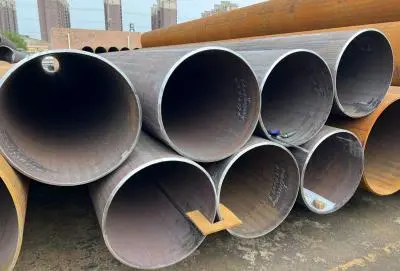
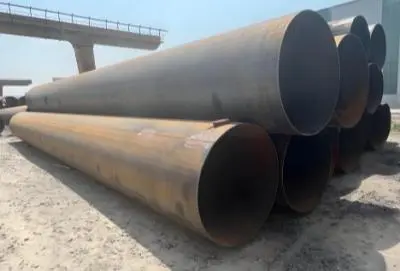
Understanding ISO 3183 L290 Pipe Specification
As far as steel line pipes for oil and natural gas transportation systems go, ISO 3183 L290 pipe is the world standard. The number L290 means that a line pipe has a minimum yield strength of 290 megapascals, which makes it the same in terms of measurements as API 5L Grade X42. This standard covers both seamless and welded steel pipes, making sure they meet strict performance requirements needed for pipelines that run across countries.
Chemical Composition Requirements
The chemicals that make up line pipe steel have a direct effect on how it behaves mechanically when it is being made or used. Low-carbon manganese steel chemistry is used in ISO 3183 L290 pipe to balance strength and flexibility. Under PSL2 standards, the carbon content usually stays below 0.22% for seamless types and 0.20% for welded pipes. This makes the Carbon Equivalent better for welding in the field. The highest amount of manganese is 1.20%, which gives the material enough hardenability without lowering its toughness. Adding small amounts of grain-refinement elements like vanadium, niobium, or titanium improves the material's dynamic qualities without making it less flexible. To keep segregation risks to a minimum and improve impact resistance, phosphorus and sulfur levels must stay below 0.025% each. Because of this chemistry, the material can keep its shape even when the temperature changes and the operating pressures that are typical in transmission lines and gathering systems.
Mechanical Properties for PSL1 and PSL2
In the ISO 3183 standard, Product Specification Levels describe the different levels of quality. The minimum yield strength in PSL1 is 290 MPa, and the minimum tensile strength is 415 MPa. These standards are good for a wide range of uses. The amount of elongation depends on the wall thickness and the shape of the object, but it's usually between 22% and 25%. PSL2 has stricter rules. It needs yield strengths between 290 and 495 MPa and tensile strengths between 415 and 565 MPa. This level of specification includes controlled yield ratio factors, Charpy V-notch impact tests at certain temperatures, and hardness checks to make sure the right heat treatment was done. The stricter testing methods make sure that the products always work well in dangerous places where safety must always come first, like on offshore bases or in high-risk areas close to crowded areas.
Delivery Conditions and Heat Treatment
The manufacturing method has a big impact on the end properties of the pipe. ISO 3183 L290 pipe comes in a range of different transport conditions that are designed to meet the needs of each application. As-Rolled (AR) pipes are cooled under controlled conditions after they are fully formed, which gives them their basic qualities. Normalizing (N) the pipe means bringing it up to an austenitizing temperature and then cooling it in air. This refines the grain structure to make the pipe stronger. Thermomechanical rolling (M) uses controlled rolling and cooling techniques to make microstructures with small grains without having to do a separate heat treatment. Through quick cooling and controlled hardening, Quenched and Tempered (Q) conditions give the best strength and toughness. Each delivery situation changes how well the material can be welded, how well it can withstand impacts, and how stable its dimensions are. This lets engineers choose the best designs for their projects.
Applications and Advantages of ISO 3183 L290 Pipe
Because ISO 3183 L290 pipe can be used in many different ways, it is essential in many building areas. Its balanced mechanical qualities make it work with a wide range of problems while still being cost-effective.
Primary Industrial Applications
The main area where ISO 3183 L290 pipe really shines is in medium- to low-pressure gas gathering networks. At pressures usually between 2 MPa and 10 MPa, these systems take raw fuels from several wellheads and send them to central processing facilities. The material's moderate strength is enough to handle these amounts of pressure, and its excellent weldability makes building easier in the field. The grade is cheaper than options with higher strengths, which is good for medium-sized oil and gas branch lines that link regional distribution networks. L290 pipe is perfect for short-distance coastal pipelines that carry crude oil and natural gas in warm conditions with low hydrogen sulfide levels because its chemical makeup prevents corrosion well enough without the need for expensive alloying additions. This grade is being used more and more in water transmission infrastructure projects for city supply lines and industrial process water systems where dependability is important but extreme circumstances don't exist.
Performance Advantages in Operational Environments
Several performance features of ISO 3183 L290 pipe make it an appealing value offer. The middling strength level gives enough safety gaps for medium-pressure use without the higher costs that come with X60 or X65 grades. Controlled carbon equivalent values make it easy to weld, because they lower the need for preheating and keep heat-affected zone stiffening to a minimum during field welding. This feature speeds up the installation process and lowers the cost of building. Good toughness retention across a wide range of ambient temperatures prevents brittle fracture onset. This is especially important in continental areas where temperatures change with the seasons. It's easier to get things to faraway project sites when they can be fully compatible with on-site fabrication methods like hot bending, cold forming, and mechanical joining. Because the material is flexible, it can handle small changes in the ground's level without cracks spreading. This makes it useful in areas where the ground is busy geologically.
Comparative Cost-Effectiveness
To get the best deal on a job, procurement managers always compare ISO 3183 L290 pipe to other grades. When compared to API 5L Grade B, which has a yield strength of 245 MPa, L290 pipe lets the wall thickness be thinner while still holding the same amount of pressure. This lowers the cost of materials and welds. Compared to better grades like L360 or X52, L290 pipe's middling strength is enough for uses below 15 MPa design pressure, so you don't have to spend extra money on over-specification. The grade is widely available from many makers around the world, which keeps prices low through market forces. The lighter weight saves money on transportation costs compared to lower-grade options with heavier walls. This is especially important for projects in distant areas where logistics are hard. Total fixed cost analysis often chooses ISO 3183 L290 pipe for projects where it can be used because of how they work.
Manufacturing and Quality Assurance of ISO 3183 L290 Pipes
At Longma Group, we know that constant L290 pipe quality comes from careful manufacturing methods and thorough testing procedures. We use cutting-edge production methods to make sure that every meter of ISO 3183 L290 pipe we make meets international standards.
Raw Material Selection and Processing
Choose high-quality steel from well-known mills like Shagang, Shangang, TISCO, and Bao Steel to start. These companies sell hot-rolled steel coils or plates that follow strict chemical makeup limits. This is shown by analyzing both the ladle and the finished product. Before it goes into production lines, new material is put through ultrasound testing to find any internal flaws. When pipes are being formed, Longitudinal Submerged Arc Welding (LSAW) makes strong seam welds with the help of automatic welding systems that keep the heat input and movement speed exact. For smaller diameter pipes, Electric Resistance Welding (ERW) lines use high-frequency induction heating to make narrow heat-affected zones with little grain growth. Post-weld heat treatment levels out the join areas, removing any remaining pressures and making the microstructures of the pipe body and seam the same.
Comprehensive Testing and Inspection
Our quality assurance program has several steps of checks that are in line with ISO 3183 standards. For hydrostatic testing, water pressures higher than the design specs are applied to each pipe length. This makes sure that the pipes are leak-proof. Non-destructive testing includes ultrasonic testing of the pipe body and weld gaps to find flaws below the surface, as well as radiographic viewing to see if the joint is good. Using examples cut from pipe samples for tensile tests supports the values for yield strength, tensile strength, and elongation. For PSL2 orders, Charpy V-notch impact testing at certain temperatures confirms the strength to fracture, and hardness testing confirms that the right heat treatment was done. Optical emission spectrometry for chemical research proves that the makeup is correct. Dimensional verification compares the error limits for outside width, wall thickness, straightness, and being out of roundness. Full traceability is maintained from the heat numbers of the raw materials to the markings on the finished products. This is shown in detailed Material Test Certificates.
Certification and Documentation
Engineering companies need a lot of paperwork to meet the requirements of the job and follow the rules. We offer full packages that include Inspection and Test Plans that list all the quality control steps, Manufacturing Procedure Specifications that explain how the products are made, and Material Test Certificates that show the real test results for each batch of pipes. API 5L certification from the American Petroleum Institute proves that the product meets North American standards, and ISO 9001:2016 certification shows that the product is managed in a structured way to ensure quality. Our ISO 14001 certification for environmental management and our ISO 18001 certification for workplace health and safety give customers peace of mind that we make things in a responsible way. Factory Production Control certificates and different third-party inspection reports from SGS, Bureau Veritas, or organizations chosen by the customer add another level of proof.
Conclusion
When it comes to medium-pressure pipelines, ISO 3183 L290 pipe specifications provide the best mix between mechanical efficiency and cost-effectiveness. Procurement pros can make smart choices about where to buy things when they know about the grade's chemical makeup, mechanical properties at the PSL1 and PSL2 levels, and manufacturing quality controls. The material has been used successfully in gas gathering systems, regional power lines, and water infrastructure, showing that it can be used in a variety of settings. The project will be successful if the suppliers are carefully evaluated based on their certifications, production ability, and service skills. As the world's energy infrastructure continues to grow, L290 pipe will remain an important part of getting supplies to markets safely and quickly.
FAQ
With basic mechanical testing, PSL1 gives you normal quality that's good for most uses. PSL2 has tighter limits on chemical makeup, Charpy impact tests at certain temperatures, hardness verification, and controlled yield-to-tensile ratios. For better reliability guarantee, projects in harsh environments or important service areas usually choose PSL2 for the ISO 3183 L290 pipe.
What distinguishes PSL1 from PSL2 for L290 grade?
When made to meet the extra standards in ISO 3183 Annex H, ISO 3183 L290 pipe can be used in sour circumstances with hydrogen sulfide. This needs more tests to see how resistant it is to hydrogen-induced cracking and how susceptible it is to sulfur stress cracking. Standard ISO 3183 L290 pipe shouldn't be used in bad service situations without these extra tests.
Can L290 pipe handle sour service environments?
Carbon equivalent models can tell you how hard steel will get and how likely it is to crack when welded. Through controlled chemistry, ISO 3183 L290 pipe PSL2 limits carbon equivalent values, which lowers the need for preheating and lowers the amount of heat-affected zone stiffening. A lower carbon equivalent makes it easier to weld in the field, which is especially important for projects that need to be welded over a large area and in a variety of weather conditions.
How does carbon equivalent affect L290 weldability?
Longma Group is ready to help you with your pipeline projects by providing you with high-quality ISO 3183 L290 pipe that is made to strict international standards. Our 230,000-square-meter LSAW and ERW production plants, which make more than 1,000,000 tons of steel every year, make sure that we can reliably work on projects of any size. We get high-quality raw materials from well-known Chinese mills like Shagang, TISCO, and Bao Steel. Each pipe goes through a lot of tests that are approved by API 5L, ISO 9001:2016, and ISO 14001 standards. Whether you need standard specs or custom fabrication with beveling, coating, or other end treatments, our skilled technical team is available to help you from the quote process through delivery. As a reliable manufacturer that works with over 90 countries, we know how hard it is for engineering contractors, project managers, and people who specify tools to buy the right things. Get in touch with our export team right away at info@longma-group.com to talk about your needs and get a full quote that fits your project.
Partner with Longma Group for Premium ISO 3183 L290 Pipe Supply
Longma Group is ready to help you with your pipeline projects by providing you with high-quality ISO 3183 L290 pipe that is made to strict international standards. Our 230,000-square-meter LSAW and ERW production plants, which make more than 1,000,000 tons of steel every year, make sure that we can reliably work on projects of any size. We get high-quality raw materials from well-known Chinese mills like Shagang, TISCO, and Bao Steel. Each pipe goes through a lot of tests that are approved by API 5L, ISO 9001:2016, and ISO 14001 standards. Whether you need standard specs or custom fabrication with beveling, coating, or other end treatments, our skilled technical team is available to help you from the quote process through delivery. As a reliable ISO 3183 L290 pipe manufacturer serving over 90 countries, we understand the procurement challenges facing engineering contractors, project managers, and equipment specifiers. Contact our export team at info@longma-group.com today to discuss your specifications and receive a detailed quotation tailored to your project requirements.