
As required by ISO 3183 L290, every pipe must be put through controlled high-pressure water tests to make sure it is structurally sound and won't break before it is used. The ISO 3183 L290 pipe has to be able to withstand a test pressure based on a certain hoop stress (usually 90–95% of its minimum yield strength) for a set amount of time. This is to make sure that safety standards are met. This strict testing method makes sure that the pipe is ready for medium-pressure oil and gas transportation uses, and it checks for both PSL1 and PSL2 quality levels.
|
|
|
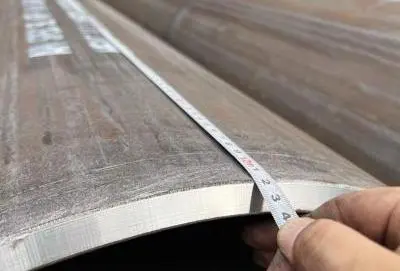
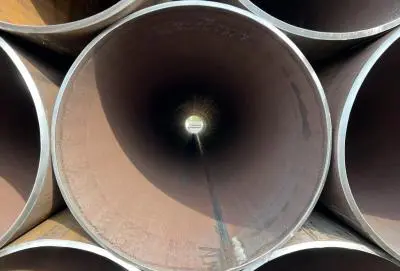
Understanding ISO 3183 L290 Pipe and Hydrostatic Testing
The ISO 3183 standard is a well-known and recognized set of rules for steel pipes that are used in pipelines for oil and natural gas. The ISO 3183 L290 Grade in this standard points out a certain grade that works best in medium to low-pressure situations where cost-effectiveness and dependability are important.
What Defines ISO 3183 L290 Grade?
The "L" stands for line pipe, and "290" means the minimum yield strength of 290 MPa, which is about 42,100 psi. This grade is the metric version of API 5L Grade X42. It's in the middle range between simple industrial pipes and transmission lines that are under a lot of stress. The material is made up of low-carbon manganese steel with a maximum manganese content of 1.20%. It also has small grain-refining elements that make it stronger without making it less flexible. This balanced chemistry makes sure that the material can be welded well during on-site fabrication, which is very important for field installation teams that are working on tight deadlines.
The Critical Role of Hydrostatic Testing
Hydrostatic testing is the only way to be sure that a pipeline is completely solid. This non-destructive test applies controlled internal water pressure to the whole length of the pipe. This shows any flaws in the making, the welding, or the materials that might make the process less safe. The test mimics the worst-case situations for pressure, making sure that pipes can handle working stresses plus a safe amount. Before committing pipes worth millions of dollars to important infrastructure projects, procurement managers and project engineers use hydrostatic test results to make sure that the pipes supplied meet the terms of the contract.
Key Hydrostatic Testing Requirements for ISO 3183 L290 Pipes
ISO 3183 sets up thorough testing procedures that take into account differences in how products are made, their performance levels, and the circumstances they are meant to be used in. Knowing these details helps people who work in buying set up the right testing schedules that are in line with the project's risk profile.
Pressure Calculation and Hold Duration
To find the test pressure for ISO 3183 L290 pipes, use the formula P = 2St/D, where S is the required hoop stress (usually set at 90% of the minimum yield strength for PSL1 and 95% for PSL2), t is the wall thickness, and D is the outside diameter. These mean that, based on the size requirements, test pressures for a normal ISO 3183 L290 pipe can be anywhere from 5 to 15 MPa. The hold time is usually between 5 and 10 seconds, which is long enough to keep the pressure numbers stable and let you look for leaks or seepage. LSAW (Longitudinal Submerged Arc Welded) and ERW (Electric Resistance Welded) pipes are both subjected to the same levels of pressure. However, LSAW pipes made at places like Longma Group often have longer hold times than 10 seconds to show that the weld is more stable.
PSL1 Versus PSL2 Testing Protocols
Product Specification Level 1 (PSL1) sets the minimum standards for quality, and hydraulic testing makes sure that basic pressure control is met. The minimum yield strength for PSL1 ISO 3183 L290 pipes is 290 MPa, and the minimum tensile strength is 415 MPa. Hydrostatic testing is the main way to make sure that the pipes are solid. As per Product Specification Level 2 (PSL2), there are stricter rules. These include controlled yield-to-tensile ratios (yield range 290-495 MPa, tensile range 415-565 MPa), Charpy V-notch impact testing at certain temperatures, and hardness checks in the weld zone and heat-affected areas. PSL2 hydrostatic testing uses more advanced monitoring tools and documentation standards. It creates full test reports with pressure charts, hold time verification, and inspector certifications, which are necessary for projects that are going to be audited by a third party or regulated by the government.
Monitoring Equipment and Acceptance Criteria
Modern hydrostatic testing systems use calibrated pressure scales that are accurate to within ±1% of full scale, electronic data loggers that record changes in pressure every millisecond, and leak detection systems that use moisture sensors along with eye inspection. Acceptance standards say that there must be no obvious leaks, no pressure drops of more than 5% during the hold time, and no lasting deformation that can be seen by measuring the dimensions again. Pipes that don't meet any of the criteria are rejected and then looked into to find out what went wrong, whether it was a flaw in the material, a broken weld, or a problem with the way it was processed.
Comparing ISO 3183 L290 Hydrostatic Testing with Other Pipe Grades
When making decisions about pipeline purchases, it's necessary to compare different standards and grades. Each has its own testing needs that affect the project specs and the choice of provider.
ISO 3183 Grade Comparisons
The ISO 3183 range goes from L245 (the weakest) to L555 (the strongest). For each grade, the hydraulic test pressures must be specifically adjusted based on the yield strength. ISO 3183 L290 pipes are the basic type for oil and gas uses. They work well for medium-low pressure oilfield gathering networks and short-distance onshore transfer where pressures don't go above 6 MPa. When you move up to L320 or L360 grades, you have to use higher test pressures and often have to deliver the product under PSL2 conditions that require impact testing. When procurement teams look at grade selection, they have to weigh the initial cost of the materials against the long-term operating pressure needs and safety gaps. They have to keep in mind that too many specifications can make the project more expensive and too few specifications can introduce unacceptable risk exposure.
Cross-Standard Equivalencies and Testing Differences
In terms of mechanical properties, ISO 3183 L290 is exactly the same as API 5L Grade X42. However, there are some small changes in the testing methods that affect how procurement works. API 5L lets you figure out different test pressures based on what the pipe maker can do and what the buyer agrees to. This could mean that lower test pressures are needed than what ISO 3183 requires for the same grades. ASTM A53 Grade B is often used in structural and non-critical situations. It needs to be tested hydrostatically at pressures estimated using lower stress factors, which shows that it can be used for more than just oilfield service. When engineering contractors buy pipes for multinational projects, they have to make sure that the standards they choose are in line with the rules in the destination country. For example, Middle Eastern projects often require compliance with ISO 3183, while North American contracts may specify compliance with API 5L. This means that manufacturers must get dual certification to meet both frameworks.
Best Practices and Challenges in Hydrostatic Testing of ISO 3183 L290 Pipes
Hydrostatic testing programs that work well strike a balance between strict quality control and operational efficiency. They do this by tackling common problems with systematic process controls and efforts for ongoing growth.
Common Testing Challenges and Solutions
The most common problem during tests is a drop in pressure during hold times, which could mean micro-leaks, trapped air pockets, or temperature-induced fluid contraction. Testing centers with a lot of experience deal with this problem by following strict rules for clearing the air before pressurization, keeping the temperature stable inside the test bays, and using pressure tracking systems that adjust for temperature. Another problem with finding leaks in ISO 3183 L290 pipes with thick walls is that small flaws might not show up as wet on the outside during short hold times. Modern facilities use acoustic emission tracking and helium leak detection technologies in addition to eye inspection. This is especially important for PSL2 uses that need to meet strict defect detection limits. Failures in the calibration of equipment can invalidate whole test runs. For this reason, preventative repair plans and backup gauge systems are important parts of quality assurance programs.
Integration with Complementary Testing Methods
Hydrostatic testing is great at finding flaws that go through walls and confirming the overall strength of a structure, but it's not very good at finding gaps below the surface or changes in the material's properties. Modern makers use both hydraulic testing and full NDT programs that include checking the thickness with ultrasound, looking at welds with x-rays, and inspecting particles with magnets. This multi-layered method is normal at places like Longma Group's 230,000-square-meter industrial complex. It makes sure that pipes not only meet the requirements for pressure containment, but also have uniform material qualities and weld seams that are free of defects. The combination works especially well for sour service uses with H₂S, since flaws below the surface can cause hydrogen-induced cracking even if the material passes hydrostatic testing.
Documentation and Traceability
When you document all of your tests, hydrostatic testing goes from being a simple pass/fail check to being a useful quality assurance record that helps with long-term asset management. Material Test Certificates (MTC) list the chemical make-up and mechanical properties of the material, hydrostatic test reports list the pressures and hold times, dimensional inspection records show that the pipe meets the requirements for shape, and heat traceability connects finished pipes to raw material sources like Shagang, TISCO, or Bao Steel coils. Engineering companies who are in charge of multi-phase projects that last for years use this paperwork to make sure that the materials are the same across all batches of purchases and to help with regulatory compliance checks.
Conclusion
The ISO 3183 L290 pipe hydrostatic testing requirements set the standard for quality that makes sure pipelines are safe and reliable in a wide range of situations, from city water systems to gas gathering networks. The testing procedures, whether they are PSL1 or PSL2, make sure that pipes meet strict pressure containment standards. Full paperwork helps with regulatory compliance and managing assets over the long term. When purchasing things, it can be hard to figure out which grades to use, which standards are equivalent, and which suppliers are qualified. To make things easier, procurement workers should work with well-known companies that have testing skills that have been proven, full certification portfolios, and reliable delivery performance. This strategy method lowers the risks of the project and raises the total cost of ownership over the lifetime of the pipeline infrastructure.
FAQ
What test pressure is required for ISO 3183 L290 pipes?
The method for figuring out test pressure is P = 2St/D, where S is the stress factor and D is the diameter of the pipe. The stress factor is usually 90–95% of the minimum yield strength (290 MPa), and the test pressure is between 5 and 15 MPa for ISO 3183 L290 pipes, depending on the size of the pipe. The higher 95% stress factor is usually needed by PSL2 standards.
Can L290 pipes be retested if they fail initial hydrostatic testing?
Pipes that have leaks or pressure drops that are too high are thrown out and not added to the batch. After fixing a flaw using allowed repair methods, like making small weld fixes that are checked by x-ray before the retest, it is okay to do another test.
How does hydrostatic testing differ between ERW and LSAW pipes?
The test pressure estimates and acceptance standards for both ways of making things are the same. Longer hold times (15–20 seconds) may be given to LSAW pipes to show better longitudinal weld integrity. This is because the submerged arc welding process naturally produces better weld quality than ERW methods.
Is hydrostatic testing sufficient for sour service applications?
Hydrostatic testing checks for pressure control but doesn't check for cracking caused by hydrogen or sulfide stress in H₂S settings. According to ISO 3183 Annex H, applications for sour services need extra testing, such as HIC and SSC evaluations that go beyond standard hydraulic methods.
Partner with a Certified ISO 3183 L290 Pipe Manufacturer
Longma Group is ready to help you with your pipeline projects by providing approved ISO 3183 L290 pipe along with full proof of hydrostatic testing that meets both PSL1 and PSL2 standards. Our quality control systems and state-of-the-art testing labs make sure that every pipe meets the strict integrity standards your important infrastructure needs. As a well-known ISO 3183 L290 pipe supplier that has been working on big projects in the Middle East, Australia, and Southeast Asia since 2003, we combine manufacturing scale with technical expertise, making over 1,000,000 tons of pipe every year while keeping the accuracy and traceability that engineers need. As part of our full range of services, we make end treatments, apply anti-corrosion coatings, and provide full paperwork packages with ITP, MPS, and MTC records. Email our technical sales team at info@longma-group.com to talk about the specifics of your project, get full product datasheets, and get prices on L290 pipe for sale that fit your needs and your budget.