
When your EPC project hinges on meeting owner specifications, passing third-party audits, and hitting every contract milestone, the line pipe you source is not a commodity—it is a liability or an asset. This guide walks procurement directors through everything worth knowing about ISO 3183 L290 pipe: what the standard demands, how it stacks up against adjacent grades, how to vet a manufacturer, and what a credible supplier looks like in practice. Whether you are sourcing for a gathering network in the Middle East or a trunk line in South America, the following pages are built for you.
|
|
|

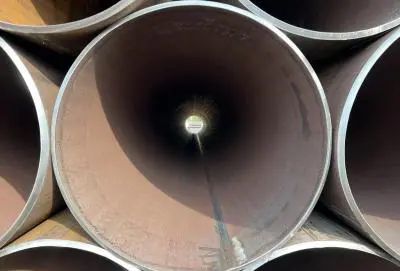
Understanding ISO 3183 L290 Pipe: Specifications and Benefits
What the Standard Actually Requires
ISO 3183 L290 pipe is a worldwide standard for line pipe used in oil and natural gas transportation systems. The "L" prefix means line pipe service, and the "290" prefix means a minimum yield strength of 290 MPa, which is the same in terms of pressure as API 5L Grade X42. It is 290 MPa for yield and 415 MPa for tensile strength at PSL 1. The standards for PSL 2 are much stricter. They include a yield range of 290–495 MPa, a tensile range of 415–565 MPa, a controlled yield-to-tensile ratio, and Charpy V-notch impact tests and hardness verification at every heat.
The chemical make-up of L290 is a low-carbon manganese steel. Manganese content is limited to 1.20%, and small amounts of niobium, vanadium, or titanium are added to refine the grains. These metals make the steel tougher without making it harder to weld. The carbon equivalent (CE) for PSL 2 welded pipe is usually kept below 0.25%. This means that field welding can be used even in remote building sites.
Why EPC Buyers Favor This Grade
L290 is placed in the middle of the range of pipeline grades on purpose. It is the best choice for medium-low pressure oilfield gathering networks, short-distance onshore crude and gas transmission lines, and surface pipes that work in mild conditions where the H₂S partial pressure stays low because of its reasonable cost-to-pressure ratio. The grade stays flexible, can be welded using standard methods without pre-heating in most ambient conditions, and is commonly stocked by major mills, which cuts down on lead times compared to higher-strength grades that need special rolling schedules.
Comparing ISO 3183 L290 Pipe with Other Grades and Standards
It is very important to know where ISO 3183 L290 pipe is in relation to the grades next to it when evaluating a technical bid. Here is a comparison that is specific to EPC pipeline procurement:
- L290 vs. L360 (X52): L360 has a higher minimum yield by 70 MPa and is usually used when the working pressure is higher. The extra cost is real—it's between 8 and 12 percent per ton, based on the thickness of the wall—but it's only necessary when the MAOP figures say so. For gathering systems and branch lines with lower pressure, L290 has the same service life but costs less in materials.
- L290 vs. L450 (X65): L450 is designed for transmission mainlines that handle high pressure. For thermomechanical rolling, the mill needs to be able to do certain things. Buying L290 when the design calls for it cuts down on schedule risk and cost that aren't necessary.
- ISO 3183 vs. API 5L: When it comes to grades, ISO 3183 and API 5L both have the same strength values. The main difference is in the documentation: ISO 3183 uses metric SI units and is the standard for projects in the Middle East, Southeast Asia, and Central Asia. A lot of trustworthy manufacturers offer dual-certified MTCs that meet the needs of both owners.
These differences have a direct effect on how competitive EPC bids are. One of the easiest ways to protect project margin is to make sure that the grade exactly fits within the design envelope. This means not over- or under-specifying.
How to Source ISO 3183 L290 Pipes: A B2B Procurement Approach?
Evaluating Manufacturers: The Non-Negotiable Checklist
Finding ISO 3183 L290 pipe for a project that is being audited by a third party requires more than just a low unit price. Before sending out an RFQ, qualified procurement teams make sure of the following:
- Active API 5L license and ISO 3183 scope confirmation — check the API logo database for the certificate number and expiration date; the license must cover the exact OD/WT range and grade that is needed.
- Mill test certificate format — EN 10204 3.1 is the standard; projects with owner hold points may need 3.2 certificates signed by a third-party inspection accepted by the owner, like SGS or Bureau Veritas.
- NDT capability — 100% ultrasonic testing (UT) of the weld seam and hydraulic testing are normal; check to see if radiographic testing (RT) is available for certain types of welds.
- NACE MR0175 / ISO 15156 compliance — To make sure you're following NACE MR0175 and ISO 15156, ask for written HIC and SSC test results from a reputable lab for any sour service scope.
- Raw material traceability — A reliable mill keeps heat-to-pipe traceability from receiving the plate or coil to shipping it out. Ask for the raw material mill certificate along with the pipe MTC.
These factors separate sellers who can work on projects from general-trade stockists. When procurement teams implement them during pre-qualification, third-party audit failures go down. These are some of the most expensive scheduling problems that can happen during EPC execution.
Managing Lead Time and Logistics
Standard ERW pipe in L290 from a well-known manufacturer usually ships within seven to fourteen days for sizes that are in stock. Large-diameter LSAW pipe with thicker walls takes longer to make; find out early on what the mill's rolling schedule is. When comparing seller lead-time promises, you should think about all three of these things: how close the port is, whether you have an export license, and when the third-party inspection hold-points are.
Case Studies: Successful Pipeline Projects Using ISO 3183 L290 Pipes
Field Performance That Demonstrates the Grade's Value
For about 180 km of collection trunk lines, a regional gas gathering project in the Persian Gulf called for PSL 2 ISO 3183 L290 pipe (LSAW). The owner asked for EN 10204 3.2 MTCs, 100% UT, and a final check by SGS. The chosen maker turned in all the necessary paperwork on time, including ITP, MPS, and heat-indexed MTCs. During the owner's pre-shipment check, there were no weld rejections. The pipeline went into service on time, and the EPC contractor said that the materials cost was about 9% less than the original L360 specification, which had been changed lower after hydraulic modeling.
A different project to move crude oil on land in Southeast Asia used ERW L290 pipe for a 45 km network of gathering points. The grade was technically right because it was used in a mild environment and had a low design pressure. Also, because ERW pipe has a shorter production cycle, the contractor was able to meet an early milestone that was tied to starting up production. Recorded hydraulic test results and inspection reports from a third party made up a full quality file that was accepted without any problems at the final handover.
These results are not one-time events; they can happen again and again when grade selection is controlled and supplier qualification is thorough.
Conclusion
Finding ISO 3183 L290 pipe for a pipeline project is a business and technical choice that gets more complicated at each stage of the project. When ordered from a certified maker and given the right specifications, L290 pipe offers a good value for money when it comes to gathering networks and medium-pressure transmission lines. The keys are simple: match the grade to the design envelope, make sure there are current certifications before sending out the RFQ, make sure that MTC and NDT standards are met through the purchase order, and only work with manufacturers who have shown that they are ready for audits with big owners. As soon as you get those four things right, the material supply chain stops being a risk and starts being a benefit.
FAQ
Is ISO 3183 L290 the same as API 5L X42?
Yes. The two names mean the same thing in a technical sense: the minimum yield strength of 290 MPa in the ISO system is the same as the floor pressure of 42,000 psi in the API system. Most trustworthy mills are dual-certified, which means they can give you paperwork that meets both standards.
When is PSL 2 required instead of PSL 1?
When the owner's standard calls for documented impact toughness, hardness limits, or tighter chemical controls, PSL 2 has to be used. PSL 2 is usually required for any job that has to do with high operating pressure, low temperature service, or a project that needs to be certified by DNV or a similar third party.
Can L290 pipe be used in sour service?
The standard L290 isn't immediately ready for work with H₂. According to ISO 3183 Annex H, sour service compliance needs extra testing, such as HIC and SSC review. If your process conditions include H₂S, you should ask for specific sour service test reports.
What delivery condition should I specify?
For L290, "N" means "normalized" and "M" means "thermomechanically rolled." Both make a fine grain structure that is tough, which is important for meeting the impact requirements of PSL 2.
Request a Quote from Longma Group — Certified ISO 3183 L290 Pipe Supplier
Since 2003, Longma Group has been making certified line pipe. They provide API 5L and ISO 3183 L290 pipes in both ERW and LSAW production routes to EPC contractors in more than 90 countries. Every order comes with full MTC paperwork, help with third-party inspections, and the ability to track raw materials back to Baosteel, HBIS, and other Tier 1 Chinese plants. To get a quote for your job right away, email our expert team at info@longma-group.com or go to longma-group.com.








