
If you're sourcing line pipe for an oil and gas pipeline project, understanding grade specifications is non-negotiable. ISO 3183 L320 pipe is one of the most widely specified grades for medium-pressure gathering and transmission systems worldwide. The "L" designates line pipe service, and "320" reflects its minimum yield strength of 320 MPa — the direct metric equivalent of API 5L Grade X46. Whether your project runs through the Middle East, Southeast Asia, or South America, this guide walks you through everything a procurement team needs to evaluate, specify, and source this grade with confidence.
|
|
|
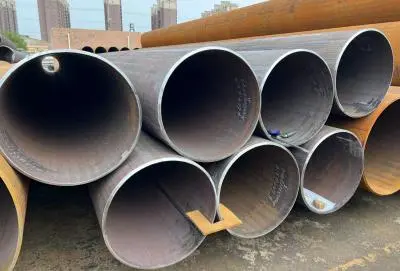
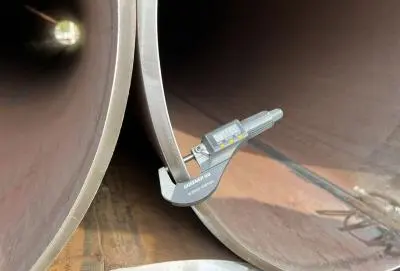
Understanding ISO 3183 L320 Pipe Specifications
What the Standard Actually Covers
In the oil and natural gas businesses, ISO 3183 is the international standard that controls steel pipe used in pipeline transportation systems. In many foreign contracts, it replaces older regional standards. It is also very similar to API 5L, which makes it the standard for all global EPC buying. The L320 pipe grade is in the medium-strength range, above L290 and below L360. It was specifically designed for gathering trunklines, wellhead manifold connections, and coastal transmission paths in mild sub-zero temperatures.
Mechanical Properties: PSL 1 and PSL 2
ISO 3183 L320 pipe earns its place by how well it works mechanically. It must be at least 320 MPa in yield strength and 435 MPa in tensile strength for PSL 1. For PSL 2, the yield strength must be between 320 and 525 MPa and the tensile strength must be between 435 and 655 MPa. Charpy V-notch impact testing is also required by PSL 2, usually at 0°C or -20°C. This gives verified fracture toughness data that many owner engineers need for the project to be approved.
Chemical Composition and Material Design
The chemistry behind ISO 3183 L320 pipe is planned. Manganese content can reach 1.30 percent, which helps with both strength and flexibility. Microalloying with niobium (Nb) or titanium (Ti), which is optional, smooths out the grain structure and makes the metal tougher at low temperatures without making it harder to solder. The carbon equivalent (CEQ) is usually kept below 0.43. This makes field welding possible and lowers the risk of cold cracking, which is very important for building teams working in rural areas.
Manufacturing Routes
Electric Resistance Welding (ERW), Longitudinal Submerged Arc Welding (LSAW), or seamless methods can be used to make ISO 3183 L320 pipe, based on the diameter and wall thickness needs. LSAW is better for large-diameter, thick-wall orders that are common in mainline transmission, while ERW is better for smaller diameters with tighter tolerances. Both the N (normalized) and M (thermomechanical rolling) delivery conditions work consistently in service settings that are only slightly cold.
Comparing ISO 3183 L320 with Other Standards
A lot of buying guides list both L320 pipe and API 5L X46, and for good reason. In terms of yield strength and tensile requirements, they are basically the same because they have almost the same chemical limits. The main difference is the language used for documentation and where it is accepted. ISO 3183 is more commonly used for European-tendered projects and some NOC standards, while API 5L is more common for North American and Middle Eastern operator needs. In real life, dual-certified pipe that meets both standards gets rid of the risk of substitution and makes it easier for third parties to approve audits.
People sometimes use ASTM A106 Grade B as a comparison, but it's made for pressure pipes, not line pipes, so it has smaller yield standards and no PSL framework. In pipeline projects, it can't be used instead of L320 pipe. In Japan, JIS G3457 covers arc-welded pipes that are used in everyday life. It has different test procedures that might not match up with inspection plans set by project owners in other countries.
The standard traceability framework for ISO 3183 L320 pipe is what sets it apart in global procurement. It is the best choice for projects that need full paperwork packages because it comes with EN 10204 3.1 and 3.2 material test certificates, required measurement inspection records, and the ability to work with external coatings like 3LPE and FBE.
Applications and Quality Testing of ISO 3183 L320 Pipes
Where L320 Gets Specified
In upstream oil and gas fields, L320 pipes are used for medium-pressure gathering trunklines and wellhead manifold pipes. It works with natural gas transmission pipelines in the region that run at moderate pressures. Its N/M delivery conditions make it suitable for onshore pipelines in northern areas where temperatures are mild below zero. The higher pressure grade of ISO 3183 L320 pipe compared to L290 lets engineers select a thinner wall thickness for the same working pressure. This directly lowers the total pipe weight and material cost per kilometer, which is a real benefit when looking at project budgets.
Beyond oil and gas, L320 pipes are also used in high-pressure water injection systems for secondary recovery operations. In these systems, the mechanical properties and corrosion protection must be tested because of the changing hydraulic pressure and the outside environment.
NDT and Inspection Protocols
Several levels of checks are used to make sure the quality of the ISO 3183 L320 pipe supply. Before sending out their goods, reputable makers do the following core inspections:
- 100% ultrasonic testing (UT) of the weld seam and pipe body finds flaws below the surface that can't be seen, protecting against weld breaks that would not pass an owner-third-party review.
- Radiographic testing (RT) creates a permanent picture of the quality of the weld, which directly supports the documentation needs for EN 10204 3.2 certification where an outside inspector signs the MTC and watches it being made.
- Hydrostatic pressure testing verifies that the pipe body is still solid under working pressure before it is sent out, ensuring that yield and tensile qualities are accurate for use in the real world.
- Chemical and dimensional verification involves mill heat analysis and product analysis, with results linked to each heat number and included in the MTC package.
Third-party inspection companies like SGS and Bureau Veritas regularly watch these tests at certified mills. Their stamp of approval on the MTC gives owner engineers the proof they need during project audits.
Procurement Considerations for ISO 3183 L320 Pipes
The price of L320 pipes depends on the cost of the raw materials, the size of the order, the thickness of the wall, and any finishing or end treatment needs. Larger orders usually get better unit prices, and if you time your purchases to match project milestones, you can avoid the extra costs that come with urgent delivery requests.
Checking the supplier's credentials should be the first step in evaluating them. It is necessary to have a current API 5L license, an ISO 9001 quality management certification, and a written ITP (Inspection and Test Plan). Factory audits, which can be done by your own quality assurance team or by a third-party inspector you hire, make sure that the mill can produce what it says it can produce. Lead time transparency is also very important. For standard ISO 3183 L320 pipe dimensions, experienced manufacturers can give you accurate delivery windows, and some keep stock to meet urgent project deadlines.
When you buy an EPC, the documentation packages are just as important as the pipe itself. A full supply package should have the MPS (Manufacturing Procedure Specification), the MTC according to EN 10204 3.1 or 3.2, inspection reports for dimensions, NDT records, and certificates for hydraulic tests.
Why Choose Certified ISO 3183 L320 Pipe Suppliers
When you buy from a certified, factory-direct maker, you avoid one of the biggest risks in pipeline procurement: the lack of paperwork that happens when L320 pipe changes hands several times. A company with both API 5L and ISO 9001 licenses can show a clear path from the heat of the raw materials to the finished pipe. This is exactly what project auditors look for when they visit to check on the work.
Long-term ties with suppliers are also useful for business. It's easier to get priority scheduling during times of high demand when your seller knows about your project collection and the specs that you use over and over again. That consistency means fewer RFQ cycles, more reliable shipping performance, and lower costs for buying things for multiple jobs at the same time.
Conclusion
The grade hierarchy for line pipes clearly shows that ISO 3183 L320 pipe is in the right place. It is a good choice for medium-pressure transmission and gathering tasks in a wide range of geographical areas because of its mechanical properties, material design, and dual recognition with API 5L X46. For EPC procurement teams, the most important things are whether or not the certification is valid, whether or not the NDT paperwork is full, and whether or not the source can meet the deadlines for large-diameter or thick-wall orders. Choosing a verified maker with quality systems that can be audited and full paperwork support lowers project risk and makes your supply chain more reliable over multiple project cycles.
FAQs
How does ISO 3183 L320 differ from API 5L X46?
Technically, they are the same grade; ISO 3183 L320 pipe in the ISO system is the same as X46 in the API system; both have a minimum yield strength of 320 MPa. The main difference is in the way standard names are used and how data is organized. A lot of projects use dual-certified pipe because it meets both systems of requirements at the same time.
What certifications should an L320 pipe supplier hold?
If nothing else, make sure they have a valid API 5L license for the right grade, an ISO 9001 quality management certificate, and EN 10204 3.1 or 3.2 material test certificates. Third-party inspection reports from companies like SGS or Bureau Veritas add an extra layer of independent proof that helps meet the needs of owner audits.
What is the typical lead time for L320 line pipe orders?
Standard sizes for ERW and LSAW production usually have wait times of four to eight weeks from the time the order is confirmed, but this depends on how busy the mill is and what kind of finish is needed. Suppliers who keep goods in warehouses can meet urgent project needs more quickly for ISO 3183 L320 pipe orders.
Can L320 pipe be used in sour service applications?
Yes, ISO 3183 L320 pipe can be used in sour service conditions with H2S if it is made to PSL 2 and meets the HIC and SSC resistance standards set by NACE MR0175. Make sure that these needs are clearly stated in your technical design and buy order.
Request a Quote from Longma Group — Your Trusted ISO 3183 L320 Pipe Manufacturer
Since 2003, Longma Group has been making certified line pipe for EPC contractors in more than 90 countries. We offer full paperwork for our ISO 3183 L320 pipes, including ITP, MPS, and MTC, as well as 100% UT/RT inspection and API 5L certification. To get a price for your job right away, email our technical sales team at info@longma-group.com or go to longma-group.com.