
When purchasing managers look at ISO 3183 L320 pipe next to API 5L X52 pipe, they find two line pipes of the same grade but controlled by different foreign standards. An international standard called "L320 pipe" is used for many oil and gas projects around the world. The American Petroleum Institute's standard, API 5L X52, refers to a strength class that is very similar. Both grades have minimum yield strengths of about 320–360 MPa (46–52 ksi), which means they can be used together in medium-pressure pipelines. The main differences are the certification standards, the acceptance in different regions, and the small changes in testing methods that affect buying choices in various regions.
|
|
|
Understanding ISO 3183 L320 and API 5L X52 Pipes
When looking for line pipe for oil, gas, and water transport systems, pipeline engineers and procurement managers often come across ISO 3183 L320 pipe and API 5L X52 standards. ISO 3183 L320 pipe comes from international standards that are kept up to date by ISO. These standards stress metric measures and global harmonization. In places like the Middle East, Southeast Asia, and Australia, where ISO approval is very important, this grade fits right in with projects. API 5L X52, on the other hand, is based on standards made by the American Petroleum Institute. It is mostly used in North American infrastructure and by international companies who know how to use imperial units.
It's important to understand these standards because each one has its own ways to comply, rules for dimensions, and quality control procedures. Both grades are used for the same things: medium-pressure gathering lines, regional gas delivery networks, and onshore pipeline systems that work in mild conditions. Because their mechanical qualities are similar, ISO 3183 L320 pipe and API 5L X52 can often be used instead of each other, as long as buyers make sure they have the same certifications and follow the rules in their area. When procurement teams understand these subtleties, they are better able to bargain, give customers more choices, and keep the supply chain running smoothly.
Why Standards Matter in Global Pipeline Procurement?
Standards are the shared language that connects what engineers want to do with what machines can do. ISO 3183 and API 5L set minimum standards for chemical make-up, mechanical strength, correctness in measurements, and how often tests should be done. When project specs mention ISO 3183 L320 pipe, providers know exactly what is needed for yield strength, tensile properties, and impact toughness. This makes things clearer and reduces quality disagreements. In the same way, API 5L X52 talks about instant certainty for inspectors and fabricators in North America. When people are fluent in two or more standards, buying managers can get goods from more places, get better deals, and get them faster without compromising the value of the project.
Industry Adoption Across Geographic Markets
Standard adoption trends are shaped by regional tastes. Megaprojects in the Middle East, like those being built by Saudi Aramco and ADNOC, often use ISO 3183 standards because they are more in line with what European engineering firms do. Australian businesses like MOBIL OIL AUSTRALIA used to only accept API standards, but they are now more open to ISO versions in order to get more suppliers. Southeast Asian pipeline developments often use a mix of the two standards, which lets companies use the manufacturing power of China, Korea, and India. When planning cross-border sourcing strategies, knowing these geographical trends helps procurement teams guess source strengths, certification timelines, and logistical benefits.
Technical Comparison: Specifications, Chemical Composition & Mechanical Properties
When you compare ISO 3183 L320 pipe to API 5L X52, you can see that their performance measures are mostly the same. However, small changes can affect how the procurement process goes. Both grades are made for medium-strength uses where working pressures are higher than what lower grades can handle but not as high as what luxury grades X60 or L415 can handle.
Mechanical Properties: Strength and Ductility
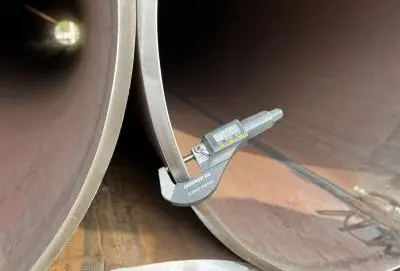
As required by PSL1, ISO 3183 L320 pipe must have a minimum yield strength of 320 MPa and a minimum tensile strength of 435 MPa. In PSL2, the range is narrowed down to 320 to 525 MPa for yield and 435 to 655 MPa for tensile strength. According to API 5L X52 PSL1, the minimum yield stress is 52,000 psi (359 MPa), and the minimum tensile stress is 66,000 psi (455 MPa). The small difference in minimum return is due to small differences in unit change, not differences in performance. Both standards have PSL2 versions that have tighter chemical controls and require impact tests. This is very important for pipes that are used in low-temperature or sour service conditions.
Length standards make sure that the material can be bent during installation in the field and pressure cycles. Both standards usually need elongation values higher than 18–20% over defined gauge lengths. This is so pipes can handle bending loads during installation and testing without breaking. This flexibility is very important in rough terrain where pipeline routes need to be curved gently instead of abruptly changing directions.
Chemical Composition: Balancing Strength and Weldability
Weldability, toughness, and resistance to rust are all directly affected by the chemistry of the material. The manganese percentage in ISO 3183 L320 pipe can be controlled up to 1.30 percent, and niobium or titanium microalloying is a possibility. These small changes smooth out the grain structure, making the metal stronger and tougher at low temperatures without making it harder to weld. Carbon equivalent (CE) values usually stay below 0.43%, which makes it less likely that hydrogen will cause cold cracks during welding.
API 5L X52 has similar chemical profiles, with values of carbon, manganese, and silicon that are similar. The main benefit is that there are standard testing procedures that check the chemistry heat-by-heat, making sure that all output lots are the same. When purchasing goods, people who look at mill test certificates (MTC) should make sure that the levels of sulfur and phosphorus stay low, usually less than 0.02% each. This is to keep the steel from becoming weak and cracking from stress corrosion in harsh settings. Nickel, chromium, and molybdenum are sometimes added to luxury versions to make them more resistant to corrosion or to service in cold conditions, but they are not required.
Manufacturing Methods and Dimensional Standards
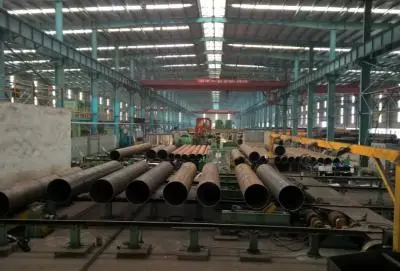
There are different ways to make ISO 3183 L320 pipe and API 5L X52. They can be made seamless (SMLS), electric resistance welded (ERW), or longitudinal submerged arc welded (LSAW). For smaller sizes and ultra-high-pressure uses, seamless pipes work best. For large-diameter trunk lines, ERW and LSAW methods are the best because they save money and can be used on a larger scale. Tolerances for outer diameter, wall thickness, and length are very similar between standards. However, ISO standards use metric units by default and API standards use imperial units, so conversions must be done carefully when buying.
The choice of wall thickness has a direct effect on the project's costs. Because ISO 3183 L320 pipe and API 5L X52 grades can handle more pressure than lower-strength options, they can have thinner walls while still working at the same level of pressure. This makes the pipes lighter, cheaper to move, and easier to install. Because of this, these grades are good for long-distance gathering systems that need to save weight because it means lower costs.
Performance Analysis: Corrosion Resistance, Durability & Application Suitability
The performance of a pipeline depends on more than just how strong it is mechanically. It also depends on how well it can stand up to environmental damage, installation stresses, and operating tiredness over time. Both ISO 3183 L320 pipe and API 5L X52 have strong performance ratings that work well in a variety of working settings.
Corrosion Resistance and Protective Coatings
Although carbon steel line pipe has some rust protection by nature, it needs to be coated on the outside and inside to last for decades. Coatings made of three-layer polyethylene (3LPE), fusion-bonded epoxy (FBE), and two-part polypropylene (2PP) protect the outside of surfaces from earth wetness, oxygen, and microbes. When stated, internal linings protect against fluids that are toxic, like sour gas that contains hydrogen sulfide.
Baseline rusting behavior is affected by the chemistry of the material. The controlled manganese and possible microalloying in ISO 3183 L320 pipe make it slightly more resistant to corrosion in the atmosphere than normal carbon steel, but this effect is still less important than how well the coating works. When trying to find the best rust resistance, procurement managers should put provider knowledge in coating application, surface preparation, and adhesion tests ahead of small chemical differences.
Durability Under Operational Stress and Fatigue
When medium-pressure gathering lines are turned on and off and the flow rate changes, the pressure changes in cycles. Controlled microstructures and strict inclusion content limits make sure that both ISO 3183 L320 pipe and API 5L X52 grades have enough wear resistance for normal field duty cycles. Charpy V-notch impact testing is done on different types of PSL2. This makes sure that the material stays tough at temperatures as low as 0°C or -20°C, which keeps it from breaking easily during cold snaps in northern areas.
Real-world performance data from projects in Western Canada, the North Sea, and Siberian fields show that ISO 3183 L320 pipe that is properly defined can survive decades of changing temperatures and pressures without breaking down significantly. The important thing is to make sure that the PSL level, impact testing temperature, and covering choice are all right for the spot.
Application Suitability: Where Each Grade Excels
When it comes to medium-pressure gathering trunklines connecting wellheads to processing facilities, regional natural gas transmission networks, and coastal pipelines that go through mild sub-zero temperatures, ISO 3183 L320 pipe really shines. Its balanced strength-to-weight ratio lets you build an economical pipeline without selecting too much material, which keeps project costs low.
API 5L X52 fills the same need and is popular in midstream infrastructure in North America, export pipes in Latin America, and projects where contractors who know about API standards can easily make sure quality and get governmental approval. Water pumping systems that improve oil recovery also use API 5L X52's high pressure and weldability, which makes high-pressure service safe in secondary recovery operations.
When made to PSL2 standards and tested for hydrogen-induced cracking (HIC), both grades can handle sweet and mildly sour service. However, ultra-sour environments (high H2S concentrations) may need stronger metals or inhibitor programs. By knowing these limits, you can avoid expensive over-engineering or dangerous under-specification.
Conclusion
Ultimately, the choice between ISO 3183 L320 pipe and API 5L X52 depends on the location of the project, the rules that apply, and the supply chain plan, not on the differences in performance. Both types are strong enough to handle medium-pressure situations, can be welded well, and have been proven to last in a wide range of oil, gas, and water transfer situations. To be successful at procurement, you need to know how to compare standards, check the certifications of suppliers, and make sure that PSL levels are in line with what the environment needs. By using global buying options and working with experienced makers, engineering teams can keep quality and safety standards high while also lowering the cost of the project. This is important for making sure that the pipeline lasts for decades.
FAQ
What distinguishes ISO 3183 L320 from API 5L X52 in practical terms?
Both ISO 3183 L320 pipe and API 5L X52 have the same mechanical properties, aiming for a yield strength of 320–360 MPa and equal tensile qualities. The main differences are the ruling standard body (ISO vs. API), the units of measurement (metric vs. imperial), and the legal acceptance in each area. Engineers and procurement managers can use either one as long as it meets the PSL levels, impact testing standards, and licensing requirements for the project.
Can ISO 3183 L320 pipe handle high-pressure applications?
ISO 3183 L320 pipe works well in medium-pressure situations and can handle pressures of up to 10 MPa, though this depends on the width and wall thickness. For projects that need higher pressures, you should ask for improved grades like L415 or X60. The right grade is chosen by using accurate MAOP estimates that take safety factors and environmental variables into account.
What effect does the chemical make-up have on rust resistance?
Manganese and microalloying elements that are controlled in ISO 3183 L320 pipe make it tougher and smoother, but they don't do much to help with rust. Long-term corrosion protection rests more on coatings like 3LPE on the outside and linings on the inside than on the chemistry of the base metal. When buying things, procurement should put standards for finishing quality and application ahead of small differences in makeup.
Where in the world can I find authorized suppliers?
China, India, South Korea, Europe, and North America are just a few of the big manufacturing hubs where certified sellers do business. The supply chain is reliable if API 5L or ISO 3183 approval is checked, third-party inspections are accepted, and full mill test paperwork is kept. Longma Group has been recognized as having the right capacity with API 5L and ISO 3183 credentials, producing more than one million tons of goods every year, and having a lot of experience working on oil and gas projects around the world.
Partner with Longma Group: Your Trusted ISO 3183 L320 Pipe Manufacturer
Longma Group has been a top ISO 3183 L320 pipe producer for over 20 years, making LSAW and ERW steel pipes to the highest standards. Our 230,000-square-meter building can handle more than a million tons of cargo every year and has all the necessary foreign certifications, including API 5L, ISO 3183, and many more. We get high-quality raw materials from Baosteel, HBIS, and Shougang. This way, we can be sure that the quality stays the same from the heat to the finished product. For engineering companies and procurement managers working on complicated global projects, our technical team offers fabrication services like beveling, coating application (3LPE, FBE), and full paperwork packages (MTC, ITP, MPS). Email us at info@longma-group.com to talk about your pipeline needs, get detailed quotes, and get reasonable prices from an approved ISO 3183 L320 pipe maker that is dedicated to on-time delivery and top-notch technical support.








