
When EPC procurement teams search for ISO 3183 L360 pipe, the stakes are high. A wrong supplier choice can stall a project milestone, fail a third-party audit, or quietly erode your profit margin. This guide walks you through exactly what L360 line pipe is, how it compares to adjacent grades, and the practical steps to identify a manufacturer who can actually deliver — on spec, on time, and with documentation that holds up under owner inspection.
|
|
|
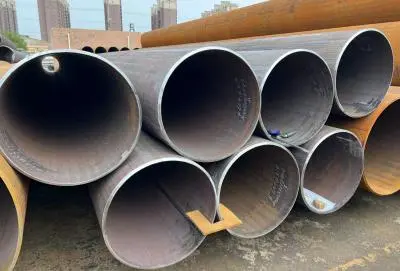
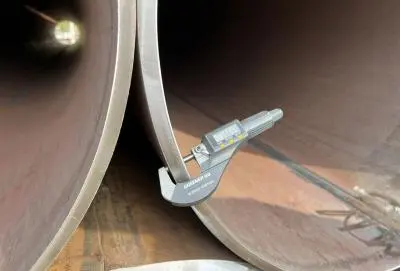
ISO 3183 L360 Pipe Key Features
ISO 3183 is the world standard for steel line pipe used in the natural gas and oil businesses. ISO 3183 L360 pipe in that standard means a minimum yield strength of 360 MPa, which is the same as API 5L X52, which is the most commonly used grade for transmission line pipes in the world. According to the ISO metric name practice, the "L" prefix just means "line pipe application."
Chemically, ISO 3183 L360 pipe is based on a managed microalloy design, with a manganese limit of 1.40 percent and a carbon content of less than 0.22% for PSL1. That Mn cap is important because it controls how small the grains are and how tough the metal is without raising the carbon equivalent to levels that make it impossible to weld. This makes a steel that doesn't crack from sulfide stress in moderately harsh service conditions.
The picture is mechanically split into two levels:
- PSL 1: Minimum bending strength is 360 MPa for PSL 1 and 460 MPa for PSL 2. It can handle standard onshore and non-sour service.
- PSL 2: You can stretch it up to 760 MPa and pull it back down to 360 MPa with PSL 2. It requires Charpy V-notch impact testing, tighter chemical makeup limits, and maximum yield strength caps, which makes it the best choice for service that is sour or high-criticality.
In real life, these two levels cover most situations where gas is bought, from medium- to high-pressure gas mains in cities to shallow offshore gathering pipelines with low H₂ concentrations.
Comparing ISO 3183 L360 with Other Pipe Grades and Standards
Positioning L360 Within the Grade Ladder
Purchasing engineers often compare ISO 3183 L360 pipe to grades that are close by. In real life, these similarities work out like this:
- L290 (X42) vs. L360: L290 has a lower minimum yield of 290 MPa, which means that the wall thickness needs to be thicker to get the same hoop stress resistance. When used for long-distance transfer at pressures above 6 MPa, ISO 3183 L360 pipe saves money on materials by making the walls thinner.
- L360 vs. L450 (X65): Moving up to L450 adds about 90 MPa more yield strength, which is good for projects in high-pressure offshore or rocky areas. However, the higher carbon equivalent means that stricter preheat welding processes are needed, which raises the cost of work in the field. For most midstream projects, ISO 3183 L360 pipe is the best choice because it is strong, easy to weld, and cheap.
- PSL1 vs. PSL2 within L360: PSL1 is for normal service, while PSL2 is needed when the pipeline specification sheet lists sour service, temperatures below zero, or high design factors. Ordering PSL2 when it's not needed costs money, and choosing PSL1 for a bad-service application increases the risk of failing an audit.
It has been found that ISO 3183 L360 pipe/X52 is still the best grade for most hydrocarbon transfer uses in terms of both cost and performance. This finding is shared by all global EPC project databases.
How to Find and Select the Right Supplier for ISO 3183 L360 Pipe?
For ISO 3183 L360 pipe purchases, the time between RFQ and contract is usually between one and three months. This means that seller qualification must happen at the same time as expert review, not after it. First, make sure you know what your specifications are. These include the outside diameter, wall thickness, pipe end treatment (plain end, angled end, threaded end), coating standards (bare, FBE, 3LPE), and whether PSL1 or PSL2 applies. When there is uncertainty at this stage, it leads to MTC discrepancies that stop third-party inspection.
Once the specification is set, use the following criteria to judge the suppliers. These are the things that set a spot-market risk apart from a strong long-term partner:
- Active API 5L license: Check the API website to see the certificate number and expiration date. If your license has expired or been canceled, your MTC will not work for most owner checks.
- Third-party inspection readiness: Make sure the mill can have SGS, Bureau Veritas, or owner-designated inspectors on the production floor without making it hard for them to see test results or heat records.
- NDT capability: The weld zone must be able to do 100% automatic UT or RT. For PSL2 sales, UT of the pipe body and inspection of the end area are planned.
- Delivery lead time: If you need standard stock sizes, a supplier who can deliver certified pipe seven days after receiving payment gives you real flexibility with your project schedule. For custom orders for big diameters, get written confirmation of the rolling plan and mill capacity.
- Documentation package: As part of the usual package, the ITP (Inspection and Test Plan), the MPS (Manufacturing Procedure Specification), and the heat-number-traceable MTC should be sent along with the goods.
Planning logistics should get the same amount of care. For large orders going to ports in the Middle East or Southeast Asia, they need export packaging that is rated for ocean freight, accurate weight manifests, and import paperwork that meets the requirements of the destination country. A supplier with a history of exporting to more than 90 countries makes customs clearance a lot easier.
Top ISO 3183 L360 Pipe Manufacturers and Trusted Brands
The best companies that make ISO 3183 L360 pipe have integrated mills with their own heat treatment, NDT, and quality assurance (QA) teams. Getting raw materials from well-known steelmakers (mills whose production has been tracked and proven to be consistent) is a big differentiator, since differences in chemistry at the billet stage are what cause most changes in mechanical properties at the pipe stage.
Since 2003, Hebei Longma Group Limited has been making ERW and LSAW steel pipe. Longma Group has a facility in China that covers 230,000 m² and has a valid API 5L license that covers grades PSL1 and PSL2 from Grade B to X80. The ISO 3183 grade range covers grades L245 to L555. By the end of 2023, the annual output had gone over 1,000,000 tons. The raw materials come from Shagang, HBIS, Bao Steel, and other Tier-1 local mills. The science can be tracked from the heat to the finished pipe.
Longma Group does more than just make pipes. They also offer anti-corrosion coating services (FBE, 3LPE, 2PP, hot-dip galvanizing) and fabrication treatments like beveling, expanding, and threading. These services make it easier for EPC contractors to coordinate inspections for projects that are happening at the same time in different regions by reducing the number of vendors they need to work with.
Conclusion
Finding the right ISO 3183 L360 pipe depends on three things that can't be changed: a seller who can work with your project schedule without affecting shipping, and certification that can be checked. The grade is technically mature and can be found all over the world, but how reliable the supplier is is what makes or breaks a procurement decision. Give more weight to mills that have active third-party certification, clear NDT records, and a history of being able to export to the area where your project is located. That mix covers both the contract deadlines and the QA/QC sign-off.
FAQ
What is the difference between ISO 3183 L360 and API 5L X52?
Functionally, they are the same. ISO 3183 L360 pipe sets its minimum yield to 360 MPa using the ISO system, while X52 sets its minimum yield to 52,000 psi using the API system. Technically, both standards work together, and a pipe that is certified to one will usually work with the other as well if the MTC says it meets both.
When should I specify PSL2 instead of PSL1?
If the project has sour service conditions (H₂S), operating temperatures below zero, higher design factors, or if the owner's engineering specification says so, you must specify PSL2. PSL2 requires impact tests and tighter limits on chemicals.
What certifications should I request from the supplier?
An current API 5L certificate (check the number yourself), an EN 10204 3.1 MTC for each heat, and, if the owner asks for them, third-party inspection records from SGS or Bureau Veritas. As per NACE MR0175, ask for HIC and SSC test results for bad service.
What are typical lead times for large-diameter L360 pipe?
Within seven days, standard stock sizes from approved mills can be shipped. Depending on mill rolling schedules and coating needs, custom large-diameter, thick-wall LSAW orders usually take four to eight weeks from the time the order is confirmed.
Can L360 pipe be supplied with anti-corrosion coating?
Yes, reputable manufacturers offer ISO 3183 L360 pipe that has FBE, 3LPE, 2PP, or other coating systems applied in-house. This cuts down on the number of suppliers and inspection points in your supply chain.
Request a Quote from Longma Group — Your Trusted ISO 3183 L360 Pipe Supplier
From 2003 to now, Longma Group has sent verified line pipe to projects in more than 90 countries. If your project needs PSL2 sour service pipe, large-diameter LSAW with 3LPE coating, or fast shipping on standard sizes, our team is ready to give you a low quote and all the paperwork you need. Send us your RFQ today by emailing info@longma-group.com or going to longma-group.com.








