
When procurement directors on EPC pipeline projects evaluate line pipe specifications, one question surfaces repeatedly: should you order ISO 3183 L360 pipe or API 5L? Both standards govern the same family of carbon steel line pipe, yet the choice carries real consequences for third-party audit outcomes, weld qualification records, and ultimately contract milestone delivery. This guide cuts through the technical overlap and gives you a clear, practical framework for making the right call on your next project.
|
|
|
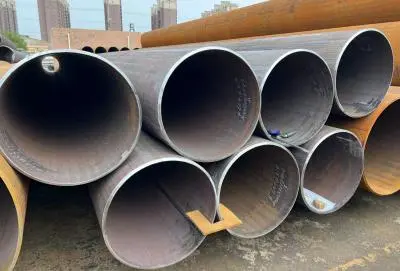
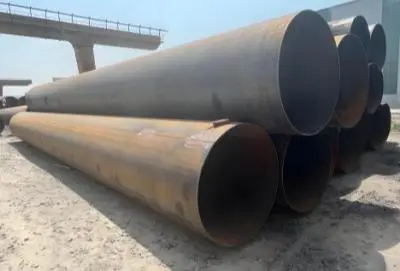
ISO 3183 L360 Pipe and API 5L Standards
What ISO 3183 L360 Actually Specifies
The International Organization for Standardization (ISO) put out ISO 3183, which is the international standard for steel pipe used in pipeline transportation systems in the natural gas and oil industries. The name "L360" in that standard means that the minimum yield strength is 360 MPa, with "L" standing for "line pipe" and "360" representing the metric yield value. Chemically, the grade is made of a microalloyed design with a maximum Manganese content of 1.4% and a controlled carbon equivalent. This directly helps resistance to sulfur stress cracking (SSCC), which is an important thing to think about for sour-field service.
The lowest tensile strength under PSL 1 is 460 MPa. As of PSL 2, the yield range gets smaller, from 360 to 530 MPa, and the tensile range goes from 460 to 760 MPa. Charpy impact testing is now required, and chemical limits have been tightened. The level of specification that most project owners in the Middle East and Southeast Asia want right now is PSL 2.
How API 5L Maps to the Same Grade
Imperial names are used in API 5L, which is put out by the American Petroleum Institute. In terms of numbers, its grade X52, where "52" stands for 52,000 psi minimum output, is the same as L360. API 5L also has both PSL 1 and PSL 2 tiers, with requirements that are mostly the same. The two standards became much more similar after the 5th version of API 5L added technical information from ISO 3183 in 2004. This means that a mill that makes L360 PSL 2 pipe according to ISO 3183 is also making material that meets API 5L X52 PSL 2 requirements.
In real life, the difference is in the paperwork and the wording used in area contracts. ISO 3183 is usually what project owners in Europe and other parts of the world ask for. Most companies in North America and the Middle East use API 5L by default. To make a purchase choice, you must first know which name your owner's engineer wrote into the technical specification book.
Technical Comparison: ISO 3183 L360 vs API 5L Pipes
It is well known that L360 and X52 work the same way mechanically. Procurement teams need to pay more attention to choosing the PSL tier and meeting other needs. Here are the most important success factors that determine which ISO 3183 L360 pipe materials to use:
Mechanical and Chemical Properties Side by Side
- PSL 1 baseline: Minimum yield 360 MPa and minimum tensile 460 MPa. There are no required impact tests. Fits onshore gathering lines and water injection systems with lower risk.
- PSL 2 sour service (MS designation): You have to do HIC and SSC tests according to NACE TM0284 and TM0177. The yield is limited to 530 MPa to avoid over-hardening. Required for streams that contain H₂S.
- Carbon equivalent control: The standard microalloy design keeps CE values low, which means that the material can still be welded in the field. This is especially helpful for building teams that use human or semi-automatic welding methods.
These differences are not just for looks. With PSL 1, a project in a low-H2S gas area can go ahead without any problems. Your mill test certificate needs to show that your sour oil trunkline is PSL 2 with the "MS" or "QS" supplementary name if it's in a Saudi Arabian or Indonesian block. The two standards have very similar tolerances for size and wall thickness. This means that when both the ISO and API certificates are present on the same heat, they can be used interchangeably in most manufacturing and finishing situations.
Quality Assurance and Traceability Requirements
Third-party inspectors of projects, like SGS, Bureau Veritas, or inspection firms chosen by the owner, pay attention to both mechanical results and traceability. At this grade level, line pipe is usually inspected with a 100% ultrasonic or radiographic weld inspection, hydrostatic testing to 100% SMYS, Charpy V-notch impact testing for PSL 2 heats, and full height and width checks. All the outcomes must be written down on an EN 10204 3.1 or 3.2 Mill Test Certificate, and a heat number must be used to connect the raw material to the final pipe.
Practical Applications and Industry Use Cases
This grade is in the middle of the line pipe market for a reason: it has the best mix of strength, toughness, and weldability for the widest range of oil and gas infrastructure. Typical deployment scenarios include main oil and gas trunklines around the world, shallow offshore platform gathering pipelines that work in low-H2S environments, medium- to high-pressure gas distribution mains in cities, and high-pressure water injection lines that help with secondary recovery operations.
ISO 3183 L360 pipe of the PSL 2 variety has been used on cross-country pipeline projects in Central Asia and South America, where unstable land and earthquakes make loads more difficult. The pipe has worked reliably for many decades. Engineers can change the plan and pressure class without having to switch to a more expensive grade like L415 or X60 thanks to its flexible wall thickness optimization. In North America, API 5L X52 is used in both gathering systems and projects where the owner's standard specification refers to API nomenclature. The result of the performance is the same, but the paper trail is different.
Procurement Considerations for B2B Clients
Not only is picking the right pipe grade hard, but getting it is also hard. It is important to make sure that your supplier's API 5L license covers the grade range you need and stays good until the inspection time for your project. If a certificate expires in the middle of a project, it delays milestone payments and causes problems with the audit.
Lead time dependability is just as important for ISO 3183 L360 pipe procurement. If you need large-diameter, thick-wall pipe on a tight EPC schedule, a provider who can ship stored sizes in 7 days is a good way to protect your schedule. In addition to speed, you should check to see if the seller can fully cooperate with owner-designated third-party inspectors during inspections. This includes letting resident inspectors in, holding pre-inspection meetings, and providing ITP (Inspection and Test Plan) documents. Value-added services like 3LPE or FBE anti-corrosion coating, bevel end preparation, and bundled logistics coordination cut down on the number of vendors you have to deal with, which speeds up the buying process.
Decision-Making Guide: Which Pipe Grade Is Best for You?
Once you map out the parameters of your project, the decision tree is easy to use. After the H₂S partial pressure goes over the NACE MR0175 level, choose PSL 2 with the sour service name. If you can, choose PSL 1 when the fluid stream is smooth, the operating pressure is average, and the owner specification lets you. When your contract is based on European or international standards, use ISO 3183 nomenclature. When your owner's engineer refers to API documentation, use API 5L nomenclature.
ISO 3183 L360 pipe (or X52) always has the lowest total fixed cost among mid-strength grades because its weld qualification processes are well-established, its consumables are easy to find, and it doesn't need any special heat treatment. When a service condition can be met by L360 PSL 2, upgrading to X60 or L415 before it's time adds material cost without adding safety margin.
Conclusion
Both ISO 3183 L360 pipe and API 5L X52 are basically the same grade because they follow the same set of rules. There isn't a big difference in performance between the two standards; your choice depends on the language used in the owner specification, the PSL tier requirements, the sour service designation, and the format of the documentation. For many global EPC pipeline projects, the standard for buying is L360 PSL 2 with full EN 10204 3.1 MTC documentation and 100% NDT coverage. This meets the needs of both owner auditors and project engineers.
FAQ
Is ISO 3183 L360 the same as API 5L X52?
Yes, the minimum yield strength for both L360 (ISO metric) and X52 (API imperial) is the same: 360 MPa, or about 52,000 psi. At the PSL 2 level, both standards are basically the same.
When must I specify PSL 2 instead of PSL 1?
If the service setting has a lot of H₂S, the working temperature is low and notch toughness verification is needed, or the project owner's technical specification says so, you must specify PSL 2.
What certifications should I require from a supplier?
At the very least, you need a valid API 5L license for your grade, an EN 10204 3.1 or 3.2 Mill Test Certificate that shows full heat traceability, and inspection reports from a third party, like one from SGS or Bureau Veritas.
Can seamless and welded versions of L360 be used interchangeably?
When made to the same PSL and extra requirements, they can handle the same pressure and temperature ratings. However, your welding procedure specification and NDE plan may be different for seamless (SMLS) pipe versus ERW or LSAW pipe.
Does the API 5L certificate expire?
Yes, API product licenses are checked and renewed on a regular basis. Always make sure that the mill's API 5L license is still good until the date of the final check for your project.
Source Your Next Pipeline Project with Longma Group
Longma Group has been making approved ERW and LSAW steel pipe since 2003. Each year, they send more than a million tons of pipe to more than 90 countries. Our company is a reliable ISO 3183 L360 pipe maker, and we have active API 5L PSL1 and PSL2 certifications. We also offer EN 10204 3.1/3.2 Mill Test Certificates and help with full third-party inspection coordination. Visit longma-group.com or email our technical team at info@longma-group.com to get a reasonable price on your job.