
When purchasing line pipe for important oil and gas infrastructure, buying managers often come across two names that sound a lot alike but have different naming conventions: ISO 3183 L360 pipe and API 5L X56. Both grades have a minimum yield strength of 360 MPa, which is about 52,000 psi. This makes them good choices for trunk pipes, offshore gathering systems, and high-pressure gas delivery networks in cities. Engineers and buying teams can choose the best materials, make sure they follow the rules, and find the cheapest sources without sacrificing safety or performance in tough field conditions if they understand the small technical and process differences between these standards.
|
|
|
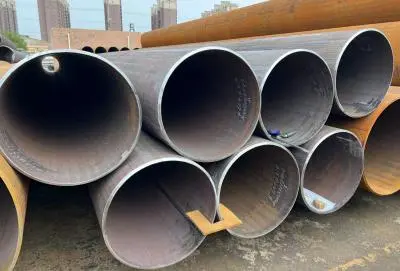
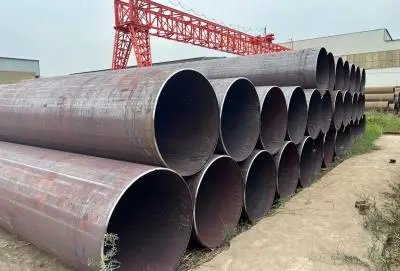
Understanding ISO 3183 L360 and API 5L X56 Pipes
Standards and Certifications Overview
ISO 3183 L360 pipe follows the rules set by the International Organization for Standardization. It uses metric notation, where "L" stands for line pipe and "360" for minimum yield strength in megapascals. The American Petroleum Institute sets the rules for API 5L X56. It uses imperial units, with "X" showing grades that go beyond basic requirements and "56" indicating yield strength in thousands of pounds per square inch. Both standards use standardized requirements that are decided on by joint technical groups. This means that an ISO 3183 L360 pipe made to PSL2 standards usually also meets API 5L X56 PSL2 standards. This agreement is helpful for procurement teams working on international projects because it makes it easier to handle paperwork, ship goods across borders, and coordinate with contractors in places where regulations are different.
Chemical Composition and Mechanical Properties
The chemistry formula for both grades includes controlled manganese content of up to 1.40 percent, along with microalloy adds of niobium, vanadium, or titanium to improve toughness and fine-tune grain structure. Carbon equivalent values are closely controlled to keep the metal's ability to be welded and to stop it from cracking when it's being made. For mechanical performance under PSL1, the minimum yield strength is 360 MPa and the minimum tensile strength is 460 MPa. This is enough for normal pipeline uses with mild service conditions. The yield range for PSL2 types is increased to 360–530 MPa and the tensile range is increased to 460–760 MPa. Charpy V-notch impact testing at certain temperatures is required to check the low-temperature hardness. This two-level specification method lets buyers match pipe quality exactly to project risk profiles. This way, buyers don't have to worry about over-specification for normal installations, but they can get better properties for harsh conditions like arctic or sour service.
Manufacturing Processes and Quality Control
Electric resistance welding, lengthwise submerged arc welding, and seamless hot-rolling are some of the modern methods used to make line pipes. The method used depends on the width and wall thickness needs. Normalizing microstructures and relieving residual stresses along weld gaps are done by heat treatment processes. This makes sure that the pipe body has the same mechanical properties all the way through. Longma Group has high-tech LSAW and ERW production lines that can make large-diameter pipes with thick walls. At every step of the way, the pipes are inspected with full-body ultrasound and x-rays. Each pipe is tested hydrostatically to make sure it can handle pressures higher than what is needed for normal use. This is followed by checks for out-of-roundness, straightness, and even wall thickness. Material test certificates that meet EN 10204 3.1 or 3.2 standards make it possible to track everything from the raw steel coil to the final finish. This gives purchasing managers the proof they need for engineering approvals and third-party checks in all global markets.
Detailed Technical Comparison: Chemical, Mechanical, and Dimensional Aspects
Chemical Element Influence on Performance
Manganese helps to strengthen solid solutions and smooth out grains, which directly raises yield strength without lowering flexibility. Carbon levels below 0.22 percent for PSL1 and even lower levels for PSL2 keep the weldability high, which means less preheating is needed and the heat-affected zone doesn't become as rigid. Sulfur and phosphorus levels are kept very low, which lowers the chances of hot shorts and weakening that can happen over time when the structure is loaded and unloaded again and again. During controlled rolling, microalloy elements form as fine carbonitrides. These pinning grain boundaries make the metal stronger at temperatures below zero. For pipes used in phased building projects, where material qualities must stay the same over multi-year purchase cycles, this compositional discipline is essential to making sure that performance is consistent across production batches.
Mechanical Property Benchmarks
Comparative mechanical testing shows that ISO 3183 L360 pipe and API 5L X56 have similar elongation values, usually more than 20 percent over a 50-millimeter gauge length. This means that they are flexible enough to handle installation pressures during bends and field welding. Yield-to-tensile ratios are usually around 0.78, which means that the material can bend easily and won't break into a thousand pieces when hit hard. More Charpy tests are done on PSL2 grades at temperatures as low as -20 degrees Celsius to make sure that they can withstand absorbing energy values above 27 joules in cold areas. Because of this mechanical balance, both types can be used in a wide range of situations, from pipes in the desert that are exposed to changing temperatures to platforms in the ocean that are shaken by waves and sprayed with saltwater, which can damage the steel.
Dimensional Standards and Tolerances
The outer diameter tolerances for both standards are very close to each other. For sizes less than 610 millimeters, variations of plus or minus 0.75 percent are allowed. For precision-machined connections, the limits are tighter. Tolerances for wall thickness are based on tiered structures, which allow minus 12.5 percent for pipe bodies that are not upset while keeping tighter control at weld gaps where stress concentration peaks. Common sizes range from 16 inches to 60 inches in diameter, and wall thicknesses range from 6 millimeters to 50 millimeters. These sizes can accommodate design pressures ranging from low-pressure gas distribution networks to high-pressure crude oil transportation systems. This consistency in dimensions helps procurement workers because it lets them get the same products from different approved makers without having to redesign supports, clamps, or flange connections. This lowers project risk and speeds up the building process.
Performance and Application Suitability
Environmental Resistance and Durability
Both types of pipe work well in temperatures ranging from -29 degrees Celsius to +150 degrees Celsius, which includes yearly extremes in places like Siberian gas fields and sites in the Middle East desert. External layers like three-layer polyethylene or fusion-bonded epoxy make it more resistant to corrosion from soil-side electrical attack. Smooth as-rolled surfaces on the inside improve flow patterns by reducing turbulence and pressure drop. PSL2 types that need extra conditions for hydrogen-induced cracking tests work best in slightly sour oil settings with low levels of hydrogen sulfide, as long as the partial pressure stays below 0.05 bar and the pH level stays above 5.5. With the right cathodic protection, this durability profile can last longer than 30 years, giving you cost savings over the course of its lifetime that make up for slightly higher starting material costs compared to lower-grade options.
Welding and Fabrication Considerations
Using the Pcm formula, the controlled carbon equivalent of ISO 3183 L360 pipe and API 5L X56 grades usually drops below 0.43 percent. This means that normal processes can be used for welding with little or no preheating needed, even when it's windy outside. Shielded metal arc welding, gas metal arc welding, and automated submerged arc methods can all make joints that are strong as long as the approved welding process specs are followed. Post-weld heat treatment isn't usually needed for walls thinner than 25 millimeters, which cuts down on the time and energy needed to make pipeline spools and put them together in the yard. But when welding in the field in places with temperatures below -10 degrees Celsius, the metal should be heated up to 50 to 75 degrees Celsius first to keep hydrogen from building up and make sure the heat-affected area is tough enough. Because these types are easy to weld, they are available to a wide range of fabrication shops around the world. This lowers the risks of building and the requirements for contractors.
Real-World Use Cases Across Industries
Major crude oil trunk lines that run across continents depend on ISO 3183 L360 pipe and API 5L X56 pipes to balance the amount of oil that can be moved with the amount of material that can be used efficiently. This is done by optimizing wall thickness estimates under API 579 fitness-for-service standards. Shallow offshore gathering platforms that work with low-hydrogen sulfide fields use PSL2 versions to get created fluids from wellheads and send them to central processing facilities, where mildly sour conditions need better resistance to sulfide stress cracking. These grades are set by urban gas distribution authorities for medium- to high-pressure mains that serve industrial districts and residential neighborhoods. In these areas, where there are a lot of people, tight safety rules and leak prevention methods are needed. The same pipe types are used in water injection systems that help with improved oil recovery to move corrosion-free seawater at pressures higher than 150 bar. This shows how versatile this strength class is in hydrocarbon, aqueous, and mixed-phase service situations.
Conclusion
ISO 3183 L360 pipes and API 5L X56 pipes are essentially similar material solutions that are only different by how they are named, not by differences in performance. Based on decades of field service data and ongoing metallurgical improvement, both types have been shown to be reliable in oil and gas transportation, water injection systems, and urban distribution infrastructure. To be successful at procurement, you need to choose PSL levels that are in line with the project's risk profile, work with certified makers who offer clear quality paperwork, and use flexible suppliers who can respond quickly to changing project schedules. Whether buyers are using metric or imperial measurements, they can be sure that these mid-strength types will give them the best mix of mechanical strength and cost-effectiveness. They are the standard for building cost-effective pipelines around the world.
FAQ
What is the main difference between ISO 3183 L360 and API 5L X56?
The grades have almost the same mechanical properties, but ISO 3183 L360 pipe is named in ISO metric units (360 MPa yield strength) and API 5L X56 is named in API imperial units (56,000 psi yield strength). Both can be made to the same level of quality (PSL1 or PSL2), so they can be used in place of each other if they come from mills that are approved under both standards.
Can these pipes be used in sour service environments?
Some types of PSL2 that have extra standards (shown by the MS or QS suffixes) are tested for hydrogen-induced cracking and sulfide stress cracking. This means that they can be used in slightly sour hydrocarbon service where the partial pressure of hydrogen sulfide is less than 0.05 bar. Without more tests, standard PSL1 grades are not ready for sour environments.
How do I verify material quality before shipment?
Please ask for EN 10204 3.2 material test records that show full chemical analysis and mechanical test results that can be linked to specific heat numbers. Hire outside inspection companies to see the hydrostatic testing, ultrasonic examination, and measurement verification done at the manufacturer's building before you allow shipping to your project site.
Partner with Longma Group for Certified ISO 3183 L360 Pipe Supply
Longma Group is a reliable ISO 3183 L360 pipe manufacturer that has worked with pipeline builders, planning firms, and purchasing managers in over 90 countries for more than 20 years. Our API 5L-certified factories make dual-stamped L360/X56 pipe that meets both PSL1 and PSL2 standards. This is backed up by full mill test certificates and coordination of third-party inspections. We guarantee on-time delivery of quality-assured line pipe that fits the needs of your project thanks to our yearly output of more than a million tons, our strategic partnerships with Bao Steel and HBIS for raw materials, and our combined coating capabilities that include 3LPE and FBE systems. Get in touch with our technical team right away at info@longma-group.com to talk about your needs and get a thorough quote that fits your budget and time frame for purchase.








