
Procurement managers often have a hard time finding the right line pipe for high-pressure oil and gas transportation projects while also making sure that the pipes meet all the rules and regulations. With the ISO 3183 L390 pipe, you can get an answer that is just right for these problems. This grade is for a carbon steel line pipe that has a minimum yield strength of 390 MPa, which is about 56,600 psi, and is made for systems that move oil and natural gas. Because its metric name is the same as API 5L X56, it is the world standard for intermediate pipeline equipment. The L390 grade is great at lowering the required wall thickness under high pressure while keeping the structure strong. This saves a lot of money on materials for long-distance trunk lines that run for hundreds of kilometers.
|
|
|
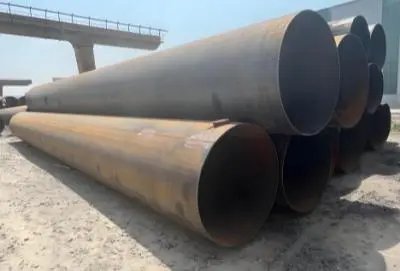
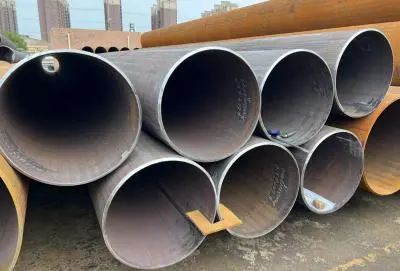
Understanding ISO 3183 L390 Pipe Specifications
Chemical Composition and Metallurgical Design
The metallurgy shape of ISO 3183 L390 pipe is unique because it has carefully controlled alloying elements that make it easier to weld and better at its mechanical performance. The steel has niobium and vanadium grain polishing along with high-manganese microalloying. This smart mix provides enough low-temperature impact energy, which is very important for pipes that work in cold places or underwater.
The carbon content in PSL2 types is usually kept below 0.22%, which makes them easy to weld in the field without having to heat them up first in most normal circumstances. Manganese amounts of about 1.40% help to make stable solutions stronger while still allowing them to be flexible. To keep the Carbon Equivalent value from cracking in the weld zone during the manufacturing and installation steps, it is closely watched.
Mechanical Properties Across Product Specification Levels
Engineers can choose the right specification level for their application setting by understanding the mechanical performance needs. At least 390 MPa of yield strength and 490 MPa of tensile strength can be found in PSL1 grade L390. This basic level of quality is good for many common pipeline uses where effect testing is not required by the project requirements.
The quality level PSL2 is stricter, requiring a yield strength range of 390–545 MPa and a tensile strength range of 490–760 MPa. This narrowed range makes design estimates more accurate, so engineers can confidently find the best wall width. Charpy V-notch impact testing is required by PSL2. This makes sure that the material keeps its flexibility and toughness to break at certain low temperatures, which is often very important for activities in the Arctic or deep water.
The material is very hard to break, especially when it comes to PSL2 types that are supplied in normalized (N), thermomechanically rolled (M), or quenched and tempered (Q) states. This makes the pipe resistant to brittle failure modes that have historically caused pipeline integrity problems.
Application Performance Advantages
As the main high-pressure long-distance grade that takes the place of heavy-wall L360 lines, the L390 grade is very important in the pipeline material order. The performance traits directly lead to operational and cost gains that project procurement teams can relate to.
Because it can hold a lot of pressure, engineers can choose smaller wall sections than with lower grades. This saves a lot of money on steel costs for big projects. This benefit is especially clear for large-diameter submerged arc welding pipes, where even small cuts in wall thickness of 2 to 3 mm can save a lot of tons of material over kilometers of pipeline.
Long-distance high-pressure natural gas trunk lines and inter-regional crude oil export pipes are common examples of deployment situations. The economics of these projects are based on getting the most throughput while reducing installation weight. The PSL2 L390M or L390N versions are good for onshore pipes in cold areas because they promise impact energy performance at temperatures as low as -45°C. When paired with the right external coating systems, such as 3-layer polyethylene or fusion-bonded epoxy, the material's high resistance to rust is used in shallow underwater flowlines.
Transmission pipes for oil and gas fields with fairly high sourness are another important use for the material that has to pass extra HIC (Hydrogen-Induced Cracking) and SSC (Sulfide Stress Cracking) resistance tests according to NACE MR0175 standards. This special testing method makes sure that the grain of the steel can handle being exposed to hydrogen sulfide without breaking into a million pieces.
ISO 3183 L390 Pipe Dimensions and Manufacturing Process
Standard Dimensional Ranges and Tolerances
Accuracy in measurements has a direct effect on how well installations work and how well welds are done in the field. ISO 3183 L390 pipe producers must keep specific limits for length, wall thickness, and outer diameter during production. The outer widths are usually between 114.3 mm and 1422 mm, which is wide enough to fit everything from gathering lines to major transmission routes.
Specifications for wall thickness depend on the design pressure estimates, but for L390 uses, they usually range from 6 mm to 40 mm. Tighter margin control on wall thickness uniformity—usually ±10% or ±1mm, whichever is greater—makes sure that the stress in the hoop is spread evenly and stops weak spots from forming in certain places. You can get pipes in random lengths, double random lengths, or set lengths of up to 18 meters. Length tolerances of +500mm/-0mm make them easier to move and handle.
Measurements of out-of-roundness are closely watched, and the largest ovality is usually kept to 1% of the standard width. With this level of accuracy, automatic welding tools can keep the same depth of penetration while building a pipeline.
Manufacturing Techniques and Quality Control
The way L390 pipe is made has a big effect on its final mechanical qualities and dependability. We use modern manufacturing methods at Longma Group, such as LSAW (Longitudinal Submerged Arc Welded) and ERW (Electric Resistance Welded). It works especially well for large-diameter, thick-walled projects that need to be very accurate in terms of size and strength when they break.
The first step in the production process is getting raw materials from trustworthy Chinese mills like Shagang, Shangang, TISCO, and Bao Steel. This is done to make sure that the chemical makeup of the coil stock or plate is the same. Precision cutting is used to make the right shape for fusion welding on the plate edges. Submerged arc welding in LSAW forms deep penetration fusion inside and outside the pipe body. This makes a weld seam whose mechanical properties are the same as or better than the source material.
After welding, heat treatment steps are needed to get rid of any leftover stresses and smooth out the grain. To normalize the heat treatment, the pipe is heated to about 900–950°C and then cooled by air. This evens out the grain structure and finds the best balance between strength and stiffness. Thermomechanical rolling methods control the amount of deformation and cooling to make microstructures with small grains that are better at withstanding impacts.
At every step of production, quality control procedures make sure that the dimensions are correct and the metal is solid. With full-body ultrasound testing, any interior cracks or laminations in the pipe wall can be found. Radiographic testing checks the quality of the weld seam to make sure there are no holes or slag inclusions in the full fusion. Hydrostatic testing, which is usually done at 90% of the minimum stated yield strength for 5 to 10 seconds, shows that the seal is leak-proof.
Corrosion Protection and Surface Treatment
Long-term pipeline performance depends a lot on methods for corrosion protection that make assets last longer in harsh soil conditions or marine environments. The base is the material choice; L390 steel's controlled chemical makes it less vulnerable to different types of rust. Coating systems on the outside of things are the main security obstacle.
We provide a full range of anti-corrosion services, such as fusion-bonded epoxy (FBE) for temperatures up to 100°C, two-layer polypropylene (2PP) for modest protection needs, and three-layer polyethylene (3LPE or 3PE) systems for the best protection for buried pipes in the industry. The 3LPE method has an FBE base layer that sticks things together, a copolymer glue layer in the middle, and a polyethylene topcoat that protects against damage and chemicals. For uses that need metal protection in outdoor situations, hot-dip galvanizing is still an option.
Comparing ISO 3183 L390 with Other Pipe Grades and Standards
Equivalency with API 5L X56
On global projects, pipeline workers often have to deal with both ISO 3183 L390 pipe and API 5L standards. Knowing how they work together keeps things clear during the planning and procurement stages. The ISO 3183 L390 grade and the API 5L X56 grade are exact equivalents. The difference between them is the minimum yield strength, which is 390 MPa for ISO 3183 and 56,000 psi for API 5L.
The standards are very similar when it comes to the chemical makeup requirements, but there may be small changes in how the Carbon Equivalent is calculated and how certain elements can be used. The needs for mechanical properties are the same as long as the testing methods are accurate. In general, procurement teams can use these grades interchangeably. However, project specs should make it clear which standard applies when there is a disagreement.
Performance Comparison with Adjacent Grades
Putting L390 in a wider range of grades helps engineers choose the best material for a given set of temperature and pressure conditions. The next smaller grade, L360 pipe, has a minimum yield strength of 360 MPa and a minimum tensile strength of 460 MPa. In the past, L360 was used for many intermediate tasks. Now, L390 is replacing it more and more, and its higher strength lets wall thickness be cut by 8–10%. This saves a lot of weight and money on big, long-diameter projects.
L415 grade is the next level up. It has a minimum yield strength of 415 MPa and a minimum tensile strength of 520 MPa in PSL1. L415 is good for ultra-high pressure uses where the working pressures are higher than what L390 can handle, but it costs more in materials. The choice is based on a lifetime cost study that compares the price of the material to the thickness of the walls needed and the cost of installation.
Different design ideas can be seen when compared to ASTM A106 Grade B, which is a seamless carbon steel pipe for high-temperature work. A106 Grade B requires a minimum yield strength of 240 MPa and focuses on performance at high temperatures. This makes it good for refining pipes and power production but not for long-distance transmission, which is where L390 shines.
Conclusion
For difficult oil and gas transportation projects, choosing the best line pipe grade means finding a balance between technical performance, cost effectiveness, and source dependability. The ISO 3183 L390 pipe standard has been shown to work well for high-pressure, long-distance uses. It also saves money on materials by designing walls with the right thickness. When buying teams know about the mechanical qualities, dimensional tolerances, and manufacturing factors, they can make choices that are better for the project's budget while still following safety rules and regulations. L390 pipe is a good choice for building midstream infrastructure in a wide range of operational and geographical areas because it comes with detailed instructions, expert support, and quality assurance from well-known makers.
FAQ
What makes API 5L X56 different from ISO 3183 L390?
The only difference between these names is the way they are written. They both refer to the same type of material. In ISO 3183 units, "ISO 3183 L390 pipe" means a minimum yield strength of 390 MPa, while in API 5L units, "X56" means a minimum yield strength of 56,000 psi. The standards are very similar in terms of chemical and mechanical needs, so they can be used instead of each other for most situations.
Can this grade be used in places with bad food?
Yes, when it's clearly stated. If you order L390 pipe as PSL2 with the extra "S" end (L390MS or L390QS) and test it according to NACE MR0175/ISO 15156 standards, you can safely move sour fuels that contain hydrogen sulfide. The HIC and SSC tests show that the material is not easily damaged by hydrogen and doesn't crack under stress.
What's different about PSL1 and PSL2?
PSL2 has tighter rules, like Charpy V-notch impact testing being required, yield-to-tensile ratio limits being lowered, carbon equivalent controls being tightened, and full recording of traceability. PSL1 is normal quality that's good enough for most uses, while PSL2 is for important services that need extra strength and quality assurance.
What kinds of delivery conditions are there?
'N' stands for "normalized," 'M' for "thermomechanically rolled," and 'Q' for "quenched and tempered." Different microstructures are made by each heat treatment, which improves certain property profiles. Based on running needs and design calculations, your engineering specifications should list the right state.
Partner with Longma Group for Your ISO 3183 L390 Pipe Requirements
To get a steady supply of ISO 3183 L390 pipe that meets specifications, you need more than just a good price. You need a production partner with proven technical skills, thorough quality systems, and a dedication to customer success. Since 2003, Longma Group has been a reliable ISO 3183 L390 pipe seller, sending more than a million tons of pipe to oil and gas projects in more than 90 countries every year. Our API 5L licensing, advanced LSAW production skills, and full manufacturing services, which include 3LPE coating, let us take care of all of your pipeline infrastructure needs. Engineering contractors and procurement managers get tailored technical help, complete documentation packages, and delivery dates that they can count on to keep projects on track. Get in touch with our team at info@longma-group.com to talk about your specific needs and get a quote for ISO 3183 L390 pipe for sale that fits your project's needs and your budget.