
When engineers and procurement managers have to choose pipeline materials for very long-distance transmission projects, ISO 3183 L415 pipe stands out as an option that is both technically sound and cost-effective. This high-quality steel pipe has a minimum yield strength of 415 MPa and can be welded very easily. It is used as the main material for high-pressure natural gas trunklines, crude oil export networks, and water transmission systems that cross countries. Its engineered microalloyed makeup makes it possible for wall sections to be thinner without lowering safety margins. This directly leads to lower material costs and easier operations in tough project settings.
|
|
|
Understanding ISO 3183 L415 Pipe Specifications and Properties
Mechanical Properties That Drive Performance
This grade of pipe has a good name in key infrastructure because of how well it works mechanically. Under PSL 1 rules, the material must have a minimum yield strength of 415 MPa and a minimum tensile strength of 520 MPa. For projects that need higher reliability, PSL 2 standards make these limits stricter: the yield strength must be between 415 and 565 MPa, the tensile strength must be between 520 and 760 MPa, and the yield-to-tensile ratio must be less than 0.93. This controlled ratio stops failure modes that are hard to predict during pressure spikes. This gives pipeline engineers peace of mind during the hydraulic testing and operating commissioning phases.
Chemical Composition and Microalloying Strategy
Low-carbon high-manganese steel that has been carefully microalloyed with Niobium, Vanadium, and Titanium forms the basis of ISO 3183 L415 pipe. This mix finens the grains without increasing the carbon content, which would make it harder to weld in the field. The controlled carbon equivalent—which is usually kept at or below 0.43 for PSL 2 variants—makes sure that welding processes can be done consistently in harsh outdoor conditions, from the heat of the desert to the cold of the Arctic. Optical emission spectroscopy checks these exact chemical balances during production, making sure that the products are the same from batch to batch across thousands of tons.
Manufacturing Methods and Heat Treatment
Longitudinally Submerged Arc Welding and Electric Resistance Welding are two modern methods of production that are each best for a certain range of diameters and thicknesses. When the width of the part being made is more than 600 mm, LSAW production gives you better seam integrity and dimensional accuracy. The thermomechanical rolling process, which is shown by the "M" grade, bends and cools the steel in controlled ways that make it tougher at low temperatures and less likely to crack. This is very important when pipes go through ice zones or deep sea areas where the risk of brittle fractures is higher.
Corrosion Resistance and Testing Protocols
The base material is pretty resistant to rust, but for long-distance projects, three-layer polyethylene (3LPE) or fusion-bonded epoxy are often used to make it even better. As part of quality assurance, non-destructive testing methods are used. These include automatic ultrasonic inspection of the whole pipe body and all weld seams, radiographic examination of key junctions, and hydrostatic pressure testing to 90% of the minimum yield strength that was specified. For PSL 2 orders, Charpy V-Notch impact testing at temperatures as low as -20°C proves that the material is not easily broken, and Drop Weight Tear Tests on large-diameter pipes prove that they can stop cracks from forming when loaded dynamically.
Standard Comparisons: ISO 3183 L415 vs API 5L X60
Engineers often wonder what the connection is between ISO 3183 L415 and API 5L X60, since both names refer to the same mechanical qualities. The ISO standard promotes international cooperation and is widely accepted in markets in the Middle East, Southeast Asia, and Australia. On the other hand, API 5L is the most common set of requirements for buying things in North America. From a technical point of view, they can be used in place of each other, but different inspection acceptance standards and paperwork requirements may apply. Procurement managers benefit from sellers who are qualified to both standards. This makes sure that global projects can work together without having to wait for material substitutions.
Advantages of ISO 3183 L415 Pipe in Long Distance Pipeline Projects
Structural Efficiency Under Extreme Conditions
Ultra-long-distance pipelines are put under a lot of stress from the environment, including temperature changes of more than 80°C and pressures inside the pipes that can hit 12 MPa in high-capacity transmission networks. The 415 MPa yield strength lets engineers optimize wall thickness using normal pressure vessel calculations. This means that engineers can use about 15 to 20 percent less steel than with lower-grade options like L360 or X42. This drop in thickness leads to real cost savings on the project: lighter ISO 3183 L415 pipe pieces are easier to handle during installation, less freight is needed, and fewer welding consumables are needed for thousands of field joints.
Lifecycle Cost Efficiency
Buying the first materials is only a small part of the total cost of the job. When we look at the prices over a 30-year period, the better mechanical properties of L415 pipe mean that it needs less upkeep and is less likely to break. The managed yield-to-tensile ratio stops the material from deforming too much during changes in pressure. This keeps the dimensions stable, which means that support structure adjustments are kept to a minimum. For offshore and subsea uses, this longevity cuts down on the need for expensive repairs, which can cost more than $500,000 per event.
Regulatory Compliance Across Global Markets
International pipeline projects have to deal with complicated rules that apply to many countries. This type of pipe is in line with ISO 3183:2019, which is an internationally known standard that makes it easier for regulatory bodies like the US Pipeline and Hazardous Materials Safety Administration and the Australian Standards that govern the transportation of hydrocarbons to accept it. When made to NACE MR0175/ISO 15156 standards, PSL 2 variants meet strict requirements for projects that will be used in sour service settings. This helps oil and gas gathering systems deal with worries about hydrogen sulfide exposure.
Proven Track Record in Major Projects
Large-scale applications use operating data to prove the theoretical benefits. ISO 3183 L415 pipe has been used in national natural gas trunklines that are more than 4,000 kilometers long to reach design pressures of 10 MPa while keeping wall thicknesses below 20 mm for parts that are 1016 mm in diameter. If you use the right coating methods on export oil pipes in harsh coastal settings, they can last for more than 15 years without rusting. Medium-depth underwater pipes that work in water up to 200 meters deep depend on this grade's unique ability to combine high strength and fracture toughness in a cost-effective way.
How to Choose the Right ISO 3183 L415 Pipe Supplier for Your Project?
Certification Validation and Manufacturing Capabilities
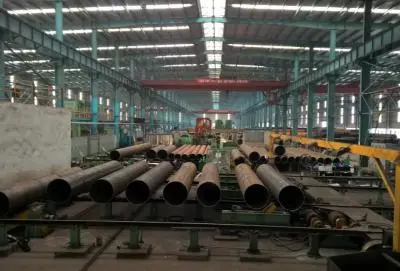
Checking that a supplier follows foreign quality control systems is the first step in choosing a good one. Look for companies that have both ISO 9001 certification and specific API 5L and ISO 3183 product certifications from reputable third-party groups. Manufacturing capacity is very important. Annual production amounts of more than 1,000,000 tons show that processes are well-established and economies of scale have been reached, which leads to reasonable prices and safe delivery times. Longma Group is a good example of this type of capacity because it has been running modern LSAW and ERW production lines in 230,000 square meters of factories since 2003.
Geographic Sourcing Considerations
When handled well, global supply lines can be very helpful for business. Chinese companies have become the main sources thanks to partnerships between their steel mills and companies like HBIS, Bao Steel, and Shougang. These partnerships make it possible to track raw materials from the blast furnace to the finished pipe. This kind of vertical merging keeps costs low while keeping quality high at every stage of production. When purchasing from China, purchasing managers can take advantage of the country's well-established export transportation infrastructure and full paperwork packages that include Material Test Certificates, Inspection and Test Plans, and Manufacturing Procedure Specifications that meet the needs of engineering contractors.
Pricing Dynamics and Order Quantities
The price of steel pipes changes depending on the raw materials used, the size requirements, and the number of orders. Because they need special tools to be formed and welded, large-diameter LSAW pipes naturally cost more. On the other hand, smaller ERW pipes are cheaper for gathering lines and distribution networks. Most of the time, the minimum order quantity is between 50 and 200 tons, but if the specifications are very complicated, established makers may be able to handle smaller amounts for special projects. Knowing these limits when making a budget keeps changes from being made without warning when the purchase is being carried out.
Lead Times and Technical Support
Production and delivery times range from 45 to 90 days for normal requirements and up to 120 days for custom requirements that require special tests or heat treatment methods. By cutting out extra steps in processing, suppliers who offer manufacturing services like beveling, threading, finishing application, and custom length cutting can shorten the time it takes to finish a project. Technical support after delivery is very helpful during the installation phase, where qualifying welding procedures and field inspection advice speed up the building process while keeping quality standards high.
Conclusion
When choosing the right materials for a pipeline, you have to balance technical performance with cost considerations over the course of decades-long project lifecycles. The ISO 3183 L415 pipe standard solves this problem with specialized metals that give 415 MPa yield strength without affecting the ability to weld in the field. This lets wall thickness optimization happen, which lowers the amount of steel used and the cost of installation. It has been used successfully in installations in permafrost zones, ultra-high-pressure natural gas trunklines, and underwater environments, showing that it is reliable even in the toughest situations engineers face. When bought from certified makers that offer full quality documentation and expert support, this high-quality pipe forms the basis of transmission infrastructure that works safely and efficiently for a long time.
FAQ
Which industries primarily utilize ISO 3183 L415 pipe?
The biggest buyers are oil and gas midstream businesses, which use these pipes for networks that move natural gas and export pipelines for heavy oil. The pressures they use are between 8 and 12 MPa. More and more, water companies are using ISO 3183 L415 pipe standards for large-diameter trunk mains that serve cities. This is because the ratio of strength to weight makes it easier to support the structure. Offshore platform building uses PSL 2 versions for underwater flowlines that connect wellheads to processing facilities. These variants are better at resisting cracking in deepwater environments, which is a big benefit.
How does heat treatment affect pipe performance?
The "M" delivery condition of thermomechanical rolling controls the bending of steel at certain temperature ranges. This improves the grain structure to make the steel tougher at low temperatures and better at stopping cracks. This method produces Charpy impact values higher than 100 joules at -20°C, which is very important for pipes that go through Arctic areas or go through times of fast depressurization. Another option is to use normalizing heat treatment, which creates slightly different microstructures that might be better for some welding processes or thick-wall uses.
Can specifications be customized for unique project requirements?
Well-known makers can make a number of changes to the L415 grade structure. Wall thickness can be changed in 0.5 mm steps, pipe lengths can be changed to fit shipping needs, and end preparations can be changed to fit different ways of combining. Depending on the climate, different coating methods are used, ranging from basic FBE to advanced three-layer polyethylene. When buying something, you can ask for extra testing that isn't required by law, like testing for hydrogen-induced breaking resistance for bad service.
Partner With Longma Group for Your Pipeline Material Needs
Longma Group is a certified ISO 3183 L415 pipe supplier that has been making high-quality pipes for over 20 years for oil and gas transportation projects in 90 countries. With our LSAW and ERW production skills, we can make pipes with diameters ranging from 219 mm to 1,422 mm. Our API 5L and ISO 9001 certifications guarantee consistent quality that meets international standards. We get high-quality raw materials from HBIS, Bao Steel, and Shougang, and we can track everything from the steel mill to the finished product. Our engineering team offers full technical support, including advice on how to weld, manufacturing services, and finishing applications that are specifically made for your project. Email our purchasing experts at info@longma-group.com to talk about your long-distance pipeline needs and get competitive quotes from a reputable ISO 3183 L415 pipe manufacturer that cares about the success of your project.