
If you compare ISO 3183 L415 pipe to API 5L X65 for high-pressure transmission lines, you'll find that they are officially the same grade because they both have a minimum yield strength of 415 MPa. For oil and gas infrastructure, both ISO 3183 and API 5L do the same things, but ISO 3183 is the world standard and API 5L is the American standard. Most of the time, the decision is based on regional compliance requirements, source availability, and project paperwork preferences, not on differences in performance.
|
|
|
Understanding ISO 3183 L415 and API 5L X65 Pipe Specifications
Standard Origins and Regulatory Frameworks
ISO 3183 L415 pipe is based on the guidelines for oil and gas pipeline systems made by the International Organization for Standardization. It focuses on world harmonization across different regulatory settings. To make sure that cross-border projects can work together, the standard requires tight limits on dimensional tolerances, chemical makeup, and mechanical properties. The American Petroleum Institute created API 5L X65, which is used mostly in North American markets and projects that follow U.S. building standards. Both standards have the same minimum yield strength of 415 MPa, even though they are governed by different groups. This means that they can be used interchangeably in most engineering formulas.
Product Specification Levels Explained
Both standards make a distinction between PSL1 and PSL2 versions, but they have very different effects. PSL1 means standard quality, which means it has been through basic mechanical tests and is good for normal onshore uses with mild working conditions. Charpy V-Notch impact testing is now required by PSL2. There are also stricter carbon equivalent controls (usually PCM ≤ 0.43) and better paperwork for tracking. This top level is necessary for systems that are submerged, for sour service settings with hydrogen sulfide, or for any use where the risk of brittle fractures poses a safety risk. The yield range for PSL2 is 415–565 MPa, and its tensile strength is 520–760 MPa. It must maintain a key yield-to-tensile ratio of ≤ 0.93 to keep it from breaking too soon under cyclic loads.
Dimensional Standards and Tolerances
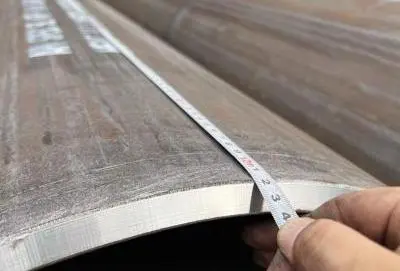
Tolerances in manufacturing have a direct effect on how well things are installed and how well they stay together over time. The ISO 3183 standards spell out exact tolerances for outside width, wall thickness, and ovality that control the quality of pipes. API 5L X65 keeps the same size limits, but the ways they are measured and the standards they must meet may be slightly different. These small changes affect how to join in the field, how to match the flanges, and how evenly the coating is applied. To avoid expensive rework during the building stages, procurement teams that buy pipes from foreign makers need to make sure that the methods used for dimensional approval are in line with the project requirements.
Mechanical Properties & Chemical Composition Comparison
Strength Characteristics and Performance Metrics
The mechanical strength of both grades is based on their minimum yield strength of 415 MPa. This means that engineers can choose smaller wall widths compared to lower-grade options like X52 or L360. This edge in strength means that long-distance projects can use a lot less steel. For example, a 10% wall reduction can cut material costs by millions of dollars on trunk lines that run for hundreds of kilometers. The lowest tensile strength for both types of PSL1 is 520 MPa, which gives designers enough room for error when they calculate the design pressure. PSL2 grades increase the tensile strength up to 760 MPa, which means they can handle surge pressures and thermal expansion loads in a wide range of working conditions.
Elongation qualities show how flexible something is under stress. Both standards require minimum values to make sure the pipe can be bent and handled in the field without cracking. When used in cold climates, impact protection is especially important. Thermomechanically rolled (M-condition) ISO 3183 L415 pipes are tougher at low temperatures and don't break when they go from being flexible to brittle, which can happen in places like ice or deep water, where the temperature is high enough to test the material's durability.
Chemical Composition and Weldability
Low-carbon high-manganese steel is the base metal, and Niobium, Vanadium, and Titanium are used in composite microalloying to smooth the grains without adding too much carbon. This strategic makeup keeps the carbon equivalent low, so it can be welded in the field even in remote areas with basic welding gear. Instead of depending on carbon, which can make the weld zone less tough and make hydrogen-induced cracking more likely, controlled adds of alloying elements increase strength through processes called precipitation hardening.
The PSL2 pipes come with chemical analysis reports that show the exact amounts of carbon, manganese, phosphorus, sulfur, and minor elements. These numbers tell you how much preheating you need, what consumables to use, and how much heat treatment you need after the welding is done. Manganese content usually falls between 1.2% and 1.6%, which is a good balance between making the metal stronger and making it harder to weld. Sulfur and phosphorus amounts must stay very low to avoid hot cracking and cold brittleness, respectively.
Microstructural Considerations
Modern pipe mills use thermomechanical rolling methods to make ferrite-pearlite or acicular ferrite microstructures that are stronger and tougher at the same time. This advanced manufacturing method, shown by the "M" term in delivery conditions, deforms the steel in a controlled way at certain temperature ranges. This makes the grains smaller, which stops cracks from spreading. Normalizing rolled (N-condition) pipes go through simpler heat treatment processes that work for most uses but don't provide the high level of fracture resistance needed for important transmission infrastructure.
Manufacturing Processes and Quality Assurance
Production Methods and Their Implications
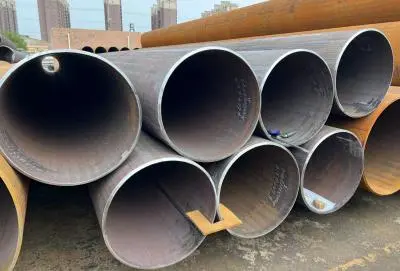
Longitudinally Submerged Arc Welded (LSAW) is a method of making large-diameter ISO 3183 L415 pipes for trunk line service. In this method, steel plates are shaped into cylinders and connected with high-quality double-sided welds. This method makes welds that are very strong and can handle wall thicknesses up to 50 mm. Spiral Submerged Arc Welded (SSAW) pipes are cheaper for some diameter-thickness pairs, but they can't be used in high-pressure situations because of worries about the shape of the helical joint.
Longma Group's 230,000-square-meter factories use advanced forming tools and automatic welding stations that keep exact heat input control, which is important for keeping the properties of the base metal in the heat-affected zone. Our production lines get high-quality steel plates from famous mills like Bao Steel and HBIS. This makes sure that the chemistry and mechanical qualities are always the same before the first step of forming.
Non-Destructive Testing Protocols
Comprehensive NDT systems separate high-end makers from producers of basic goods. Automated Ultrasonic Testing (UT) systems look at the whole pipe body and all longitudinal welds to find flaws inside that can't be seen. Radiographic Testing (RT) with X-rays or gamma radiation makes lasting film records of the quality of the weld, which is needed for important pipeline parts and to follow the rules in many places. Magnetic Particle Inspection (MPI) finds cracks that break the surface, and hydrostatic testing puts each pipe under forces that hit 90% of its minimum yield strength. This proves that it doesn't leak when it's under stress.
For PSL2 purchase, Charpy V-Notch impact tests must be done at temperatures that are similar to the expected service conditions. For cold-climate projects, these temperatures are often 0°C or -20°C. Three samples from each heat and lot are broken in a controlled way, and the numbers for the received energy show that they are tough enough. As an addition to CVN data for large-diameter uses, Drop Weight Tear Testing (DWTT) simulates how cracks stop spreading quickly.
Certification and Traceability Systems
Mill Test Certificates (MTC) list all the parameters that were tried, from Optical Emission Spectroscopy for chemistry analysis to tensile and impact testing for mechanical property verification. Our quality management system keeps records of the complete chain of custody, connecting finished pipes to specific steel heats, production dates, and testing results. This is very important for lifetime tracking in case problems arise in the field decades after installation. API 5L approval from recognized bodies and ISO 9001:2016 compliance show that quality controls are built into every step of the manufacturing process.
Comparative Advantages and Limitations
Strengths of ISO 3183 L415 Applications
ISO 3183 L415 pipes work great for projects that need to save money and follow foreign standards, which makes buying from other countries easier and getting approval from regulators. The global acceptance of the standard makes engineering reviews easier when projects are spread across multiple countries with different codes. Many foreign consulting firms and companies use ISO standards as a default to make sure that their work is consistent across the whole world. Material prices are often competitive because there are more suppliers to choose from and factories in Asia, Europe, and developing markets.
The optimal strength-to-weight ratio of this grade lets you save a lot of material compared to smaller grades. When designing an ultra-high-pressure gas transmission line with L415 pipe, the walls can be 25% thinner than comparable L290 standards. This means that the line will cost less to ship, be easier to handle, and require fewer welding consumables. These savings add up to big economic benefits for projects that move huge amounts of stuff over long distances, like transcontinental energy lines.
API 5L X65 Market Position
The North American market is dominated by API 5L X65 because it is well-known by regulators and has well-established supply networks. Engineering companies and contractors in the U.S. have a lot of experience with API standards, which makes the design review and approval process go more quickly. Pipe mills and service providers in the United States keep X65 inventory on hand so that projects can be started quickly. This cuts down on the time it takes to buy materials, which is very important for tight building plans.
Because the standard is used by many, there are mature testing methods, well-documented failure analysis case studies, and performance records that go back decades. This working past gives risk-averse stakeholders who are looking at the long-term reliability of an asset trust. When deciding how to finance big infrastructure projects, insurance companies and project lenders often look kindly on API compliance.
Potential Limitations and Considerations
Neither specification by itself ensures that the product will work in harsh circumstances. No matter what the base norm is, settings that are very sour and have high levels of hydrogen sulfide require extra testing of materials according to NACE MR0175/ISO 15156 standards. For Arctic uses, extra cold-temperature impact testing is needed on top of the normal PSL2 needs to make sure the product works well at -40°C or lower.
Weldability problems can happen if the process isn't qualified or if the welder isn't trained well enough, especially when heavy-wall parts are joined in the field. To avoid weld flaws, both L415 and X65 grades need careful hydrogen control, the right amount of preheating, and controlled cooling rates. The procurement teams need to make sure that the fabrication contractors have the right welding procedure specs (WPS) for the pipe grade and joint design.
Conclusion
Both ISO 3183 L415 pipes and API 5L X65 pipes meet the same functional requirements. They both have a yield strength of 415 MPa, which is necessary for current high-pressure transmission systems. Your choice is based on regional regulatory tastes, supply chain operations, and project-specific documentation needs, not on differences in performance. PSL2 versions of either standard give important uses in tough environments the extra toughness and weldability assurance they need. A good procurement process combines the cost of materials with the dependability of suppliers, the timeliness of deliveries, and the completeness of quality paperwork. Partnering with experienced makers with track records and full certification packages lowers risks and makes sure that your pipeline infrastructure meets the needs of operations for decades to come in a safe and cost-effective way.
FAQ
Are ISO 3183 L415 and API 5L X65 pipes truly interchangeable?
Yes, the specs list the same necessary mechanical properties, so in engineering formulas, they are the same thing. But project specifications and government approvals usually set one standard, which means that procurement has to match paperwork perfectly, even if the performance of the materials is still the same.
What quality verification tests should I prioritize during inspection?
First, look over the mill test certificates that prove the chemical makeup and mechanical qualities. Next, look over the Non-Destructive Testing records that show the full ultrasonic and radiographic examination. Documentation of the hydrostatic test pressure and Charpy impact results for PSL2 grades are necessary to prove the quality of the goods before they are shipped.
How do I verify supplier credibility for international purchases?
Ask for copies of the API 5L license and ISO 9001 quality system credentials, and then look at examples from past projects that were similar. Inspection services from a third party can check out factories and watch tests, giving claims of skills and quality systems an independent check.
Partner with Longma Group for Premium ISO 3183 L415 Pipe Supply
Longma Group is a qualified ISO 3183 L415 pipe manufacturer that has been providing to energy infrastructure projects around the world for 20 years. Our production capacity of 1,000,000 tons per year includes modern LSAW and ERW techniques along with strict quality control measures that meet PSL1 and PSL2 standards. We get high-quality base materials from Bao Steel, HBIS, and Shougang. This way, we can be sure that the mechanical traits and weldability will stay the same at all temperatures.
Our full range of services includes manufacturing skills like beveling, hydrostatic testing, and applying anti-corrosion finishes (3LPE, FBE, hot-dip galvanizing) that are specific to your project needs. Full paperwork support gives you inspection and test plans, material test certificates, and manufacturing procedure specifications that meet the strictest government standards. Our technical consulting services help engineering teams with things like design optimization, choosing the right materials, and field welding processes.
Contact info@longma-group.com today to discuss your pipeline project requirements with our skilled sourcing experts. We offer low prices for large orders, easy payment options, and dependable shipping times that meet your building deadlines in markets around the world, including Asia, the Middle East, and Europe








