
When EPC procurement teams evaluate line pipe for a new gas trunkline or oilfield gathering system, one grade keeps appearing in owner technical specifications: the ISO 3183 L450 pipe. Equivalent to API 5L X65, this grade delivers a minimum yield strength of 450 MPa paired with a minimum tensile strength of 570 MPa — a balance that satisfies most onshore high-pressure transmission requirements without the added cost of higher-grade alternatives. This guide walks through specifications, grade comparisons, sourcing strategy, and real-world performance so your team can move from specification review to purchase order with confidence.
|
|
|
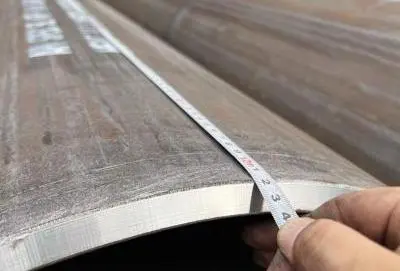
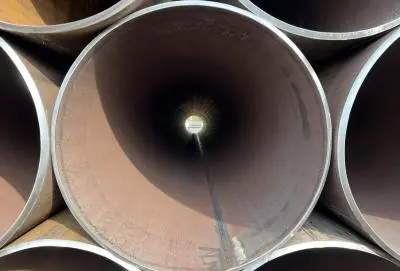
Understanding ISO 3183 L450 Pipe Specifications and Standards
Chemical Composition and Microalloying
This is a low-carbon steel microalloyed with Nb, V, and Ti. The Carbon Equivalent (CEV) stays low enough for reliable field girth welding, with a carbon content of 0.22% or less and a manganese content of up to 1.60%. Sulfur and phosphorus levels are closely monitored to lower the amount of inclusions. This directly improves impact resistance and weld zone toughness, which are two qualities that are always checked by outside testers during project audits.
Mechanical Performance Data
For this grade, the minimum yield strength is 450 MPa, the minimum tensile strength is 570 MPa, and the minimum elongation is 21%. Charpy V-notch impact testing is required by PSL 2 to confirm low-temperature performance. Charpy absorption energy stays the same from room temperature to -40 °C, and Drop Weight Tear (DWT) testing shows that it can stop cracks in permafrost areas. These numbers are not marketing hype; they are taken straight from mill Material Test Certificates (MTC) that are formatted to EN 10204 3.1 or 3.2.
Delivery Conditions and Testing Methods
The delivery conditions for L450 are ME (thermomechanical as-rolled) and QE (quenched and tempered). This gives project engineers options based on wall thickness and service temperature. A normal non-destructive test includes UT testing of the whole weld seam and the pipe body, as well as RT testing at the ends of the welds. Before any pipe leaves the mill, it goes through a quality gate that includes hydrostatic pressure testing and dimensional inspection.
Comparative Analysis: ISO 3183 L450 vs Other Industry Grades
L450 vs API 5L X52 and L360
The lowest stress strength for X52/L360 is only 360 MPa, so builders have to choose walls that are thicker to get the same design pressure. For a long trunkline, thicker walls make the pipes heavier, take longer to weld, and cost more in consumables. The L450 has a thinner wall but still has the same pressure grade. This means that less material is needed and the cost of supplies per kilometer is lower, which is a big savings for projects that go over hundreds of kilometers.
L450 vs L485 and L555
It is possible to get higher pressure by going up to L485 or L555, but there are real costs involved. Higher-grade steels need stricter rules for preheating, more expensive welding supplies, and more careful process controls to make sure the coating sticks. L450 is in the perfect range because most EPC contractors are familiar with the welding procedure, the FBE and 3LPE coating systems work well together, and there are enough suppliers to keep prices low and lead times short.
L450 vs ASTM A106
The ASTM A106 Grade B pipe is made of seamless carbon steel and is designed to work at high temperatures. It is mostly used in process piping and not for long-distance transmission. It is not certified for API 5L or ISO 3183 L450 pipe, and it does not offer PSL 2 sour service. A106 can't be used instead of ASME B31.8 or B31.4 for pipeline projects where the owner's requirements refer to ISO 3183. To avoid expensive material rejections during third-party inspection, procurement teams must make sure that the grade they choose exactly fits the specification sheet.
Procurement Guide for ISO 3183 L450 Pipes
Evaluating Manufacturer Qualifications
Anyone who wants to make ISO 3183 L450 pipes must have a valid API 5L license that covers both PSL 1 and PSL 2, an active ISO 9001 quality management certificate, and the ability to issue EN 10204 3.1 MTC, with 3.2 available in case the owner's inspection needs to co-sign. Ask the mill for the expiration date of its API 5L license, a copy of its most recent surveillance audit report, and proof of the NDT equipment calibration plan before sending out an RFQ. These three papers get rid of the most common reasons why an owner's expert review is turned down.
Lead Time, Pricing, and Stock Management
It usually takes 4 to 8 weeks to make large-diameter LSAW pipe with wall thicknesses above 20 mm. For jobs with tight deadlines, some mills keep a backup stock of standard sizes (e.g., 24", 30", and 36" OD in common wall thicknesses) so that stocked sizes can be delivered faster, within 7 days. Volume brackets help with pricing for bulk orders. Splitting a project order between two or more suppliers to save a little money per ton usually backfires when inspection times clash. ITP planning is easier, and QA man-hour costs are lower when there is only one approved source.
Customization and Documentation Requirements
PSL 2 sour-service pipe needs extra HIC and SSCC testing according to NACE MR0175 / ISO 15156, and the mill must list the H₂S partial pressure limits in the MTC. Check to see if the owner's requirements call for SAWL (single longitudinal seam) or DSAW (double-submerged arc weld) construction, and describe the condition of the inside surface if a coating will be used to reduce drag. Full sets of paperwork, including ITP, MPS, MTC, NDT reports, and SGS or Bureau Veritas third-party inspection certificates, should be agreed upon in writing when the contract is signed, not after the production has begun.
Application and Performance of L450 Pipes in Oil and Gas Projects
Onshore Gas Trunklines and Distribution Networks
L450 is the grade most often used for natural gas main pipes on land and high-pressure gas delivery networks in cities. Its strength-to-weight ratio lets designers cut down on wall thickness compared to lower grades. This saves money on materials without lowering design pressure. In project technical data sheets reviewed at OTC and ADIPEC industry meetings, this grade was specified by a number of national transmission system owners in the Middle East, Southeast Asia, and South America.
Oilfield Gathering and Crude Oil Transmission
In oilfield gathering systems, pipelines often have to deal with changing fluid compositions and changing internal pressures. L450 PSL 2 with NACE-compliant chemistry can handle mild sour service, which means it can work in low H₂S partial pressure environments. This means it can be used for gathering wet gas and sending medium-pressure crude oil. External corrosion protection is done with FBE or 3LPE systems, and internal drag-reducing coatings work with the ISO 3183 L450 pipe's internal surface finish.
Limitations to Consider
L450 isn't always the best choice for business situations. This grade isn't good for ultra-high-pressure underwater submersible uses, places where the temperature drops below −45 °C, or high-sulfur service that goes beyond what NACE MR0175 allows. In those situations, engineering teams should look at options made of L485, L555, or duplex stainless steel. By staying within the approved service envelope of L450, both the project's integrity and the supplier's responsibility are kept safe.
Why Choose ISO 3183 L450 Pipe? A Rational Buyer's Perspective
Cost and Supply Chain Efficiency
When used on land and the operating pressure doesn't need the higher grade, L450 always gives better cost performance than L485 or L555. Because the supplier base is more established, there are more qualified manufacturers, bids are fairer, and wait times are shorter. When EPC contractors are working on multiple projects at the same time, having a single approved L450 supplier with API 5L PSL 1/PSL 2 certification across a wide size range makes it easier to qualify vendors and cuts down on the work that needs to be done for audits.
Certification and Traceability
From the raw material to the end product, each pipe has full heat and lot tracking. When combined with EN 10204 3.1/3.2 MTC, third-party reports from SGS or Bureau Veritas meet the documentation needs of most owner technical specifications and project quality audits. This ability to track back saves the EPC provider in case questions come up during building or commissioning.
Long-Term Supplier Relationship Value
EPC contractors who find a reliable L450 manufacturer and pass the initial mill audit can place repeat orders at agreed-upon prices and lead times for future projects. This continuity cuts the time it takes to buy things from the usual one to three months to just a few weeks for follow-up orders, which directly protects project schedule margins.
Conclusion
ISO 3183 L450 pipe occupies a practical middle ground in pipeline material selection — strong enough for most onshore high-pressure applications, cost-effective to procure and weld, and supported by a mature global supply base. For EPC procurement teams working to tight milestones with rigorous third-party inspection requirements, choosing a qualified manufacturer with current API 5L certification, full MTC documentation, and demonstrated audit-readiness is the lowest-risk path to on-time delivery and audit sign-off. Verify certifications early, align documentation requirements at contract, and plan lead times against your project schedule.
FAQ
1. Is ISO 3183 L450 the same as API 5L X65?
In a precise sense, ISO 3183 L450 and API 5L X65 are the same grade. They are both made with the same PSL 1 and PSL 2 qualification frameworks and have the same minimum yield strength of 450 MPa. In many owner requirements, either name can be used instead of the other.
2. What is the difference between PSL 1 and PSL 2 for L450?
PSL 1 handles the most basic chemical and motor needs. Charpy V-notch impact testing is now required by PSL 2. Tougher chemical limits and fracture toughness standards have also been added, and sour-service supplementary testing is now available. PSL 2 is what owners ask for in most foreign gas transportation projects.
3. Can L450 PSL 2 be used in sour service environments?
In some cases, yes. If you make PSL 2 pipe that meets the extra standards of NACE MR0175 and ISO 15156, it can handle light sour service as long as the H₂S partial pressure stays within certain limits. Extremely high sulfur environments are outside of L450's tested range and need different material solutions.
4. How do I verify that a supplier's API 5L certificate is valid?
Ask for the certificate number and expiration date, and then use api.org to check the API Monogram Program database immediately. For a license to be acceptable, it must cover the exact pipe grade, size range, and PSL level that your project needs.
5. What documentation should I request before placing a bulk order?
Ask for the current API 5L license, the ISO 9001 certificate, an example of an MTC in EN 10204 3.1 format, the mill's ITP, qualifications for the NDT process, and references from SGS or Bureau Veritas checks that have already been done.
Source Your ISO 3183 L450 Pipe Supplier Through Longma Group
Since 2003, Longma Group has been making LSAW and ERW steel pipes and sending them to more than 90 countries every year. They produce more than 1,000,000 tons of steel each year. The API 5L PSL 1 and PSL 2 certification we offer covers all sizes of L450. It also comes with an EN 10204 3.1/3.2 MTC inspection, 100% UT/RT inspection, and third-party papers from SGS and Bureau Veritas. As a direct manufacturer of ISO 3183 L450 pipes, we help with owner hold-point inspections and give full ITP and MPS documentation for EPC project audits. You can get a technical quote from our team by emailing info@longma-group.com.