
If you're sourcing line pipe for an onshore gas trunkline or a high-pressure crude gathering system, the price of ISO 3183 L450 pipe is rarely a single number. It shifts with steel markets, production methods, coating requirements, and your supplier's certification status. As someone who works closely with EPC procurement teams, I've seen projects lose margin not because they paid too much for the pipe itself, but because they didn't account for the full cost picture. This article breaks down every factor that moves the price needle on L450 grade pipe, so you can build a sharper budget and a stronger supply chain.
|
|
|
Understanding ISO 3183 L450 Pipe Specifications and Their Impact on Price
What the Standard Actually Defines
For oil and natural gas pipeline systems, ISO 3183 L450 is a line pipe grade set by the International Organization for Standardization. The number "450" means that the minimum yield strength is 450 MPa, which is the same as API 5L X65. It is made from low-carbon Nb/V/Ti microalloyed steel that has its sulfur and phosphorus levels tightly managed. It has a minimum tensile strength of 570 MPa and an extension of ≥21%.
PSL1 vs. PSL2 and the Price Gap
The Product Specification Level has a direct effect on your bill. PSL1 includes basic requirements for size and strength. Charpy V-notch impact testing is now required by PSL2. There are also stricter chemical controls and choices for sour-service (HIC/SSCC) protection according to NACE MR0175. Because they have to go through more tests and stricter steel chemistry, PSL2 pipes usually cost 5–12% more than PSL1 pipes of the same size.
Dimensional Tolerances and Their Cost Influence
Tolerances for wall thickness, outer diameter, and pipe-end squareness all affect how long it takes to set up the mill and how many parts are rejected. Tighter margins raise the cost of production, especially for LSAW pipe with a diameter of more than 24 inches. When projects need EN 10204 3.1 or 3.2 material test certificates, they add fees for coordinating inspections that get added to the unit price.
Main Factors That Drive the Cost of ISO 3183 L450 Pipes
The main thing that changes in any L450 price quote is the cost of the raw materials. Prices for hot-rolled coil and plate can change by 15–25% in a single year, depending on the markets for iron ore and coking coal. To keep an eye on costs, here are the main ones:
- Steel grade and chemistry controls: Microalloyed steels with Nb, V, and Ti additions cost more to produce than plain carbon grades. The strictly controlled CEV (Carbon Equivalent Value) that makes L450 field-weldable adds real mill cost.
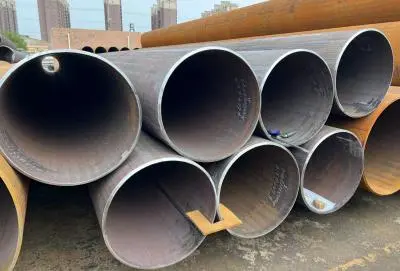
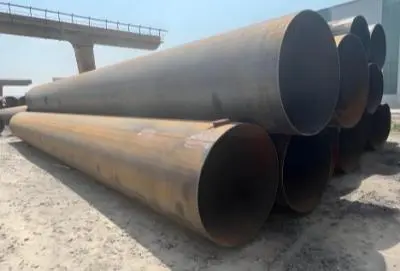
- Manufacturing process — seamless vs. LSAW vs. ERW: Seamless ISO 3183 L450 pipe for small diameters carries a higher per-ton cost than ERW pipe. For large-diameter trunklines, LSAW (Longitudinal Submerged Arc Welded) pipe is the standard choice and sits between the two in cost. Longma Group produces both ERW and LSAW pipe, giving buyers flexibility to match the right process to their diameter and pressure requirements.
- Quality assurance and non-destructive testing: Full-body UT, weld seam RT, hydrostatic testing to 90% SMYS, and DWTT for PSL2 all add per-joint cost. Skipping these is not an option on API 5L or ISO 3183 certified supply.
- Anti-corrosion coatings: FBE (Fusion Bonded Epoxy) adds roughly $15–40/m² to pipe cost depending on diameter. Three-layer polyethylene (3LPE or 3PE) coatings cost more but significantly extend service life in buried onshore applications — reducing lifecycle expense even when upfront price rises.
These four drivers work together. There is a big difference in performance between a bare PSL1 ERW pipe and a PSL2 large-diameter LSAW pipe with 3PE coating and full third-party inspection. This is how it should be, since the price is higher.
Comparing ISO 3183 L450 Pipe to Alternative Pipeline Materials and Standards
L450 vs. API 5L X65
In terms of yield strength and tensile requirements, the two grades are the same. The main difference is the standard structure. International NOCs and European-led EPC contracts usually use ISO 3183, while US and Middle Eastern projects mostly use API 5L. Qualified mills can offer dual certification, which means that a single pipe is certified to both standards. This removes the risk of replacement during third-party audits.
L450 vs. L415 and X52
L415 (X60) and X52 have lower yield strengths, which means that thicker walls are needed to meet the same working pressure. On a 100 km trunkline, switching from L415 to L450 can cut the amount of steel used by 8–10%, which makes up for the stronger grade's slightly higher price per ton. It's not cost-per-ton that counts, but cost-per-kilometer.
L450 vs. L485 and L555
Moving up to L485 (X70) or L555 (X80) increases the cost of the material per ton and requires more precise welding methods and better tools. It's clear that L450 is cheaper than the other two grades because its welding supplies are easier to find, its field girth welding methods are well-established, and its production costs are still lower. Most onshore gas distribution and oilfield gathering jobs can be done with L450 because it is strong enough without being too expensive or hard to work with.
Procurement Considerations That Influence ISO 3183 L450 Pipe Price
Order Volume and Lead Time
Through economies of mill scheduling and buying raw materials, bigger orders lower the cost per unit. A 500-ton order from the same mill might cost 6–10% less per ton than a 50-ton spot order. It's also important to have a flexible lead time. A standard production window of 60–90 days usually gets you a better price than a compressed 30-day delivery, though mills with standard dimensions in stock can offer fast turnaround.
Supplier Certification and Traceability
For EPC projects, having API 5L approval, ISO 3183 L450 pipe quality management, and third-party review acceptance (SGS, Bureau Veritas) is required by law and can't be skipped. Buying from a mill whose API license is up to date and whose quality records support EN 10204 3.2 witness inspection will keep your project on track and lower the risk of an audit. Longma Group has current API 5L, ISO 9001, and HSE management certifications. It gets its raw materials from well-known Chinese mills like Bao Steel, HBIS, and Shagang.
Freight, Customs, and Import Duty
FOB China's prices are just the beginning. Ocean freight to the Middle East, Southeast Asia, or South America costs an extra $30 to $80 per ton, depending on the pair of ports and the state of the market. Import taxes are different for each country they go to. Some EPC-designated project sites can get duty exemptions under bilateral trade deals, which can make the landed cost much lower.
How to Test and Verify ISO 3183 L450 Pipe Quality Before Purchase
Chemical and Mechanical Verification
Ask for a full product analysis report that confirms the levels of carbon equivalent, Mn content, and microalloying elements. The tensile strength must be at least 570 MPa and the yield strength must be at least 450 MPa. As per the standard, elongation should be at least 21%.
Non-Destructive Testing Requirements
Full-body UT finds flaws in the pipe body that are laminar. For LSAW pipe, weld joints must have RT or automatic UT. Hydrostatic testing at the mill, which is written down in the MTC, makes sure that the pressure integrity is complete before shipping.
Documentation Review and Third-Party Inspection
It is important to look over the Inspection and Test Plan (ITP), the Manufacturing Procedure Specification (MPS), and EN 10204 3.1 or 3.2 MTC before the goods are shipped. For an owner-witnessed inspection, make sure the mill can handle permanent third-party inspectors. This is a strict requirement for most NOC-led EPC projects and has a direct impact on the choice of supplier.
Conclusion
A steel market index is not the only thing that affects the price of ISO 3183 L450 pipe grade line pipe. The final landed cost changes depending on the type of steel, the production method, the PSL level, the coating standard, the order number, the state of the certification, and the logistics. Knowing about these factors gives EPC buying teams real power when negotiating with suppliers and making budget plans. L450 is a great deal because it performs at the same level as X65, can be welded using standard methods, and costs less to make than better grades. This makes it the best choice for onshore oil and gas pipeline projects around the world.
FAQ
1. What is a typical price range for ISO 3183 L450 pipe?
Prices change with the steel market, but LSAW L450 pipe usually costs between $700 and $1,100 per ton FOB China, based on the diameter, wall thickness, PSL level, and finish. At the top is PSL2, which has sour-service tests and a 3PE finish.
2. Is L450 pipe more durable than API 5L X52?
Yes. The lowest yield strength for L450 (X65) is 450 MPa, while the lowest for X52 is 358 MPa. This means that L450 can handle higher operating pressures at the same wall thickness. This lowers the total weight of the material and makes it more resistant to fatigue over time in cycling pressure service.
3. Can L450 pipe be customized for sour gas service?
If you follow NACE MR0175, you can make PSL2 grade L450 that is resistant to HIC and SSCC in mildly sour environments with low H₯ content. You should check with your supplier during the technical review stage to make sure this is available for all wall thicknesses and diameters.
4. What delivery conditions are available?
You can get L450 pipe in two different shipping conditions: ME (as-rolled) and QE (quenched and tempered). It is common for QE delivery to be required for service at low temperatures of up to -40 °C and for PSL2 Charpy impact requirements.
Request a Competitive Quote from Longma Group
From 2003 to now, Longma Group has sent ISO 3183 L450 pipe and API 5L X65 line pipe to projects in over 90 countries. Our ERW and LSAW production lines, along with our in-house FBE and 3PE anti-corrosion coating services, let you get everything from a single ISO 3183 L450 pipe manufacturer whose quality records can be checked. For a price that is tailored to your project, email info@longma-group.com with the details and amounts you need.








