
When purchasing line pipe for important energy infrastructure, buying managers and pipeline experts have to make a big choice: should the pipe be seamless or welded? ISO 3183 L450 pipe, which is technically the same as API 5L X65, is a medium-strength grade with a minimum yield strength of 450 MPa that strikes a good balance between cost-effectiveness and structural integrity. Seamless types are best for high-stress applications that need smaller sizes and walls that are all the same thickness. On the other hand, welded types, which can be made using ERW or LSAW methods, are most common for large-diameter, long-distance gearbox projects because they are easier to make and cost less. Even though both forms meet strict international standards, they don't work the same way when it comes to welding, keeping dimensions, and project costs.
|
|
|
Understanding ISO 3183 L450 Pipe Specifications
Mechanical and Chemical Foundation
The minimum yield strength for ISO 3183 L450 pipes is 450 MPa, and the minimum tensile strength is 570 MPa. They can also stretch more than 21%. This performance comes from low-carbon microalloyed steel that has niobium, vanadium, and titanium added in a controlled way. Strict limits on sulphur and phosphorus impurities make it easier to weld and less likely that hydrogen will cause cracks in sour service conditions. The Carbon Equivalent Value stays below 0.43 for the most part, which lets field girth welding happen without a lot of preheating. This is a huge benefit in remote pipeline building zones where getting tools is hard because of logistics.
PSL1 and PSL2 Quality Levels
Different levels of product specifications show different levels of quality assurance. PSL1 meets basic mechanical needs and has standard size ranges, making it ideal for medium-pressure systems that operate in predictable conditions. PSL2 requires extra Charpy V-notch impact tests, smaller chemical makeup windows, and full recording of all traces. When plant equipment managers choose materials for areas with permanent frost or a lot of earthquakes, they make sure that PSL2 is tested for toughness at low temperatures of up to -40°C. This difference has a direct effect on lead times and prices for purchases, since making PSL2 requires more heat treatment cycles and non-destructive testing protocols.
Manufacturing Methodology Implications
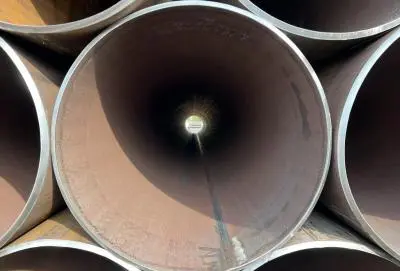
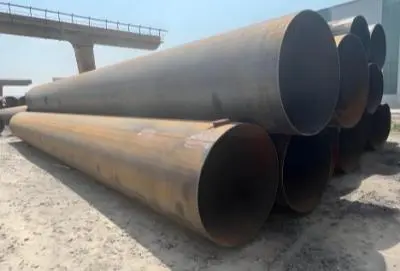
Seamless pipes are made from solid billets that are shaped by rotary piercing or extrusion. This creates a uniform microstructure that doesn't have any longitudinal weld seams. This way of making things means that widths can only be about 660 mm, but the walls are thick and the mechanical qualities are the same everywhere. Electric Resistance Welding is used for diameters up to 24 inches, and Submerged Arc Welding is used for gearbox lines with a diameter of more than 1,200 mm. There are differences in the mechanical qualities along the weld seam, but current post-weld heat treatment and ultrasonic inspection procedures keep these differences to a minimum. Dimensional accuracy varies. Seamless pipes have tighter tolerances on ovality and wall thickness uniformity. Welded pipes, on the other hand, can be made in a variety of lengths and can produce large orders more quickly.
Seamless Pipes vs Welded Pipes under ISO 3183 L450—Technical Comparison
Microstructure and Strength Characteristics
The thermomechanical control of hot extrusion processes used to make seamless pipes makes the grain structures more refined. Welded pipe metallurgy is easier to understand when there are no heat-affected zones because there are no join fusion zones. In branch connection welding and hot tapping, where knowing how the material will react ahead of time lowers risk, structural engineers value this uniformity. On the other hand, Longma Group's LSAW pipes go through a normalised heat treatment after they are welded to make the microstructure the same across the weld seam and the parent material. When done correctly, this treatment produces mechanical properties that meet or go beyond ISO 3183 L450 pipe requirements. This was proven by destructive testing on production samples.
Corrosion Resistance and Compatibility with coatings
Standard anti-corrosion systems, such as Fusion Bonded Epoxy, three-layer polyethylene, and interior drag-reducing coatings, can be used on both smooth and welded forms. The main difference shows up in how well the coating sticks at weld seams, where surface preparation needs to take into account any mill scale or heat tint that might be there. Longma Group uses automatic grit blasting and chemical cleaning lines to get surfaces with a Sa 2.5 profile before painting them. This makes sure that the coating sticks evenly around the whole pipe. Microalloyed steel chemistry in L450 grade resists atmospheric rust better than plain carbon grades. This means that the steel will last longer in humid coastal settings that are popular in Southeast Asian projects.
Economic and Lead Time Factors to Think About
Manufacturing complexity has an effect on budgets for buying things. Manufacturing seamless pipes requires several stages of forming and heating that use a lot of energy. As a result, they usually cost 15 to 30 percent more than welded pipes of the same size. This difference in prices gets smaller for widths smaller than 12 inches, since making welded pipes more efficiently gets harder at those sizes. Lead times are very different. For welded pipe sales, continuous mill operations can meet large-diameter, long-length requirements in 4 to 6 weeks. However, for seamless production, ordering often takes 8 to 12 weeks because of batch processing limits. When project procurement managers try to find a balance between budget security and schedule risk, they have to look at both of these issues along with the technical needs that determine the choice of materials.
ISO 3183 L450 Pipe in Industry Applications
Oil and Gas Transmission Networks
The main place where L450 grade material is used is in onshore natural gas main pipes. The balanced strength-to-cost ratio makes it possible to design walls with a low cost for operating pressures of 10 to 15 MPa, which are common in continental trunk line systems. Large projects, like the MOBIL OIL infrastructure in Australia, depend on large-diameter LSAW pipes that are made to PSL2 standards. Charpy impact testing at -20°C makes sure that the pipes can handle changes in temperate climates. Both seamless small-bore laterals and welded header pipes are used in oilfield gathering systems that work with unconventional shale formations. The choice of material is based on the amount of hydrogen sulphide present and the changes in operational pressure.
Water Transmission and Structural Applications
In addition to carrying hydrocarbons, ISO 3183 L450 pipes are used in city water supply systems that need long-lasting, high-pressure lines. The grade is easier to weld than higher-strength options, which makes field joint building easier in urban distribution networks where traffic disruptions need to be kept to a minimum. More and more, structural engineers are using L450 hollow sections for bridge piers and offshore platform jacket structures. They do this because the material is tough and comes in both seamless and welded forms. For these non-traditional uses, strict quality documentation is needed. Longma Group offers detailed Material Test Certificates and Inspection and Test Plans that meet the needs of engineering firms for tracking structural steel.
Sour Service and Harsh Environments
Customisation of the PSL2 grade allows for mild sour service in sources with low hydrogen sulphide levels. When combined with the right hardness limits, the controlled sulphur content and shape of the inclusions made possible by calcium treatment make the metal less likely to crack from sulphide stress corrosion. Drop Weight Tear Testing shows that heat treatment under quenched and tempered delivery conditions improves the material's ability to stop cracks even more. Plant equipment managers need to know when a material's performance is limited. For example, L450 is still not ideal for harsh high-sulfur environments or ultra-deep underwater installations below 500 meters of water depth; in these cases, higher-grade materials like L555 or X70 are needed.
Conclusion
Choosing between seamless and welded ISO 3183 L450 pipe depends on how well the technical needs and business facts match up. When it comes to demanding applications, seamless options offer uniform properties, while welded options save money on large-diameter gearbox projects. When bought from qualified makers who follow the right heat treatment and inspection procedures, both formats meet strict international standards. To be successful at procurement, you need to know the limits of performance, look at the total cost of ownership, and work with suppliers who can provide both manufacturing and technical expertise. Important choices made during project planning have long-lasting effects on how well the building is built and how reliably it works.
FAQs
What distinguishes seamless from welded L450 pipe?
Seamless pipes are made from solid billets that don't have any longitudinal welds. They have uniform wall thickness and isotropic properties that make them perfect for applications with small diameters and high stress. Welded pipes are made by shaping a plate or coil into a cylinder shape and joining the edges using ERW or SAW methods. This allows for larger diameters and faster production, but there are some things to keep in mind with the ISO 3183 L450 pipe weld seam.
How does heat treatment affect pipe performance?
The delivery conditions of quenching and tempering improve the microstructure, making the material tougher at low temperatures and better at stopping cracks. This process is necessary in areas with permanent cold and in seismic zones, where the ductility of the material stops brittle fractures from spreading during ground movement or changes in pressure.
Where can buyers find L450 providers who are certified?
Reliable manufacturers keep their ISO 9001 certification and API 5L monogram licenses. Longma Group is a good example of a certified supplier that has full quality documentation, can track raw materials from major Chinese mills, and offers fabrication services that help deliver turnkey projects around the world.
Partner with Longma Group for ISO 3183 L450 Pipe Solutions
Since 2003, Longma Group has been making high-quality LSAW and ERW line pipe and sending products certified by API 5L and ISO 3183 to more than 90 countries. Our factory covers 230,000 square meters and makes both small-bore seamless pipes and large-diameter welded pipes that meet L450 standards. These pipes are tested thoroughly using Charpy impact, hydraulic pressure, and ultrasound inspection. We only get our raw materials from Shagang, HBIS, and other top Chinese mills. This way, we can be sure that the chemistry is correct and the mechanical properties are consistent. As an experienced ISO 3183 L450 pipe maker, we offer full fabrication services, including beveling, coating application with FBE and 3LPE systems, and customising the dimensions. We also provide full paperwork packages that meet the needs of engineering firms. Email our technical team at info@longma-group.com to talk about the details of your project and get detailed quotes that are tailored to your budget and timeline.








