
To make sure that high-pressure, low-temperature pipeline systems have structural integrity, welding ISO 3183 L485 pipe needs to be done using carefully planned procedures and strict quality control. With a minimum yield strength of 485 MPa and a microalloyed composition that includes niobium and vanadium, this grade is hard to work with when it comes to fabrication because it can only handle a small amount of heat and is prone to defects caused by hydrogen. Mastering the rules for welding and putting in place thorough inspection systems will give project teams the confidence to use 3183 L485 pipe in important tasks like transporting hydrocarbons offshore or sending gas across borders, knowing that they will meet safety requirements and perform well in the long term.
|
|
|
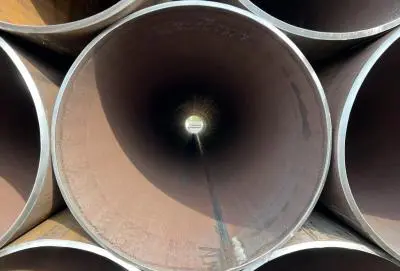
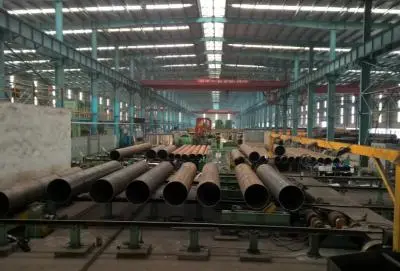
Understanding ISO 3183 L485 Pipe Welding Basics
Material Characteristics That Influence Weldability
The ISO 3183 L485 pipe grade is made of a hybrid Nb-V microalloyed steel that has a high manganese content. It is rolled carefully and cooled quickly to create an acicular ferrite microstructure. This metal design has a tensile strength range of 570–760 MPa and a minimum stretch value greater than 20.5%. This makes a strong matrix that stops cracks from spreading. The acicular ferrite form, which is made up of needle-shaped grains that fit together, makes this material very hard to break, even at temperatures as low as -40°C. This makes it essential for use in cold plains and northern climates. But the same alloying strategy that gives these benefits also puts strict limits on thermal processing—welders have to stay within a small temperature range to keep the grains from getting bigger or to stop the formation of brittle martensite islands in the heat-affected zone.
Common Welding Defects and Preventative Approaches
When pipeline engineers join ISO 3183 L485 pipe parts without following the right methods, they often find hydrogen cracking, solidification cracks, and partial fusion. Hydrogen cracking happens when products or base metal surfaces are contaminated with water. This is made worse by the high strength and mild carbon equivalent of steel. Solidification cracks appear when the welding parameters cause the metal to cool too quickly or when the restraint stresses are too high for the weld metal to handle while it solidifies. We've seen that keeping warmup temperatures between 50°C and 100°C and having strict interpass temperature limits around 250°C greatly reduces these risks. Using low-hydrogen electrodes that are kept in hot cabinets and making sure the joint is properly prepared by grinding and solvent cleaning help lower the number of defects even more. This protects both the quality of the weld and the project's schedule.
Suitable Welding Methods for L485 Applications
Manual shielded metal arc welding is still used for root pass and small-bore tie-ins because it can be done in a variety of places. However, gas metal arc welding and flux-cored arc welding are more common in production settings because they can deposit metal faster and are less sensitive to operator touch. Submerged arc welding is the best way to make longitudinal seams in mills that make large-diameter LSAW pipe because it provides consistent heat input and little contamination from the air. For each method, you need to choose the right consumables. Cellulosic electrodes make it easier to move downhill for field tie-ins, while basic low-hydrogen formulations give important welds better mechanical qualities when they are put through rough service conditions. The choice depends on things like the thickness of the walls, the temperature, how easy they are to get to, and how much work needs to be done. This shows how important it is for procurement managers to make sure that the requirements for the welding method match up with how things work before they start fabrication.
Systematic Approach to ISO 3183 L485 Welding Procedure Development
Defining Requirements Based on Service Conditions
To make a strong welding procedure specification, you must first carefully look at the pipeline's operating envelope, which includes its internal pressure, the composition of the medium being transported, its minimum design temperature, and different loading scenarios from the outside. Transporting natural gas at pressures higher than 10 MPa through areas where temperatures can change from +40°C to -30°C needs very different WPS parameters than shallow subsea installations that have to deal with hydrostatic compression and chloride exposure. The project's regulatory frameworks—whether they are ISO 3183 and ISO 15614, API 1104, or ASME B31.8—set the rules for testing and acceptance criteria that must be used in the qualification process. We have found that early collaboration between project engineers, welding coordinators, and procurement specialists stops expensive rework by making sure that the development of WPS takes into account both technical requirements and business constraints, like the need for available equipment, qualified staff, and meeting schedule milestones.
Critical Welding Parameters and Their Impact
Increasing the amount of heat (in kilojoules per millimetre) is the most important factor in determining the texture of the welded metal and the HAZ qualities in ISO 3183 L485 pipe joints. Too much heat—usually more than 2.5 kJ/mm for single-pass welds—makes austenite grains bigger and encourages the growth of bad things like upper bainite or martensite-austenite islands that weaken the strength. On the other hand, not enough heat can lead to incomplete fusion and high cooling rates that trap hydrogen that can move around, which can cause cracks to appear later. The second important factor is controlling the temperature during the interpass. Keeping the temperature below 250°C protects the fine-grained microstructures and gives enough heat to get rid of any remaining moisture. By changing the arc voltage and travel speed, you can finetune the shape of the beads. Lower voltages make profiles that are narrow and deeply penetrate the root, while higher voltages make profiles that are wider and flatter, ideal for fill and cap layers. Because of these connections, welding engineers must write down exact parameter ranges during WPS qualification and strictly follow them during production by using calibrated tools and watching in real time.
WPS Qualification Through Testing and Documentation
To qualify a welding process standard, test assemblies must be made that look like production joints. These must then be put through mechanical tests that show they meet ISO 3183 requirements. Transverse tensile specimens must have a strength equal to or greater than the minimum strength for the pipe body. Charpy V-notch samples taken from the weld metal, fusion line, and HAZ locations must meet certain impact energy thresholds at the design temperature. Bend tests check how flexible the metal is, and hardness checks across the weld cross-section make sure that no area is harder than 350 HV, which is a common limit beyond which sulphide stress cracking becomes too likely to happen. We keep detailed Procedure Qualification Records that list every parameter, test result, and batch of consumables. This makes a paper trail that procurement managers can check before sending equipment out for shipping. Even though it takes a lot of time and money, this methodical approach to qualification gives confidence that field welds will work reliably for the entire operational life of the pipeline.
Quality Control in ISO 3183 L485 Welding: Ensuring Reliability and Safety
Visual and Dimensional Inspection Protocols
Quality control starts with a visual check right after each pass of the welding machine. Inspectors trained to ISO 9712 or ASNT SNT-TC-1A standards look at the bead profile, surface finish, and lack of cracks, undercuts, or too much reinforcement. Dimensional verification makes sure that the joints are lined up within the allowed range (usually ±1.5 mm for circumferential welds) and that the heights of the weld reinforcements are within the allowed range, which is usually 3 mm above the pipe surface. Even though these checks seem simple, they find about 40% of problems before non-destructive testing tools are used up. This speeds up production and lowers costs. We've put in place inspection forms with check lists that are linked to specific hold points. This way, we can't move on to the next step of the process until all the quality gates are met, and we have written proof of process control that meets the needs of third-party certification bodies.
Non-Destructive Testing Methodologies
Radiographic testing with X-ray or gamma-ray sources looks at all of the circular welds in key service categories in a volumetric way. This shows any internal flaws like porosity, slag inclusions, and lack of fusion. Automated ultrasonic testing systems with phased-array probes offer the same level of sensitivity without the safety concerns of radiation. They can scan welds at speeds of over 300 mm per minute and make digital records that can be stored. Magnetic particle inspection finds cracks and surface-breaking in ferromagnetic materials. It is especially useful for final cap passes where thermal stresses are high. For non-ferromagnetic weld coatings or austenitic cladding, penetrant tests can be used instead. These NDT methods are used based on the needs of the project. For example, all seam welds must be ultrasonically tested under PSL2 conditions, and sour service applications may need both radiography and advanced ultrasonic techniques to get the defect detection rates needed for safe operation. To compare indications to acceptance criteria in ISO 10675 or API 1104 requires skilled workers whose credentials are checked during supplier audits. This is an important step that procurement teams should make when they are choosing fabricators.
Mechanical Testing and Corrosion Resistance Verification
Destructive testing takes samples from production welds at set times, usually one test unit per welding operator qualification or production lot, to make sure that the mechanical properties stay within the specifications as the part is being made. Tensile tests show that the strength of the weld is the same as or higher than the strength of the base metal, and bend tests show that the weld is flexible enough to handle the loads of installation. Charpy impact testing at the lowest design temperature, which for ISO 3183 L485 pipe applications is usually -40°C, makes sure that the energy received is higher than the threshold values needed to ensure resistance to brittle fracture. Hardness traverses make sure that no areas are too hard, which could cause cracking in sour environments with hydrogen sulphide. For projects that need anti-HIC or anti-SSCC performance, specific tests must be done according to NACE TM0284 and TM0177. These tests involve immersing samples in aggressive solutions and checking how likely they are to crack after 96 hours of exposure. Even though these mechanical and corrosion tests take more time and cost more, they provide quantitative evidence of weld integrity that supports engineering risk assessments and satisfies insurance underwriters who are deciding whether a pipeline project is viable.
Conclusion
To get reliable performance from ISO 3183 L485 pipe systems in the field, you need to use qualified welding procedures that have been tested thoroughly and are backed up by full quality control during fabrication and installation. The material's good strength-to-weight ratio and low-temperature toughness make it the best choice for tough jobs. However, these advantages mean that it needs careful thermal control when joining to keep the metal from breaking down. When purchasing things, teams need to look at more than just the price per unit. They also need to see how well the suppliers can provide full welding support, which includes creating procedures, writing them down, and giving technical advice. Engineering and procurement professionals can help their companies complete pipeline projects that meet safety requirements, performance standards, and budget limits while reducing the risks that come up over the course of the project's lifetime by understanding how the properties of the materials, the parameters for welding, and the inspection procedures work together.
FAQ
What preheat temperature is required for welding L485 pipe?
For ISO 3183 L485 pipe material, the recommended preheat temperatures are usually between 50°C and 100°C, but this can change based on the wall thickness, the temperature of the environment, and the need to control hydrogen. When it's cold outside, thicker parts need more preheating to slow down cooling and stop hydrogen cracking. In warm places, lighter-wall pipe may only need a little preheating.
Can L485 pipe be welded using cellulosic electrodes?
Cellulosic electrodes are often used for root passes in field tie-ins because they can go deep and burn through small amounts of contamination. However, these consumables release more hydrogen into the air than low-hydrogen options. This means that strict moisture control and approved methods that have been tested to make sure that the final weld has good mechanical qualities is needed.
How does wall thickness influence welding procedure selection?
Increasing wall thickness slows down cooling, which might mean lower preheat temperatures but usually means a post-weld heat treatment is needed to fix toughness issues in areas with large grain patterns that were affected by the heat. When joining thick-wall pipe, you need to use multi-pass methods with controlled interpass temperatures. But when joining thin-wall sections, you can use single or limited-pass methods that reduce the total amount of heat input and distortion.
Partner with Longma Group for Superior ISO 3183 L485 Pipe Supply
Longma Group is a reliable ISO 3183 L485 pipe manufacturer that meets the needs of pipeline experts and purchasing managers on all six continents. Our cutting-edge LSAW and ERW production lines cover 230,000 square meters and are certified by API 5L and ISO 9001. They make more than a million tonnes of linepipe every year that meets foreign standards like ISO 3183, API 5L, and ASTM. We get our premium coil from Bao Steel, Shougang, and HBIS. This makes sure that the chemistry is always the same, which makes it easier to qualify the welding procedure and do it in the field. Each delivery comes with a lot of paperwork, like Material Test Certificates, Inspection and Test Plans, and qualified Welding Procedure Specifications. This makes it easy to hand over the project and make sure it meets all the rules. In addition to selling products, we also offer expert advice throughout the entire lifetime of your project, from choosing the materials to fixing problems during installation. Our in-house welding engineering team is here to help. Get in touch with us at info@longma-group.com to talk about your needs and find out how working with a trusted ISO 3183 L485 pipe supplier can optimize both your procurement process and project outcomes.








