
When looking for high-strength line pipe for important infrastructure, it is very important to know how ISO 3183 L555 pipe and API 5L X80 work together. Technically, these two names mean the same thing; they both say that the minimum yield strength is 555 MPa and that the mechanical features are similar. The primary distinction lies in their origin: ISO 3183 is the international standard governed by the International Organization for Standardization, while API 5L represents the American Petroleum Institute's specification. Over recent decades, harmonization efforts have aligned these standards closely, enabling global procurement teams to use them interchangeably in most scenarios. Most of the time, regional legal requirements, client requirements, and provider certification portfolios are more important than basic differences when deciding between them.
|
|
|
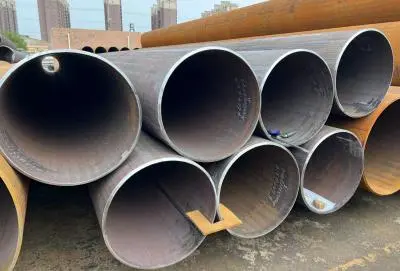
Introduction to ISO 3183 L555 and API 5L X80 Pipes
Defining the Standards and Their Industrial Context
Both ISO 3183 L555 pipes and API 5L X80 are the best line pipe grades that can be bought in stores. They were designed to carry energy at very high pressures. The numerical designation "555" and grade "X80" both signify minimum yield strength benchmarks—555 MPa or approximately 80,500 psi—that enable pipeline operators to reduce wall thickness substantially compared to lower grades like L485 or X70. This decrease directly leads to material cost savings of 15% to 25% on large projects with diameters of hundreds of kilometres.
For these grades, ultra-clean low-carbon steel with a higher manganese content and composite microalloying elements like niobium, vanadium, and titanium are used in the manufacturing process. Through Thermo-Mechanical Controlled Processing, this planned metallurgical design creates a very fine substructure of bainite and ferrite with charged particles. TMCP doesn't need to be heated after rolling, and it has better mechanical properties and can be welded better than regular normalised steels.
Material Composition and Manufacturing Excellence
To keep strength, toughness, and the ability to be welded in the field in balance, chemical makeup limits are strictly controlled. The amount of carbon in the metal usually stays below 0.10%, which keeps carbon equivalent values low enough that they don't weaken the weld. Manganese levels should be between 1.6 and 1.9% to give a solid solution that is strengthened without becoming too hard. Niobium and titanium are added in a planned way to improve the grain structure, and vanadium helps to strengthen the precipitation during controlled cooling.
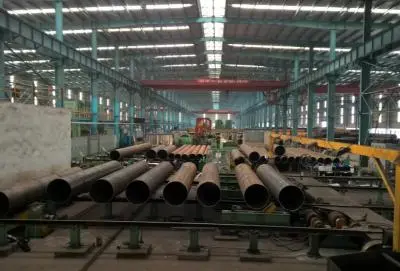
Inline inspection technologies, such as automatic ultrasonic testing grids and real-time dimensional tracking systems, are used in modern factories. Before they go into our LSAW production lines, raw materials from top local mills like Bao Steel and HBIS are carefully inspected by Longma Group. Our thermomechanical rolling settings are exactly set to reach the target austenite conditioning temperatures. This makes sure that the microstructural refinement is the same along the whole length of the pipe.
Detailed Comparison: ISO 3183 L555 vs API 5L X80 Pipes
Mechanical Property Benchmarks
The mechanical performance envelope shows how well something can work in the worst possible service conditions. The lowest yield strength is 555 MPa, and the highest tensile strength is between 625 and 825 MPa. This managed strength band makes sure that the material can handle enough strain stiffening without becoming too hard, which would make it less flexible. Elongation values of 19.5% or more show that the material can handle installation stresses and ground movement without breaking easily.
The yield-to-tensile ratio is still very important for pipeline safety engineering. The PSL2 standards say that this ratio can't be 0.93 or higher. This makes sure that there is enough ductility before the final failure. There are times when this trait is very important, like when pipes have to handle impact loads or bend when they are being installed in rough territory like the arctic tundra or hilly areas.
Manufacturing Methodology and Quality Tiers
Different Product Specification Levels separate normal uses from important service environments. PSL1 includes basic chemical and mechanical testing protocols that meet standard business needs. To make sure the quality is high, PSL2 requires full-length ultrasonic testing, radiographic weld inspection, and hydrostatic pressure testing at levels higher than 90% of the minimum yield strength. Because of the risks that come with sending high-pressure gas, almost all API 5L X80/ISO 3183 L555 pipes purchases are made under PSL2 conditions.
Our longitudinal submerged arc welding lines can make large-diameter thick-wall pipes up to 60 inches in diameter. Longma Group can use both ERW and LSAW to make its products. Our production potential each year is more than 1,000,000 tonnes, and we have full quality control systems that are certified to ISO 9001:2016, ISO 14001, and ISO 18001 standards. Drop weight tear testing is done on every production batch to make sure it doesn't allow ductile fracture spread, which is a must for high-pressure gas service.
Dimensional Tolerances and Field Compatibility
Quantity accuracy has a direct effect on how well an installation works and how well the joints hold together. To make sure that things fit right during field welding operations, out-of-roundness tolerances are strictly controlled. Wall thickness consistency ensures consistent pressure containment capability around the entire pipe diameter, while length tolerances affect transportation planning and material waste estimates. Our factory's production control certificate proves that measurements were followed during production.
Performance and Application Analysis
Environmental Resistance and Service Limitations
The resistance to corrosion in these high-strength grades is very different from that in lower-grade grades. The improved microstructure and lower inclusion content make it more resistant to rusting in surroundings that are too sweet. However, applications with high hydrogen sulphide levels need more changes to the metal's structure. Ultra-low levels of sulphur and phosphorus, along with calcium treatment methods, provide anti-HIC and anti-sulfide stress cracking performance that is good for sour gas fields. However, these improvements greatly raise the costs of materials and tests.
Extreme temperatures are another important performance factor. The very small microstructure keeps its high Charpy V-notch impact toughness down to -45°C. This lets it be used in permafrost zones where ground movement and temperature cycling put a lot of stress on the structure. On the other hand, service at temperatures above 150°C might need to think about creep qualities and ways to handle thermal expansion.
Strategic Application Scenarios
Project engineers choose API 5L X80/L555 grades because they have special operating benefits that make their higher cost worth it. Less wall thickness is very good for ultra-long-distance gas gearbox trunks because it cuts the total amount of steel used by hundreds or thousands of tonnes over the life of the project. This decrease in weight leads to savings in transportation and logistics, less need for installation equipment, and lower foundation loads for pipeline sections above ground.
Deepwater subsea pipeline projects use strength-to-weight optimisation to deal with issues related to the security of the bottom and the ability of the installation vehicle. Offshore platforms that connect to land through high-pressure risers rely on the material's ability to keep internal pressure high and prevent hydrostatic collapse from the outside. Arctic pipeline construction from resource fields to processing plants takes advantage of the steel's low-temperature toughness, which keeps it from breaking in terrible ways during winter operations.
For injection and production manifolds in high-pressure gas storage facilities, ISO 3183 L555 pipe is used because it has better fatigue resistance than other materials. The refined microstructure and controlled inclusion morphology extend fatigue life compared to conventional grades, reducing maintenance intervals and improving operational reliability.
Conclusion
Knowing the similarities and differences between ISO 3183 L555 pipe and API 5L X80 lets you make smart purchasing choices that meet the technical needs of your project and follow the rules. Both names give great strength-to-weight performance, which lets wall thickness optimisation happen. This saves a lot of money on material and building costs for big energy infrastructure projects. The decision between standards is mostly based on regional preferences and client needs, not on basic differences in the materials. A successful procurement depends on making sure the supplier is qualified, following a thorough testing protocol, and building long-term partnerships for technical support. By choosing a manufacturer with a history of certifications, advanced production skills, and a dedication to quality assurance, you can be sure that the pipeline will stay in good shape for decades.
FAQs
What distinguishes ISO 3183 from API 5L standards structurally?
Both sets of rules came from different groups that set standards. ISO is an example of foreign agreement, while API is an example of how businesses work in the United States. Harmonisation efforts have brought technical requirements closer together, so they can be used interchangeably for most procurement purposes. Regional laws may choose one standard over the other, which can change how suppliers are certified.
Can PSL1 specifications meet high-pressure pipeline requirements?
PSL1 doesn't have the thorough testing protocols that are needed for critical high-pressure service. Ultrasonic testing, impact toughness verification, and tighter tolerances required by PSL2 make it a nearly universal specification for X80/L555 uses where failure would have very bad results.
How does wall thickness reduction affect project economics?
By cutting wall thickness by 15–25% compared to smaller types, the same amount of steel is used, which saves money that adds up over hundreds of kilometres. Even though the cost of materials is higher per tonne, the overall project economics are better because transportation costs, the use of welding consumables, and the need for installation labour all go down at the same rate.
What welding consumables are recommended for field construction?
Low-hydrogen electrodes, such as E8018-G or similar flux-cored wires, fit the right amount of power and control hydrogen. The choice of consumables must be in line with the approved welding procedure specifications, which were made through qualification testing that shows the welds will have good mechanical properties.
Partner with Longma Group for Your High-Strength Pipe Requirements
Longma Group is ready to help you with your next important pipeline project by providing you with approved ISO 3183 L555 pipe that is made to the highest international standards. Our industrial history goes back 20 years and includes modern LSAW technology and full quality systems that are certified to API 5L, ISO 9001, and environmental management standards. Our technical team can help you with designing infrastructure for ultra-long-distance gas transmission, deepwater subsea pipelines, or arctic service applications. They can give you custom solutions along with full documentation packages and fabrication services that add value. Email us at info@longma-group.com to talk to one of our engineering experts about your specific needs, get detailed technical datasheets, or set up factory audits to make sure we can meet your needs as your preferred ISO 3183 L555 pipe supplier.