
When procurement managers and pipeline experts look for pressure-rated pipes for mission-critical installations, they want goods that are strong, cost-effective, and easy to work with. As the name suggests, ASTM A671 CC70 pipe is made from ASTM A516 Grade 70 plate and has a thick wall. It is electric fusion welded to make it strong and suitable for high-pressure uses where regular pipes don't work. Longma Group makes and sells ASTM A671 CC70 pipe with custom lengths and end finishes to meet exact project requirements in the petrochemical, oil and gas, and power generation industries around the world.
|
|
|
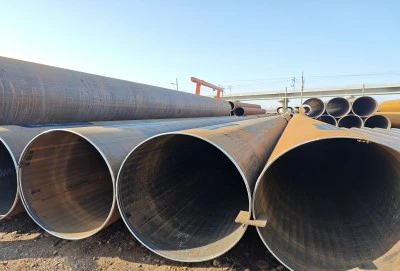
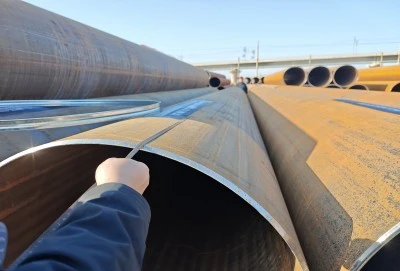
Understanding ASTM A671 CC70 Heavy Wall Pipes
ASTM A671 CC70 pipe is different because of how it is made and the material it is made of. This pipe grade is made using the Electric Fusion Welding method and ASTM A516 Grade 70 fine-grain killed carbon steel plate, which is the strongest option in the CC series. The fine-grain method makes sure that the material is very tough against impacts, even at temperatures below zero. This makes it ideal for use in cold and low-temperature settings where weaker materials could fail catastrophically.
Chemical Composition and Mechanical Strength
The chemicals that make up ASTM A671 CC70 pipe are carefully balanced to make it easier to join and stronger overall. This steel composition has a maximum carbon content of 0.27%, a manganese range of 0.85% to 1.20%, and silicon controlled between 0.15% and 0.40%. It performs consistently when subjected to thermal cycling and mechanical stress. The pipe can reach a minimum tensile strength of 70 ksi (485 MPa) and a minimum yield strength of 38 ksi (260 MPa), which is stronger than many normal carbon steel types used in less demanding situations.
The mechanical qualities of thick wall ASTM A671 CC70 pipe make sure that it can withstand high internal pressures for a long time without deforming or creeping. When building pipeline systems for LNG terminals, offshore platforms, and large-scale water supply networks, where loss of a component can have big economic and safety effects, these traits are necessary.
Heat Treatment and Performance Enhancement
Heat treatment is an important part of getting the most out of ASTM A671 CC70 pipe performance. Depending on the Class number, like Class 10, Class 22, or Class 32, the pipe goes through normalizing or stress-relieving thermal cycles to improve the hardness of the notches, smooth out the grain structure, and lower any leftover pressures from welding. Class 22, which needs post-weld heat treatment (PWHT), is best used in places where stress corrosion cracking needs to be avoided.
Controlled heat treatment creates a fine-grain structure that makes the metal very hard to break and very flexible. When these qualities are combined, they make an installation more reliable, especially in places where thermal loads or pressures change over time, like power plants and petrochemical refineries that work with volatile hydrocarbons.
Comparing ASTM A671 CC70 with Other Pipe Grades
When purchasing managers know how ASTM A671 CC70 pipe stacks up against other types, they can make data-driven choices about where to get the materials that meet the needs of the project and stay within the budget.
ASTM A671 CC60 versus CC70
ASTM A671 CC60 is made from ASTM A516 Grade 60 steel and has a minimum tensile strength of 60 ksi (415 MPa). Both types use electric fusion welding and pressure vessel quality plate. The ASTM A671 CC70 pipe version has more carbon and manganese, which gives it a higher tensile strength at 70 ksi (485 MPa). This makes it better for systems that work at high pressures or need bigger wall sections to handle stress loads. The extra cost for ASTM A671 CC70 pipe is usually not that high compared to the better technical performance, especially when looking at the long-term costs of downtime or replacing parts.
ASTM A672 CC70 Comparison
Also, ASTM A672 CC70 pipe is electric fusion welded, but it's meant to be used at high temperatures instead of at room temperature or lower temperatures. The base plate grade for both standards is the same, but A672 CC70 goes through extra heat treatment procedures that make it work well at higher temperatures. This makes it perfect for steam pipes and hot water flows. ASTM A671 CC70 pipe, on the other hand, works really well in places where low temperature toughness is very important, like cryogenic, sub-ambient, and intermediate temperature settings.
API 5L Grade B and Carbon Steel Alternatives
A standard for line pipes called API 5L Grade B has a minimum yield strength of 35 ksi (241 MPa) and a minimum tensile strength of 60 ksi (415 MPa). Although API 5L Grade B is cheap and easy to find, it doesn't have the heavy wall strength or better impact resistance of ASTM A671 CC70 pipe. ASTM A671 CC70 pipe is more reliable and lowers the risk of brittle fracture in uses that need large-diameter, thick-walled solutions that have been tested to work at low temperatures. This is especially important for setups in cold areas or offshore settings.
The corrosion resistance of stainless steel pipes is very high, but the material is much more expensive and it is harder to weld and make things out of. As a result, carbon steel grades like ASTM A671 CC70 pipe are the best choice for many large-scale infrastructure projects because they are strong, don't rust thanks to protective coatings, and are also very cheap.
Custom Length and End Finishes: Enhancing Pipe Performance and Fit
Customizing pipe sizes and ends to fit the needs of a project makes installation easier, cuts down on changes that need to be made in the field, and speeds up the building process. All of these things have a direct effect on the total cost of the project and how well it stays on schedule.
Benefits of Custom Length Fabrication
By asking for custom lengths, you can avoid cutting the material on-site, which saves time and money. This is especially helpful when working with heavy wall pipe, where cutting and beveling needs special tools and skilled workers. Custom-length ASTM A671 CC70 pipe improves operations by combining shipments, lowering freight costs, and making it easier to keep track of supplies on building sites. This adaptability is especially helpful for big engineering firms that are in charge of handling complicated pipeline systems that span many different places.
End Finish Options and Their Impact
End finishes are very important for making field welding go smoothly, making sure connections don't leak, and keeping the integrity of the system when it's under a lot of stress. Some common ways to finish the ends of ASTM A671 CC70 pipe are:
Beveling: Pre-machined bevel angles, usually 30° or 37.5°, speed up the preparation for welding, use less filler metal, and make the regularity of the weld entry better, which makes the joints stronger and more reliable.
Threading: Threaded ends allow mechanical links that work for smaller-diameter pipes or situations where welding isn't possible because of safety rules or site limitations.
Grooving: End finishes with grooves make it easier to install mechanical couplings quickly, which reduces the need for hot work and improves safety in dangerous places like petroleum plants.
Manufacturers like Longma Group can do advanced end machining like precision facing, counterboring, and custom flange preparation. All of these processes are done with very tight size tolerances to make sure they work with other parts and meet international standards like ASME B16.5 and B16.25. These features cut down on work that needs to be redone in the field, lower the cost of installation, and improve system performance overall.
Procurement Considerations for ASTM A671 CC70 Pipes
When buying heavy wall ASTM A671 CC70 pipe strategically, you have to keep a lot of things in mind, like price, source reliability, certification needs, and the details of the supply chain.
Pricing Dynamics and Cost Optimization
The price per tonne of ASTM A671 CC70 pipe changes depending on the cost of raw materials (especially the price of steel plates), the level of customization (length, wall thickness, end finishing), market demand, and how much of the supplier's capacity is being used. Custom orders may have higher unit costs than normal inventory items, but these extra costs are often cancelled out by less work in the field, less waste, and faster project plans. Instead of just looking at the unit price, procurement managers should look at the total cost of ownership, which includes things like shipping, handling, and possible fines for being late.
Supplier Selection Criteria
To find a trusted maker and distributor, you need to look at a number of important factors. Lead times and freight costs are affected by suppliers' geographic reach and the availability of goods in their regions. Suppliers with carefully placed warehouses or production facilities close to project sites have logistical benefits. Minimum order quantities (MOQs) can change how you buy things, especially for smaller tasks where buying in bulk could tie up cash or make you have too much inventory.
Looking at a supplier's past work with OEMs and big engineering firms can help you figure out how mature their operations are and how well they can do technical work. Longma Group has been making heavy wall pipe for over 20 years and produces more than 1,000,000 tonnes of it every year. It sells it to more than 90 countries and is used in high-profile projects like MOBIL OIL AUSTRALIA. This track record of success in a wide range of markets and demanding applications adds to the credibility of the supplier.
Quality Certifications and Compliance
Quality certifications that are recognized around the world are important signs that a manufacturer is dedicated to maintaining consistent product quality and following all regulations. Some of the most important licenses are ISO 9001 for quality control systems, API 5L for line pipe standards, and ASME SA671 compliance. Third-party inspection reports, Mill Test Certificates (MTC) according to EN 10204 3.1, and detailed records of chemical analysis, mechanical testing, and non-destructive examination make the whole supply chain traceable and responsible.
It is important for procurement teams to make sure that suppliers can provide full documentation packages that include Inspection and Test Plans (ITP), Manufacturing Procedure Specifications (MPS), and Material Test Certificates (MTC). These are essential for engineering firms that are in charge of managing regulatory approvals and project quality assurance protocols.
Manufacturing Process and Quality Assurance of Heavy Wall CC70 Pipes
Knowing how ASTM A671 CC70 pipe is made and how quality control is done gives you confidence in the product's dependability and the competence of the supplier, which lets you make smart sourcing decisions.
Raw Material Selection and Chemical Analysis
When making something, the first step is to carefully choose pressure vessel quality steel plate from reputable mills like Shagang, Shangang, TISCO, BX Steel, Shougang, HBIS, and Bao Steel. Each batch goes through a strict chemistry test to make sure it meets the requirements of ASTM A516 Grade 70. This checks that the levels of carbon, manganese, silicon, and minor elements are within the allowed ranges. This quality control upstream keeps nonconforming materials from getting into production, which lowers the chance of expensive repairs or fails in the field.
Electric Fusion Welding and Heat Treatment
For electric fusion welding, a flat steel plate is cut into cylindrical pieces, and the longitudinal seam is joined with an electric arc and filler metal. Compared to Electric Resistance Welding (ERW), this method can make diameters that are bigger and walls that are thicker. This makes it perfect for high-pressure applications. After being welded, pipes go through heat treatment processes that are specific to their Class name. Normalizing smooths out the grain structure, and stress relieving lowers any remaining stresses that could weaken the weld or cause stress corrosion cracking.
Non-Destructive Testing and Mechanical Verification
Before it is shipped, strict inspection protocols make sure that every length of ASTM A671 CC70 pipe meets performance standards. For many Class labels, full radiographic testing (RT) is needed to make sure that the weld goes all the way through and there are no flaws, holes, or cracks. During hydrostatic testing, each pipe is put under pressures that are higher than their design values. This makes sure that the structure is solid and that there are no leaks while the testing is simulated.
Charpy V-Notch impact testing confirms low-temperature hardness according to ASTM A370. This makes sure that the pipe can survive temperatures below zero without breaking into brittle pieces. The weld zone's mechanical properties are checked with transverse tension and guided-bend tests. These show that the joint is as strong and flexible as the base metal. Along with dimensional checks that make sure tolerances for diameter, wall thickness, and straightness are met, this multi-layered testing process makes sure that custom length and end finish requirements are always met, which allows for smooth integration into complex pipe systems.
Conclusion
Heavy wall ASTM A671 CC70 pipe has great mechanical strength, great low-temperature toughness, and many customization choices to meet the needs of high-pressure pipeline systems in many different industries. Pipeline engineers and project managers can confidently choose ASTM A671 CC70 pipe for important installations if they understand the technical specs, comparative benefits, and buying factors listed above. Custom length and end finish options increase the value of a project by making installation easier, cutting down on waste, and speeding up the building process. This improves the overall cost of ownership and operational reliability.
FAQ
1. Why is ASTM A671 CC70 pipe better than CC60?
ASTM A671 CC70 pipe has a higher tensile strength (70 ksi vs. 60 ksi) because it has more carbon and manganese in it. This means it can hold more weight and last longer under high pressures, making it the best choice for tough jobs.
2. Does buying a custom length change how long it takes to deliver?
Custom length orders may have slightly longer wait times than stock items. Depending on the complexity of the order and the manufacturer's capacity, this can add anywhere from one to three weeks. Planning ahead and sharing details early on reduces the effect on schedules.
3. Is it necessary to heat treat CC70 pipe after it has been welded?
Based on the Class designation, different heat treatments are needed after the weld. Stress relieving is required for Class 22, which is often given for important work, to lower leftover stresses and improve resistance to stress corrosion cracking.
4. Is it possible to use ASTM A671 CC70 pipe in sour service?
Standard ASTM A671 CC70 pipe does not automatically meet NACE MR0175 for sour service. But if asked, makers can make ASTM A671 CC70 pipe with an HIC-resistant plate and managed hardness levels to meet the needs of sour gas.
Partner with Longma Group for Reliable Heavy Wall Pipe Solutions
Longma Group is ready to help you with your next high-pressure pipe job by making ASTM A671 CC70 pipe to exact specifications and making it in any length or end finish you need. As a top manufacturer with a track record of completing large projects around the world, we provide a wide range of fabrication services, such as welding, beveling, threading, and anti-corrosion treatments like FBE and 3LPE coatings. Our ISO 9001 and API 5L certifications, along with full paperwork packages, make sure that we follow all the rules and can track everything from the raw materials to the final product. Get in touch with our expert team at info@longma-group.com right away to talk about your needs, get a full quote, and find out why engineering contractors and procurement managers all over the world choose Longma Group as their top ASTM A671 CC70 pipe provider.