
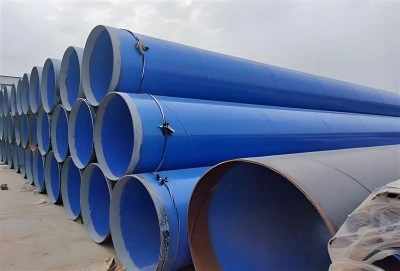
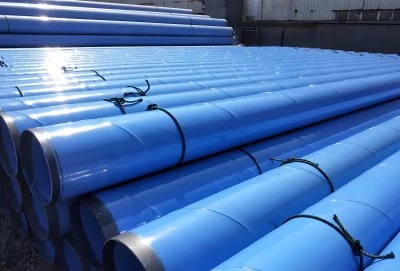
For OEM epoxy coated carbon steel pipe, you can pick the steel, the coating, and the paperwork before it is made. Longma Group supply epoxy coated carbon steel pipe with outer diameter from 60.3 mm to 1422 mm and wall thickness from 6.02 mm to 50.8 mm. The base pipe is constructed to API 5L, ASTM A53, EN10210 or AS/NZS 1163. You can also select coating standards such as AWWA C210, CSA Z245.20, DIN 30670, EN10339 and ISO 21809-1. This article explains in great depth each custom option, so you can submit a clear request, and get a precise estimate.
|
|
|
Why Project Teams Choose Epoxy Coated Carbon Steel Pipe?
Carbon Steel Strength With a Corrosion Barrier
It's cheaper than other alloys, it's strong, and it welds well. What eats it away is corrosion. Electrochemically, water from the earth, hydrochlorides and sewage all react with steel, creating holes and leaks. Epoxy layer is dry, that touch stops. It also interrupts the flow of electricity and breaks the corrosion circuit. When good fusion-bonded epoxy (FBE) is combined with cathodic protection, it works. This blend is popular with contractors, distributors and project owners since it has the strength of steel but needs less maintenance. With OEM sourcing, you can expect the same data, coating, specifications and sizes for every purchase.
How the Coating System Works?
The initial phase in the process is the coating of the steel. Sandblasting is one approach to remove oil, rust, and mill scale. The clean steel is then primed or the first epoxy layer is applied. Once dry, this coating will inhibit any more epoxy from coming through. Some projects might have the epoxy on the inside, outside or both sides. The outer covering prevents dirt and water from entering. There is less friction so the fluid moves easier since the coating on the inside keeps the fluid out. Sometimes polyethylene or polypropylene is laid down first, as 3LPE, and then epoxy is used as a primer. Just tell us what surfaces you want protected and we will give you an estimate. Then we'll make sure the proper build is done.
Where Coated Pipe Fits Best, and Where Bare Pipe Still Works?
Steel pipe with epoxy on it is used to move oil and gas, water and sewage from cities, fire protection, slurry lines in mines, and utilities in factories. Animal waste acids and hydrogen sulfide don't stick to the coating in wastewater plants. It doesn't rust in fire sprinkler lines because there is no water there. If the service is dry inside or the lines are only going to be used for a short time, bare carbon steel may still make sense. This is because coating doesn't help much in these cases. Most of the time, the extra protection cuts down on repair work and downtime for service that is buried, submerged, or wet. You should look at the lifecycle cost instead of just the unit price when you compare prices.
Custom Options for OEM Epoxy Coated Carbon Steel Pipe
Dimensions, Grades, and Pipe Standards
We have epoxy coated carbon steel pipes with walls that are between 6.02 mm and 50.8 mm thick and outside diameters that range from 60.3 mm to 1422 mm. For the base pipe, you can choose from API 5L, ASTM A53, EN10210, or AS/NZS 1163. The standards we use for our goods are ASTM A53/A53M in Grade B and API 5L for PSL1 and PSL2 from Grade B to X80. We make both ERW and LSAW pipes. The diameter and wall thickness of the pipe tell us which method to use. We'll match the length, grade, and end treatment to your hydraulic needs if you let us know what they are.
Coating Standards and Coating Types
We follow these coating rules: AWWA C210, AWWA C213, CSA Z245.20, EN10339, ISO 21809-1, and DIN 30670 and 30678. For water projects in the US, AWWA C213 talks about epoxy that is fused together, and AWWA C210 talks about epoxy that is liquid and used on steel water pipes. Because we offer anti-corrosion services like FBE, 2PP, 3LPE, 3PE, and hot-dip galvanizing, you can compare systems from the same company. How thick the coating is will depend on what you need it for. From what we know, the normal range for FBE is between 300 and 500 microns. We will let you know which standard and thickness class apply as soon as you send us your specification sheet.
Markings, Packaging, and Documentation
Longma Group gives each order the project documentation it needs:.
- Inspection and Test Plan (ITP): This plan lists every inspection point, the acceptance criteria, and the witness or hold points. Your QA/QC team can review it before production starts and compare each test result with the project specification. Agreeing on this plan early prevents disputes during final inspection and shipment.
- Manufacturing Procedure Specification (MPS): This document describes how we make the pipe, from forming and welding to heat treatment and testing. It gives your engineers a written basis to approve the process before the first pipe leaves the line, and it keeps production consistent across repeat orders and separate batches.
- Material Test Certificate (MTC): This certificate records the chemical composition and mechanical properties of the steel. Because we trace each product from raw material to finished pipe, you can match every pipe to its domestic mill source, such as Shagang, TISCO, Bao Steel, or HBIS.
Your QA/QC team can easily look over these records. For your question, please send it. We can also talk about markings and export packaging.
How Epoxy Coating Is Applied and Inspected?
Surface Preparation Sets the Bond
The first thing that changes adhesion is the steel surface. Before coating the pipe, workers shot blasted it to get rid of mill scale, rust, oil, and dust. It is best to use Sa 2.5 or Sa 3 for most projects, and the anchor profile should be 50 to 100 microns. This makes a rough surface for the epoxy to stick to. Other things that affect the results are the dew point, the temperature of the steel, and the humidity. This is because the bond is weaker when there is water on the surface. Lack of proper preparation is a common reason why coatings fail early, so we ask buyers to tell us what level of cleanliness and profile they need.
FBE and Liquid Epoxy Application
This method heats the pipe to about 232°C (450°F) for fusion-bonded epoxy. Cover the surface with epoxy powder. It melts, flows, and connects with itself to form a single film as it dries. AWWA C213 and CSA Z245.20 both talk about this type of coating. AWWA C210 says that crews must mix the parts, put them on a surface that has already been prepared, and wait for them to cure before checking the thickness and planning vacations. FBE works well for standard production with a lot of copies and a consistent film. This means that you have more choices when it comes to fittings, special batches, and repairs. Let us know which parts of your line need each one so we can see which projects need them.
Inspection and Traceability
Most of the time, QA/QC engineers check four things on each pipe that has been coated. This holiday season, you can use a spark tester to find holes and empty spots. What FBE must follow is NACE SP0490. When you use a magnetic gage to check the thickness of a dry film, the coating is within the range given. You can use cross-cut or V-cut tests to see if the film stays together. In order to show that the film is fully cured, differential scanning calorimetry is used. A film that isn't fully cured can break when heated or stressed. These checks are backed up by the ITP and the ability to follow materials from the factory to the made pipe. All of the results will be linked to a specific pipe this way.
Specifications, Performance, and Material Comparisons
Reading Performance Data Correctly
The spec clarifies pipe standard, grade, diameter, wall thickness, length, manufacturing method, end treatment, position and thickness of coating, and inspection demands. Performance data must be presented in a larger context. Cathodic disbondment is generally considered acceptable if the radius is smaller than 6 to 8 mm after 24 to 48 hours at 65°C. But the exact limit will depend on the needs of your project. It also matters how hot or cold it gets. Most epoxy goes soft over a specific temperature, typically 100C. You need a high Tg powder to construct lines for high temperatures. One design check is pipe pressure, the other is coating temperature.
Service Life Depends on Conditions
When someone wants to buy epoxy coated carbon steel pipe, they often ask for a number of years. For each project, though, we don't give one number. Time it lasts depends on how well the surface is prepared, the temperature, the type of soil and fluids, how it is put down, and how it is handled. Too fast of a flow rate, chlorides, low pH, solvents, rough particles, and low pH all make the coating work harder. If you leave pipe outside for more than six months, you should cover it or put a UV-resistant wrap over it. Standard FBE can also chalk for a long time in direct sunlight. You need to coat field joints after you weld them. You can use heat-shrink sleeves, liquid epoxy kits, or FBE that is put on in the field to do this. These little things will help the design last longer if they are planned out.
How Epoxy Compares With Galvanized, Stainless, and Polyethylene?
That layer of zinc that rusts instead of the steel itself keeps it safe. Zinc is lost faster in water or soil that is rusty. Because epoxy is a waterproof film, it can protect both the outside and the inside of the pipe. Stainless steel naturally doesn't rust like other metals do, but it costs more to make and buy. It is better for polyethylene systems, like 3LPE, to protect against rocks and damage from handling. Single-layer FBE, on the other hand, gets rid of heat better and works well with cathodic protection. When you're comparing options, don't just look at the price. Take a look at the service conditions, installation method, compliance needs, and cost over the whole life of the product.
Buying Guide: Water Supply, Pricing, and Supplier Selection
Choosing Pipe for Water Supply
The first step is to describe the service. For example, should the water be drinkable? If not, should it be buried or above ground? What is the water's pressure, temperature, and chemistry? The lining has to be approved by NSF/ANSI/CAN 61 for drinking water projects in the US. This approval has to go over both the finish and the coating. The epoxy inside also keeps the flow smooth and stops iron from oxidizing in red water. For engineers who work with water and sewers, AWWA C210 and C213 are useful guides. We'll make sure the coating system meets the requirements set by your owner before you place your order. Just let us know what they are.
Building an RFQ and Understanding Price
The pricing is not based on the weight of the steel alone. Each grade, diameter, wall thickness, kind of weld, coating location and thickness, surface preparation, testing, certification, end finishing, packaging, quantity, and destination has a separate number. The whole RFQ must specify the pipe standard, the coating standard, the service conditions, the inspection requirements, the quantity, the Incoterms and the delivery date. If you ask for a line-item price breakdown of pipe, coating, testing, packaging and freight, you can compare rates properly. If you talk about maritime freight you cannot avoid mentioning loaded containers, incomplete shipments, congested ports and extra time for delays. This is because there are many huge covered pipes that need to be protected from damage during shipment.
Qualifying an Epoxy Coated Carbon Steel Pipe Manufacturer
A direct manufacturer can tell you about production procedure, testing and capacity. A distributor however may have stock in their own area but less control on how things are done. It has been manufacturing ERW and LSAW steel pipe since 2003. The factory will be making more than 1,000,000 tons of steel a year by the end of 2023. It covers an area of 230,000 square meters. API 5L, ISO 9001, ISO 14001 are our licenses. We sell our products in over 90 countries. Ask for samples, inspection documents or a test order before you authorize the complete transaction. Then have the supplier make sure that all the batches have the same paperwork and specs.
Conclusion
It is made of carbon steel and has an epoxy barrier that has hardened. This barrier keeps dirt, water, and chemicals from touching the epoxy coated carbon steel pipe. OEMs can choose from a variety of options for diameter, wall thickness, steel standard, coating standard, coating thickness, paperwork and packing. The quality of the coating is dependent upon the surface preparation, application of FBE or liquid epoxy, and checking for defects, adherence, thickness and cure of the coating. There is no single number which works for every project, as chemistries, temperature, installation and handling can all impact service life. If cost over time is the most essential issue, epoxy is generally a better choice than galvanized, stainless or polyethylene for works that will get buried and damp. With a detailed specification, the proper approvals for potable water, line item pricing and a certified manufacturer, there is less technical and business risk.
FAQ
What is the difference between FBE and liquid epoxy?
If you put FBE powder on hot steel, it melts and forms a continuous film that is very hard. This makes it good for bulk production that is done often. When you mix liquid epoxy and then spread it out on a ready surface, it's easier to make fits, fixes, and custom batches.
Can the internal coating be used for drinking water?
But you can only do that with permission. For US projects, the finish and coating need to be approved by a group such as NSF, ANSI, or CAN 61. Let us know what kind of approval your project needs before you place the order.
What information do you need for a quotation?
For the pipe, you need to send the standard, grade, length, number, quantity, coating standard, coating location, thickness, service conditions, certificates needed, packaging needs, and port of destination. We use graphs or data sheets to make sure it's possible.
How long will the coating last?
Life depends on the surface, the temperature, how it is installed, how it is handled, and how well it is kept up. That's why we don't give a single number for life.
Request Your Custom OEM Epoxy Coated Carbon Steel Pipe Quote
The Longma Group is ready to look over your plans, standards, and amounts. As an epoxy coated carbon steel pipe manufacturer with FBE, 3LPE, and 3PE coating services, we respond with a suggestion, a quote, a sample plan, and an estimated production schedule. You can email info@longma-group.com with information about your pipe, the coating you want, and where you'd like it sent. You can also visit longma-group.com to learn more about their products.