
When comparing PVC and PE-coated pipes for subterranean use, PE-coated steel pipe is the better choice for tough industrial projects. The polyethylene covering protects steel from corrosion very well while keeping its structure intact. This combination makes oil and gas transit, water supply systems, and industrial pipe networks last longer than anything else. PVC is cheaper for basic uses, while PE-coated steel pipe is better for mechanical strength, temperature tolerance, and long-term performance underground.
|
|
|
Understanding PE Coated Steel Pipe Technology
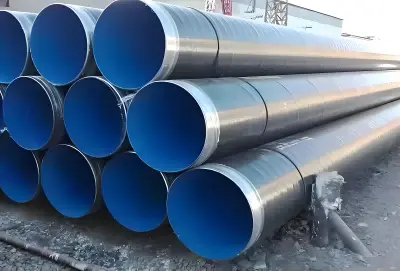
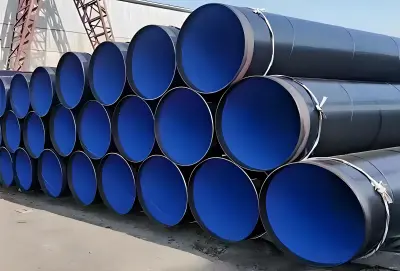
PE-coated steel tubing combines the structural benefits of steel with cutting-edge coating technology that protects it. The production method uses fusion bonding to add a layer of polyethylene, which protects the steel substrate from damage from the environment.
The coating method meets strict international requirements, such as DIN 30670, ISO21809-1, and AWWA C210. These requirements make sure that the adhesive strength is always the same, and peel tests usually show that it is more over 80 N/cm. The polyethylene covering is between 2.0mm and 3.2mm thick, which protects the pipeline well against chemicals and moisture in the soil.
Modern PE coating applications utilize three-layer systems:
- Fusion-bonded epoxy (FBE) primer - enhances adhesion to steel
- Adhesive copolymer layer - bonds PE to the primer
- Outer polyethylene layer - provides primary corrosion protection
This multilayer method is quite helpful for underground plumbing systems. The thermal insulation capabilities keep heated pipes from losing energy, while the chemical resistance keeps them running longer than normal preventive measures.
PE-coated systems work better than single-layer systems when it comes to protecting underground steel pipes from corrosion.
PVC Pipe Characteristics and Applications
PVC pipes are the most common type of pipe used in homes and small businesses since they are easy to make and cheap to buy. These thermoplastic pipes work well enough for moving and draining water at low pressure.
Standard PVC formulations provide:
- Tensile strength: 45-55 MPa
- Operating temperature range: 0°C to 60°C
- Chemical resistance to acids and alkalis
- Lightweight installation advantages
However, PVC limitations become apparent in industrial environments. The material experiences significant strength reduction at elevated temperatures. Impact resistance decreases substantially in cold climates, leading to brittle failure modes.
To work, PVC joints need either solvent welding or rubber gaskets. These connections work well for city water systems, but they may not be able to handle the mechanical stresses that are frequent in industrial settings. When running lengthy pipelines, it's important to think carefully about thermal expansion coefficients.
PVC systems are a good choice for basic water distribution if you require cost-effective options that work well within their constraints.
Mechanical Strength Comparison Analysis
Steel pipe manufacturing standards like API 5L and ASTM A53 ensure consistent mechanical properties that far exceed PVC capabilities. The comparison reveals significant performance gaps:
Yield Strength Comparison:
- PE coated steel pipe (API 5L Grade B): 245 MPa minimum
- PE coated steel pipe (API 5L X60): 415 MPa minimum
- PVC pipes: 45-55 MPa maximum
Pressure Rating Analysis:
Steel pipes can bear working pressures of more than 100 bar, although normal PVC systems usually only allow operations up to 16 bar. This difference in pressure becomes very important when moving oil and gas that needs to be kept at high pressure.
Testing for impact resistance shows that steel is better. Charpy V-notch tests reveal that steel stays ductile at -20°C, whereas PVC breaks down below 10°C. This temperature sensitivity has an impact on the dependability and maintenance schedules of pipelines.
The modulus of elasticity differs substantially:
- Steel: 200,000 MPa - minimal deflection under load
- PVC: 3,000-3,500 MPa - significant flexibility
External loading from soil pressure and traffic loads favors steel construction. Buried installations experience less settlement and deformation with steel pipe durability characteristics.
If you need pipelines capable of high-pressure operation and extreme loading conditions, PE coated steel pipe provides unmatched mechanical performance.
Corrosion Resistance and Longevity
The main benefit of polyethylene coating methods is that they stop corrosion. Laboratory tests show that it is very resistant to chemicals in the soil, such as chlorides, sulphates, and organic acids that are often found in industrial settings.
Accelerated Corrosion Testing Results:
- Uncoated steel: 0.1-0.3 mm/year corrosion rate
- PE coated steel pipe: <0.001 mm/year with intact coating
- PVC: Immune to electrochemical corrosion
The anti-corrosion layer performance depends on coating integrity. Holiday detection testing ensures complete coverage during manufacturing. Coating adhesion tests verify bond strength exceeding 80 N/cm per ISO standards.
PVC offers inherent corrosion immunity but faces other degradation mechanisms. UV exposure during storage and installation can weaken molecular bonds. Stress cracking occurs when exposed to certain organic solvents and detergents.
Pipeline protection extends beyond corrosion resistance. PE coatings provide:
- Cathodic disbondment resistance
- Impact damage tolerance
- Thermal cycling resistance
- Chemical compatibility with soil conditions
Expected service life calculations favor coated steel systems. Engineering studies project 50-75 year operational life for properly installed PE coated pipelines, compared to 25-50 years for PVC systems in similar conditions.
If you need maximum pipeline lifespan in corrosive environments, PE coated steel pipe delivers superior long-term value.
Cost Analysis for Underground Projects
Initial material costs favor PVC installations, but comprehensive project economics require broader analysis. Steel pipe manufacturing involves higher raw material costs, while coating application adds processing expenses.
Comparative Cost Factors:
Material Costs (per linear meter):
- PVC pipes: $15-45 (diameter dependent)
- PE coated steel pipe: $85-320 (diameter and grade dependent)
- Coating application: $8-15 per square meter
Installation Considerations:
- PVC: Lighter weight reduces handling costs
- Steel: Requires specialized lifting equipment
- Joint preparation time differs significantly
However, lifecycle cost analysis reveals different conclusions. Pipeline maintenance requirements, replacement intervals, and operational reliability impact total project economics.
Maintenance cost differentials include:
- Inspection frequency requirements
- Repair complexity and downtime costs
- Environmental compliance expenses
- Performance monitoring systems
Large-scale engineering projects benefit from steel's dimensional stability. Reduced settlement and joint movement minimize ongoing maintenance. The mechanical strength prevents damage during backfilling operations.
Risk assessment models incorporate failure probability and consequence analysis. Steel systems demonstrate lower failure rates in demanding applications, reducing insurance and liability exposure.
If you need optimized lifecycle costs for critical infrastructure, PE coated steel pipe provides superior economic value despite higher initial investment.
Installation and Maintenance Considerations
Underground installation procedures differ significantly between PVC and steel systems. Each material requires specific techniques for optimal performance and longevity.
PVC Installation Requirements:
- Careful bedding material selection
- Thermal expansion accommodation
- Joint preparation and curing time
- Impact protection during backfilling
Steel Pipe Installation Advantages:
- Higher load-bearing capacity simplifies bedding
- Welded joints provide continuous structural integrity
- Coating damage repair using field-applied materials
- Resistance to installation damage
Field inspection protocols ensure coating integrity. Holiday detection equipment identifies coating discontinuities before backfilling. Repair procedures restore protective capabilities using heat-shrinkable sleeves or cold-applied wrapping systems.
Maintenance accessibility favors steel installations. Excavation requirements decrease due to superior damage resistance. When repairs become necessary, welding techniques allow permanent restoration of structural integrity.
Cathodic protection systems integrate effectively with PE coated steel pipe. The coating acts as a high-resistance barrier, reducing current requirements and improving system efficiency.
Leak detection systems work more effectively with steel pipelines. Pressure testing capabilities exceed PVC limitations, enabling comprehensive system verification.
If you need simplified installation procedures and reduced maintenance requirements, PE coated steel pipe offers significant operational advantages.
Industry-Specific Applications and Performance
Different industries impose varying requirements on underground piping systems. Performance expectations, regulatory compliance, and operational conditions influence material selection decisions.
Oil and Gas Transport Applications:
Transporting hydrocarbons at high pressure requires materials with very special characteristics. PE-coated steel pipe satisfies the API 5L standards for use as line pipe. The coating keeps the pressure within while also protecting against corrosion from the earth side.
A lot of coated steel is used in the building of offshore platforms. Corrosion happens faster in marine conditions, thus protective coatings are a must. For subsea systems, the combination of strength and resistance to corrosion is very important.
Water Supply Systems Requirements:
More and more, municipal water distribution networks are requiring trunk mains to be made of PE-coated steel. The system lasts longer because it has better flow properties and is more resistant to corrosion, yet it still meets water quality regulations.
Chemical resistance is good for industrial water systems. Unprotected materials can be damaged by process water that has dissolved minerals and treatment chemicals in it. Polyethylene covering protects against harsh water chemistry by acting as a barrier.
Structural Applications:
Building and bridge foundations need to be strong for a long time. Utility installations that are underground must be able to handle structural loading while still working properly. Standards for making steel pipes make guarantee that their load-bearing capability is always the same.
Changes in temperature from season to season can impact how materials work. Steel's thermal expansion coefficient is the same as that of concrete structures, which lowers stress concentrations. More complicated accomodation mechanisms are needed for PVC expansion joints.
PE-coated steel pipe is shown to be reliable in a wide range of industries, making it a good choice for demanding industrial applications that need specialised performance.
Expert Recommendations for Project Selection
Material selection requires careful evaluation of project-specific requirements, operating conditions, and performance expectations. Engineering analysis should consider multiple factors beyond initial cost comparisons.
Critical Decision Factors:
Pressure Requirements:
- High-pressure systems: PE coated steel pipe mandatory
- Low-pressure applications: Either material acceptable
- Pressure surge conditions: Steel preferred for safety
Environmental Conditions:
- Aggressive soil chemistry: PE coating essential
- Temperature extremes: Steel thermal stability advantageous
- External loading: Steel structural capacity required
Regulatory Compliance:
- API standards: Steel pipe required for petroleum applications
- Potable water: Both materials acceptable with proper certification
- Industrial discharge: Material compatibility assessment necessary
Project Scale:
- Large-diameter installations: Steel fabrication advantages
- Long-distance pipelines: Steel dimensional stability beneficial
- Complex routing: Consider installation flexibility requirements
Quality assurance programs ensure material performance meets specifications. Manufacturing certifications, testing documentation, and traceability systems provide verification of compliance with international standards.
Risk mitigation strategies should evaluate failure consequences. Critical infrastructure applications justify premium materials and protective systems. The cost of service interruption often exceeds material price differentials.
If you need comprehensive engineering support for material selection, experienced manufacturers provide application-specific recommendations based on proven performance data.
Partner with Longma Group for Superior PE Coated Steel Pipe Solutions
Longma Group stands as a trusted PE coated steel pipe manufacturer with over two decades of expertise serving global industrial markets. Our comprehensive product range meets international standards including API 5L, ASTM A53, and EN10210, with coating systems certified to DIN 30670 and ISO21809-1 specifications. Advanced manufacturing capabilities and rigorous quality control ensure consistent performance for demanding underground applications. Contact our engineering team at info@longma-group.com to discuss your project requirements and discover why leading contractors worldwide choose Longma Group for critical pipeline infrastructure.
Conclusion
PE coated steel pipe demonstrates clear advantages over PVC for demanding underground applications. The superior mechanical strength, pressure handling capability, and enhanced corrosion resistance justify the investment for critical infrastructure projects. While PVC serves basic applications effectively, industrial requirements favor the proven performance and longevity of PE coated steel systems.
Project selection should consider lifecycle costs, performance requirements, and operational reliability. Steel pipe durability and protective coating technology deliver superior value for oil and gas transport, water supply systems, and industrial piping applications. Proper material selection ensures optimal performance and minimizes long-term operational risks.








