
When choosing line pipe for important transmission facilities, ISO 3183 L360 pipe is the standard. It is the best of both worlds when it comes to mechanical strength and weldability. Its minimum yield strength is 360 MPa, which is what the name "L360" means. According to PSL1 standards, its minimum tensile strength is 460 MPa. The PSL2 standard, which is used around the world, says that the yield strength should be between 360 and 530 MPa and the tensile strength should be between 460 and 760 MPa. The L360 is the best choice for crude oil trunklines, natural gas distribution networks, and offshore gathering systems around the world because it has a full mechanical window that lets project engineers and procurement managers find the best wall thickness and pressure ratings for a wide range of operating conditions.
|
|
|
Understanding ISO 3183 L360 Pipe Specifications
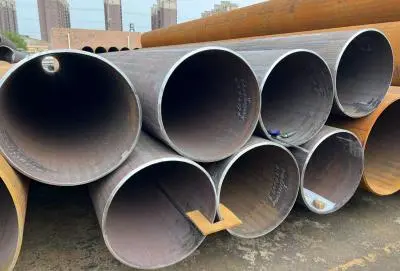
ISO 3183 sets strict requirements for steel pipes used in pipeline transportation systems. ISO 3183 L360 pipe is a type of steel pipe that works best in moderately pressurized settings, such as delivering gas in cities and collecting oil and gas off the coast.
What Makes L360 Grade Distinctive?
Controlling the chemistry makeup and microalloy design is how the L360 grade works. For PSL1 versions, the carbon content usually stays below 0.22%, which makes it possible to weld without affecting the structure's strength. Manganese content can reach 1.40 percent, which helps smooth out the grain and makes the material tougher. This standard microalloy design is resistant to sulfide stress cracking (SSCC), which is important to think about when moving fuels that contain hydrogen sulfide. The controlled carbon equivalent method lets producers weld in the field without having to go through a lot of steps to heat up the metal first. This cuts down on installation times and project costs overall.
Mechanical Property Chart and Performance Metrics
Knowing the changes in mechanical properties between PSL1 and PSL2 specifications helps buyers match the pipe's powers to the needs of the project. Standard quality PSL1 has a minimum yield strength of 360 MPa and a minimum tensile strength of 460 MPa. It's good for less important uses where saving money is important. As part of PSL2, there are now required boundaries on chemical makeup, notch toughness, and maximum yield strength. This creates a controlled performance range. This level of standard includes a yield strength of 360 to 530 MPa and a tensile strength of 460 to 760 MPa. This gives engineers the freedom to choose the best wall thickness while still keeping safety limits. The extension qualities make sure that the pipe is flexible during installation, which is especially important when the pipe has to go through rough terrain and needs to be cold-bent.
Temperature and Dimensional Considerations
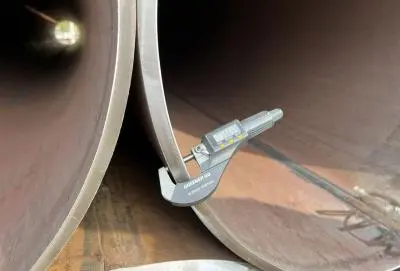
Dimensional limits have a direct effect on how well hydraulics work and how they are installed. Changes in wall thickness have an effect on pressure ratings, and being out of round has an effect on the quality of welding and the passing of the pig tool inside the tube. In places where the weather changes a lot from season to season, temperature effects are especially important. To make sure that PSL2 variants are tough enough to be used in northern climate setups or cryogenic service uses, they are tested for Charpy V-Notch impact at temperatures below zero.
Comparing ISO 3183 L360 with Other Pipeline Pipe Grades
To make the best pipe choice, procurement experts need to know how L360 stacks up against similar standards and nearby grades. This way, material choices can be made that meet business needs.
L360 Versus API 5L X52 Equivalency
These names refer to materials that are functionally identical. ISO 3183 L360 pipe uses ISO metric naming conventions, while X52 uses API imperial rules (52,000 psi yield strength). Both standards are used equally in many foreign projects, and makers like Longma Group keep two sets of certifications to make buying things around the world easier. The chemicals used, the way they are made, and the testing standards are pretty much the same. This means that buyers can choose which standard to use based on area tastes or contractual requirements.
Comparison with Adjacent Grades
When you compare L360 to smaller grades like L290 or L320, the higher yield strength lets you use thinner wall pipes with the same pressure ratings. This saves money on materials and makes the work lighter. Compared to better grades like L415 or L555, L360 is easier to weld and costs less, but it still meets the needs of most medium-pressure transmission uses. Because it is in the "sweet spot," L360 is the most common grade of line pipe used around the world, especially for jobs where cost-performance is more important than maximum pressure.
Specialized Standards Considerations
ASTM A106 seamless carbon steel pipe is made in different ways and has different pressure-temperature grades for different uses, mostly in plant plumbing and power generation. L360 is designed to work especially well on transmission pipes where long-distance stability, coating adhesion, and the integrity of longitudinal weld seams are important for success. Knowing these limits of the application stops design mistakes that could damage project schedules or safety gaps.
How to Test and Verify L360 Pipe Mechanical Properties?
To make sure the quality of pipes, you need to know how to test them in a way that proves compliance and predicts long-term performance dependability.
Destructive and Non-Destructive Testing Methods
Tensile testing is still the best way to be sure of the numbers for yield and tensile strength. Test models made from pipe bodies are loaded in a controlled way until they bend permanently (yield point) and then break (tensile strength). These tests are done by reputable manufacturers on samples that are representative of each heat lot. Ultrasonic checking for weld seam stability and pipe body uniformity is one type of non-destructive testing. Radiographic examination is also used when needed. Hardness testing is a quick way to make sure that the heat treatment process created the right microstructure, which is related to the pipe's strength qualities without damaging it.
Mill Test Certificates and Traceability
Mill Test Certificates (MTC) that meet EN 10204 3.1 or 3.2 standards show the full heat number, the chemical make-up, the results of mechanical tests, and the accuracy of the dimensions. With every package, we include a lot of paperwork, like Material Test Certificates, Inspection and Test Plans (ITP), and Manufacturing Procedure Specifications (MPS). This paperwork is very important for projects that need to be inspected by a third party or get governmental permission. This is especially true for sites that are offshore or pipelines that go through more than one country.
Manufacturing Process Impact on Properties
The way something is made affects its technical qualities and how well it works in certain situations. Longitudinal Submerged Arc Welded (LSAW) pipes are better for large-diameter, thick-wall uses because they produce better welds. Electric Resistance Welded (ERW) pipes are cheaper for smaller sizes. At Longma Group, we use advanced heat treatment methods to make welds match the features of the base metal, and high-tech testing tools find any problems before the pipes leave our building. From the raw materials that come from trusted mills like Shagang, TISCO, and Bao Steel to the finished goods, we keep track of everything to make sure that quality is always guaranteed.
Procurement Considerations for ISO 3183 L360 Pipes
When it comes to transmission pipeline projects, pricing, availability, and source dependability have a big effect on global buying strategies.
Market Dynamics and Lead Time Planning
The demand for ISO 3183 L360 pipe grade is stable in both existing and new markets, and prices are affected by the cost of raw materials, the price of energy, and the amount of capacity used in the area. Lead times are usually between 30 and 60 days for standard requirements and up to 90 days for unique requirements that include special finishes or end treatments. Minimum order numbers (MOQs) change by manufacturer and pipe diameter. Building relationships with direct factory partners, such as Longma Group, lets you negotiate more flexible MOQs and give production priority during times of high demand.
Supplier Certification and Quality Assurance
Certified providers who keep their API 5L, ISO 9001, and other related health and safety and work certifications show that they are committed to consistent quality. We have API 5L certification, ISO 9001:2016 quality management approval, and environmental management system certification. These show that the way we make things meets foreign standards. Direct factory relationships get rid of markups on the middlemen and give you access to technical help for developing specifications and fixing problems during installation.
Export Documentation and Compliance
For international deals, you need a lot of paperwork, like business bills, packing lists, certificates of origin, and certifications of materials. Different countries have different rules about what can be exported. For example, some areas need pre-shipment inspections or tests that go beyond normal mill licenses. We offer full documentation packages that are tailored to the needs of the location. This speeds up the customs clearance process and cuts down on project delays. Since we've worked with clients in over 90 countries, we know the specifics of each country's compliance rules, which helps buyers avoid making mistakes that cost a lot of money.
Practical Applications of ISO 3183 L360 Pipes in Industry
ISO 3183 L360 pipes are used in a lot of different ways in pipeline building, showing that they are flexible in a wide range of working conditions and service settings.
Oil and Gas Transmission Infrastructure
L360 pipe is used for main crude oil and natural gas branch trunklines all over the world because it is strong, tough, and easy to connect. L360 has been used in difficult situations where dependability is more important than exact maximum pressure values, as shown by projects like the MOBIL OIL AUSTRALIA transmission systems. Engineers can use flexible wall thickness optimization to make cost-effective pipes that meet safety standards and keep installation costs low. PSL2 versions work in slightly sour hydrocarbon fields with low hydrogen sulfide levels, which means they can be used in more situations than just sweet service.
Offshore and Coastal Installations
When mixed with the right coating systems, L360's resistance to corrosion makes shallow offshore platform collecting pipes better. The controlled chemistry makes it less likely that hydrogen will cause cracks in wet service settings, and the toughness qualities can handle installation stresses during marine lay operations. When used with fusion-bonded epoxy or three-layer polyethylene coats, cathodic protection systems make things last longer when they are exposed to saltwater.
Urban Infrastructure Applications
Medium- to high-pressure gas mains and high-pressure water pumping lines in cities are two growing types of applications. Because it can be welded, it makes network growth and maintenance easier in crowded cities where building windows are limited. The track record of thousands of installations gives engineers trust that helps them make decisions about building investments that will last for decades.
Conclusion
ISO 3183 L360 pipe is the standard for transmission pipeline uses because it has the best cost-performance ratio and has been used in the field for decades around the world. It has a minimum yield strength of 360 MPa and a minimum tensile strength of 460 MPa under PSL1, with wider ranges under PSL2. This gives engineers the freedom to make designs that work best in a wide range of situations. The controlled chemistry makes it possible to weld and prevents sulfide stress cracking, which are both real issues that affect how well the system works and how long it lasts. Knowing these technical features, testing needs, and buying factors gives buyers the confidence to choose materials, which guarantees the success of the project from the beginning to the end of its operating life.
FAQ
What exactly distinguishes yield strength from tensile strength in L360 pipe?
Yield strength is the amount of stress at which the pipe starts to change shape permanently; it won't go back to its original size after being loaded. Tensile strength tells you the most force that can be applied before it breaks. The minimum yield strength of 360 MPa in L360 makes sure that the pipe stays structurally sound at working pressures, and the minimum tensile strength of 460 MPa adds to the safety buffer before catastrophic failure.
Can L360 pipe safely handle uses with high pressure?
When correctly defined, ISO 3183 L360 pipe can be used in medium- to high-pressure situations. The pressure number is based on the width, thickness, and design factor of the wall. Engineers use yield strength, dimensions, and safety factors based on relevant rules to figure out the highest working pressure that is allowed. Some uses may need thicker walls or higher grades like L415 or L485 for high pressure, but this depends on the specifics.
How do I verify supplier certifications authentically?
Ask for Mill Test Certificates that have a heat number that can be tracked, and then check the manufacturer's certifications with the groups that issued them. For example, API posts a list of certified manufacturers, and registrar records can be used to confirm ISO certifications. Third-party inspection agencies can watch tests and make sure that documents are real before they are shipped, which gives important projects extra security.
Partner with Longma Group for Certified ISO 3183 L360 Pipe Supply
Longma Group is one of the best ERW and LSAW steel pipe makers in China. Since 2003, they've been providing over 1,000,000 tons of pipes every year and are experts at making L360 pipes. Our thorough API 5L PSL1 and PSL2 certifications, along with our ISO 9001:2016 quality control systems, make sure that every pipe meets the strict standards for mechanical properties. We only get our raw materials from trusted domestic mills like Shagang, TISCO, and Bao Steel. We use modern heat treatment and inspection methods to make sure that the products always work well. We are an ISO 3183 L360 pipe supplier that works with engineering contractors and project procurement managers in 90 countries. We offer full fabrication services, such as welding, coating application (FBE, 3LPE, hot-dip galvanizing), and complete documentation packages that are made to fit the needs of your project. Our skilled staff can be reached at info@longma-group.com to get personalized quotes, expert advice, and reliable pipeline solutions that will help your foreign infrastructure projects be more efficient, safe, and valuable.








