
Before you look at prices, make sure that the method of coating works with the soil, the way it will be put down, and the rules. The best way to purchase polyethylene coated steel pipe is through this website. It's the first thing I do: I check for corrosion. After that, I look at the test records, coating layers, thickness, and grade of the steel. Then I ask all the providers to give me the same information so I can compare their prices. Lastly, I verify the papers, the package and the terms of delivery. This handbook helps U.S. contractors through every stage of the process, from comprehending the structure and standards of 3LPE to determining the overall cost, checking with suppliers and avoiding typical mistakes on the project site.
|
|
|
Understanding Polyethylene Coated Steel Pipe
What Polyethylene Coated Steel Pipe Is?
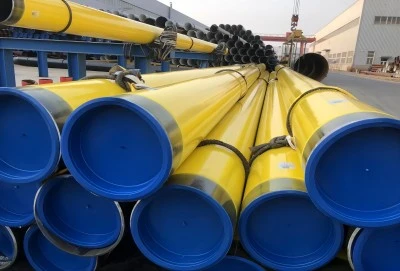
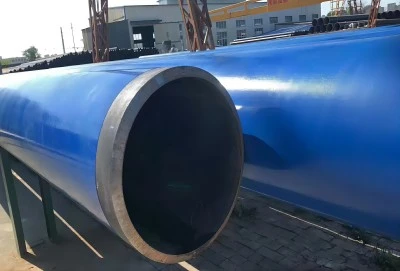
The term "polyethylene coated steel pipe" refers to carbon steel line pipe with an outer polyethylene jacket. It's called 3LPE and most buried projects use it. After being blasted, an epoxy primer that is fused together stays on the steel and doesn't rust. Some kind of copolymer glue is used to stick the primer to the outside layer of high-density polyethylene. The steel can handle the soil's weight and pressure, and the coating keeps water, chlorides, and soil electrolytes from getting in. It's good for the economy to protect against corrosion. Corrosion costs the world about US$2.5 trillion a year, or 3.4% of the world's GDP, according to the NACE IMPACT study. These things are not the same as PE-lined, PVC-coated, or galvanized pipe. They are put together and built in different ways.
Benefits on Buried Lines
When contractors are talked to, four benefits are often brought up. Hits or scrapes don't hurt the polyethylene jacket when it's being hauled, lowered, or backfilled. Bacteria, acids, or bases in the soil don't change its chemical make-up. Because it has a high dielectric strength, cathodic protection systems don't have to handle as much current. The insulation still works even after being submerged in water for a long time because it holds less than 0.1% of water. Depending on the size of the pipe and the standard, the coating is usually between 1.8 mm and over 4 mm thick. At 23°C, the peel strength is usually more than 100 N/cm. You should always compare these numbers to your own order's test report.
Limits to Weigh Early
It's not possible to coat every line with PE. Since standard grades only work from -40°C to +80°C, hot fluid services above that range usually need polypropylene systems. It costs more up front than bare steel as well. Crews drag pipe. They pick it up with chains. They weld as close to the edge of the coating as they can get. Or they backfill with sharp rock. Polyethylene is not designed for burial, and if you wish to store it above ground for a long time, you will need to cover it or add UV-stable materials to it. Even with a covering on the outside the inside can still rust therefore aggressive media may need a different treatment for the inside. Test each limit against how your business truly works.
Specify the Project and Choose the Coating System
Write a Precise Inquiry
You can save weeks leaving a question open. Before I call I note the purpose for calling, the medium to be used, the operating pressure and temperature, the soil conditions, the design life, the outer diameter, the wall thickness, the steel grade, and the type of connection. I filled in the designs, the funds, the port of delivery and the due date. Then I send all the bidders the same package and ask them to confirm the coating’s structure, thickness, test techniques, repair process, packing and lead time. You can input the same information and get identical quotations and it’s easy to determine if there are any hidden charges. For most line sizes, Longma Group provides what you need. They are produced in sizes from 60.3 mm to 1422 mm ( 2.4 inches to 56 inches ) across the outside , and 6.02 mm to 50.8 mm thick .
Two-Layer or Three-Layer
A two-layer technique combines the polyethylene layer on the outer side with an adhesive. The epoxy primer is the third layer of a three coat technique. That’s why 3LPE is typically used for transmission lines carrying high-pressure electricity: it makes the chemical bonds stronger and less prone to break. If the requirements allow it, easier jobs can be done with two-layer coatings. And before I decide, I'll look at the standard, the cathodic protection design, how it's going in and the corrosiveness of the soil. Layer count is not the only thing that matters. It is also very vital to regulate the extrusion process and prepare the surface.
Set Thickness by Risk
Extra thick isn't always better. How thick the coating should be should depend on the pipe's diameter, the project standard (such as ISO 21809-1 or DIN 30670), the handling plan, and the type of soil. You need more thickness when there is rocky backfill, long hauls, or rough stockpiling. Working without trenches is even more dangerous. The pipe string drags through rough ground with a lot of shear in horizontal directional drilling. Polyethylene covers the epoxy primer on the outside to keep it safe. That kind of abuse is bad for bitumen and tape coatings. Make sure the supplier knows how the plant measures the minimum thickness by pipe size that they give you.
Compare Options and Verify Quality
Polyethylene Versus Galvanized, Epoxy, and PVC
Each option has its place. It is made of steel that has been dipped in zinc. There are only microns of zinc between the wires, so it doesn't protect against wet, buried soil as well as a millimeter-thick polyethylene jacket would. Epoxy and FBE coatings fit together well and don't change when chemicals are added. Some epoxy systems can also handle higher temperatures, but polyethylene is usually better at protecting itself from damage caused by drops and wear. In 3LPE, epoxy comes after polyethylene because of this. With steel, you can have bigger diameters and walls, as well as heavier loads on the outside. However, PVC is lighter and easier to work with. I think about more than just the price. I also think about how corrosive the soil is, how deep the line needs to be buried, how likely it is to damage things during installation, and how much it will cost in the long run.
Steel and Coating Standards to Match
Standards make anything acceptable. So name them before you make it. Longma Group produces steel pipes according to API 5L, ASTM A53, EN 10210, AS/NZS 1163. API 5L grades B through X80 are covered for PSL1 and PSL2. There are other coating standards that can be employed, such as CSA Z245.20, EN 10339, ISO 21809-1, AWWA C210 and C213. U.S. water utilities typically employ AWWA C210 and C213 to apply epoxy coatings to pipelines. Coatings based on polyolefin and polyethylene are specified in ISO 21809-1 and DIN 30670. Please see your owner’s manual for the edition and grade you need.
Test Evidence to Request
When the paper fits the pipe, it fosters trust. For steel, request a Material Test Certificate stating wall thickness, chemical composition and mechanical qualities. 1. Inspect the coating visually for holidays, get peel or adhesion findings, impact and flexibility tests and cathodic disbondment data to get information on the coating thickness of polyethylene coated steel pipe. Longma Group provides you with a Material Test Certificate, Inspection and Test Plan and Specification for Manufacturing Process. Mills like Bao Steel, TISCO, HBIS and Shougang supply it with the raw materials it needs. You may follow the raw materials from the start to the end of the procedure. If the owner want to observe the testing, the checking should be done by a third party and the plan should be agreed upon before work begins.
Pricing, Suppliers, and Logistics
Count the Full Delivered Cost
It's not all about the price per square foot of space. What changes the number is the type of steel, the diameter, the wall thickness, the coating structure, the thickness, the number, the end treatment, the packing, and the testing scope. And finally, add up the freight, insurance, handling at the port, inspection, repair materials in the field, and the cost of something going wrong. Each company I buy from has to set their own prices for steel, coating, testing, packaging, freight, and extras. Most of the time, it costs more after the fact when a low quote leaves out things like certification or protective packaging. It is possible to compare prices that use the same Incoterms and the same details. Keep track of how long the quotes last and how much you need to pay.
Vet the Pipe Manufacturer
A website's claims need to be backed up. I check the factory's address, the number of production lines, the lab, the coating equipment, and whether the coating is done by employees or by subcontractors who are under strict supervision. Longma Group has been making ERW and LSAW steel pipe on a 230,000-square-meter site in China since 2003. It sold goods in more than 90 countries and made more than 1,000,000 tons of goods every year by the end of 2023. It has Factory Production Control, API 5L, ISO 9001, ISO 14001, and ISO 18001 certificates for health and safety at work. That means you can get the pipe and the coating from the same place. It also does hot-dip galvanizing, 3LPE, 3PE, FBE, 2PP, and 3PP.
Protect Pipe in Transit and at Field Joints
There is a lot of damage to the covering in between the plant and the trench. For maritime freight, please request a packing strategy on how to stack, pad and secure the products. Also ask for lifting slings instead of chains or hooks. When you come, measure every length. Crosslinked polyethylene heat-shrink sleeves are used to extend the protection time, since the coating does not reach the pipe end at the weld. Choose repair materials and sleeve with coating provider before shipping. This will ensure the factory-applied coating will match the system in the field. Fill in some spots, try them out over the holidays, repair some spots.
Avoid Mistakes and Decide with Confidence
Mistakes That Cost Projects
Most of the time the coating that doesn't work is the site or the directions. I see the same mistakes in bids time and time again: dragging pipe over rough terrain, not verifying before lowering, utilizing the same coating grade for all soil types and installation methods, not deciding on field-joint repair until the project starts. Rushing manufacturing might not leave time for coating and inspection and this increases the danger. Ensure there is enough room for the plant and that you know how the supplier will deal with any difficulties before you sign. These blunders are easy to avoid in planning, and costly to remedy when you get there.
Procurement Checklist
Make this list of your needs before you place your order so that the supplier knows what they need to do.
- Technical scope: Please confirm the following in writing: application, conveyed medium, outer diameter, wall thickness, steel grade, coating structure, coating thickness, soil conditions, operating temperature, connecting technique and end treatment. But before comparing prices, you must state the controlling standards and editions, e.g. API 5L, DIN 30670 or ISO 21809-1. Include pictures and numbers.
- Quality scope: Define your requirements for certificates, Inspection and Test Plan, adhesion and holiday testing, traceability records and third-party inspection. Request Material Test Certificate for each shipment. The repair processes, warranty terms and procedures to handle non-conformances should be agreed upon so that everyone knows how the response will be before the first pipe leaves the facility.
- Commercial scope: Quantities, delivery dates, price basis, Incoterms, payment terms, packaging technique, shipping documentation, spare coating and repair materials, production capacity. Compare the lead time to your installation timetable. Also, provide a contact for after-sales concerns. Field questions often occur months after the pipe gets on site.
Before the order was placed, these three scopes were finished. They make things clear and keep the project on track.
Final Decision Guide
The order of importance is: 1. Job suitability. 2. Corrosivity of soil. 3. Temperature and pressure. 4. Expected life. 5. Adhesion and resistance to damage of coating. 6. Compliance. Then find out how much the complete project will cost, how reliable delivery is, how good the documentation is, and how fast the supplier responds to technical issues. Contractors want aid most with delivery and installation, engineers most with planning and testing, and distributors want to be able to repeat and maintain track. Select providers who can give you samples, data sheets, verified testing records and a project-specific estimate. Order a sample or visit the factory before you place a significant order with them.
Conclusion
Don't just compare prices one at a time when you want to buy polyethylene coated steel pipe. Instead, do a number of checks. 3LPE is made up of an epoxy primer, an adhesive, and a polyethylene jacket. It is used to protect steel that is buried. Its pros are that it doesn't absorb much water, doesn't break easily, and has a high dielectric strength. On the other hand, it can only handle a certain temperature range, costs more up front, and is easily broken when handled roughly. When there is a clear specification, the right layer system and thickness, standards that match the pipe and coating, written test results, the full cost delivered, safe shipping, and field joints that work together, there is less risk. When contractors look at different suppliers for the same jobs and see what the factory can do, they can make smart choices that are good for both the budget and the pipeline.
FAQ
What is polyethylene coated steel pipe used for?
This is what horizontal directional drilling, long-distance oil and gas transmission, and city water and sewage mains use it for. It's important that the steel is strong and doesn't rust on the outside for these projects to work. Check to see if it meets the requirements for pressure, temperature, medium, and where you live before you choose it for your line.
What is the difference between 2LPE and 3LPE?
It is made up of a polyethylene layer and an adhesive layer. 3LPE has an epoxy primer that helps the layers stick together better and stops cathodic disbondment. This is why it is often used for high-pressure transmission lines.
How long does the coating last?
Not every site can use the same number. If you follow DIN 30670 or ISO 21809-1 when installing pipes, they can last more than 50 years with little upkeep. But the outcome depends on the soil, the temperature, how it is handled, and how well it was fixed. The terms of the warranty and proof that they are qualified should be asked for.
What temperature range can it handle?
Between -40°C and +80°C, most polyethylene coatings can handle the heat. When the temperature goes up to about 110°C, polypropylene coatings are usually needed. Check with the manufacturer to make sure the tested range is correct.
Request a Polyethylene Coated Steel Pipe Quote from Longma Group
Longma Group, a company that makes polyethylene coated steel pipes, sells ERW and LSAW pipes with 3LPE, 3PE, FBE, and 2PP coatings. Send an email to info@longma-group.com with your drawings, sizes, standards, and delivery port. Following that, our team will make a project quote that includes ITP, MPS, and MTC files. At longma-group.com, you can look at documents and goods.