
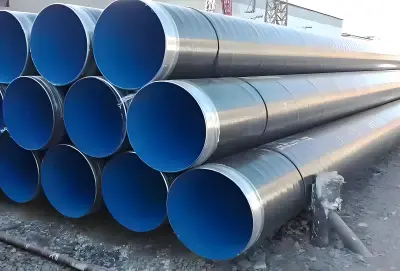
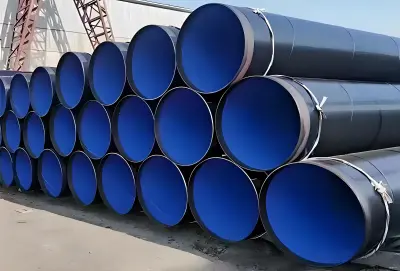
Finding reliable producers of PE-coated steel pipe is becoming more and more important for international customers in the ever-changing world of global industrial commerce. There is still a lot of demand for high-quality polyethylene-coated pipes in many different fields. These specialised items are the backbone of modern industrial progress, from moving oil and gas to building water infrastructure. After making welded steel pipes, producers cover the surfaces of carbon steel pipes with a protective layer according to client specifications to stop rusting.
Finding dependable vendors might be hard at times. International purchasers require partners that can fulfil strict export criteria and always supply high-quality goods. This necessity is even more important when working on big infrastructure projects when failure is not an option. The coating technology used must be able to handle different weather conditions while keeping the product's structure strong throughout its life.
Cangzhou City in Hebei Province is in the middle of China's industrial belt and has become a key place for manufacturing. This area is close to large ports and has good transit networks, which is good for business. The industrial environment here covers the whole range of steel pipe production, from processing raw materials to applying innovative coatings. Manufacturers in this field use decades of experience and contemporary technology to satisfy demand throughout the world.
|
|
|
Understanding PE Coating Technology and Standards
Polyethylene coating is a complex barrier system that keeps steel pipes from being rusty and damaged by the environment. PE Coating Paper is paper that has polyethylene glued to one or both sides. This makes it resistant to moisture, oil, grease, and even certain chemicals. Over the past several years, this technology has come a long way, using new materials and ways of using them.
There are several levels in the coating process, and each one has a different job. The steel surface is first cleaned with a blast to get the right surface profile. After that, an epoxy primer helps the steel and polyethylene layers stick together. The intermediate adhesive layer makes sure that the connection is strong, and the outer polyethylene covering protects against chemical and mechanical damage quite well.
PE coated steel pipe applications are subject to international standards to guarantee quality and compatibility across the world. DIN 30670 from Germany is one of the most important standards. It sets specifications for polyethylene coatings on steel pipes and fittings. The Canadian standard CSA Z245.20 talks about using epoxy coating to connect steel pipes together from the outside. EN 10339 gives European standards for tubes with polyethylene coatings, and ISO 21809-1 gives detailed rules for the oil and gas sectors. These requirements make sure that coated pipes fulfil strict performance standards no matter where they are going.
Quality control is still very important during the whole coating process. Automated inspection systems that check coating thickness, adhesion strength, and holiday detection are used in modern operations. Controlling the temperature when applying the polymer makes sure that it flows and bonds in the best way possible. The outcome is a strong, even coating that makes pipes last far longer and needs less maintenance.
Advanced Application Technologies
Modern PE coating plants use the most advanced extrusion machines that can manage temperature and pressure very precisely. The extrusion technique makes sure that the coating is the same thickness all over the pipe's surface. Side extrusion method makes it possible to cover pipes with exterior diameters between 60.3mm and 1422mm. Because they may be used in so many different ways, PE-coated pipes are good for anything from tiny distribution lines to large transmission pipelines.
When choosing a coating method, environmental factors are becoming more and more significant. Modern PE coatings are very good for the environment and give great protection. The materials used are safe for people and the environment and follow all international health and safety rules. Also, the coating process has been improved to use less energy and produce less waste, which is in line with worldwide efforts to protect the environment.
Key Factors in Selecting Export-Grade Manufacturers
When choose the proper PE coated steel pipe manufacturer, you need to think about a lot of things. When buying PE-coated steel pipes from other countries, consumers may compare manufacturers and products at fair costs. Some of the alternatives include steel pipe, carbon steel pipe, and steel tube. Production capacity is a key factor since it affects delivery times and the reliability of fulfilling orders.
Certification and compliance documents are important ways to check a manufacturer's skills. Reputable vendors have both ISO 9001 quality management certificates and specialised product certifications, such as API 5L for line pipes. ISO 14001 and other environmental management certifications show that a company is committed to long-term policies. These credentials provide purchasers faith in both the quality of the products and the company's responsibilities.
Leading manufacturers stand out from typical providers since they have more technical knowledge. Advanced manufacturers put money into research and development to make better coating compositions and ways to apply them. Their technical teams can come up with solutions that are tailored to the needs of each project. When working in tough climatic circumstances or with specialised applications, this level of technical knowledge is very useful.
A manufacturer's ability to handle the difficulties of international trade is greatly affected by their expertise with exporting. Established producers have sent a lot of items to Europe, the Middle East, Southeast Asia, North and South America, and their customers have been happy with them. Exporters with experience know what paperwork is needed, how to transport things, and how rules differ from one location to another. They keep in touch with goods forwarders and logistics companies to make sure that deliveries go smoothly.
Manufacturing Infrastructure Requirements
Modern PE coating plants need a lot of money to build their infrastructure. Production lines must be able to handle pipes of different sizes while also making sure that the quality stays the same. Automated handling systems cut down on the need for people to do things by hand, which lowers the danger of harm during processing. Climate-controlled storage spaces keep completed goods safe from the weather before they are sent.
Testing labs using high-tech analytical tools check the performance characteristics of coatings. These places do testing for adhesion, impact resistance, and cathodic disbondment. Regularly calibrating testing equipment makes ensuring that measurements are accurate and can be repeated. Documentation systems keep track of test findings, making sure that each production batch has a full record of its quality.
A manufacturer's ability to meet delivery deadlines depends on how well they manage their supply chain. Having good ties with raw material suppliers makes sure that quality inputs are always available. Inventory management systems keep track of stock levels and order needs to find the best balance between the two. This keeps service levels high while maximising working capital. Contingency planning deals with possible problems that might happen, keeping consumers safe from supply problems.
Longma Group's Export Excellence
Longma Group has been one of China's top PE coated steel pipe suppliers since it was founded in 2003. The company's growth shows that it keeps putting money into technology and quality procedures. Longma Group has a lot of ability to service worldwide markets, as it will be able to produce more than 1,000,000 tonnes of goods per year by the end of 2023.
The firm makes thick-walled, double-sided submerged arc welded steel pipes with huge diameters. This line of products is made for tough jobs in oil and gas transportation, structural engineering, and industrial processing. LSAW (Longitudinal Submerged Arc Welded) technology makes it possible to make pipes that are stronger and more accurate in size. Electric Resistance Welded (ERW) steel pipes are a great addition to the product line since they are affordable and can be used in many different ways.
Longma Group can coat PE to meet all international requirements. The company's coating lines can handle pipes with outer diameters between 60.3mm and 1422mm and wall thicknesses between 6.02mm and 50.8mm. This size range works for most industrial uses, from big transmission pipes to distribution networks. Following several coating standards, such as DIN 30670, DIN 30678, CSA Z245.20, EN 10339, ISO 21809-1, AWW C210, and C213, makes it possible to sell products all over the world.
Longma Group has a competitive edge since it is located in a strategic area in Cangzhou City, Hebei Province. The region has a long history of industry, which has resulted to a competent workforce that knows how to make steel pipes. Being close to Tianjin Port makes it easier to export goods quickly, which cuts down on the time it takes to go to other countries. The local supply chain ecology enables just-in-time manufacturing solutions, which help keep costs down while yet being able to respond quickly.
Quality Assurance Systems
Longma Group implements comprehensive quality management systems throughout the production process. Raw material inspection begins with chemical composition analysis and mechanical property testing. Each steel coil undergoes verification against specified requirements before entering production. This rigorous screening prevents quality issues from propagating through the manufacturing process.
In-process quality control monitors critical parameters at each production stage. Welding parameters receive continuous attention to ensure joint integrity. Dimensional measurements verify compliance with specified tolerances. The PE coating application process incorporates real-time monitoring of temperature, pressure, and line speed. These controls maintain coating uniformity and adhesion strength across the entire pipe surface.
Final inspection procedures validate product conformance before shipment release. Visual examination identifies surface defects or coating irregularities. Non-destructive testing methods detect subsurface anomalies that might compromise performance. Holiday detection ensures coating continuity, preventing corrosion initiation points. Documentation packages accompany each shipment, providing complete traceability from raw materials through finished products.
Customer feedback mechanisms drive continuous improvement initiatives. The company actively solicits input regarding product performance and service quality. This information guides process refinements and new product development efforts. Long-term partnerships with international customers testify to Longma Group's commitment to excellence and customer satisfaction.
Conclusion
The global demand for reliable PE coated steel pipe continues growing as infrastructure development accelerates worldwide. Surface coating prevents corrosion through standard applications of black paint, varnish, and anti-rust oil for temporary protection during transportation, while FBE, PE, or PP coatings provide enhanced long-term protection. Selecting the right manufacturing partner requires careful evaluation of technical capabilities, quality systems, and export experience.
Longma Group stands ready to meet these demanding requirements with comprehensive PE coating solutions. Our extensive product range covers PE Coated Steel Pipes manufactured to international standards including API 5L, ASTM A53, EN10210, and AS/NZS 1163. With coating standards compliance spanning DIN 30670, DIN30678, CSA Z245.20, EN10339, ISO21809-1, AWW C210, and C213, we ensure global market compatibility. Our production capabilities accommodate outer diameters from 60.3mm to 1422mm with wall thicknesses ranging from 6.02mm to 50.8mm, addressing diverse industrial applications.
As one of China's leading ERW/LSAW steel pipe manufacturers since 2003, Longma Group combines extensive experience with modern technology. Our Cangzhou City facility in Hebei Province leverages regional industrial advantages while maintaining global quality standards. With annual production exceeding 1,000,000 tons, we possess the capacity and expertise to support your most demanding projects. Contact our expert team today at info@longma-group.com to discuss your PE coated steel pipe requirements and discover how Longma Group can contribute to your project's success.
FAQs
Q1: What makes PE coating superior to other anti-corrosion methods for steel pipes?A: PE coating offers exceptional durability and chemical resistance compared to traditional paint or galvanizing methods. The multi-layer system provides mechanical protection against impact and abrasion while maintaining flexibility. Unlike single-layer systems, PE coating accommodates thermal expansion without cracking. The coating's longevity often exceeds 50 years under proper conditions, significantly reducing lifecycle costs. Additionally, PE coating allows for cathodic protection compatibility, providing dual corrosion prevention mechanisms for critical applications.
Q2: How can international buyers verify the quality of PE coated steel pipes before shipment?
A: Buyers should request comprehensive quality documentation including mill test certificates, coating thickness reports, and adhesion test results. Third-party inspection services provide independent verification of product compliance with specified standards. Many manufacturers offer witness testing opportunities where buyers or their representatives observe quality control procedures. Video inspection capabilities enable remote quality verification when travel isn't feasible. Pre-shipment sample evaluation allows buyers to confirm product characteristics before accepting full orders. Established manufacturers like Longma Group maintain transparent quality systems that facilitate buyer confidence.
Q3: What factors influence PE coating pricing for export orders?
A: Several variables affect PE coating costs including pipe dimensions, coating thickness requirements, and applicable standards. Order volume significantly impacts unit pricing through economies of scale. Raw material market conditions, particularly polyethylene resin prices, influence coating costs. Special testing or certification requirements add incremental expenses. Packaging specifications for ocean freight affect overall delivered costs. Currency exchange rates between buyer and seller countries create pricing variability. Seasonal demand patterns in global markets can influence availability and pricing. Understanding these factors helps buyers negotiate effectively while ensuring quality requirements are met.








