
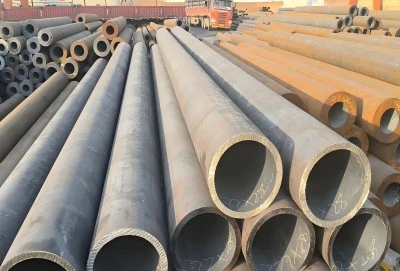
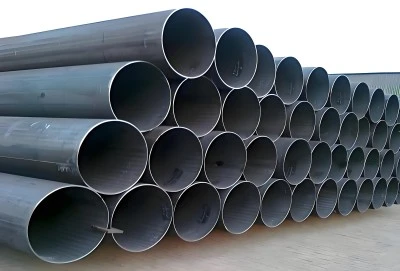
When infrastructure projects demand structural hollow sections capable of enduring extreme cold and dynamic loading, the EN10219-1 S235J2H pipe stands as a reliable solution. This premium cold-formed welded structural hollow section delivers exceptional low-temperature toughness, guaranteeing a minimum impact energy of 27 J at -20°C. The J2 designation specifically addresses the risks of brittle fracture in harsh climates, making it indispensable for bridges, offshore platforms, wind towers, and heavy structural frameworks where safety cannot be compromised. Its excellent weldability and fabrication characteristics enable engineers to work with confidence across demanding applications worldwide.
|
|
|
Understanding EN10219-1 S235J2H Pipe Specifications and Properties
The EN10219-1 Standard and Its Role in Infrastructure
Making cold-formed welded structure hollow parts is governed by the EN10219-1 standard, which sets quality standards that are the same across the European market and beyond. This standard makes sure that every piece of pipe that is made according to its rules meets strict requirements for mechanical features, weld integrity, and dimensional limits. This framework is used by engineers and procurement managers to make sure that the specs for materials match up perfectly with the figures for loads and safety factors. The traceability requirements in EN10219-1 make sure that all finished products can be traced back to where the raw materials came from and the production batch they were made in.
Chemical Composition and Mechanical Properties
The EN10219-1 S235J2H pipe grade has a carefully controlled chemical make-up that makes it strong while also being easy to weld. The amount of carbon stays low to keep the fabrication properties good, and the amounts of manganese and silicon help keep the structure strong. A minimum yield strength of 235 MPa is one of the mechanical qualities. This means that it can hold enough weight for most construction uses. The J2H version is different because it guarantees impact energy performance at -20°C, which is an important requirement for projects in cold places or where temperatures change a lot. This low-temperature toughness stops catastrophic brittle failure, which has been a problem in the past with structural steel that has been stored in cold or winter places.
Available Dimensions and Wall Thickness Options
According to EN10219-1, structural hollow parts can have square, rectangular, or round shapes. Wall thickness is usually between 2mm and 16mm, so it can be adjusted to fit different load needs and span lengths. Because the dimensions are flexible, structural engineers can use the least amount of material possible while still leaving enough room for error. When making material orders, procurement workers can make better decisions when they know these size ranges. This is because standard dimensions are easier to find and cost less than custom specifications. The "H" at the end of the grade name proves that the product was made as a hollow piece. This makes it different from plate or bar products that may have the same grade name but different mechanical properties.
Performance and Application: Why Choose S235J2H Pipes for Infrastructure Projects?
Critical Infrastructure Applications
More and more infrastructure projects around the world are using EN10219-1 S235J2H pipes in places where tough environmental conditions need strong structures. When building a bridge, these pipes are used for truss members and support beams because they are strong and work well in cold temperatures. Offshore platform builders like how the material doesn't crack when it's loaded and unloaded by waves and changes in temperature. Another area that is growing is wind tower building. This is because the green energy industry needs structure parts that can handle both mechanical stress and extreme weather. The superior toughness of the J2 grade makes it ideal for heavy industrial buildings, cold storage facilities, and transportation infrastructure in northern climates.
Mechanical Performance and Quality Assurance
EN10219-1 S235J2H pipes are structurally reliable because they go through strict quality control measures when they are made. Charpy V-notch impact testing at -20°C makes sure that every batch of products meets the minimum 27 J energy absorption standard. Tensile tests prove the ultimate and yield strengths, while bend tests check the flexibility and stability of the weld zone. Eddy current and ultrasound checking are two types of non-destructive testing that can find problems inside a weld or in the base metal that might affect how well the structure works. These checks give procurement managers confidence that the properties of the materials match what was expected in the design. Certification papers that meet EN 10204 Type 3.1 or 3.2 standards allow full tracking from the steel mill to the finished product. This is something that many engineering companies require to protect themselves from risk and keep track of quality.
Weldability and Fabrication Advantages
The EN10219-1 S235J2H grade is naturally very good at welding, which makes it very useful for both field production and workplace assembly. Most of the time, the controlled carbon equivalent lets you weld without preheating, which cuts down on the time and cost of making things. When the right steps are taken during standard welding procedures using GMAW, SMAW, or FCAW processes, the joints are strong. Cutting, drilling, and making work well with the material, which makes it easy for makers to plan out connection details. Because it's easy to make, the project will cost less because fewer hours of work will be needed and less rework will be needed. Companies that work with contractors like materials that work the same way in different manufacturing shops without needing special techniques or expensive products.
Comparing S235J2H with Alternative Pipe Grades: Making the Right Decision
S235J2H Versus S275JR and S355J2 Grades
Knowing the differences between the types of structural steel helps you make better choices about what to buy. The S275JR has a higher yield strength of 275 MPa, but it can only be tested for impact at room temperature, which makes it less useful for uses in cold climates. The impact test at -20°C shows that S355J2 has a much higher strength of 355 MPa. This makes it ideal for heavy loads where the extra weight justifies the higher price. EN10219-1 S235J2H pipe is often the best choice for projects in cold places with moderate loads because it strikes the best balance between performance and cost-effectiveness. It is important to keep in mind that too much or too little information can waste resources and put people's safety at risk, so the decision matrix should weigh structure formulas against budget limits.
Comparison with ASTM A500 and International Standards
The main structural hollow section standard in North America is ASTM A500 Grade B, which is often compared by global buying teams to EN10219-1 S235J2H pipe. Both can be used for structural purposes, but ASTM A500 Grade B doesn't have any specific standards for low-temperature impact. Instead, it focuses on mechanical traits at room temperature. This basic difference changes how materials are chosen for projects that will be done in cold places or where temperatures change. The Australian standard AS/NZS 1163 has C250 and C350 grades that can be tested at different temperatures, which is similar to EN10219-1 in terms of the assurances it gives. When you know about these differences in international standards, you can avoid design problems when you buy things from around the world or work on projects with people from other countries where different standards may apply.
Welded Versus Seamless Manufacturing Processes
The EN10219-1 S235J2H pipe standard talks about cold-formed welded hollow sections in detail. These are made by shaping a flat steel strip and welding it along its length. For structural uses, this method of production is cost-effective and gives consistent results as long as quality controls are followed correctly. When hot cutting and rolling are used to make seamless pipes, the weld line is eliminated. However, these pipes usually cost more because they are harder to make. Modern welding technology makes joints with mechanical properties that are the same as or better than those of the base metal, so seamless construction is rarely needed in structural applications. Procurement managers should know that EN10219-1 welded parts meet structural needs well and save money on projects compared to selecting seamless options that aren't needed.
Procurement Insights for EN10219-1 S235J2H Pipes: How to Buy Smartly
Identifying Qualified Suppliers and Manufacturers
A good procurement process starts with qualifying suppliers. It's important that makers have the right certifications and can show they've worked on building projects before. Achieving ISO 9001 quality management certification means that production is controlled in a planned way. API, CE marking, or national standard approvals show that specific technical requirements have been met. When a manufacturer has their own testing lab, they can get mill test certificates to customers faster and answer technical questions more quickly. When project deadlines are tight or order volumes are high, production capacity is important. A company like Longma Group that makes more than 1,000,000 tons of goods every year shows the size and dependability needed for big building projects. Being close to steel plants that offer high-quality raw materials, like Shagang, TISCO, and Baosteel, makes sure that the chemical makeup and mechanical properties stay the same from the beginning of the steel-making process to the end.
Cost Considerations and Lead Time Planning
The price of EN10219-1 S235J2H pipes changes based on the cost of raw materials, the size of the order, and the quantity ordered. Standard sizes that are in stock are available right away and are priced competitively. Custom sizes, on the other hand, need mill runs that take longer and may have a minimum order quantity. Buying in bulk takes advantage of economies of scale, which is especially helpful for big building projects that take a long time to build. Clear prices should take into account the costs of making the product, testing and approval, surface treatments (if needed), and shipping. For standard production runs, lead times are usually between 4 and 8 weeks. They get longer if special testing, dimensional requirements, or surface treatments are needed. When buying things from other countries, procurement planning should make sure that material orders are in sync with construction plans and allow extra time for customs clearance and inland transportation.
Customization and Value-Added Services
Value-added services, on top of normal pipe production, have a big effect on the speed of a project and the total cost of installation. Fabrication services, such as cutting to length, beveling the ends for welding, drilling connection holes, and expanding, cut down on the need for field labor. In places where rust is common, anti-corrosion treatments like hot-dip galvanizing, fusion-bonded epoxy coating, or three-layer polyethylene coats make things last longer. Buyers of galvanizing should make sure that the amounts of silicon and phosphorus are controlled while the steel is being made to avoid the Sandelin Effect, which makes the coating thickness uneven. Engineering companies that work with various suppliers can easily check the quality of their work when they have complete paperwork packages that include Inspection and Test Plans, Manufacturing Procedure Specifications, and Material Test Certificates. When suppliers offer these bundled services, it's easier for everyone to work together, and there are fewer chances of quality problems happening between the manufacturing and installation stages.
Conclusion
The EN10219-1 S235J2H pipe is a planned option for building projects that need strong structures and the ability to work reliably in cold temperatures. Its guaranteed impact toughness at -20°C, along with its ease of welding and low cost, make it the best choice for bridges, marine buildings, wind towers, and heavy industrial construction. It is important to make sure that procurement decisions are in line with both technical needs and budget constraints by thoroughly understanding specifications, systematically comparing alternatives, and working with qualified manufacturers. As the world's infrastructure needs grow and sustainability becomes more important, choosing products from companies that care about quality, innovation, and being environmentally friendly will pay off in the long run and make the project a success right away.
FAQ
What distinguishes S235J2H from S235JRH for cold climate applications?
The main difference is the temperature needs for impact testing. For S235JRH, testing must be done at room temperature (20°C), but for EN10219-1 S235J2H pipe, testing must be done at -20°C with an impact energy of at least 27 J. Because it can withstand lower temperatures, J2H is a lot more reliable for structures that will be used in cold places or during the winter, when the risk of brittle fractures is higher.
Can these structural hollow sections be hot-dip galvanized after fabrication?
Yes, hot-dip galvanizing can be done on EN10219-1 S235J2H pipes as long as the amount of silicon and phosphorus in the steel is controlled during production. In requests for quotes, buyers should make it clear that the steel must be "suitable for galvanizing" to avoid the Sandelin Effect, which affects the zinc coating's thickness and appearance.
Is EN10219-1 appropriate for pressurized fluid systems?
Not at all. EN10219-1 is more concerned with structural uses than pressure containment. For projects that need pipes for pressurized fluids, EN 10216 for seamless steel tubes or EN 10217 for welded tubes should be used. These standards include pressure design criteria and the right testing protocols that aren't covered in the structural standard.
Partner with Longma Group for Your EN10219-1 S235J2H Pipe Requirements
Longma Group is ready to help you with your infrastructure projects by providing you with the best EN10219-1 S235J2H pipe solutions, which are made to the highest standards. We have been known as a reliable supplier of structural hollow sections since 2003, when we started sending over 1,000,000 tons of material to projects in 90 countries. We are dedicated to quality, as shown by our ISO 9001, API 5L, and other foreign standards. We only get our raw materials from the best local mills, like Shagang, TISCO, and Baosteel. This way, we can be sure that the mechanical features will be the same from the start. In addition to making, we provide full fabrication services, anti-corrosion treatments, and all the paperwork that engineering firms need. Email our technical team at info@longma-group.com to talk about the details of your project and get a quote based on decades of experience working on infrastructure projects.








