
ASTM A252 steel pipe represents the gold standard for structural piling applications. Consequently, it serves as the backbone of countless infrastructure projects worldwide. This comprehensive specification covers welded steel cylinders designed for deep foundation systems. In these systems, pipes function either as permanent load-bearing members or as shells for cast-in-place concrete piles. Therefore, understanding the grades and specifications is crucial. It proves essential for engineers working in oil and gas transportation. Furthermore, project managers on offshore platforms and large-scale construction projects rely heavily on this data.
|
|
|
Understanding ASTM A252 Steel Pipe Fundamentals
The ASTM A252/A252M specification establishes the standard for welded steel pipe piles used in foundation construction. Primarily, these cylindrical steel pipes undergo rigorous manufacturing processes. This ensures structural integrity under extreme loading conditions. Unlike conventional piping systems, these load-bearing pipes must withstand heavy forces. Specifically, they handle both axial and lateral forces while maintaining dimensional stability.
Manufacturing excellence begins with selecting premium raw materials. Manufacturers source these from certified steel mills. Subsequently, the welding process creates seamless joints. These joints distribute stress evenly throughout the pipe structure. Additionally, strict quality control measures are in place. These include dimensional verification, mechanical testing, and visual inspection. As a result, these steps guarantee compliance with specification requirements.
The specification covers various diameter ranges. Typically, these range from 8 inches to 60 inches. Thus, ASTM A252 steel pipe accommodates diverse foundation requirements. Moreover, wall thickness varies based on load requirements. Soil conditions also dictate the thickness. Consequently, engineers select appropriate dimensions through comprehensive geotechnical analysis. This ensures the pile can support the intended structure safely.
Grade Classifications and Mechanical Properties
ASTM A252 defines three distinct grades. Each grade offers specific mechanical properties tailored to different application requirements. Therefore, choosing the right grade is vital for project success.
Grade 1 provides the most economical option for standard foundation work. It features a minimum yield strength of 30,000 psi. Additionally, it offers a tensile strength of 50,000 psi. For basic construction needs, Grade 1 is often sufficient. It offers reliable performance without unnecessary cost.
Grade 2 delivers enhanced performance characteristics. It boasts an increased yield strength of 35,000 psi. Furthermore, it has a tensile strength of 60,000 psi. This intermediate grade suits moderate-load applications. Here, additional strength justifies the cost premium. Ultimately, the improved mechanical properties enable longer spans. They also allow for higher load capacities in challenging soils.
Grade 3 represents the premium option. It offers a maximum yield strength of 45,000 psi. Also, it features a tensile strength of 66,000 psi. Heavy-duty applications benefit greatly from these superior properties. ASTM A252 steel pipe in Grade 3 is particularly useful in offshore piling. High-rise construction also demands this grade. In these scenarios, safety factors demand exceptional performance.
Material chemistry varies between grades. However, the specification allows flexibility in composition. This helps achieve the required mechanical properties. Consequently, this approach enables manufacturers to optimize alloy content. They can do this while maintaining cost-effectiveness for the buyer.
Technical Specifications and Dimensional Standards
Dimensional accuracy plays a crucial role in pile installation success. Therefore, the specification establishes strict tolerances. These cover outer diameter, wall thickness, and length variations. Standard diameter ranges accommodate most foundation designs. On the other hand, custom dimensions serve specialized applications.
Wall thickness selection depends on several factors. Load calculations are primary. Additionally, engineers must consider corrosion allowances and installation methods. Thicker walls provide greater load capacity. However, they increase material costs. They also add to handling complexity during transport. Thus, engineers balance these factors through detailed structural analysis.
Length specifications typically range from 20 to 80 feet. Nevertheless, custom lengths accommodate specific project requirements. Joining methods enable extended lengths. Contractors achieve this through welding or mechanical connections. As a result, this allows adaptation to varying soil conditions. It ensures the pile reaches the necessary depth.
Straightness tolerances ensure proper installation. Furthermore, they guarantee correct load distribution. Excessive deviation creates installation difficulties. It can also compromise structural performance. Therefore, quality manufacturers maintain tight tolerances. They achieve this through controlled cooling and straightening processes.
Critical Applications in Infrastructure Development
- Offshore Platform Construction
This represents one of the most demanding applications for steel piling systems. Marine environments subject pipes to corrosive conditions. Simultaneously, wave action creates dynamic loading. ASTM A252 steel pipe in Grade 3 material typically serves these applications. This is due to its superior strength characteristics. The pipe must survive harsh saltwater environments for decades.
- Bridge Foundation Systems
Bridges rely heavily on these structural pipes for deep foundation support. Traffic loads create cyclic stressing. This demands fatigue-resistant materials. Therefore, proper grade selection is critical. It ensures long-term performance under varying load conditions. Without reliable piling, bridges would suffer from structural instability.
- Industrial Facility Construction
This sector utilizes pipe foundation systems for heavy equipment support. Manufacturing plants require stable foundations. Similarly, power generation facilities depend on them. Processing equipment creates vibrations and operational loads. Consequently, the foundation must handle these stresses. ASTM A252 steel pipe provides the necessary rigidity and strength.
- Port and Harbor Infrastructure
Ports depend on reliable piling systems. These are essential for wharf construction. Additionally, cargo handling equipment requires strong foundations. Saltwater exposure demands careful attention. Engineers must prioritize corrosion protection measures alongside proper material selection. This ensures the port remains operational for years.
Installation Methods and Best Practices
- Pile Driving
This represents the most common installation method for steel pipe piles. Impact hammers deliver controlled energy. They force pipes through soil layers. Meanwhile, operators monitor penetration resistance. Driving criteria ensure adequate bearing capacity. Importantly, this process must not compromise pipe integrity.
- Vibratory Installation
This method offers advantages in certain soil conditions. Specifically, it reduces noise impacts. It also limits vibration impacts on surrounding structures. This method works particularly well in granular soils. In these conditions, vibration helps achieve target penetration depths efficiently.
- Drilling and Grouting
These techniques serve specific applications. Sometimes, driving proves impractical due to soil conditions. Environmental restrictions may also prevent hammering. In these cases, drilling provides precise pile placement. Furthermore, it minimizes installation disturbance. This is crucial in dense urban areas.
- Installation Monitoring
Monitoring ensures compliance with design assumptions. Crews collect real-time data. They track penetration rates. They also monitor hammer energy and pile integrity throughout the installation process. Consequently, this data verifies that the ASTM A252 steel pipe performs as expected.
Corrosion Protection and Longevity Considerations
Corrosion protection strategies significantly impact long-term performance. They also affect lifecycle costs. Therefore, engineers must choose the right protection early.
- Hot-Dip Galvanizing
This provides excellent protection for moderate exposure conditions. Furthermore, it maintains cost-effectiveness. The zinc coating sacrificially protects the steel substrate. It prevents corrosion attack from reaching the core metal.
- Epoxy Coatings
These offer enhanced protection for severe environments. They are particularly useful in marine applications. These organic coatings create barrier protection. Additionally, they resist chemical attack from aggressive soils or water conditions. This extends the lifespan of the ASTM A252 steel pipe significantly.
- Cathodic Protection Systems
These systems complement coating solutions in critical applications. Impressed current or sacrificial anode systems provide electrochemical protection. Consequently, this extends service life beyond coating alone. It is often mandatory for high-value infrastructure.
- Regular Inspection
Maintenance programs identify potential corrosion issues. Inspections should occur before issues compromise structural integrity. Monitoring systems track coating performance. As a result, they enable proactive maintenance scheduling. This prevents catastrophic failures.
Quality Assurance and Testing Requirements
- Material Certification
Documents must verify compliance with specification requirements. Mill test certificates provide chemical composition data. They also list mechanical properties. Furthermore, they offer dimensional verification data. These documents enable traceability throughout the supply chain. This transparency is vital for safety.
- Third-Party Inspection
Services validate manufacturing quality. They also confirm specification compliance. Independent testing laboratories verify material properties. They use standardized test procedures. Consequently, this verification provides additional confidence in material performance. Buyers can trust the ASTM A252 steel pipe they receive.
- Dimensional Inspection
This ensures proper fit-up during installation. Inspectors measure diameter and wall thickness. They also check length measurements. These must fall within specification tolerances. Conversely, out-of-tolerance material creates installation problems. It can also lead to potential performance issues.
- Weld Quality Inspection
This process identifies potential defects. Such defects could compromise structural integrity. Inspectors use visual inspection. They also employ radiographic testing and ultrasonic examination. These methods detect various defect types. Ultimately, quality welds ensure reliable load transfer throughout the pile structure.
Economic Considerations and Lifecycle Value
- Initial Costs vs. Long-Term Value
Initial material costs represent only one component of total project economics. Installation efficiency matters. Durability and maintenance requirements also significantly impact lifecycle costs. Therefore, premium grades may justify higher initial costs. They often reduce installation time. Furthermore, they offer extended service life.
- Transportation Costs
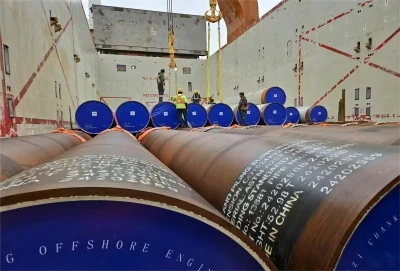
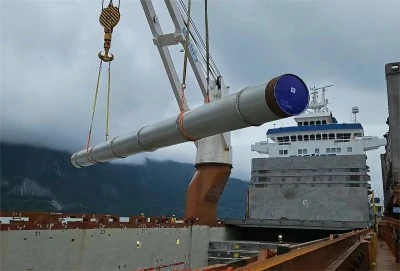
Shipping influences material selection. This is particularly true for remote project locations. Standard lengths and diameters offer shipping advantages. In contrast, custom dimensions of ASTM A252 steel pipe may require special handling. Thus, logistics planning optimizes total delivered costs.
- Installation Productivity
This factor affects project schedules. It also impacts labor costs. Material consistency reduces installation delays. Dimensional accuracy improves crew efficiency. Consequently, quality products enable faster project completion. This leads to reduced overhead costs for the contractor.
- Long-Term Performance
Considerations include corrosion protection and maintenance requirements. Service life expectations are also key. Proper material selection minimizes ongoing costs. Additionally, robust protection systems ensure design life achievement. This approach maximizes the return on investment.
Partner with Longma Group for Premium ASTM A252 Steel Pipe Solutions
Longma Group stands as your trusted ASTM A252 steel pipe manufacturer. We deliver exceptional quality products. These products meet the most demanding foundation requirements. Furthermore, we possess over two decades of manufacturing expertise. Our annual production exceeds 1,000,000 tons. Therefore, we provide comprehensive solutions backed by rigorous quality assurance.
We invite you to contact our technical team at info@longma-group.com. We are ready to discuss your specific piling requirements. Experience the reliability that engineering professionals worldwide depend upon. Choose Longma Group for your next project.
Conclusion
ASTM A252 steel pipe continues to serve as the foundation backbone. It supports critical infrastructure projects across diverse industries. Understanding grade classifications is the first step. Next, knowing technical specifications and application requirements enables informed material selection. This process optimizes both performance and cost.
As construction projects become increasingly complex, the stakes get higher. Consequently, the importance of quality materials grows correspondingly. Reliable suppliers are essential. Success in foundation construction depends on several factors. First, engineers must select appropriate grades. Second, contractors must implement proper installation techniques. Finally, project owners must partner with experienced manufacturers. Only those who understand the critical nature of structural piling applications can ensure success.