
Three-layer polyethylene coating is an external corrosion protection system made of a fusion-bonded epoxy (FBE) primer, a copolymer adhesive, and a polyethylene outer jacket. On 3PE coating steel pipe, the epoxy bonds to blasted steel, the adhesive joins the epoxy to the polyethylene, and the polyethylene absorbs the impact, abrasion, and moisture that buried pipe faces. I wrote this guide for engineers and procurement teams who need to read a coating specification with confidence. It covers structure, application, standards, inspection, limits, and supplier selection, so you can judge a quotation on technical merit.
|
|
|
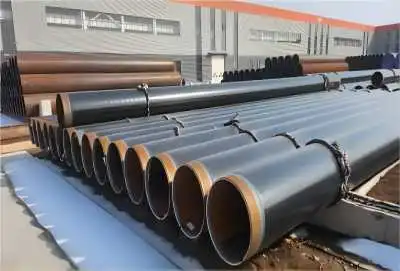
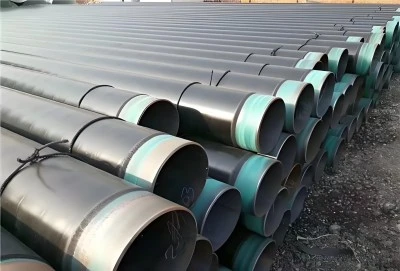
What Is 3PE Coating Steel Pipe?
Definition and Base Pipe
This is a type of steel line pipe called 3PE coating steel pipe. It has three layers of polyethylene coating on the outside. Soil, groundwater, salts, chlorides, and chemicals can't get through the coating. It also gets hit when it's being dug up or moved. This is not the same as steel pipe or concrete flooring that goes inside, as this is for the outside. The base pipe is more important than the coating. We use 3PE to make pipes that meet API 5L, ASTM A53, EN 10210, and AS/NZS 1163 standards. Walls can be anywhere from 6.02 mm thick to 50.8 mm thick. Outside widths range from 60.3 mm to 1422 mm. You should list both the pipe standard and the finish standard in your plan.
Where 3PE Coated Pipe Is Used
It's mostly found on pipes that are buried. Lines that carry oil and gas go through mountains, swamps, and rocks. The hard soil in these spots wears away at the lines by rubbing against them. In towns, gas mains and water lines that people drink need to be kept clean and free of leaks and dirt. The coating protects against electricity very well, which helps lines for industrial fluids and wastewater in places where there are stray currents. You can also use it for district heating lines as long as the temperature stays below the grade that covers it. Epoxy filler sticks to the steel, and the plastic jacket keeps the pipe safe while it's being shipped and set up.
Why Buyers Specify It
3PE is popular because it can fix both rust and mechanical damage at the same time. When there is a cathodic protection current, the coating bond breaks down. This is called cathodic disbondment. This can't happen because of the FBE layer. It's hard to scratch or break the polyethylene layer. Our data on the product says that it can last more than 50 years if it is buried normally and has the right cathodic protection. That number is a design goal, not a promise, because the real results rely on the type of dirt, the temperature at which the work is done, and how well it is installed. That goal can help your QA/QC team improve the plans they make for repair and inspections.
How the Three Layers Work Together
Layer One: FBE Primer
To make the first layer, fusion-bonded epoxy powder is spread on hot, etched steel. It melts, runs, and forms into a thin film that sticks to the metal chemically. Most FBEs are more than 100 µm thick. This layer is in charge of most of the bonding and breaking apart at the cathode. You have to blast the surface to Sa 2.5 with an anchor pattern of 50–75 µm because the quality depends on how clean it is. The glue can stick to that shape. Mill scale, oil, or water can break the link, and the layers above can't fix it. Before I do anything else, I always ask a coater for loud songs.
Layer Two: Copolymer Adhesive
The glue is what keeps everything together. It is put in between the polyethylene and the epoxy. Copolymer is put on by the coater while the epoxy is still able to stick to it. It is roughly 170 to 250 µm thick. A test of our product at 20°C shows that it can peel off with more than 100 N/cm of force. Along the edge, it also keeps water out. This thin layer is giving me a lot of trouble because the contact isn't strong enough. Time is very important. If the glue isn't worked on in time, the bond between the layers gets weaker.
Layer Three: Polyethylene Outer Jacket
The outside is made of HDPE polyethylene, which is either pushed out or wrapped around the glue. It depends on the size of the 3PE coating steel pipe but is usually between 2.5 mm and 3.7 mm thick. When being moved by truck, train, ship, or trench, this jacket doesn't let any water, dirt, or wear and tear through. At temperatures as high as 80°C, some types of 3PE can be used. Normal 3PE can be used from -40°C to 60°C too. After that, FBE at high temperatures or 3PP that is made of three layers is used. Take a look at the operating temperature and the coating rating before you place your order.
How 3PE Coating Is Applied and Inspected
The Application Process
A good coating line always goes in the same order. The coater first looks at the pipe's size, surface, welds, and grade. Abrasive blasting is then used to get rid of the rust, mill scale, oil, moisture, and dust. Next, the pipe is heated up, and then the electrostatic FBE powder is applied to it within the given temperature range. The glue and polyethylene are added after the layers and are either poured or wrapped around the layers while they are still in their manufacturing window. Once the cover has cooled down in a controlled environment, it is cut off about 100 to 150 mm on each end so that welders can join the pipe. When the last stamps, checks, and packing are done, the job is done. When we ship coated pipe, we protect it by bundling it, putting it in a wooden box, or the pallet is made of wood.
Thickness and Standards
The diameter of the pipe, how deep it is buried, the chemistry of the soil, and the rules all affect how thick the coating is. You should list the thicknesses of the FBE, adhesive, and polyethylene separately in your specification, along with the minimum and maximum values for the whole thing. These are AWWA C210, AWWA C213, CSA Z245.20, EN 10339, and ISO 21809-1. To find them, go to our 3PE coating steel pipe page. Pipes must meet the standards set by API 5L, ASTM A53, EN 10210, and AS/NZS 1163. People in the US who buy things will know what API 5L and AWWA are because they use them in their own projects. What standard does your engineer of record use? Then compare the thickness and test requirements to that.
Inspection and Test Records
The cover and the paper are the same, as can be seen. SA 2.5 is clean and has an anchor pattern that is 50–75 µm thick, according to checks done on the surface. Holiday Detection tests the whole pipe with a 25 kV spark to look for holes in the polyethylene. A method called DIN 30670 is used to check how strong it is for samples of the bond to steel to peel off. After 28 days, the test shows how well the coating works when a cathode is used to protect it. Some of the papers that Longma Group provides are ITP, MPS, and MTC. We also keep track of items from the raw ingredients to the finished goods. As part of the deal, buyers often ask for a third party to inspect the work. When you look over the order, talk about the hold points.
Benefits, Limits, and Alternatives
Benefits
The layer doesn't combine with rainwater, soil acids, alkalis, or salts, so electrochemical corrosion is hard to start. It is the plastic jacket that gets scratched and hit the most during shipping, trenching, and backfilling. If you add cathodic protection to the FBE layer, it keeps its link. It is also more even in thickness when it is put on in the factory instead of in the field, which means fewer repairs are needed. These features lower the total cost of ownership for big energy and water projects and lower the amount of upkeep that needs to be done in the future.
Limitations
Some treatments work better than others for some tasks. 3PE costs more than regular 3PE coating steel pipe, has to be covered with special tools, and can only be fixed by trained workers. Most grades work well up to 60°C, but hot fluid lines need a system that is different or has been changed. If the temperature changes, chemicals are present, or there is rocky backfill, it can all stress the jacket. The ends that are soldered together don't come coated, which makes field joins even weaker. Most of the time, that gap is filled with heat shrink covers that look like the three-layer build. Damage can also happen during shipping, so get the parts you need to fix the pipe and check it when it gets there. To figure out how long something will last, don't use a single number. Instead, look at each job separately.
Comparison with FBE, Epoxy, and Galvanized Pipe
Single-layer FBE is good at stopping bonding and cathodic disbondment, but it's not as good as 3PE at stopping wear and contact. FBE might work for some jobs that need to be done at high temperatures or for repairs. Liquid epoxy works well for chemical service and coating the inside, but it doesn't protect against damage as well as a plastic jacket. Most of the time, 3PE is used for big transmission lines that are buried. Galvanized pipe, on the other hand, is better for smaller plumbing, utility, and building projects. Cathodic disbondment is more likely to happen with 2PE because it doesn't have an epoxy primer and instead uses mastic glue. Before making a decision, you should think about the chemistry of the soil, the temperature, the way the object will be buried, the cathodic protection, and the cost over its whole life.
Specification and Buying Guide
Technical Specification Checklist
Describe both the pipe and the coating before you send a question. For pipes, write down the length, outside diameter, wall thickness, steel grade, production method, end cut, and tests. When you're coating something, you should write down the layer structure, the individual and total thickness, the polyethylene grade, the working temperature, the holiday test voltage, the adhesion limits, and how to make field joints and fixes. If you know anything about the site, like how deep the burial was, what kind of dirt was used, which way the holes were dug, any river crossings, and how the ground changed from below to above. Longma Group sells both ERW and LSAW pipe. In PSL1 and PSL2, our API 5L range goes from Grade B to X80.
How to Compare Suppliers
Quotes need a solid base. The price per meter, ton, or pipe doesn't mean much if it doesn't cover testing, packing, shipping within the country, export paperwork, freight, insurance, and testing. It's important to know if the provider makes the base pipe or gets it, and how they handle the tracking, blasting, and temperature. Check the minimum order quantity, wait time, capacity, and the way that a ruined coating can be replaced. You can ask for prizes and test scores. A lot of people who buy EPCs also go see the plant before they sign. This is a good way to make sure the records match what was said.
Why One Manufacturer for Pipe and Coating Helps
It's easier to talk to people and keep track of time when the same company makes and coats the pipe. On a 230,000-square-meter site, Longma Group has been making ERW and LSAW steel pipe since 2003. They will be making more than 1,000,000 tons of steel every year by the end of 2023. Steel comes from mills like Bao Steel, TISCO, Shougang, and Shagang. People from more than 90 countries have bought from us. We offer end treatments and coatings like FBE, 2PP, 3LPE, and 3PE. Two of our certificates are API 5L and ISO 9001.
Conclusion
For 3PE coating steel pipes that are buried, a three-layer polyethylene cover with three linked layers keeps them safe. If you blast steel, an FBE primer will stick to it and not let go when it gets cathodic. It is strong enough to peel off because it is made of copolymer glue. A layer of plastic shields against damage from drops, wear, and water. How well the coating works depends on how the surface is prepared, the temperature at which it is applied, the thickness of the layer, how fast it cools, and how it is inspected using tests like holiday, peel, and cathodic disbondment tests. The system works with underground water, gas, oil, and industrial lines as long as the temperature stays between -40°C and 60°C for normal grades. It costs more than plain pipe and needs elements that can be used to join and fix it. It is better to use 3PE than FBE, liquid epoxy, or steel pipe to protect big transmission lines from damage. When you buy something, make sure it fits the project's soil and operating conditions by getting the right pipe standard, coating standard, thickness, paperwork, and supplier controls.
FAQ
1. What is the difference between 2PE and 3PE?
3PE adds the FBE primer. It sticks to the steel chemically and does a better job of stopping cathodic disbondment than 2PE, which only uses mastic glue. 3PE is the best choice when cathodic protection will work on the line.
2. What temperature can standard 3PE handle?
As high as 80°C; some types of 3PE can be used. Normal 3PE can be used from -40°C to 60°C too. What kind of coating should I use for hotter conditions? Make sure you ask your coating provider what grade to use.
3. How do crews protect field joints?
Most of the time, teams use heat shrink covers that look like the three-layer build: polyethylene backing, epoxy primer, and glue. The covers fit over the 100–150 mm gaps at each pipe end. Make sure the sleeve will work with the original finish before you put it on.
4. What should I include in a quotation request?
Please send the steel grade, amount, outside diameter, wall thickness, pipe and coating standards, coating thickness, location, inspection requirements, and Incoterms if you have them. A picture or list of specs is also helpful. If you tell us everything we need to know, we can answer faster and better.
Request a 3PE Coating Steel Pipe Quotation from Longma Group
The outside diameter of the 3PE coating steel pipes that Longma Group sells ranges from 60.3 mm to 1422 mm. They also make ERW and LSAW pipes and can apply coatings that stop rusting. Want to find a business that makes 3PE-coated steel pipes? Email info@longma-group.com with your needs, the number of items you need, the finishing standard, and where you want the goods sent. We give you a quote and back it up with documents like ITP, MPS, and MTC.