
The main types of black coatings for steel pipes are fusion-bonded epoxy (FBE), liquid epoxy, powder coating, polyethylene systems such as 3LPE, polypropylene systems such as 2PP, polyurethane, and bituminous coatings. Black coated steel pipe describes the color of the finish, not one coating chemistry. Each project therefore needs a named coating system, thickness, and test standard. I wrote this guide for EPC contractors and procurement teams who must match coatings to soil, temperature, and specification requirements. It covers coating types, specifications, selection, buying steps, and what Longma Group can supply.
|
|
|
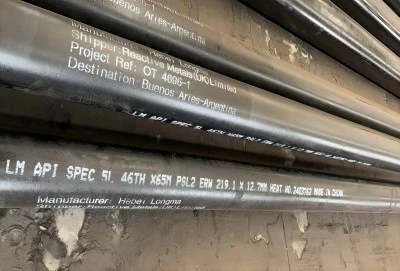
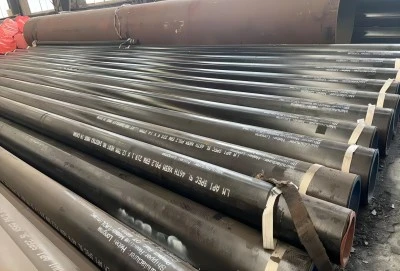
Understanding Black Coated Steel Pipe and Its Coating Types
What Black Coated Steel Pipe Means
A lot of people who are shopping use "black coated steel pipe" as if it were the name of a single item, but it's not. This word refers to a way to protect carbon or alloy steel pipe with a black coating. There are four parts to a finished item: the steel substrate, the surface preparation, the finishing application, and the final check.
It's not the same as black iron pipe. That steel usually doesn't have a finish and has a dark mill finish. Over time, it doesn't do a good job of protecting against wet soil. An engineered coating is what makes a real wall. That's why I believe you should check the color after looking at the size, corrosion protection, service area, measurements, certificates, and lifecycle cost. It's hard to tell what the layer is made of, how thick it is, or how long it will last from this dark surface.
Main Types of Black Coatings
"Black coated" refers to a group of finishes. Epoxy, like FBE and liquid epoxy, is strong and doesn't react with chemicals. The powder finish looks good on parts that will be seen and need a smooth finish.
Lines that are buried are more flexible, won't get damaged by water, and are more resistant to 3LPE systems. In a 3LPE system, there is an epoxy primer, a copolymer adhesive, and a polyethylene topcoat. The stacked method is also used for polypropylene systems like 2PP and 3LPP, which work best at higher temperatures.
Bituminous coatings are a low-cost way to keep water out, but they don't work well in hot weather or UV light. For certain jobs, coatings made of polyurethane, acrylic, and rubberized coatings are used. What you pick will depend on the weather, chemicals, soil, water, temperature, abrasion, and how it will be installed.
How Coatings Protect the Steel
Water, air, salts, chemicals, and soil that break down metal are kept out by a coating. It must also stick well and not get broken while being sent or put up. Failure costs a lot. The NACE IMPACT study found that corrosion costs the world about US$2.5 trillion, or 3.4% of the world's GDP.
A layer lasts as long as it keeps the area safe. Most of the time, crews degrease and blast to an agreed-upon ISO 8501 or SSPC/NACE level to get rid of oil, rust, mill scale, and other contaminants. After that, the specs list the minimum, maximum, and average thickness. Having more doesn't always make things better. Being too thick can cause cracks or poor curing. When fixing coatings on the inside and outside of things, they often need different tests, materials, and methods.
Specifications, Manufacturing, and Quality Control
Specifications and Dimensions
It lists the outside diameter, wall thickness, length, end finish, coating system, and tolerance for each pipe grade, production standard, and pipe. We sell black coated steel pipe that is 60.3 mm wide, 1422 mm long, and has walls that are 6.02 mm thick to 50.8 mm thick.
Some of the rules for pipes are API 5L, ASTM A53, EN 10210, and AS/NZS 1163. There are rules that cover a lot of ground, like CSA Z245.20, EN 10339, ISO 21809-1, AWWA C210, and AWWA C213. Needs for steel and needs for coatings should be kept separate, since each set has its own tests.
Also, let people know if a measurement is for raw pipe or pipe that has already been coated. How well the parts fit together can depend on how thick the layer is. There should be records of how the things were made, batch numbers, marks, and heat numbers on export orders.
Manufacturing and Coating Process
Longma Group makes both ERW and LSAW pipe. The pressure class, diameter, wall thickness, and standards of the project help choose the best process. Checks are done on the pipe's appearance, size, weld, material, and hydrostatic tests before it is coated. Testing that doesn't damage anything is now a critical service. An inspection tool is used to find problems, and heat treatment is used to make welds stronger.
A typical coating line does the following steps: degrease, abrasive blast, measure the profile, apply the primer or first layer, let it cure, cool, check, repair, and pack. The next step is different from the last one. In this case, it doesn't matter how good the sealing material is if the blast profile is bad. We also keep track of goods, from raw materials to finished goods. In other words, each pipe is linked to its own heat and batch records.
Quality Testing and Documents
Tests on the coatings prove what was said to be true. Common checks include dry film thickness, adhesion, holiday detection, impact, flexibility, and looking at it with the naked eye. The FBE and polyolefin standards often have cathodic disbondment testing added to them. This is important for lines that are buried and have cathodes to protect them.
You should ask for an inspection and test plan (ITP) before the line starts running. The Material Test Certificate (MTC), the Manufacturing Procedure Specification (MPS), and the ITP are all provided by Longma Group for every order. If the project needs it, the coating's thickness, adhesion, and size can be checked by a third party. Your QA/QC team can easily check everything from the steel plate to the finished pipe thanks to these records.
Comparing and Selecting the Right Coating
Black Coated Pipe vs. Other Options
There are many distinct varieties of black-coated steel pipe. These include galvanized, stainless, epoxy-coated, and uncoated black iron pipe. See how things function, not how they seem. Galvanized metal pipe is protected by a sacrificial zinc coating. Organic coatings could be superior at protecting against chemicals or wear and tear. Stainless steel doesn't rust on its own, but it costs more and is produced differently.
The business includes black epoxy-coated pipe. Sometimes you require powder, PE, or bituminous systems. I look at factors like the thickness of the coating, how well it adheres, how resistant it is to impact, how flexible it is, the temperature range, how UV-resistant it is, how simple it is to fix, how much it costs to maintain, and how long it lasts. The cheapest pipe on day one may not be the cheapest after 30 years.
Choosing by Service Conditions
Where is it? Inside, outdoors, buried, underwater, offshore, chemically aggressive? And then you have to know the design pressure, the test pressure, the impact loads, the bending stresses, and the installation stresses.
For choosing the coating, you need to know the kind of pipe, its wall thickness, and the method it was constructed. Typically, epoxy is appropriate for water and wastewater, FBE or 3LPE is good for oil and gas, and powder coating is ideal for architectural pieces or fences. Extreme heat and cold may affect how well anything adheres together, so be more careful in extreme heat or cold. Suppliers should be providing test results at the temperature you would want to utilize, not making sweeping statements.
Matching Coatings to Applications
Water pipes are typically sealed with epoxy. For example, AWWA C210 covers liquid epoxy, and AWWA C213 covers fusion-bonded epoxy for steel water pipes. For drinking water usage in the destination market, you additionally require approvals from associations like NSF, WRAS, or ACS.
Most oil and gas pipelines need competent FBE, 3LPE, or comparable systems. They also require field joint protection and cathodic protection compatibility. Follow fire sprinkler pipe regulations defined by NFPA, UL, FM, EN, or your local government. You can't simply paint it black and have it authorized. Those in construction, fencing, and OEM may worry more about appearance, UV resistance, unique lengths, grooving, and batch uniformity. Be specific in your RFQ as to what you need from each application.
Buying Guide: Price, Risks, and Supplier Checks
Price Factors and Bulk Procurement
That depends on the kind of steel, the diameter, the wall thickness, the weight, how it was built, the type of coating, how the surface is prepared, how it is tested, packed, and transported. You may also acquire different pricing per meter or ton if you require customized ends, bespoke measurements, or a third party to inspect it.
An RFQ in detail will include the specifications, dimensions, coating thickness, quantity, usage, location, packaging, and documentation that has to be done. You should acquire a price that breaks down the expenses of the pipe, coating, testing, packing, inland freight, and ocean freight. And it's reasonable to compare services when they are set up that way. Lead time is affected by the quantity of orders, stock, manufacturing strategy, and coating capability. Before you sign, get written confirmation of what you are purchasing and when it will be dispatched.
Common Buying Mistakes
The phrase “black coated steel pipe” tells you nothing about the kind of coating chemistry, the thickness of the coating, the certification of the coating, or the life of the coating. But when individuals choose by color or price, they pay more in the long run for repairs, replacements, and downtime when things fail.
Another major problem is dealing with damage. Installation of welding hooks, stacks slings damages finishes. Fix it immediately with the correct packing, lifting, arrival inspection, and repair supplies cleared. Verify compatibility with cathodic protection, process fluids, couplings, welding techniques, and field joint coatings prior to shipment. Ask the service provider how it preserves coated pipe during maritime freight. MTCs, coating reports, dimension records, test findings, and Certificates of Conformity should be included in the overall paperwork.
Supplier Qualification Checklist
Before you give a provider the nod, you will need to check out their technical know-how and commercial muscle. If the manufacturer claims it can create your grade, dimensions, lengths, and coating method, it should be able to back it up with convincing evidence it can.
Request the data for the material, its size, the coating thickness, its stickability, its holiday detection, and its MTCs to monitor the material. See how well the firm is on international commerce and Incoterms, how effectively they package their products, and how well they can manage repeat orders. I believe if you are manufacturing a lot of anything for a significant project, you should have technical data sheets, samples, a check before shipment, independent testing, and approval of the labeling and packaging prior. If a supplier responds “yes” to these requirements, they are good enough at managing the process to do so.
Why Buyers Work with Longma Group
Manufacturing Scale and Experience
Hebei Longma Group Limited has been manufacturing ERW and LSAW steel pipe since 2003. The facility encompasses an area of 230,000 square meters, with the yearly production surpassing 1,000,000 tons by the end of 2023. Longma goods are exported to over 90 countries.
That size is important for EPC purchasers who require huge quantities of consistently high quality. The company’s products include big-diameter, thick-walled, double-sided submerged arc welded pipe and ERW pipe. Longma sells to engineering contractors, stockists, and import dealers, and hence the team knows how projects are procured, from specification approval through to shipping.
Standards, Certificates, and Material Sources
Longma Group produces according to API 5L PSL1 & PSL2 (Grade B to X80), ISO 3183, EN 10219, ASTM A53, ASTM A500, ASTM A252, ASTM A671, A672 and A691, AS/NZS 1163 and API 2B. Certificates: API 5L, ISO 9001, ISO 14001, ISO 18001, FPC.
Raw materials are from domestic mills including Shagang, Shangang, TISCO, BX Steel, Shougang, HBIS, and Bao Steel. We start with a recognized mill on each order, so we have a good source of material. The origin of coated pipe will be directly tied to the traceability data your QA/QC team will want to see.
Coating Services and Documents
Hebei Longma Group Limited is a professional company providing anti-corrosion services comprising hot-dip galvanizing, FBE, 2PP, 3LPE and 3PE. Fabrication services include end treatments, perforations, expansions, and welds to make the joints fit together. If you get the pipe body and the coating from the same supplier, you don't have to worry about mills, coaters, and inspectors.
That helps in keeping records. Longma delivers ITP, MPS, and MTC for engineering customers and more on request. If your project requires a coating standard not listed here, please advise us immediately. In this way, our staff can ensure that the plan, testing, and due date all satisfy your standards.
Conclusion
The working effect of black coated steel pipe may be judged from the coating chemical, thickness, and test standard. Epoxy and FBE systems guard against chemical and adhesion problems. 3LPE and polypropylene systems provide mechanical protection for underground lines. Powder coating is suitable for areas that will be exposed. Bituminous coatings are low-cost water barriers but have temperature and UV restrictions. Tests like adhesion and holiday detection are performed to evaluate whether a coating does what it is supposed to do. The surface receives the coating, and its thickness is adjusted. If you are a person who wants to purchase anything, you must consider the service environment, the pressure, the temperature, and the applicable standards. They should also consider the cost of galvanized, stainless, and uncoated choices throughout their whole life. It is safer to purchase when the requests for quotations are unambiguous, and there are distinct demands for pipe and coating, with complete records and controls for handling. No project is a one-size-fits-all.
FAQ
1. Is black coated steel pipe the same as black iron pipe?
No. Black iron pipe usually has an uncoated dark mill finish. Epoxy, polyethylene, or bituminous materials are used to coat black coated steel pipe to keep it from rusting.
2. Which coating suits buried oil and gas lines?
FBE and 3LPE are common choices. The final pick depends on soil, operating temperature, cathodic protection, and project standards such as CSA Z245.20 or ISO 21809-1.
3. Which documents should I request?
Ask for an ITP, MPS, MTCs, coating test reports, dimensional records, and certificates of conformity. Add third-party inspection when your specification requires it.
Request a Black Coated Steel Pipe Quotation from Longma Group
Thank you for telling us about your project. Longma Group can give you a quote on black coated steel pipe in the sizes and standards shown above. As a manufacturer with ERW and LSAW production, we also offer hot-dip galvanizing, FBE, 2PP, 3LPE, and 3PE. Send your standard, grade, diameter, wall thickness, coating, and quantity to info@longma-group.com for details. Our team will respond with pricing, lead time, and documents.