
Black pipes that are electric resistance welded (ERW) are an essential part of today's industrial infrastructure since they are both affordable and dependable in a wide range of uses. Procurement experts may maximize project results by making educated selections based on a thorough understanding of the complex production process and rigorous quality control techniques. Consistent quality for vital industrial applications is achieved in the manufacturing of ERW black pipes by the use of advanced electric resistance welding processes, exact dimensional control, and thorough testing procedures that conform to international standards including API 5L, ASTM A53, and EN10210.
|
|
|
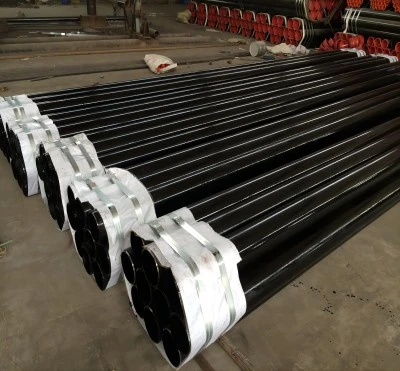
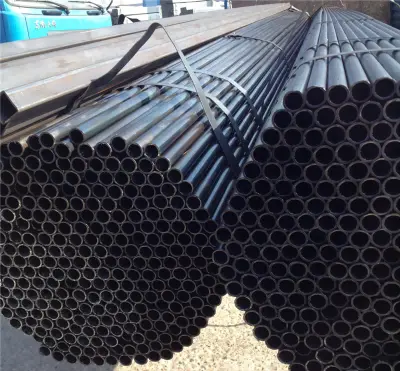
What Is ERW Black Pipe and How Is It Made?
Electric resistance welding is a complex manufacturing process that ERW black pipes go through. It takes flat steel strips and shapes them into strong cylinder constructions. With its superb dimensional precision and constant quality control throughout the manufacturing cycle, this technology offers one of the most efficient ways to pipe manufacture.
The Electric Resistance Welding Process
The production process starts with obtaining high-quality steel coils from trustworthy mills like as Shagang, Shangang, and Bao Steel. Prior to being fed into the forming mill, these coils are carefully sliced to meet the specified width requirements. Without sacrificing material integrity, the steel strip is progressively shaped into a tubular design as it travels through a succession of forming rollers.
By applying regulated pressure and an electrical current, the produced steel edges may be joined in an electric resistance welding process. A continuous weld seam is formed down the length of the pipe as a result of the process's localized heating, which fuses the steel edges together. In order to achieve the best possible weld penetration and strength, the welding parameters, such as current density, pressure application, and speed control, are constantly monitored.
Quality Control During Manufacturing
When it comes to keeping production standards high, inline inspection systems are crucial. In order to identify any possible flaws or discrepancies in the weld quality, ultrasonic testing equipment is constantly running the gamut. To make sure the surface quality is up to par, visual inspection methods work in tandem with automated testing.
After welding, the pipe is subjected to heat treatment in order to improve its overall performance and standardize the weld zone. To maximize mechanical qualities and minimize residual stresses that might impact long-term performance, advanced temperature control systems maintain accurate heating and cooling cycles.
Key Specifications, Dimensions, and Material Grades of ERW Black Pipes
When purchasing teams have a firm grasp of technical parameters, they are better equipped to choose pipe grades that meet project needs while maximizing efficiency and minimizing waste. With a wide variety of material grade choices and standard ranges, modern ERW black pipes can meet the needs of a wide range of applications.
Dimensional Range and Wall Thickness Options
From small-scale plumbing systems to large-diameter transmission pipelines, ERW black pipes are offered in an outer diameter range of 60.3mm to 1422mm. To accommodate a wide range of pressure ratings and structural needs, wall thickness parameters might be anything from 6.02 mm to 50.8 mm.
The conformity of these dimensional ranges with worldwide project requirements is guaranteed by their support for several industry standards, such as API 5L PSL1 & PSL2, ASTM A53, EN10210, and AS/NZS 1163. Logistics planning and transportation cost prediction benefit greatly from weight estimations based on these parameters, especially in cases of bulk buying.
Material Grades and Chemical Composition
Carbon steel grades are meticulously monitored for mechanical property achieving, and they are the basis for ERW black pipe manufacture. The X42, X46, X52, X56, X60, X65, X70, and X80 grades of API 5L provide a range of strengths that are well-suited to various temperature and pressure environments.
For common structural applications, ASTM A53 Grade B offers dependable performance. For more particular needs, specialty grades like as ASTM A500 and A252 are available for construction and foundations. Chemical analysis is performed on each grade to ensure that it complies with the stipulated composition limitations and that manufacturing batches operate consistently.
Surface Treatment and Coating Standards
There are a number of well-established standards that black coating applications must adhere to. These include CSAZ245.20, EN10339, ISO21809-1, AWWAC210, and C213. These coatings are more cost-effective than more sophisticated coating systems, but they still provide vital corrosion protection.
Black coating is a method of protecting steel from the elements by carefully applying a protective substance that bonds to the substrate. To make sure the coating is applied evenly and has the best possible protective properties, quality control procedures include measuring the thickness, evaluating the adhesiveness, and visually inspecting the work.
Comparing ERW Black Pipe with Other Pipe Types: Making the Right Choice
When choosing a pipe technology, it's important to take the application-specific needs, cost, and performance metrics into account. While alternative technologies may be better suited to particular operational situations, ERW black pipes do provide clear benefits in some applications.
ERW vs. Seamless Pipe Performance
ERW pipes are an economical choice for uses requiring moderate pressure ratings and structural stability. When compared to seamless alternatives, the longitudinal weld seam is more cost-effective and provides enough strength for most industrial applications.
When it comes to high-pressure situations or cyclical loading, seamless pipes are better than other types of pipes since they don't have weld zones. Nevertheless, seamless pipes aren't the most cost-effective option for uses that fall within ERW performance capabilities due to the complexity and expense related with their production.
Coating Comparison and Corrosion Protection
Although galvanized pipes are more resistant to corrosion because to the zinc coating, they are more expensive up front and may not be compatible with all substances. When coated properly, ERW black pipes provide sufficient protection for a variety of conditions at a reasonable price.
The mechanical strength needed for high-pressure applications or structural stress situations is lacking in PVC and composite alternatives, despite their superior corrosion resistance. When choosing materials, it's important to think about how they'll hold up in the long run in terms of mechanical performance, environmental resistance, and dependability.
Procurement and Supply Chain Considerations for ERW Black Pipe
Factors such as supplier competencies, quality assurance processes, and supply chain stability are essential to successful procurement strategies, which go beyond initial cost. These factors are of utmost importance when dealing with large-scale projects that need continuous performance and availability of materials.
Supplier Evaluation Criteria
A primary criterion for choosing a provider is their level of certification compliance. Production competence and dedication to quality are shown by specialist certifications such as Factory Production Control (FPC), as well as by ISO 9001 quality management systems and API 5L certificates. Certifications in occupational health and environmental management systems (ISO 18001) and environmental management systems (ISO 14001) demonstrate a high level of operational excellence.
It is important for suppliers to be able to fulfill project deadlines and volume needs without sacrificing quality, thus it is wise to analyze their production capability. You can trust on the dependability of deliveries and the scalability of huge projects when you work with experienced manufacturers who have annual production capacity surpassing 1,000,000 tons.
Logistics expenses and delivery times are impacted by geographical factors, especially in the case of global purchases. The benefits of working with suppliers that are present in more than 90 countries include access to local support, technical help, and a more flexible supply chain.
Quality Assurance and Documentation
Engineering needs and regulatory compliance are both supported by comprehensive documentation packages. An integral part of any procurement process is the use of Material Test Certificates (MTCs), Manufacturing Procedure Specifications (MPSs), and Inspection and Test Plans (ITPs) to ensure quality and trackability.
Starting with high-quality raw materials sourced from reliable steel mills guarantees constant quality throughout the production process. The ability to trace materials from the beginning of the steel manufacturing process all the way to the end of the pipe delivery allows for optimization of performance and analysis of quality issues.
Longma Group's ERW Black Pipe Solutions and Manufacturing Excellence
With cutting-edge production capabilities and thorough quality control systems, Longma Group has been a leader in the ERW pipe manufacturing industry for over 20 years. Keeping our competitive advantages in quality, delivery, and technical support, we handle the complex needs of global B2B procurement via our integrated production and customer service strategy.
Advanced Manufacturing Capabilities
Our 230,000 square meter facility is home to state-of-the-art testing labs, automated welding systems, and cutting-edge shaping equipment. Projects of every size, from local infrastructure upgrades to global pipeline networks, may be reliably supplied by an annual manufacturing capacity that exceeds 1,000,000 tons.
Weld zone characteristics and overall pipe performance are optimized by the integration of modern heat treatment processes into the production process. Every pipe is guaranteed to meet or surpass specifications using advanced inspection equipment that includes mechanical testing capabilities, dimensional measuring instruments, and ultrasonic testing systems.
We have every ERW black pipe imaginable, from 60.3mm to 1422mm in outer diameter and 6.02mm to 50.8mm in wall thickness. The extensive selection of products, together with their many standard certifications such as API 5L, ASTM A53, EN10210, and AS/NZS 1163, allows for the accommodating of different project needs while still maintaining delivery timetables.
Value-Added Services and Customer Support
We provide a full range of fabrication services, from precision cutting and welding to perforating and expanding operations, in addition to our conventional pipe manufacture. With these features, we can create tailored solutions that boost project productivity while cutting down on downstream processing needs.
A wide range of coating methods, such as hot-dip galvanizing, FBE, 2PP, 3LPE, and 3PE systems, are included in anti-corrosion services. With our expertise in coating technology and strict adherence to global coating standards, we can provide customized protection solutions for any environment or application.
Assistance with specification selection, application engineering, and quality verification is provided by our specialized technical support teams as part of our customer-centric strategy. Engineering processes and regulatory compliance requirements may be seamlessly integrated with the help of comprehensive documentation packages.
Conclusion
Experts in procurement may enhance project results by making educated judgments based on knowledge of ERW black pipe production processes and quality control procedures. Economical, dependable, and with extensive specification ranges, ERW technology is perfect for a wide variety of industrial uses. To guarantee constant performance and compliance with regulations, quality control procedures are put in place. These measures include modern inspection systems, verified raw materials, and detailed documentation. To obtain the best possible project outcomes, effective procurement methods take into account not just conventional cost criteria but also supplier expertise, certification compliance, and value-added services.
Partner with Longma Group for Superior ERW Black Pipe Solutions
The ERW black pipe procurement needs of your company may be met by Longma Group, thanks to our extensive customer service and top-notch production capabilities. Our engineering contractors, procurement managers, and industrial manufacturers get outstanding value from our worldwide market expertise, competitive pricing structures, and strict quality control systems. Contact our technical team at info@longma-group.com to discuss your specific requirements and receive detailed quotations tailored to your project specifications. As a trusted ERW black pipe manufacturer, we provide complete documentation packages, flexible delivery options, and ongoing technical support that ensures project success from initial specification through final delivery.
FAQsWhat are the main advantages of ERW black pipes compared to other pipe types?
ERW black pipes offer excellent cost-effectiveness while maintaining reliable mechanical properties suitable for most industrial applications. The electric resistance welding process produces consistent weld quality with precise dimensional control, making these pipes ideal for structural applications, water systems, and moderate-pressure oil and gas transportation. The manufacturing efficiency translates to competitive pricing without compromising quality standards.
How can I differentiate between ERW and seamless pipes in procurement specifications?
ERW pipes feature a visible weld seam running longitudinally along the pipe length, while seamless pipes have no visible weld line. Manufacturing markings typically indicate the production method, and material certifications specify whether pipes are welded or seamless. ERW pipes are generally more cost-effective for applications within their pressure rating capabilities, while seamless pipes are preferred for high-pressure or critical applications.
What factors influence delivery timelines for ERW black pipe orders?
Delivery schedules depend on order volume, pipe specifications, coating requirements, and manufacturing capacity. Standard dimension pipes from established inventory can ship within days, while custom specifications may require several weeks for production. Geographic distance, shipping methods, and documentation requirements also affect total delivery time. Bulk orders benefit from consolidated shipping but may require longer production scheduling.
Which coating standards are most appropriate for different applications?
Coating selection depends on environmental conditions, chemical exposure, and performance requirements. DIN 30670 and ISO21809-1 standards suit general industrial applications, while AWWAC210 and C213 are preferred for water system applications. Consultation with coating specialists ensures optimal protection system selection based on specific operating conditions and performance expectations.