
There isn't just one list of sizes for ASTM A500 structural tubing. It says what the tolerances, grades, and mechanical properties are. The sizes can be found on mills and design tables. The outside diameter and wall thickness of a tube show that it is round. One way to tell if a tube is square or rectangular is by measuring its two outside lengths and widths. We have pipes in Grades A, B, and C that are 3 m to 12.5 m long, 114.3 mm to 1422 mm wide, and 6.02 mm to 101.6 mm thick. It's simple to read these sizes, choose a grade, and write a clear question.
|
|
|
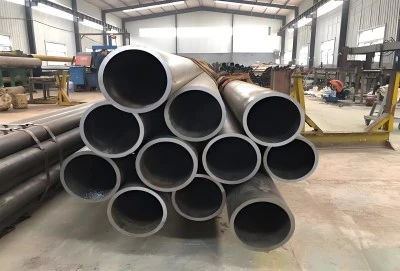
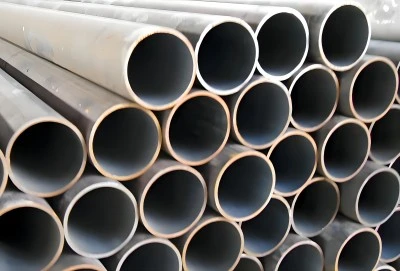
What Is ASTM A500 Structural Tubing?
Scope of the Specification
Carbon steel tubing that has been cold-formed, welded, or not joined at all is covered by ASTM A500/A500M. It can be round, square, or rectangular. The steel is shaped when it is cold-formed at room temperature. This makes the tube smooth on the outside and the same size all the way through. A lot of the market is made up of electric resistance welded (ERW) tubing. It has been making ERW steel pipe since 2003. The standard says what the chemical and mechanical properties are, as well as the test requirements and tolerances. When buyers ask for a quote, I always make sure they know the ASTM edition, project code, and purchase specification. This is because editions change all the time.
Product Standard Versus Design Requirements
There are two different ways to answer the same question: a design requirement and a product standard. To make and test the tube, a mill must follow ASTM A500. You decide what the load is, how long the member is, and how it connects to other parts. It is possible to design hollow sections with the help of AISC 360 and the AISC Steel Construction Manual. They use a design wall thickness that is 0.93 times the nominal wall for ERW tubing. This is because walls that are delivered may be thinner than what is expected. Building tubing is not the same as pressure pipe or general-purpose pipe. Also, make sure you check the pipe's wall thickness, outside dimensions, and yield strength, not just its name size.
Where ASTM A500 Tubing Is Used
Contractors use ASTM A500 tubing to build bridge frames, columns, trusses, platforms, handrails, and steelwork. Shops that make machinery, trailers, and OEM parts use it to make frames and supports. Because they don't twist, round and square pieces work well as columns. They can hold weight in more than one direction. When square and rectangular pieces have flat faces, they are easier to cut, fit, and weld on-site. It's the same for both fire-protection supports and mechanical frames: check the load path first, then the tube. People who want to buy something can usually get better size advice faster if they tell me what they plan to use it for.
Standard ASTM A500 Tube Sizes and Dimensions
How Round Tube Sizes Are Written
It says that a round tube's outside diameter is 114.3 mm and its wall thickness is 6.02 mm. ASTM A500 structural tubing is one example of this kind of round tube. It's 4.5 inches wide at its widest point, the same as NPS 4 pipe. The diameter of the pipe does not match the nominal size, so use the true outside diameter. Our round range has sizes from 114.3 mm to 1422 mm. It is possible to use smaller diameters for light supports, handrails, and equipment frames. Heights in the middle range are good for both columns and braces. Large diameters work best for heavy frames and columns. Before you place an order, make sure that the exact size you want is in stock.
Square and Rectangular Sizes
The outside width, outside height, and wall thickness of square and rectangular tubes are written as 100 × 100 × 6 mm or 150 × 100 × 8 mm. These parts are often shown in inches in the US, like HSS 4x4x1/4. When you get an A500, there isn't a single fixed-size menu. You can find tables in the AISC Steel Construction Manual that show what sizes mills can make and how they should be built. The shape of the corners is important for these shapes. Most of the time, the outside corner radius stays two to three times the wall's thickness. This changes what the sections are made of and how they connect to each other. Send me the exact measurements along with your question, and I'll check to see if they are in stock right now.
Lengths, Tolerances, and Weight
Our lengths range from 3 m to 12.5 m, and if you ask for something to be cut to length, it can help you have less waste on-site. For handrails and light frames, walls that are lighter are best. Stronger walls are better for heavy machinery, bridge parts, and columns. As per A500, the wall tolerance can be plus or minus 10%. If the design depends on thickness, make sure you get measured values. How much does a round tube weigh? Use 0.02466 × wall × (OD − wall) to get an idea. A tube that is 114.3 × 6.02 mm thick weighs about 16.07 kg/m, or 96 kg for every 6 m. Check the quote to see if it charges by the piece, meter, or ton.
Choosing Grade, Shape, and Material
ASTM A500 Grade B vs. Grade C
It is said that Grade C has a higher strength level than Grade B. At least 42 ksi (290 MPa) is needed for Grade B round tubing and 46 ksi (317 MPa) is needed for Grade C round tubing. It's 46 ksi (315 MPa) for round tubing and 50 ksi (345 MPa) for shaped tubing. To be able to pull something apart, you need at least 58 ksi (400 MPa) for Grade B and 62 ksi (427 MPa) for Grade C. If the design lets it, Grade C can be used to cut weight, and Grade B is good for most general fabrication jobs. Always read the governing edition and pick the grade that fits your budget, your ability to weld, and the rule book. We give out grades A, B, and C.
Round, Square, or Rectangular Tubing
For this reason, architects and builders use round tubing for handrails, braces, and posts. It can hold weight in many directions without twisting. ASTM A500 structural tubing is often specified for these applications. It's easier to join and weld square tubing because the section properties are the same on both axes. This is because the sides are flat. Rectangular tubing is better at not bending when loads act mostly on one axis. This is because it has more depth in one direction. Even the way it looks, feels, and how heavy it is are important. The shape you choose should be based on more than just your personal taste. It should also be based on structural calculations, load direction, and connection design. What size do you need? I'll show you the shapes that fit if you send me the member function.
A500 vs. A513, A53, and Hot-Formed Tubing
ASTM A513 tells us about mechanical tubing. It can be used to make machine parts or decorations, but it might not be strong enough for building things. A53 is a standard for pipes that are used for both pressure and mechanical work. Grade B must have a yield of at least 35 ksi (240 MPa), which is less than Grade A500 B. The A53 shouldn't come in place of the A500 by itself. There is a different way to make A501 hot-formed tubing, and A500 cold-formed tubing usually has a smoother surface and sizes that are tighter. Cost, corner shape, and stress that is still there are also different. Any changes must be agreed upon by both the engineer and the customer in writing.
Selecting Sizes by Application
A Step-by-Step Selection Method
First, find out what the member is used for. For example, a column, a beam, a brace, or something to hold up equipment. Write down the loads, like vibration, impact, bending, twisting, compression, and so on. Then look at the section's moment of inertia, slenderness, and local buckling limits. First, look at what needs to be made, like drilling, coating, welding, and galvanizing. Follow ASTM A123 for hot-dip galvanizing. Hollow parts need holes for air flow and drainage. That's why you should read the mill test certificate. The amount of silicon in the steel affects the zinc coating. Last, check that all the paperwork and approvals are correct.
Sizing for Common Applications
There are different types of columns and frames based on the axial load, the buckling length, the connections, and the fire safety. The most important things about walls are how thick and thin they are. Trusses and beams need to know their section depth, the direction of bending, the limits of deflection, how to do fatigue checks, and how to connect them well, which usually means using rectangular tubes. When you work on bridges and other infrastructure, you have to add tracking, welding procedures, corrosion protection, and inspections that meet project standards. Most of the time, the most important things for people who make trailers and other equipment are weight, resistance to impact, ability to weld, and repeatable dimensions. When it comes to handrails and guardrails, the look, the surface finish (galvanizing or coating), and the details of how they are connected are all very important. The engineer should decide on the final size, but these points should help them.
Common Size Selection Mistakes
To begin, it's not correct to use nominal pipe size instead of actual tube dimensions. ASTM A500 structural tubing is a common example where this mistake causes problems. To make the second mistake, pick the thickest wall or highest grade without first talking to an engineer. This costs more and weighs more. Some people don't care about the length, straightness, wall tolerance, corner radius, or access to the connection. A lot of times, people order without a mill test certificate or a heat number that can be tracked. Another mistake is not being clear about how to pack and deliver the goods, which can cause problems at the port or on the site. A short written specification that is looked over by the engineer before the order is placed can stop most of these problems.
ASTM A500 Procurement Guide for Global Buyers
Pre-Order Checklist
Before you send an RFQ, I think you should quickly look over three things.
- Technical details: confirm the ASTM A500 edition, grade, shape, outside dimensions, wall thickness, length, and tolerances. Add surface treatment, fabrication needs, structural calculations, and written approval for any substitution, so the engineer, buyer, mill, and inspector all work from the same specification before production starts. Clear data at this stage prevents later rework.
- Quantity and supply: state the quantity unit, whether you need stock sizes or custom production, and the target delivery date. Stock sizes ship faster, and our fastest delivery starts at 7 days. Custom sizes need extra time for production, so mention minimum quantity and lead time early in the discussion with us.
- Documents and shipping: ask for the mill test certificate, inspection records, marking, and packing details. Confirm Incoterms, destination, shipping documents, warranty terms, and the claims procedure. Longma Group provides MTC, ITP, and MPS documents on request, so engineering teams can review and approve the paperwork before the steel leaves our factory.
When it comes to these points, the design, buying, and logistics teams all agree.
Stock Sizes, Custom Sizes, and Pricing
The price depends on the market for steel, the size, grade, quantity, processing, packaging, and freight costs. Lead time is cut down by having more stock. They have between 50 and 100 tons of ASTM A500 in stock and can get it to you in as little as 7 days. It takes longer to make custom sizes, but they're useful for some projects. Things like hot-dip galvanizing, welding, perforating, and end treatment take more time and cost more money, so write them down right away. To compare quotes, you should use the same details for each: grade, size, length, tolerance, finish, packing, and Incoterms. It doesn't matter how cheap a unit is if it doesn't have the right features.
Evaluating a Supplier
Check a supplier's credentials, their track record of goods, their experience with exporting, their quality control systems, their packaging, and their communication skills. Hebei Longma Group Limited has been making ERW and LSAW steel pipe since 2003. More than 90 countries have bought from the company, which is spread out over 230,000 square meters. By the end of 2023, it will be making more than 1,000,000 tons of steel every year. The ones we have are for ISO 9001, API 5L, and FPC. Things we need come from steel mills in China, such as Bao Steel, TISCO, Shagang, and HBIS. Another thing we do is keep track of all of our goods, from the raw materials to the finished goods. On the other end, we can weld, perforate, hot-dip galvanize, and do other things.
Conclusion
For ASTM A500 structural tubing, the sizes don't come from a single list. Instead, they come from mill ranges and design tables. For every order, this means that the outside measurements, wall thickness, length, and tolerances must be checked. You need to know how big the outside diameter and wall of a round tube are. For square and rectangular tubes, you need to know the wall and two outside dimensions. Some walls may not be as thick as they should be, which can change the weight and design properties. Some say that Grade C is stronger than Grade B, but the loads, the building code, and the price will all determine which grade is best. Shape is chosen based on the direction of the load and the design of the connection. Engineers have to approve A513, A53, and hot-formed products before they can be used instead. When there are clear specifications, documents that can be tracked, and matched stock or custom supply, mistakes and delays are less likely to happen.
FAQ
What are the most common ASTM A500 shapes?
Most tubes are square, round, or rectangular. The outside measurements and wall thickness of each one make them easy to spot.
Does one wall thickness apply to every size?
No, the outside dimensions, the grade, the load, and the building code all affect how thick the wall is. Compare it to the plan.
Can A500 tubing replace A53 pipe?
Not all the time. It is called A53 for pipes that are used for mechanical and pressure tasks, and it is called A500 for structures. In the beginning, make sure that both engineering and customers agree.
Can ASTM A500 tubing be galvanized?
Yes. Galvanizing in a hot dip is done with ASTM A123. As you look at the mill test certificate, you can see how much silicon is there. For hollow parts, you should make vent holes.
Which documents come with a shipment?
Among the most common types of papers are the Material Test Certificate, inspection records, and packing and shipping papers. Longma Group can also give you ITP and MPS documents if you ask.
Request ASTM A500 Structural Tubing Sizes and Pricing from Longma Group
You can email Longma Group at info@longma-group.com with your needs for shape, size, wall thickness, grade, quantity, length, finish, destination, and documents. We make sure you know the unit price, whether the ASTM A500 structural tubing is in stock or being made, the lead time, how it will be packed, and that you have all the necessary certificates. We have grades A, B, and C, and 50 to 100 tons of stock. It will start in 7 days. Visit longma-group.com to find out more.