
Procurement managers and engineers frequently have to choose between API 5L X70 pipe and X80 grades when looking for high-strength line pipe for important transportation projects. The main differences in buying are in how well machines work, how much they cost, and how the supply chain works. X70 pipe has a minimum yield strength of 485 MPa and is the workhorse of the industry. It is easy to find, doesn't cost too much, and is backed by well-known welding methods and fittings inventories. With a yield strength of 555 MPa, X80 pipe is about 15% stronger than regular pipe, but it costs more, takes longer to get, and needs special welding skills. Most procurement pros choose X70 because it has the best mix of performance, ease of construction, and overall project cost-effectiveness.
|
|
|
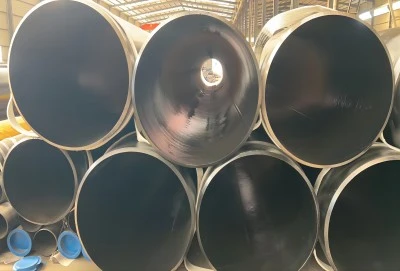
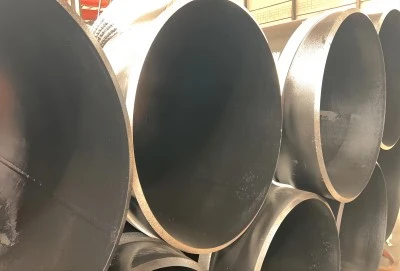
Key Technical Differences Between API 5L X70 and X80 Pipes
When procurement workers know about the qualities of materials, they can match pipe types with practical needs and avoid over-engineering or under-specification.
Chemical Composition and Alloying Elements
Micro-alloying techniques are used in both grades to get high strength without too much carbon content, which would make them harder to join. API 5L X70 pipe usually has small amounts of niobium, vanadium, and titanium added to it in a controlled way to improve the grain structure and make it stronger through precipitation hardening. The carbon equivalent (CE) value, which is a key sign of weldability, stays below 0.43% for X70 PSL2. This means that normal pre-heating procedures can be used for field welding.
Higher amounts of these micro-alloying elements are added to X80 grades along with molybdenum to reach the higher strength standard. The carbon equivalent goes up because of more alloying. In some cases, this means stricter welding processes, longer pre-heat times, and heat treatment after the join. When figuring out how much something will cost to install, procurement teams should take these things into account.
Mechanical Properties and Pressure Ratings
The difference in yield strength shows the difference in operating ability between these grades:
API 5L X70 pipe mechanical properties (PSL2):
- Yield strength must be at least 485 MPa (70,300 psi).
- Max. Strength of Yield: 635 MPa
- Tensile strength must be at least 570 MPa (82,700 psi).
- Tensile strength at its strongest: 760 MPa
- Maximum Yield-to-Tensile Ratio of 0.93
X80 mechanical properties:
- Yield strength must be at least 555 MPa (80,500 psi).
- Max. Strength of Yield: 705 MPa
- Tensile strength must be at least 625 MPa (90,600 psi).
- 825 MPa is the highest tensile strength.
Because of the 70 MPa yield strength difference, X80 pipe can work at higher pressures with the same wall thickness, or it can work at lower pressures with thinner walls. This benefit is useful for very long-distance transfer, where the higher unit cost is balanced out by the saves in materials over time. But for most midstream and collecting tasks, the X70's volume is more than enough.
Corrosion Resistance and Environmental Durability
How well steel resists corrosion relies less on its grade and more on how clean it is, what coatings are used, and where it is used. Both X70 and X80 can be made to meet Annex H standards for sour service (H2S environments). This can include calcium treatment to control the shape of the inclusions and validation through Hydrogen Induced Cracking tests. External coats like 3LPE and cathodic protection systems are the main ways that rust is stopped. Neither grade naturally has better corrosion resistance. Instead of thinking that a certain grade will protect against corrosion, procurement specs should include requirements for coatings and cleanliness standards for steel.
Procurement Considerations for API 5L X70 vs X80 Pipes
When choosing between these grades, commercial and organizational factors often weigh heavier than small technical benefits.
Cost Analysis and Budget Impact
Most of the time, API 5L X70 pipe costs 10–20% less per ton than X80 pipe. This is because it is easier to make and the cost of alloying is cheaper. Long-distance projects with big diameters that need a lot of tons have this difference compounded. Bulk purchases can get you savings, and X70's market liquidity lets many qualified sellers bid against each other.
The high cost of the X80 is due to its limited production capacity, unique manufacturing needs, and low order numbers that prevent economies of scale. Lifecycle cost analysis is something that buyers should do. They should compare the original saves on materials to possible operational benefits, such as lower compression costs from thinner-walled X80 systems causing less pressure drop.
Lead Times and Supply Chain Reliability
API 5L X70 pipe is already made at many mills around the world, including Longma Group, which has the ability to produce more than a million tons of pipe every year. Standard sizes in both LSAW and ERW configurations are often in stock, and for pressing needs, shipping times can be as short as seven days. This makes it easier to use just-in-time procurement methods and lowers the risk of missing the project plan.
Fewer makers are still making X80s, and many of them have minimum order amounts and lead times that last between 12 and 16 weeks. X80 fittings, flanges, and specialized welding tools are hard to find, which makes it harder to meet deadlines for purchase. Buyers should look at a supplier's qualifications, such as API 5L, ISO 9001, and quality management documents relevant to the product, to make sure the company is competent in making and lower the risk of delivery.
Welding and Installation Complexity
A big part of the cost of building a pipeline is the field welding, and the choice of material has a direct effect on how fast the welding is done and how well the quality is checked. Normal welding methods can be used on API 5L X70 pipe with cellulosic or low-hydrogen electrodes and normal pre-heat processes. Welders who are qualified to work with standard pipeline codes can get high deposition rates and always pass a radiographic check.
Because X80 is stronger, welding methods need to be changed, pre-heat times need to be stretched, and hardness in the heat-affected zone often needs to be controlled after the welding process. These steps slow down production and raise the cost of goods that people use. Some workers say that welding with X80 instead of X70 cuts their output by 15 to 25 percent. Integrated sourcing solutions that combine the supply of pipes with skilled manufacturing services help to solve these problems by making sure that the welding process matches the requirements of the materials.
Application Suitability and Industry Use Cases
Matching pipe grades to specific operating situations improves both performance and the costs of the project.
Oil and Gas Pipeline Transmission
Most midstream gas transportation jobs use API 5L X70 pipe, which has a width of 24 to 48 inches and a working pressure range of 7 to 12 MPa. The grade's strength-to-weight ratio makes it possible to make cost-effective designs that get the most work done while keeping the structure strong over thousands of kilometers. X70 is chosen for big projects in Australia, Southeast Asia, and the Middle East because it has been used successfully in the field and works with current infrastructure standards.
X80 can be used in situations with ultra-high pressures higher than 12 MPa or when route restrictions mean that maximum throughput must be achieved within limited right-of-way areas. Another use for X80 is in deepwater ocean pumps and flowlines that have to handle high hydrostatic pressures. However, the weight benefit over X70 is often lost because of the need for thicker walls.
Construction and Infrastructure Applications
Besides moving hydrocarbons, both types are used for water supply systems and building purposes. For large-diameter municipal water transfer where internal pressures stay modest and corrosion protection and long service life are important, API 5L X70 pipe is a strong option. The choice of coating and the cleaning of the steel become more important than the small difference in strength between grades.
Sometimes, X70 or X80 hollow sections are used in bridge pilings, building beams, and offshore platform jacket members because their high strength-to-weight ratios lower the load on the base. In these situations, grade selection is based on local building rules and design standards, and buying is based on what's available in the area and how well the fabricator knows the material.
Environmental and Operational Factors
Extreme temperatures, corrosive soil, and earthquakes can all change how well a material works in addition to its basic mechanical qualities. Low-temperature toughness approval according to Annex G is needed for Arctic environments. Charpy impact tests must be done at -45°C or -60°C. When made with controlled rolling methods and the right micro-alloying, both X70 and X80 can meet these needs.
X70 has a history of good performance and a wider range of cold-service approved materials, which are helpful for projects that go through tundra areas or seismically active zones. Because the market for X80 isn't as developed yet, not as many mills keep cold-service production lines with proven toughness performance.
Conclusion
Choosing between API 5L X70 and X80 pipe depends on how well the technical performance matches the business needs. X70 is still the standard for high-pressure transmission because it is reliable, doesn't cost too much, is easy to install, and is widely available. X80 is used in specific ultra-high-pressure uses where its higher strength makes up for higher prices and more complicated procurement. Most pipeline projects find that X70 is the best deal because it has the right amount of strength, supply chain maturity, and total fixed cost. To make procurement go smoothly, you need to carefully look at mechanical needs, price limits, shipping times, and suppliers' skills to make sure that the materials you choose meet the standards for project success.
FAQs
Can X70 and X80 pipes be used interchangeably in the same project?
Mixing grades in the same pipeline system is technically possible with the right engineering analysis, but it makes bonding harder and quality control more difficult. Different levels of strength mean that welding methods need to be changed at transition places, and there needs to be careful record keeping. Standardizing on a single grade makes it easier to buy materials, make things, and check them.
Does X80 pipe offer better corrosion resistance than X70?
Corrosion performance is mostly based on how clean the steel is, the covering methods that are used, and the cathodic protection that is in place. Both grades can be made to the same standards for cleanliness and can have the same finishing methods applied to the outside. Neither has any built-in benefits when it comes to corrosion. Instead of making assumptions about corrosion based on grade, purchase requirements should focus on Annex H compliance for sour service and coating selection.
Which grade provides better long-term value?
For most uses, X70 has a better lifetime value because it costs less at first, requires less welding, arrives faster, and has been tested and proven to work in the field. X80 may be worth the extra cost on very long, high-pressure pipes where it will save enough in material costs and operating efficiencies to make it worth it. Instead of just going with better strength grades, this decision should be based on project-specific engineering and economic research.
Partner with Longma Group for Your API 5L X70 Pipe Requirements
If you choose the right API 5L X70 pipe manufacturer, your project will be successful because they will provide reliable materials, detailed instructions, and quick expert help. Longma Group is a top maker of LSAW and ERW pipes. They have been helping with oil and gas, water infrastructure, and building projects in over 90 countries for more than 20 years. We can make X70 pipes with sizes from 1/2" to 80" and wall thicknesses up to SCH160. Our production is PSL2-certified, and we also have API 5L, ISO 9001, and HSE management certifications.
We get our high-quality raw materials from Baosteel and HBIS, two of China's best mills. This way, we can be sure of the quality and follow the materials from coil to finished pipe. Our combined fabrication services, which include hot-dip galvanizing, welding, beveling, coating with FBE and 3LPE, and beveling, make buying easier by sending goods that are already ready to be installed. We can meet both regular plans and urgent needs because our annual capacity is more than one million tons and we offer fast shipping choices that can happen in as little as seven days.
You can talk to our procurement experts about your project requirements, ask for detailed data, or get competitive quotes for API 5L X70 pipe for sale by emailing info@longma-group.com. To help you meet technical and safety needs, our team gives you Material Test Certificates, Inspection and Test Plans, and a lot of other quality assurance paperwork. You can look at our full line of products at longma-group.com and learn how our approved production excellence can help you reach your infrastructure goals.