
Welding API 5L X80 pipe demands strict adherence to advanced procedures that account for its high-strength characteristics and metallurgical sensitivity. The key requirements include precise heat input control, proper filler material selection matching X80's chemical composition, qualified welder certification, mandatory preheating protocols, controlled interpass temperatures, and comprehensive non-destructive testing. Additionally, post-weld heat treatment considerations and stringent quality documentation ensure weld integrity meets API 5L PSL2 standards, preventing hydrogen-induced cracking while maintaining the pipe's exceptional strength and toughness properties essential for high-pressure transmission systems.
|
|
|
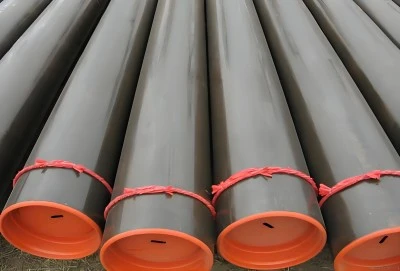
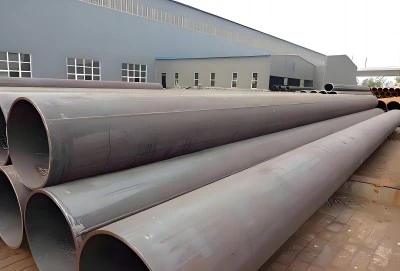
Understanding API 5L X80 Pipe and Its Welding Challenges
The development of high-strength line pipes is a big step forward in pipeline building, and Api 5l X80 pipe is the leader in this field. This grade has a minimum yield strength of 555 MPa (80,500 psi), which means it works very well in tough situations like offshore risers and long-distance natural gas transmission. Carefully controlled thermomechanical processing and micro-alloying elements like niobium, vanadium, and titanium create a fine-grained microstructure of acicular ferrite or bainite. This gives the material its high mechanical properties.
But the same things that make X80 pipe desirable also make welding it difficult in some ways. Because the material is sensitive to thermal cycles, using the wrong welding techniques can damage the heat-affected zone (HAZ), which can cause changes in hardness, less toughness, or cracking caused by hydrogen. Welding residues can combine with service loads, which could affect the long-term stability of the pipeline. Understanding these problems is the first step in putting in place effective welding controls that keep the pipe's engineered properties even during fabrication and installation in the field.
Chemical Composition Impact on Weldability
Even though X80 pipe is very strong, it is fairly easy to weld because it has a low carbon equivalent (usually CE(IIW) < 0.43). With this careful mix of alloying elements, the material can have amazing mechanical qualities while still having a structure that makes it easy to weld. Procurement teams need to make sure that mill test certificates show that they meet the chemical requirements of API 5L PSL2. If they don't, it can have a big effect on welding procedures and the choice of consumables.
Mechanical Property Considerations
When the yield-to-tensile ratio is kept below 0.93, the material is more flexible before it breaks, which is very important for strain-based pipeline design. It takes strict process control during welding to keep these qualities in the weld joint, the hot zone, and the base metal. To make sure that welded connections always work well, the high Charpy V-Notch energy values and Drop-Weight Tear Test shear area percentages that define good X80 pipe must be kept or matched.
Key Welding Requirements for API 5L X80 Pipe
Welding high-strength line pipe well starts a long time before the arc hits. By looking at EN 10204 3.1 or 3.2 Material Test Certificates, you can be sure that the arriving pipe meets certain chemical and mechanical requirements. Welder qualifying records must show that the welder is skilled in the specific tasks, roles, and materials needed for the job. These initial steps set the standard for quality for all future welding processes.
Pre-Welding Preparation Standards
Preparing the surface of api 5l X80 pipe requires paying close attention to every detail. To make sure that the pipe ends are fully penetrated and fused, they need to be beveled at the right angle (30 degrees with a 1.6 mm root face). When you clean within 50 mm of the weld zone, you get rid of mill scale, rust, wetness, and other things that could bring hydrogen or other flaws into the weld pool. A lot of specifications say that the part has to be cleaned with solvents and then mechanical methods to get it as clean as needed before welding can start.
Welding Process Selection
There are a number of useful welding ways for X80 applications, and each has its own benefits:
Shielded Metal Arc Welding (SMAW) is still commonly used for field girth welds because it is flexible and doesn't need a lot of equipment. Low-hydrogen electrodes, such as E9010 or E10018-G, match strengths well and keep their toughness. Manual processes are less productive than automated ones, but trained welders can adapt to changing conditions on the job site.
Gas Metal Arc Welding (GMAW) and Flux-Cored Arc Welding (FCAW) can cast materials faster and more consistently. Using these methods in semi-automatic or fully mechanized systems lets you finetune the welding settings, which lowers variation. The constant wire feed makes these methods good for manufacturing shops because it speeds up work on longer seams.
Submerged Arc Welding (SAW) is the best way to make longitudinal and spiral seam welds in pipes because it has the highest deposition rates and best weld quality. The granular flux protects the weld pool and adds alloying elements. The high heat input efficiency works well for the thick-wall sections that are common in large-diameter X80 pipe.
Heat Input and Temperature Control
One of the most important parts of welding X80 pipe is controlling the amount of thermal energy that goes in. Too much heat can make the HAZ grain structure coarser, which lowers its hardness and creates hard martensitic zones that are easy to crack. Heat input is usually limited to 1.5 to 2.5 kJ/mm in the industry, but tighter limits may be required for certain projects based on pipe wall thickness and service conditions.
By slowing down the cooling process and letting hydrogen escape from the weld zone before microstructural change is complete, preheating lowers the risk of hydrogen cracks. Most of the time, the minimum preheat temperature is between 100°C and 150°C. For thicker walls or colder outdoor temperatures, higher numbers are needed. Temperature control between passes, usually kept between 150°C and 250°C, stops too much heat from building up and breaking down mechanical properties. It also stops the material from cooling too quickly between passes.
Filler Material Selection
The weld joint will work as well as the pipe itself if the mechanical properties of the two metals are the same or just a little different. Filler materials need to be carefully chosen based on how well they work with other chemicals, how strong they need to be, and how tough they need to be. Consumables that meet AWS classifications like E9010 and E10018-G, or proprietary formulations made just for high-strength line pipe, work well enough for X80 applications.
The amount of hydrogen in the filler material needs extra care. The risk of cold cracking in the HAZ is lower when low-hydrogen or controlled-hydrogen consumables are used. Keeping electrodes in hot storage at 70–150°C and limiting contact time after taking them out of storage are some of the right ways to store and handle them so that the low-hydrogen properties that are needed for good welds are kept.
Post-Weld Heat Treatment Considerations
Even though it's not always required for api 5l X80 pipe, post-weld heat treatment (PWHT) can reduce leftover loads and soften hard spots in the hot zone (HAZ) if the project or code says so. Whether or not to use PWHT relies on things like the width of the walls, the service conditions, and the owner's requirements. Careful control of heating rates, hold temperatures (usually between 590 and 650°C), and cooling rates is needed to make sure that the process relieves stress without changing the features of the base metal.
Non-Destructive Testing Protocols
Full NDT testing confirms the quality of the weld and the structure's strength. At 100% coverage, radiographic (RT) or ultrasonic (UT) testing can find internal breaks like not enough fusion, porosity, or cracks. A lot of standards need both volumetric and surface examinations. To find flaws that break the surface, magnetic particle testing (MT) or liquid penetrant testing (PT) are often used. Inspection companies like SGS and Bureau Veritas often watch or do these tests, making sure they are done correctly and independently, meeting the needs of both the owner and the government.
Comparative Analysis: Welding Requirements of X80 vs Other Pipe Grades
Knowing how the standards for welding X80 are different from those for other grades helps engineers and procurement workers make the best use of resources and processes. Moving up from lower grades like X52 or X65 to X80 requires more than just more strength. Welding methods and quality control must also be completely changed.
X80 Versus X70 and X65
Going from X70 (minimum yield 485 MPa) to X80 gives you about 14% more strength, but the changes in the welding parameters are bigger than this number shows. Because X80 has stricter carbon equivalent limits and more complex microstructures, it needs more precise control over heat input and more careful choice of consumables. For X70 welding processes, parameter windows may be bigger, but for X80, there is less room for mistake. Because of the higher strength, filler materials need to have better performance properties. Often, this means using unique or highly qualified consumables instead of standard classifications.
Comparison with Lower Strength Grades
When used in moderate-pressure situations, X52 and X60 grades are common. They allow for more flexible welding processes with a wider range of parameters and fewer strict requirements for preheating. These grades usually work with standard carbon steel tools and methods, without the strict process controls that are needed for X80. The cheaper and easier-to-transport benefits of X80's thinner walls for the same pressure ratings must be weighed against the need for more complex welding and higher quality standards.
Differences from Stainless and Specialty Alloys
When X80 welding is done on lines made of stainless steel or a corrosion-resistant metal, the focus is more on controlling HAZ hardness and hydrogen cracking than on keeping the corrosion resistance high by choosing the right shielding gas or cleaning in between passes. On the other hand, X80 still needs a lot more care than regular carbon steel. It's in a middle ground where it needs specialized knowledge and methods but is easier to work with than rare materials.
Conclusion
To successfully weld Api 5l X80 pipe, you need to know a lot about the properties of the material, follow the right steps exactly, and keep an eye on the process the whole time. The great strength and toughness of X80 make it a good choice for high-pressure transmission systems. To keep these designed qualities, welding must be done carefully. Each step, from carefully preparing the pipe before welding to the final NDT check, makes the joint stronger and improves the pipeline's long-term performance. When choosing suppliers and contractors, people who work in procurement should look at more than just costs. They should look at things like proven experience, up-to-date certifications, and systematic quality approaches. The tips and tricks explained here can help you make X80 projects that are successful and meet strict technical requirements while staying on schedule and on budget.
FAQ
What preheating temperature is required for X80 pipe welding?
For X80 pipe, the lowest temperatures needed to preheat it are usually between 100°C and 150°C, but this depends on the wall thickness, the temperature outside, and the needs of the project. Higher warming levels are needed for colder places and walls that are thicker to slow down the cooling process and stop hydrogen from causing cracks. Before welding starts, temperatures must be checked with calibrated contact thermometers or infrared devices. The preheat zone should be at least 75 mm on both sides of the joint.
Can standard carbon steel electrodes be used for X80 welding?
Normal carbon steel electrodes are not good enough for X80 uses. For high-strength base metals, matching or overmatching filler materials are usually AWS E9010 or E10018-G grades or special formulas made just for high-strength line pipe. These specific materials give welds the strength, toughness, and hydrogen control they need to be good. If you use the wrong filler materials, you could end up with parts that aren't matched up properly and break under service loads.
How does wall thickness affect X80 welding procedures?
Wall thickness affects many aspects of welding, such as the amount of heat that can be used, the time needed to heat up, the temperature control between passes, and the choice of heat treatment after the welding process. To keep sections from cooling too quickly, they need to be heated up to higher temperatures, they may need more than one weld pass with careful sequencing to deal with residual stresses, and they usually need more NDT coverage. To make sure that the validated parameters produce good results across the whole project, the procedure qualification testing needs to be based on the actual production thickness ranges.
Ready to Source Premium API 5L X80 Pipe for Your Next Project?
You can trust Longma Group as your Api 5l X80 pipe maker because they have been making high-quality products for 20 years and have many quality certifications and customer-focused service. Our cutting-edge factories make high-strength line pipe that meets the strictest international standards. We also offer full documentation packages and technical support for the whole lifecycle of your project. We can produce more than a million tons of steel every year, offer fast 7-day delivery, and offer full fabrication services that include welding preparation and anti-corrosion treatments. This means that we can give you project-ready solutions that help you get things done faster. Whether you're planning long-distance transmission systems, installations offshore, or difficult EPC projects, our experienced team can give you the quality assurance and responsive partnership that your procurement needs. Get in touch with us at info@longma-group.com right away to talk about your Api 5l X80 pipe needs and find out how our approved production services and low prices on Api 5l X80 pipe for sale can help your business.