
ISO 3183 L245 pipe is a basic steel grade used in the international pipeline business. It is the main type of pipe used for moving hydrocarbons at low to medium pressures. The "L245" name means that it has a minimum yield strength of 245 MPa, which is about 35,500 psi. This gives it a good mix between being reliable mechanically and being cost-effective. This grade of specialized steel line pipe, which is governed by ISO 3183 standards, meets important operational needs. It ensures consistent material across international projects, better field weldability for remote installations, and cost-effective performance in gas networks, water injection systems, and gathering lines. When procurement managers, pipeline engineers, and project workers know exactly what qualities this pipe grade has, they can choose materials that meet both technical needs and price constraints. This guide talks about the chemical makeup, mechanical properties, production issues, and buying methods for ISO 3183 L245 pipe that you need to know in order to make smart choices for global projects.
|
|
|
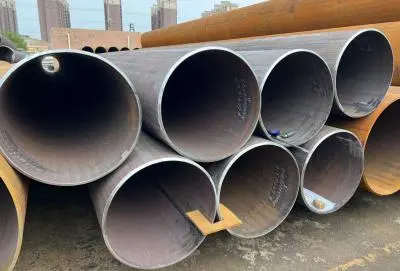
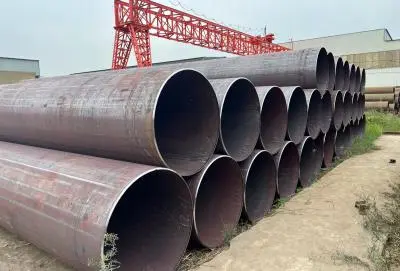
Understanding ISO 3183 L245 Pipe Properties
ISO 3183 sets out detailed rules for steel pipes that are used in pipeline transportation systems in the natural gas and oil businesses. Even though the L245 grade is at the bottom of the power scale for this standard, it still performs well in the right service conditions.
Chemical Composition and Material Characteristics
The chemicals that make up ISO 3183 L245 pipe are purposely simple. They are made of low-carbon plain carbon steel, which is designed to be easy to join and shape. The highest amount of carbon in PSL1 grade pipe is still limited to 0.28%, and the highest amount of manganese is still limited to 1.20%. Higher-strength types lack expensive microalloy elements like niobium, vanadium, or titanium because of this managed chemistry. The limited carbon equivalent (CE) value, which is an important factor derived from several alloying elements, makes sure that ISO 3183 L245 pipe can be soldered using standard methods, without the need for heavy preheating or special tools. Because the chemicals are so simple, this grade has the lowest cost of any ISO 3183 grade while still being very flexible for field bending and making. Impurities of sulfur and phosphorus are tightly limited to keep the quality uniform across production batches and keep the material from becoming weak.
Mechanical Properties and Performance Standards
The operating envelope for pipeline uses is set by the mechanical performance. Under PSL1 baseline conditions, ISO 3183 L245 pipe must have a minimum yield strength of 245 MPa and a minimum tensile strength of 415 MPa. It must also be able to stretch more than 22% over a standard gauge length. These numbers show how well the pipe can withstand constant deformation under internal pressure and how well it can handle installation loads without breaking.
Product Specification Level 2 (PSL2) adds tighter rules that make things more predictable and increase safety gaps. The yield range gets smaller, from 245 to 440 MPa, and the tensile strength ranges from 415 to 655 MPa. The yield-to-tensile ratios must be checked to make sure the material doesn't break easily. The PSL2 standards say that low-temperature impact testing with Charpy V-notch models is needed to find out how tough something is to break in cold places. The highest hardness value that can be used is 250 HV to stop cracks from spreading. PSL2 material is especially good for important service situations where operating integrity can't be compromised because of these better controls.
Standard Dimensions and Customization Options
It is possible to make ISO 3183 L245 pipe in a lot of different sizes to meet the needs of different projects. Outside widths are usually between 114.3 mm (4.5 inches) and 1219 mm (48 inches), and wall thicknesses change based on the pressure class and design rules. Standard length options include Single Random Length (SRL, 5–7 meters), Double Random Length (DRL, 10–12 meters), and fixed lengths chosen by the customer that make shipping more efficient and cut down on the need for welding in the field. Customization goes beyond just size; it also includes end preparation styles (plain end, cut for welding, and threaded end), special heat treatment conditions, and better non-destructive testing procedures that go beyond what is required by law.
Technical Performance and Manufacturing Process
The way that ISO 3183 L245 pipe is made has a big effect on its stability and performance. There are two main ways that it is made that make up the world supply.
Production Techniques and Quality Protocols
Electric Resistance Welded (ERW) pipes are the most popular way to make small to medium-sized pieces out of L245 grade material. Continuous forming rolls make a flat steel coil into a cylinder shape in the ERW process. High-frequency electrical resistance heating then joins the lengthwise seams together. Modern ERW mills use live heat treatment to level out the weld zone. This gets rid of the rigid heat-affected zone that was a problem with older production methods. Longitudinal Submerged Arc Welding (LSAW) is used for bigger diameter jobs where ERW can't do them. LSAW pipes start with separate steel plates that are shaped and joined using one or more submerged arc passes. This gives them better toughness and accuracy in size for important installations. At different steps of production, both methods use strict quality controls, such as automatic ultrasonic seam inspection, hydrostatic pressure testing, and checking the dimensions.
Manufacturing companies must have quality management systems that are written down and follow ISO 9001 standards. They must also have API licenses that show they follow the rules for the oil business. During heat treatment, specific heating processes are used to smooth out the structure of the grains and release any pressures that were left over from the forming process. Traceability systems connect finished pipes to the original licenses, heat numbers, and production records from the steel mill. This is important information that is needed for project checks and regulatory compliance reviews.
Corrosion Resistance and Protection Measures
When exposed to water, acids, or harsh soil chemicals, plain carbon steel naturally has a low resistance to rust. In underground or underwater uses, ISO 3183 L245 pipe counts on protective coatings on the outside to last longer. The three-layer polyethylene (3LPE) coating methods offer strong mechanical security and great dielectric qualities that stop electrolytic corrosion. Fusion Bonded Epoxy (FBE) coats offer security with a thinner profile and can be used at temperatures up to 120°C. Two-Part Polypropylene (2PP) systems are a cheap way to deal with settings with mild corrosion. You can ask for internal coats or linings if the fluids being moved are toxic or if the extra money is worth it to improve flow efficiency.
Cathodic protection systems work with external coats to keep underground steel surfaces from oxidizing by applying protective electrical potentials. ISO 3183 L245 pipes can last for 50 years in harsh settings if the right coating is used, the treatment is checked for quality, and corrosion is actively managed.
Testing Regimes and Compliance Verification
ISO 3183 requires thorough testing procedures that make sure materials are compliant before they are shipped. Using samples taken from pipe bodies or seam zones, tensile testing confirms the numbers for yield and final strength. Flattening tests check how flexible and strong a weld is by pressing pipe sections against parallel platens until they bend to a certain point without breaking. Hardness tests show that the qualities of the material stay within certain limits all the way through the pipe.
During hydrostatic testing, techs hold each pipe under water pressure that is higher than its maximum allowed operating pressure (MAOP), which is usually 1.5 times its design pressure, for a certain amount of time while they look for leaks or changes in its size. Non-destructive testing uses ultrasound, infrared, or magnetic particle methods to find flaws, laminations, or weld discontinuities inside a material that can't be seen from the outside. PSL2 rules include checking the chemical make-up using optical emission spectrometry and impact tests at temperature ranges that are important to the service conditions.
Comparison With Other Pipe Grades for Decision Making
To choose the best pipe grades, you need to know how to weigh performance trade-offs and cost impacts of different choices.
Mechanical and Chemical Property Comparisons
ISO 3183 L245 is the weakest member of the ISO 3183 family. Its mechanical qualities and chemical makeup are exactly the same as API 5L Grade B. The next level up, L290 (API 5L X42), has about 18% better yield strength thanks to controlled rolling and small amounts of microalloying. This makes it possible for thinner walls with the same pressure ratings. The L320 and L360 types (API 5L X46 and X52) have niobium or vanadium microalloying added to them. This improves the strength and refines the grain structure without making it harder to weld, but it raises the cost of the materials.
Another standard for seamless carbon steel pipe is ASTM A106 Grade B. It has similar strength levels but different chemical controls that make it better for high-temperature service rather than transmission pipelines. The main difference is how the pipes are made: A106 pipes are always seamless, but ISO 3183 L245 pipes can be either seamless or soldered, based on the requirements.
Application-Specific Grade Selection
ISO 3183 L245 pipe works great in low-pressure gathering systems where fluid speeds are low and design pressures don't go above 4 MPa (580 psi). Oilfield water injection networks, produced water waste lines, and short-distance gas distribution within industry sites are all common uses. Because this grade is so easy to shape, it can be cold-bent to radius standards that would require hot-bending or induction-bending with stronger materials.
When pressure classes go up, transmission lengths go beyond a region's reach, or weight optimization drives specification choices, higher-strength grades are needed. When the design pressure is 10 MPa, an L360 pipeline needs walls that are much thinner than an L245 version. This cuts down on the amount of material needed, the cost of shipping it, and the work that needs to be done to join it. For medium-diameter uses, the economic split point usually happens around 500 psi design pressure. However, final choices are affected by things like purchase lead times, available supplies, and contractor experience.
Conclusion
ISO 3183 L245 pipe works well and doesn't cost a lot for low- to medium-pressure pipeline uses in the natural gas, oil, and industrial fluid transport industries. Its balanced mechanical properties—245 MPa minimum yield strength and 415 MPa tensile strength—along with its excellent weldability due to controlled low-carbon chemistry make it the best choice for water injection networks, regional gas distribution, and gathering systems. Understanding the differences between PSL1 and PSL2 standard levels, knowing how they affect the manufacturing process, and using the right welding and repair techniques will help your equipment last as long as possible and keep you safe while you're using it. Buying in a smart way from certified makers who follow strict quality control and thorough paperwork rules lowers project risks and raises value.
FAQ
How does ISO 3183 L245 differ from API 5L Grade B?
Both ISO 3183 L245 and API 5L Grade B have the same minimum mechanical qualities, which are 245 MPa yield strength and 415 MPa tensile strength. The main difference is in the rules that guide them. ISO 3183 is the international metric standard that is used all over the world, while API 5L is the set of rules made by the American Petroleum Institute that are mostly used in North American markets. Both standards have quality levels called PSL1 and PSL2 that have similar needs.
Can L245 pipe be used in offshore applications?
ISO 3183 L245 pipe can be used offshore in low-pressure situations, but higher-strength grades are usually more cost-effective for underwater sites where minimizing weight and pressure is very important. PSL2 materials are more reliable in marine settings because they have to be tested for impact and have stricter rules over their chemical makeup. For managing rust in salty environments, it is still important to use the right external coating methods and cathodic protection.
What certifications should buyers verify before purchasing?
Buyers should make sure that the company has the right API 5L logo license, ISO 9001 quality management certification, and any regional certifications that are needed, like EN 10204 for European projects. Shipments must include Mill Test Certificates that list the chemicals used, the results of any mechanical tests, and any records of heat treatment. Third-party inspection records from well-known organizations add another level of proof for important uses.
Partner With Longma Group for Reliable ISO 3183 L245 Pipe Supply
Longma Group is ready to help you with your pipeline projects by making approved ISO 3183 L245 pipe that meets the highest international standards. Our cutting-edge ERW and LSAW factories get high-quality steel from Shagang, TISCO, and Bao Steel, three of China's top mills. This makes sure that the quality of the material is uniform from the first coil. With a production capacity of more than 1,000,000 tonnes per year and full API 5L, ISO 9001, and FPC certifications, we provide the strict paperwork and technical support that procurement managers and engineering companies need. Our manufacturing services include threading, beveling, coating with 3LPE and FBE systems, and full material tracking from raw materials to final goods. Whether you need standard stock sizes to ship right away or custom specs for unique uses, our team can help. We offer quick technical support and cheap price that makes the job as cost-effective as possible. You can talk to one of our experienced sales engineers at info@longma-group.com about your ISO 3183 L245 pipe needs and get detailed quotes that are made just for you. Visit longma-group.com to see all of our products and learn why top EPC companies in more than 90 countries choose Longma Group as their main line pipe provider.