
A787 tubing is a pre-coated metallic carbon steel mechanical tube produced under ASTM A787/A787M standards. It covers outer diameters ranging from 1/2" to 16" and wall thicknesses from SCH 10 through SCH XXS. Available in grades 1010, 1015, and 1020 low-carbon steel, this tubing ships with a factory-applied zinc coating, delivering built-in corrosion resistance from day one. Whether you are sourcing material for automotive brackets, structural frames, or fitness equipment components, knowing the exact dimensional options helps you match the right tube to your application without guesswork.
|
|
|
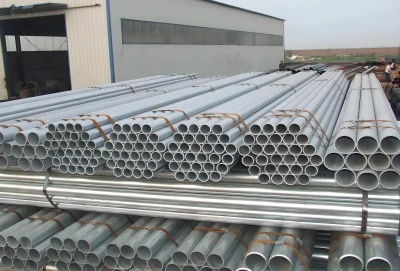
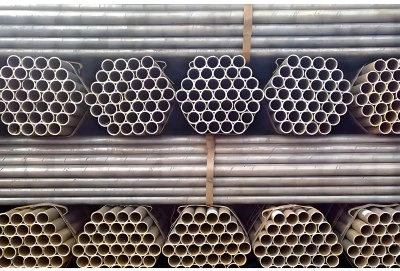
Overview of A787 Tubing Dimensions
Take a look at the size range before you ask for a price or place an order. Your machine shop needs to pay close attention to the numbers in A787 tubing because they describe a wide range of sizes.
Standard Outer Diameter Range
Outside width (OD) runs from 1/2" to 16". For precision shaft collars, mounting clamps, and furniture tubes, OD sizes like 1/2" to 2" are often the best choice. Middle-sized ODs, between 2" and 6", work well for building frames, farm tools, and car parts. Wider than 6" to 16" is the range for heavy-duty equipment bases and solar racking torque tubes.
Wall Thickness Schedule Classification
A standard schedule number for wall thickness is between 10 and XXS. The SCH 10 light wall can be used for a low-load greenhouse or for looks. In machined parts, SCH 40 and SCH 80 are the mid-weight workhorses that are most often used. They are good for high-stress, high-pressure structural uses where material removal during machining is likely to happen. The SCH 160 and XXS grades have thick walls.
Material Grades and Their Dimensional Effect
For grades 1010, 1015, and 1020, the carbon level is between 0.08% and 0.20%. A higher carbon type, like 1020, has a yield strength of around 45,000 psi. This means that a thinner wall can still hold the same amount of weight. Being less carbon-based makes 1010 more bendable and shapeable. This is something to keep in mind when picking the wall thickness for bent structural parts or made braces.
Detailed Dimensional Specifications of A787 Tubing
Having exact numbers is important when your machinists are working on CNC cutting centers or lathes that have to follow strict rules. Remember these things.
OD and ID Tolerances
For diameters up to 1-1/2", ASTM A787 tubing says that OD margins can't be more than ±1%. For sizes bigger than that, they can only be ±0.5%. In theory, you can find the inner diameter by taking the outer diameter and taking away twice the thickness of the wall. The standard wall for a 2" OD tube at SCH 40 is 0.154", which gives it an ID of about 1.692". Because of how close these tolerances are, it is often possible to make slip-fit sleeve assemblies and bearing housings without having to grind them down again.
How Wall Thickness Affects Mechanical Properties
How much stress the hoop can hold is directly related to how thick the walls are. When the wall is bigger, the pressure number goes up, and it's harder for the part to bend in some places while it's being machined. After boring, engineers usually pick SCH 80 or bigger for made bushings and sleeve bearings to make sure there is enough wall stock. But SCH 10 or SCH 20 is fine for ornamental frames, greenhouse structures, and architectural tubing that doesn't carry weight if you want to save weight.
Coating Thickness Considerations
A G90 zinc finish (0.90 oz/sq ft) is the standard for building things outside. It changes the sizes by a small amount, usually less than 0.003" per side. It works the same way with AZ50 Galvalume finishes. They are within the regular OD tolerance bands because they are so small, so they don't need to be changed in most finished assembly designs.
Comparative Analysis: A787 Tubing Sizes vs. Other Alloy Tubings
Knowing how A787 stacks up against alternatives helps procurement managers avoid over-specifying or under-specifying material.
A787 vs. ASTM A513 Mechanical Tubing
Both A787 and A513 share the same base carbon steel grades (1010–1020) and overlap in OD and wall thickness ranges. The difference is coating: A513 ships bare and needs post-fabrication painting or galvanizing, while A787 carries pre-applied metallic coating from the mill. For outdoor or corrosive-environment applications, A787 reduces post-processing cost and lead time, which is a direct procurement advantage.
A787 vs. ASTM A789 Duplex Stainless Tubing
A789 targets duplex stainless steel with far higher alloy content and correspondingly higher cost per foot. Its dimensional range is generally smaller (focused on thinner-wall heat-exchanger tubing), and its minimum order quantities tend to be higher. For structural automotive and furniture applications where moderate corrosion resistance is sufficient, A787 delivers comparable service life at substantially lower material cost.
A787 vs. Schedule Pipe (ASTM A53)
A53 pipe is designed for fluid transport and undergoes hydrostatic testing. A787 tubing is a mechanical tubing spec, not rated for pressure fluid service. However, for structural weldments and machined components, A787 frequently replaces A53 pipe because it offers tighter dimensional tolerances, better surface finish, and pre-applied corrosion protection that pipe does not carry.
Selecting the Right Size and Wall Thickness for Your Application
Choosing the right OD and wall thickness means finding the best mix between how well it works mechanically, how easy it is to machine, and how much it costs.
In order to pick the right size, keep these things in mind:
- Machining stock allowance: If you bore a sleeve to a finished ID, you need enough wall to maintain structural integrity after material removal. SCH 80 or heavier is generally the minimum for machined bushings.
- Structural load path: Frame members carrying bending loads benefit from larger OD with moderate wall rather than small OD with very heavy wall, since section modulus scales with OD.
- Surface finish requirements: A787 tubing carries a smooth pre-coated surface that reduces secondary finishing time for furniture and fitness equipment tubes destined for visible consumer-facing assemblies.
- Custom length orders: Longma Group accepts custom cut lengths, reducing saw-cutting labor at your facility and minimizing scrap.
It is better for frame members to have a bigger OD and a middling wall when they are carrying bending loads than a small OD and a very heavy wall. This is because section modulus goes up with OD.
Inspection and Quality Assurance of A787 Tubing Dimensions
When pipe goes straight into a machine shop, measurements must be exact. A CNC program can be stopped by a single OD batch that is not in the right range.
Standard Inspection Methods
At the mill-level, the outside diameter (OD) of each tube is measured at both ends and in the middle. A laser gage or a millimeter ring gage can be used for this. An ultrasonic thickness measure checks the wall thickness every 90° and along the weld joint. X-ray fluorescence (XRF) is used to compare the weight of the coating to a standard like G90 or AZ50.
Batch Consistency and Material Traceability
Changes in carbon content from batch to batch are a real problem for buyers who need goods for more than one order, like procurement managers. It gets raw coil from mills like Shagang, HBIS, and Bao Steel. All of these mills have to get approval for the boiler chemicals. A Material Test Certificate (MTC) is included with every shipment. It shows the weight of the coating, the amount of carbon in it, and the results of the mechanical tests. This will make it easy for your quality team to follow the product from the raw material to the finished tube.
Supplier Qualification Checklist
When looking for a carbon steel mechanical tube supplier, you should pay attention to the following:
- API 5L certification — confirms process capability for consistent weld integrity
- ISO 9001 Quality Management System — covers documented inspection procedures
- Factory Production Control (FPC) certificate — demonstrates ongoing production audits
Along with these three, Longma Group also has ISO 14001 and OHSAS 18001, which means they can offer documentation packages that meet the needs of engineering quality reviews in regulated fields.
FAQ
Does A787 tubing meet dimensional requirements for machined bushings?
Yes. ASTM A787 specifies OD tolerances of ±1% for smaller diameters and tighter on larger sizes. Selecting SCH 80 or heavier provides sufficient wall stock for boring to a finished ID. For tight-tolerance bearing housing applications, requesting certified dimensional data from your supplier before purchase is a practical step.
What is the smallest OD available in A787 tubing?
Standard production begins at 1/2" OD. At that size, available schedules are limited to lighter walls. If your application requires very small OD with heavy wall, confirm availability with your supplier directly, as not every schedule is produced at every OD.
Can A787 tubing be welded during fabrication?
Yes, with precautions. Welding burns off the zinc coating near the weld zone, generating zinc fumes that require proper ventilation. After welding, the zinc coating must be repaired using a zinc-rich cold-galvanizing spray to restore corrosion protection at the joint.
Is A787 suitable for fluid pressure applications?
No. A787 is a mechanical tubing specification and is not hydrostatic-tested for pressure-bearing fluid transport. For pressure service, ASTM A53 pipe is the appropriate specification.
What grades of carbon steel are available in A787 tubing?
Longma Group supplies A787 tubing in grades 1010, 1015, and 1020, covering a yield strength range of approximately 30,000 to 45,000 psi depending on the grade and thermal treatment applied.
Request A787 Tubing Samples From Longma Group Today
There are more than 1,000,000 tons of ERW steel tubes that Longma Group makes every year. They have been making them since 2003. We always have 100 to 200 tons of A787 tubing on hand. It has schedules from SCH 10 to SCH XXS and OD sizes from 1/2" to 16". It's possible to ship your small-batch test order in as little as 7 days. For your peace of mind, our company is certified by both ISO 9001 and API 5L to make A787 tubing. We send full MTC paperwork with every order. Email us at info@longma-group.com or visit longma-group.com right away to get a price.
Conclusion
A787 tubing comes in outside diameters from 1/2" to 16", and wall thicknesses from SCH 10 to SCH XXS. There are three kinds of carbon steel: 1010, 1015, and 1020. Metal tubing that has already been coated with zinc makes it different from metal tubing that has not been coated. Post-processing costs less where corrosion is likely to happen because of this. These days, it's easy to check the quality of many machined parts because the size tolerances are close enough. Batches can also be tracked through MTC paperwork. You can quickly narrow down the standard by making sure that the OD and schedule match your machine stock margin and structural load needs. Your production line will keep going if your supplier has goods in stock and short wait times.