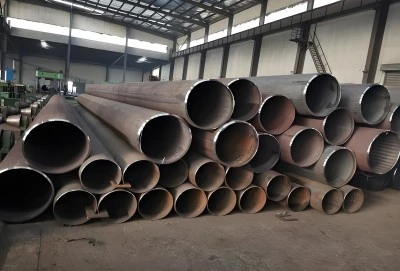
If you work in offshore construction or heavy structural fabrication, you have probably seen "2B" appear in project specifications and wondered exactly what it refers to. The short answer is this: in the context of large-diameter structural pipe, "2B" refers to API 2B, the American Petroleum Institute specification that governs the fabrication of structural steel pipe from plate for offshore and marine applications. An API 2B pipe is not a fluid-transport line pipe — it is a load-bearing structural member engineered to form jacket legs, foundation piles, and bracing systems on offshore platforms. Understanding what 2B means can save your team from costly specification errors before a single purchase order is issued.
|
|
|
What "2B" Means in Industrial Pipe Procurement
The term "2B" carries different meanings depending on the industry context, and confusion between them is more common than most procurement teams admit.
2B as an API Structural Pipe Specification
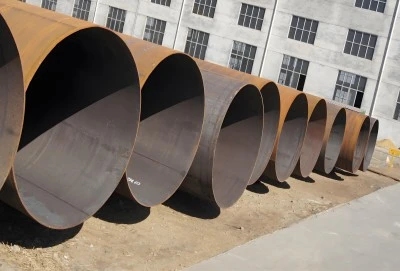
API 2B is a fabrication specification published by the American Petroleum Institute. A steel plate is rolled into a cylinder shape, and the long ends are joined together using the Double Submerged Arc Welding (DSAW) method. This makes solid steel pipe. That's not what the standard is mostly about; it's about geometric limits, weld quality, and being able to find materials. API 5L rules line pipes that move oil and gas under pressure inside the pipe. This is what makes it very different.
2B vs. 2B Stainless Steel Finish
"2B" is a cold-rolled, matte surface finish for stainless steel that is good at resisting corrosion and is often used in architecture and food processing. This word has nothing to do with pipes that are used in the ocean. Buyers need to check that the right meaning is used before sending out a request for structural tubulars. If not, they could send out the wrong product category.
Why the Distinction Matters for Offshore Projects
API 2B pipes are used for offshore jacket structures, mooring dolphins, and conductor caissons because they meet strict out-of-roundness control requirements (usually within 1% of outside diameter or 0.25 inches, whichever is less), have high Charpy V-Notch impact toughness at temperatures as low as -40°F, and can be fully traced back to the steel plate that they came from. If you use the wrong product in these roles, it could cause structural risk and cause the project to not meet requirements.
Key Applications of API 2B Structural Pipe
A lot of important structures in the ocean and off the coast are made of API 2B pipe. These are the main reasons why it's important to buy this specification:
- Jacket legs and foundation piling: These are the piles that are driven into the ocean floor below the poles that hold up a fixed offshore platform. The pipe has to be strong enough to handle waves and the force of pile-driving hammers. From 24 inches to 56 inches are used in this role.
- Structural bracing: K-braces and X-braces connect the jacket legs on the side to support the structure. They can handle loads from hurricanes and earthquakes. The quality of the weld and the toughness of the base metal must be met because these parts are stressed and compressed many times.
- Mooring piles and berthing dolphins: At LNG jetties and marine ports, these pipes are used to handle the movements of ships coming in to dock. You can stretch a material without breaking it if it has both high yield strength and flexibility.
To do any of these things, you need a supplier that can make pipes with big diameters, not just a trader in pipes from different mills without being able to see how they are made.
How Knowing the Specification Improves Procurement Outcomes
If you get a design wrong during the inquiry stage, it will affect the whole process, from getting approval from the seller to putting the parts together in the field. There were times when structural engineers turned down whole shipments of pipes because the nodal joints were too far out of round. This happened because the seller said they would make the lines according to API 2B standards but didn't.
Verify Mill Capability Before Shortlisting
It is up to the source to show that its rolling and welding tools can work with the different wall sizes in your project. Many mills can't work with both sides of the API 2B pipe range for pipes bigger than 40 inches. From SCH10 to SCH160 is the range. You can ask for details of mill runs and most recent MTCs for sizes that are nearby.
Confirm Weld Inspection Method and Coverage
On a 100% level, API 2B says that either ultrasonic (UT) or radiographic (RT) testing must be done on the longitudinal seam weld. When you buy structural pipe from someone who only checks a few spots, there is risk at every weld joint in the final building. Ask for the inspection and test plan (ITP) early on in the technical review.
Check Material Traceability to Plate Standard
For certain designs, the source plate needs to meet API 2H, API 2W, or API 2Y standards, or grades that are the same under ASTM A572, ASTM A633, or ASTM A36. The EN 10204 3.1 mill test certificate (MTC) must be able to link the pipe to the cast and heat number of the plate. It is impossible for offshore certification bodies to meet the requirements without this chain.
These three checks are the very least that need to be done when a provider is first being considered.
What to Look for in a Qualified API 2B Pipe Supplier
How safe the structure is, how long it takes, and how much it costs all depend on the provider for offshore structural pipe that you choose. With the right provider, you get more than just a product. You also get paperwork, exact measurements, and information that makes it clear how the product was made.
- Dimensional range: The provider must be able to work with ODs ranging from 16" to 56" and wall thicknesses ranging from SCH10 to SCH160 all under one quality control system. They can't hire secondary mills they don't know to do work for them.
- Weld process control: DSAW with full seam UT/RT inspection, automatic weld parameter recording, and welding procedure qualification records (WPQR) that meet AWS D1.1 or a similar standard.
- Certification portfolio: To be qualified, a API 2B pipe company must have ISO 9001 quality management, an API 5L product license (which shows that the company makes reliable pipes in general), and be able to provide EN 10204 3.1 MTCs signed by a third-party inspection body.
- Custom length capability: There are fewer girth welds in a finished building when the pipe sections are longer. This lowers the cost of construction and the area that needs to be reviewed in the field. To get the pipe to the right length for the job, a skilled maker can roll and weld it.
- Third-party inspection access: DNV, Bureau Veritas, Lloyd's Register, and other similar groups should be able to check something for authenticity and report it on their own. You should remove a provider from your list if they won't let witnesses look at their work.
Once your team has proven their skills with a technical questionnaire and mill check, they can safely move on from shortlisting vendors to formal quotes.
Conclusion
"2B" stands for API 2B pipe in offshore and marine structural fabrication. This is a set of rules for how structural steel pipe should be made, tested, and recorded so that it can be used in piles, bracing systems, and jacket legs. The finish on the outside of stainless steel has nothing to do with this. It's not the same as API 5L line pipe. For project procurement leaders looking for large-diameter structure tubulars, the standard controls the grade of the material, the quality of the weld, the geometric tolerance, and the tracking. It is important to get these details right during the research stage to protect the structure's safety, the project's schedule, and its budget.
FAQ
What is the difference between API 2B and API 5L?
API 5L is for line pipes that move oil, gas, and water under pressure inside the pipe. API 2B is a set of rules for making structural steel pipe, which is used for heavy-duty tasks like base rocks and ocean jacket legs. The two specs go over very different performance requirements, so they can't be used together.
What steel grades are used to make API 2B pipe?
A lot of people use plate types like API 2H, API 2W, API 2Y, ASTM A572, and ASTM A633. The choice is based on the temperature range and the yield strength needs of the project. The grades are picked so that they have the right amount of Charpy impact toughness when the iron is cold.
Can API 2B pipe be manufactured in custom lengths?
Yes. The pipe can be cut to any length needed for a job because it is made from rolled plate instead of being poured as a single tube. Parts that are longer need fewer field girth welds, which lowers the cost of making them and the number of things that need to be inspected.
What inspection is required under API 2B?
The specification says that all seams that run along a length of metal must be 100% UT or RT. When you check for dimensions, you look for things like OD, wall thickness, being out of round, and straightness. The material details need to have EN 10204 3.1 MTCs that can be connected to the source steel plate heat number.
Does API 2B cover spiral welded pipe?
No, API 2B says it has to be made from DSAW-cut plates with horizontal lines. Spirally-welded pipe is subject to different rules. Since the weld seam is not parallel to the main stress lines, it is usually not suggested to use it as the main structural members in marine jacket structures.
Get a Direct Quote for API 2B Structural Pipe from Longma Group
Big LSAW structural steel pipe has been made by Longma Group since 2003. Every year they make more than a million tons of it, and their quality system is ISO 9001-based. Because we are a trustworthy API 2B pipe manufacturer, we always have 100 to 200 tons of structural pipe in stock. This pipe comes in sizes from 16" to 56" OD and SCH10 to SCH160. Your order will be sent out in as little as 7 days. Visit longma-group.com or email info@longma-group.com with the details of your project to find out more about what the mill can do and to get a formal quote.