
If you're specifying electric-fusion-welded pipe for a high-pressure process system, you've almost certainly encountered the Class suffix on an ASTM A672 pipe order. That single letter—N, N&T, or S—tells you exactly how the pipe was heat-treated after forming and whether the weld seam was radiographically examined. Getting it wrong on your pipe material specification (PMS) sheet can mean a rejected inspection, a costly re-order, or, in the worst case, a weld failure under operating pressure. This guide breaks each class down so you can specify with confidence.
|
|
|
ASTM A672 Pipe and Its Classifications
What ASTM A672 Covers
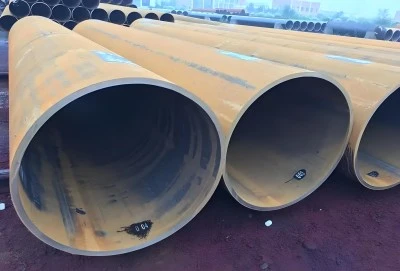
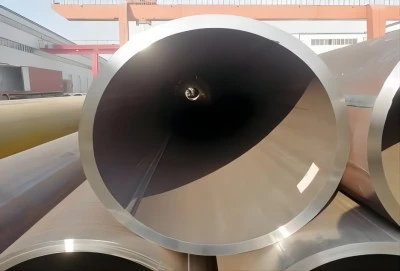
ASTM A672 is for steel pipes that are welded with electric fusion and have a diameter of 16 inches (406.4 mm) or more on the outside. Pressure-vessel plate is used to make these lines, and extra metal is added while they are being welded. As long as the temperature stays below 650°F (343°C), this standard is fine for high-pressure work. Because of this, it is often used for the equipment of power plants, petroleum plants, and LNG. At Longma Group, we have ASTM A672 pipe in types C55, C60, C65, and C70. Sizes range from 457.2 mm to 1422 mm on the outside, and from 7.92 mm to 75 mm on the inside.
The Role of Grade and Class
Each ASTM A672 pipe has two parts: a grade (like C60 or C65) that tells you about the plate material and what chemicals are in it, and a class (like N, N&T, or S) that tells you about the heat treatment and inspection level. How the pipe was made and checked is shown by the class, while the grade tells you what kind of material it is. It is important to match pipes to both the ASME B31.3 and B31.1 system standards.
Grade Chemical Overview
There are ASME/ASTM pressure-vessel plate standards that go with these carbon steel grades. They tell us what their chemical and mechanical properties are. A516 Gr.60 plate, which has about 0.21% carbon and 1.20% manganese, is used to make Grade C60. Grade C70 is made from A516 Gr.70 plate and needs to be able to hold at least 70 ksi/485 MPa of tension. It is often used in heavy-wall, high-pressure pipes because of this.
Mechanical Properties and Manufacturing Process of ASTM A672 Pipes
Class Definitions Side by Side
The three class names show that the rules in the industry are getting stricter:
- Class S (as-rolled): The pipe is formed and welded without any post-weld heat treatment (PWHT). Radiographic examination of the weld seam is not required. Class S carries the lowest processing cost but also the least structural assurance, making it appropriate only for lower-pressure, non-critical services where your project PMS permits.
- Class N (normalized): The completed pipe—or the weld seam alone, depending on wall thickness—receives a normalizing heat treatment (typically 1,650°F / 900°C, air-cooled). This refines the weld's grain structure and relieves residual stress. Radiographic examination of the weld is required, giving procurement teams documented proof of seam integrity.
- Class N&T (normalized and tempered): After normalizing, the pipe undergoes an additional tempering cycle, which further reduces hardness and improves low-temperature toughness. This dual thermal cycle makes Class N&T the specification of choice for LNG facilities and other sub-zero or cyclic-temperature services. Full radiographic examination is required.
This difference is important to the field. There is a mistake in the design that leads to a Class S pipe ending up in a high-pressure steam header. This is against the rules and could cause a safety risk.
Key Mechanical Benchmarks
Let's look at Grade C65. According to ASTM A672, the minimum yield strength is 35 ksi (240 MPa), the minimum tensile strength is 65 ksi (450 MPa), and the minimum stretch is 19%. A lot of the time, the minimum values for Class N and N&T pipes are the same. However, the Charpy impact results are better for them because the heat treatment smooths out the grain in the weld zone.
Manufacturing Tolerances
For ASTM A672 pipe diameters greater than or equal to 20 inches, the range is ±0.5% of the stated OD. −12.5% of the given number is the normal range for wall thickness. This is how Longma Group's production lines are set up, and before each length of pipe is released, ultrasonic technology checks to make sure it is the right width.
ASTM A672 Pipe Class Comparison and Application Insights
Choosing the Right Class for Your Service Conditions
When you pick between Class N, N&T, and S, it's not just about price. It's also about being scared. Pipeline engineers with a lot of experience do it this way:
- Class S is acceptable where design temperatures are moderate, operating pressures are low, and the line class in your PMS does not mandate NDT on the longitudinal weld. Utility water lines or secondary process headers sometimes fall here.
- Class N is the workhorse for most petrochemical and power plant process piping: main steam condensate returns, feedwater lines, and hydrocarbon process headers operating above 150 psi. The mandatory radiographic examination gives QA/QC managers a documented baseline.
- Class N&T is specified wherever toughness at low temperatures matters—LNG receiving terminals, cold-service process lines, and any system subject to thermal cycling that could cause brittle fracture. Saudi Aramco and SABIC engineering standards frequently call out Class N&T for cryogenic and cyclic services.
NDT doesn't need to be done on the longitudinal weld if the line class in your PMS doesn't call for it and the working pressures and temperatures are low. Here's where water lines for services or extra process heads can go.
How ASTM A672 Differs from A671 and A691
It is covered by ASTM A671, and it is used for EFW pipes in normal temperatures and lower ones. It needs a weld test every 200 feet instead of every 500 feet like A672. Alloy steel EFW pipe made of chrome-moly is the only kind that meets ASTM A691. Even if the plate material and mechanical properties look the same, it is against the rules to use A671 instead of A672 without first getting approval from an engineer.
Material Traceability and Heat Number Certification
Plates used by Longma Group to make ASTM A672 pipe have a heat and lot number that can be traced back to the mill certificate (MTC). Plate comes from well-known steel mills in China, such as Shagang, HBIS, and Bao Steel. Each package has been approved by EN 10204 3.1 or 3.2. It is important for project QA/QC managers and third-party inspectors to keep track of everything during the pre-shipment review process.
What Drives ASTM A672 Pipe Pricing
There are three main reasons why prices vary so much for the same stated size and grade:
- Heat treatment level: Class N&T adds two thermal cycles and the associated furnace time. Expect a 10–18% premium over Class S for the same dimensions when tempering is included.
- Wall thickness and OD: Heavy-wall pipe (above 25 mm) requires more plate material and longer weld passes, directly raising material and labor costs.
- Order volume: Lot sizes below 20 tons typically carry a setup premium. Longma Group holds 50–100 tons of stock across common grades, which allows partial-lot orders to ship within 7 days for standard dimensions.
Delivery Lead Times and Stock Availability
As a general rule, Longma Group needs 30 to 45 days to make an order, but this can change depending on the OD and wall thickness. Sizes that are in stock in grades C60 and C65 can be sent out in as little as 7 days for projects that need to be done quickly. Get in touch with our team as soon as possible to make sure the stock meets your PMS needs.
Conclusion
There is more than just a pretty face on an ASTM A672 pipe. The class number tells you exactly how much production quality assurance is behind the weld seam you are putting into a high-pressure system. Class S doesn't need x-rays or heat treatment. In Class N, there is now both required RT and RT that can be changed. Even more is done to Class N&T steels to make them stronger in low temperatures or when they are used over and over again. Choose the right class for your service conditions and the ASME code standards early on in the pipe design process. This is one of the most important decisions you will need to make. Once you do that correctly, the rest of the buying process will be a lot easier.
FAQ
What is the main difference between Class N and Class S?
Class S pipe is sold "as-rolled," which means it hasn't been heated up after being soldered and doesn't need to be x-rayed to make sure the gap is filled properly. The longitudinal weld on Class N pipe needs to be checked on x-rays from all sides.The pipe needs to be leveled. Based on ASME B31.3, Class N is the basic standard for any service that needs to be under a lot of pressure.
Is Class N&T suitable for LNG or cryogenic service?
Yes. In Class N&T, the extra annealing step improves the foundation of the weld zone and raises the Charpy impact values when the temperature drops below zero. Because it is less likely to break easily, Class N&T is often used for pipes in LNG terminals and cold-service process lines.
How do I verify that a supplier's ASTM A672 pipe is genuinely Class N or N&T?
The RT film or digital radiography data, as well as the EN 10204 3.1 MTC, should be asked for. If you buy ASTM A672 pipes from a reputable company, all three of these papers will be sent with the package. Having a third party check out the mill is another well-known way to be sure of something.
Can Longma Group supply custom lengths for project requirements?
Yes. When making spools, Longma Group can cut orders to length across the full OD range of 457.2–1422 mm, as well as in standard lengths.
Request a Quote from Longma Group — Your ASTM A672 Pipe Manufacturer
EFW steel pipe made to high pressure has been made by Longma Group since 2003. They ship more than 90 countries more than 1,000,000 tons of it every year. We have grades C55 through C70 of ASTM A672 pipe for sale. It comes with all the necessary paperwork for RT, EN 10204 3.1/3.2 MTC, and a heat number that can be used to track it from the plate mill to the finished pipe. There is stock that can be sent out right away. If you send your PMS needs to info@longma-group.com or visit longma-group.com today, you can get a technical quote.