
Understanding required inspection tests is essential when purchasing API 5L X65 pipe for important building projects. People who want to buy PSL2 specification pipes need to make sure that the pipes pass a chemical composition analysis, mechanical property tests such as tensile and Charpy V-notch impact tests, non-destructive testing using ultrasonic and radiographic methods, dimensional inspections, hydrostatic pressure tests, and a weld integrity check. Complete checks like these protect against material failure in high-pressure settings and make sure your pipeline assets meet both API 5L standards and project-specific safety requirements that protect big investments.
|
|
|
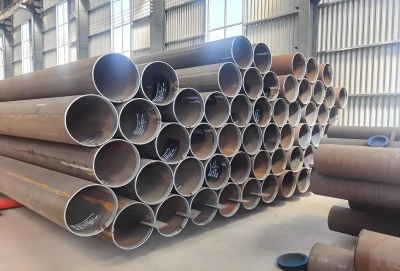
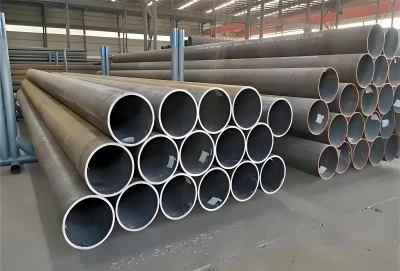
Understanding API 5L X65 PSL2 Pipes and Inspection Relevance
Technical Specifications That Define Quality Standards
The American Petroleum Institute maintains the API 5L code, which sets the standards for how line pipe used in the oil and gas businesses should be made. API 5L X65 pipe grades are at the top of this order because they are strong enough that engineers can cut down on wall thickness compared to lower grades like X42 or X52. This lowers project costs while keeping pressure ratings the same. The minimum yield strength is 450 MPa and the minimum tensile strength is 535 MPa. These strengths make the material strong enough for high-pressure uses.
The PSL2 classification is different because it has tighter controls over chemical makeup and requires Charpy impact testing at certain temperatures. It also has maximum yield and tensile strength limits. These extra standards make sure that weldability is consistent across production runs and reduce the risk of brittle fracture in low-temperature service. The carbon equivalent method tightly limits elements that might change the properties of the heat-affected zone while welding in the field.
Why Comprehensive Inspection Protects Your Investment?
Specifications for materials written on papers for buying things don't mean anything until they are checked. When we make pipes, we use raw materials from top Chinese steel mills like HBIS and Bao Steel. However, we still test every single batch very carefully. This way of doing things comes from knowing that even materials from reliable sources can be harmed by differences in the metal itself, changes in the way they are made, and damage from handling.
Inspections are important for more than just technical compliance; they're also important for risk management. One bad weld in an underwater cable can cause emergency repairs, environmental cleanup, and production delays that cost millions of dollars. Purchasing managers who think inspection costs are extra costs really don't understand how asymmetric risk works. Spending a few thousand dollars on thorough testing can save tens of millions of dollars in possible losses.
Comparing API 5L X65 PSL2 Pipe Inspection Standards to Industry Alternatives
Grade Comparison: X52 vs. X65 vs. X70 Testing Protocols
When choosing a material grade, you have to weigh the mechanical qualities against the cost and difficulty of checking. Less strict testing rules apply to X52 pipes with a minimum yield strength of 360 MPa. This is especially true for impact testing, which may not be required by all PSL1 standards. API 5L X65 pipe is in the middle. It is stronger than other grades, but it can still be welded and bent in the field, which makes building easier.
X70 pipes have a minimum yield strength of 485 MPa, which lets walls be thinner and weight be reduced even more. Because it is stronger, it needs to be inspected more carefully, especially around the weld heat-affected zone qualities. More tight limits on carbon equivalents are put on X70 material, and pre-heating is pretty much required during welding. Procurement teams should know that the grade they choose affects more than just the cost of the pipe. It also affects the costs of inspections and the steps needed to put the pipe in the field.
Higher grades make the temperature standards for the Charpy impact test harder and harder. At 0°C, X65 PSL2 material must show that it is tough enough, but for cold climate uses, project requirements may call for X70 testing at -10°C or lower. We've supplied X65 pipes for projects in temperature zones ranging from equatorial Southeast Asia to North Sea offshore platforms. The grade's balanced properties make it ideal for most uses when inspection costs and field welding costs are taken into account.
Welded vs. Seamless Pipe Inspection Differences
The way something is made has a big impact on where inspections should focus. For seamless pipes made by hot extrusion, the whole pipe body needs to be tested with ultrasound waves to find any laminations or holes in the parent material. Since there are no longitudinal welds, there are no worries about fusion flaws. However, seamless pipes often have bigger size differences than welded ones, which means that the width and wall thickness need to be checked more thoroughly.
Welded pipes made with the LSAW, DSAW, or SSAW methods need to have their weld seams inspected carefully. We look at 100% of the weld areas with x-rays or ultrasounds, and we also test the internal and external join surfaces with magnetic particles. A hardness test is done on the heat-affected area next to the welds to make sure that the welding temperature cycles haven't made the microstructures weak. High-frequency induction heating is used to join ERW and HFW pipes together. This creates small heat-affected areas that can be treated well with heat after the welding process.
Longma Group can produce using a number of different welding technologies. This lets purchasing managers choose the best manufacturing method based on the width needs and delivery times. For pipes wider than 500 mm, LSAW or DSAW processes are usually used for large-diameter transmission pipelines. ERW methods are more efficient for making smaller diameter distribution pipes. Knowing these differences in manufacturing helps procurement professionals set up the right checking processes that deal with risk factors that are unique to each method instead of using general testing requirements.
Conclusion
Inspection testing that is required for buying API 5L X65 pipes is not a choice; it is necessary due diligence. Chemical analysis, mechanical testing, non-destructive examination, dimensional validation, and hydrostatic pressure testing are all part of comprehensive routines. These tests make sure that faulty material doesn't get into your pipeline systems. The inspection cost, which is usually between 3 and 5 percent of the cost of the materials, guards against mistakes in the field that can cost hundreds of times more in repairs, damage to the environment, and damage to the company's image. Professionals in purchasing must work with certified makers who show open inspections, keep up-to-date quality systems, and provide full paperwork that can be used to track products from the time they are made from raw materials to finished goods.
FAQ
What documentation should accompany inspected pipes?
Mill Test Certificates with heat analysis and mechanical test results, dimensional inspection reports, NDT records with radiographic films or UT data files, hydrostatic test documentation, and material traceability records linking finished API 5L X65 pipes to raw material heat numbers are all part of full material deliveries. EN 10204 3.1 certification means that the papers were given by the manufacturer, while 3.2 certification means that they were checked by a third party. Positive Material Identification (PMI) records, impact test graphs, and pictures of the marking and packing may also be needed for projects.
How often should inspections happen when big orders are placed?
API 5L says that testing must be done on a regular basis based on lot sizes, which are usually described as pipes that were made with the same heat and using the same production methods. For inspection reasons, the lines between heat treatment batches are often used to define lots. Periodic checks are done on continuous production runs, with mechanical tests happening at least once every 200 lines or a part of that number. Contracts for buying things may say that certain applications need to be tested more often. This is done to balance the need for trust in the testing with the costs and time it takes.
What's the difference between harmful and non-destructive testing?
Ultrasonic, radiography, and magnetic particle inspection are all non-destructive testing methods that look at all of the production without hurting the pipes. They find flaws that need to be rejected. Destructive testing using tensile specimens, impact samples, and metallographic study gives accurate information about a material's properties, but it uses up test parts. Both methods work hand-in-hand. NDT checks for flaws, and damaging testing makes sure that the material's features meet the requirements. Both methods are used in comprehensive inspection processes.
Partner with a Certified API 5L X65 Pipe Manufacturer for Your Next Project
In order to meet the strictest project requirements, Longma Group provides approved API 5L X65 pipe with thorough inspection documents. We can make pipelines using ERW, LSAW, DSAW, and SSAW welding methods. Our diameters range from 21.3mm to 2032mm and our wall thicknesses go up to 59.54mm, making us your one-stop shop for all your pipeline needs. Along with our ISO 9001, ISO 14001, and OHSAS 18001 system certifications, we also keep our API 5L product certification. This shows that we are committed to quality greatness. Get in touch with our technical team at info@longma-group.com to talk about your project needs and get thorough offers with inspection standards, shipping schedules, and low prices from a well-known api 5l x65 pipe maker that serves markets around the world.