
The API 5L guideline itself contains the calculation method for the hydrostatic test pressure standard for API 5L X65 pipe. API 5L says to use the formula P = 2St/D to find the minimum hydraulic test pressure. Here, P is the test pressure, S is the minimum yield strength (for X65, it's 450 MPa or 65,300 psi), t is the standard wall thickness, and D is the outside diameter. This formula includes a safety factor of about 90 to 95% of the minimum yield strength. This makes sure that the pipe can safely handle working pressures and checks the structure's soundness before it is installed in the field.
|
|
|
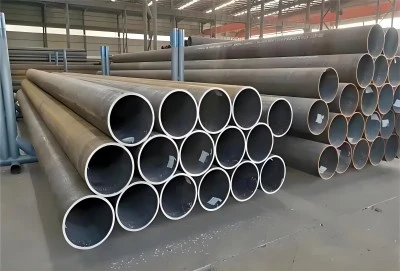
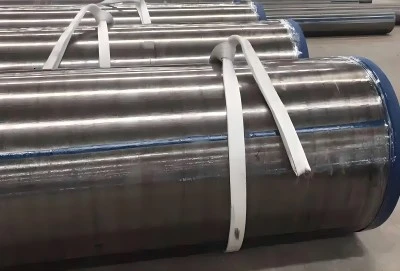
Understanding API 5L X65 Pipe and Its Standards
The American Petroleum Institute (API) 5L guideline sets the technical standards for line pipe used in the natural gas and oil businesses. In this context, the grade number X65 refers to certain mechanical qualities that set it apart from smaller grades like X42 or Grade B. The "X" stands for high-test pipe, and the "65" means that the minimum strain strength is 65,000 psi, which is about 448 MPa.
Mechanical Properties Defining X65 Performance
X65 line pipe needs to have a yield strength of at least 450 MPa and a tensile strength of at least 535 MPa. Because of these features, the material is stronger for its weight, which means engineers can specify smaller walls for the same pressure values as lower-grade materials. This directly means lower shipping costs and easier installation on project areas that are far away. The extension requirement makes sure that the material is flexible enough to be bent in the field, which is especially important for pipeline paths that go through rough terrain.
Chemical Composition and Weldability Considerations
The chemicals that make up X65 material are closely monitored to make sure that it can be welded in the field and is resistant to a number of failure mechanisms. Carbon Equivalent (CE) values are closely controlled to keep the weld zone from stiffening, which could lead to hydrogen-induced cracks. Micro-alloying elements like Niobium, Vanadium, and Titanium help to smooth out the grains and strengthen the material through precipitation, which makes it stronger and harder to break. When getting materials for sour service settings with hydrogen sulfide, it's important to keep the amounts of sulfur and phosphorus low to avoid Sulfide Stress Corrosion Cracking (SSCC) and Hydrogen Induced Cracking (HIC).
PSL1 versus PSL2: Understanding Product Specification Levels
In API 5L, there are two Product Specification Levels that have a big effect on the testing needs and prices of getting the product. PSL1 sets the general standards that are needed for most situations, while PSL2 adds more tests that must be done and tighter limits on chemical makeup. In PSL2, there are not only minimum but also maximum limits for yield and tensile strength. Charpy V-Notch impact testing is needed to make sure that the material is tough enough to break at certain temperatures, and carbon equivalent calculations must be done with more accuracy. Most new high-pressure transmission projects call for PSL2 to make sure reliable performance in tough working situations.
Hydrostatic Test Pressure Standards for API 5L X65 Pipes
The way the hydraulic test pressure is calculated is directly related to the pipe's size and mechanical features. API 5L says that every pipe piece needs to be tested under water at a pressure that creates a hoop stress equal to a certain percentage of the minimum yield strength.
Standard Calculation Formula and Safety Factors
The basic formula for figuring out test pressure is P = 2St/D. Each variable plays a specific part in making sure that the test is done correctly without damaging the pipe. A minimum stress strength (S) of 450 MPa has been set for X65. The pipe measurements tell us the wall thickness (t) and outside diameter (D). The number "2" in the numerator stands for the thin-wall pressure tank concept, which is true for most pipeline uses.
Most of the time, API 5L uses test forces that make the hoop stress between 90% and 95% of the minimum yield strength. This safety buffer keeps the pipe from deforming during tests and makes sure it can safely handle pressures that are usually between 60 and 80% of its yield strength. The exact stress number depends on the amount of specification and what the customer wants, but 95% is usually the norm for PSL2 material.
Practical Test Pressure Examples
Take a look at a typical specification: API 5L X65 pipe with a 24-inch outside diameter and a 0.500-inch wall thickness. With a S value of 65,000 psi and a 95% test factor, we get P = (2 × 65,000 × 0.95 × 0.500) / 24 = 2,552 psi. This test pressure has to be kept up for a certain amount of time, usually 5 to 10 seconds according to API 5L rules. This is enough time to find any leaks or problems with the structure.
Test pressures are proportionally different for pipes of different sizes. For the same grade of material, larger test pressures are caused by walls that are thicker and widths that are smaller. A 12-inch pipe with a 0.375-inch wall thickness would test at around 3,844 psi, while a 48-inch pipe with a 0.625-inch wall thickness might test at 1,596 psi. These changes show how the test method is based on the constant hoop stress theory.
Comparison with ASME B31.8 Pipeline Design Standards
API 5L sets the rules for making pipes and testing them in a mill. ASME B31.8 sets the rules for designing gas transport pipelines and testing them in the field. ASME B31.8 calls for hydraulic tests to be done in the field at pressures that are usually 1.4 to 1.5 times the Maximum Allowable Operating Pressure (MAOP). This takes into account design factors, site classes, and joint efficiency factors that aren't taken into account in mill testing.
There is a difference between mill hydrostatic testing according to API 5L and field hydrostatic testing according to ASME B31.8. This difference often makes buying teams confused. Mill testing checks the quality of the production process and the material features of each pipe piece. Testing the whole system in the field after the pipeline is built makes sure it works properly, checking the welds, fittings, and how it is placed. In terms of quality assurance as a whole, both tests are used for different things.
Comparative Analysis: Hydrostatic Testing for API 5L X65 vs Other Pipe Grades
Knowing how the testing standards for API 5L X65 pipe relate to those for other common grades helps purchasing managers choose materials that meet project requirements and don't cost too much.
X65 versus X60 and X70 Grade Comparisons
With a minimum yield strength of 415 MPa, X60 pipe needs about 8% lower test pressures than X65 pipe of the same size. When projects need the pressure-handling ability that X65 offers, this small difference rarely makes it worth lowering the material requirements. There is usually a 3-7% price difference between X60 and X65, which makes X65 the better deal when the higher strength lets the wall thickness be lowered.
The minimum yield strength of X70 material is 485 MPa, which means it can handle about 8% higher working pressures than X65 material or even thinner walls. But because X70 is stronger, it needs to be heated up and welded in a more precise way. Because it is harder to weld in the field and less flexible when cold bending, X65 is often the best choice for jobs that need a lot of field joints or complicated routes.
Grade B Material Considerations
API 5L Grade B is the most common low-strength standard. It has a minimum yield strength of only 240 MPa, which is about half of what X65 has. Test pressures for Grade B pipes of the same size are about 47% lower than those for X65 pipes of the same size. While Grade B is cheaper for low-pressure uses like water delivery or structural uses, it's not good for current high-capacity transmission systems because it can't handle the pressure. Instead, X65 is the best choice.
When you choose Grade B instead of X65, you save money on materials, but the thicker wall thickness needed to get the same pressure values cancels out the savings. Costs for transportation, installation, and finishing all go up as pipe weight goes up. This means that even though material unit prices are going down, the total cost of the job often goes up.
Impact of Welding Type on Test Integrity
Longitudinally Submerged Arc Welded (LSAW) and Electrically Resistance Welded (ERW) lines are tested under the same conditions but fail in different ways. LSAW pipes made from plate material with either a single or double submerged arc weld usually have better joint quality and more consistent test results. The weld seam qualities of ERW pipes, which are made from skelp and welded using high-frequency induction, have changed more over time.
This performance gap has been reduced a lot by modern ERW production technology. When heat treatment is used on ERW weld gaps, especially on PSL2 material, the mechanical qualities now match or go beyond those of the pipe body. To make sure that the hydrostatic test works the same way every time, the specs for buying something should include checking the weld heat treatment and testing all longitudinal lines without damaging them in any way.
Conclusion
Hydrostatic test pressure guidelines for API 5L X65 pipe are based on formulas that strike a balance between stringent quality control and the needs of industry. Knowing how the grades are calculated, what their performance is like compared to other grades helps procurement workers make smart choices about where to buy things that meet the needs of the project.
Different manufacturers all use the same pressure calculation method, P = 2St/D. However, the quality of the work done changes a lot depending on the facility's skills, its quality management system, and the testing equipment's calibration. Successful procurement strategies look at more than just meeting the bare minimum requirements. They also look at the track records, certifications, and investments in production technology that show that the provider will be reliable in the long run.
Comprehensive quality assurance systems include chemistry analysis, mechanical property verification, and non-destructive testing, of which hydrostatic testing is just one part. Together, these procedures make sure that X65 pipe meets the strict needs of today's pipeline infrastructure. If it fails, there could be damage to the environment, safety risks, and big financial losses.
FAQ
What is the standard hydrostatic test pressure for API 5L X65 pipe in oil and gas applications?
The normal test pressure is different for each pipe size, but it usually creates hoop stress equal to 90–95% of the minimum yield strength (450 MPa for X65). Using the equation P = 2St/D, a pipe with a diameter of 24 inches and a wall thickness of 0.5 inches would test at about 2,552 psi. According to API 5L X65 pipe standards, this pressure must be kept up for at least 5 to 10 seconds to make sure the structure is still solid.
Do hydrostatic test pressure requirements vary between different X65 pipe manufacturers?
All API-licensed makers use the same calculation formula, which makes sure that the testing method is always the same. Some makers, on the other hand, use more conservative test factors or longer hold times that go beyond the minimum API 5L standards. Higher test pressures may also be required by the customer, especially for important uses like bad service or high-pressure transmission systems. Always check the Material Test Certificate to make sure it matches the exact test pressure and time listed on it.
How frequently should post-installation hydrostatic testing occur for X65 pipelines?
According to ASME B31.8 the first field hydrostatic testing happens after the pipeline is built but before it is put into service. This testing is usually done at 1.4 to 1.5 times the Maximum Allowable Operating Pressure (MAOP). How often you have to retest afterward depends on regulations, working conditions, and integrity management systems. Many operators do full hydrostatic tests again every 15 to 20 years or when straight inspection tools find problems that need pressure verification. Areas with a lot at stake may need to be validated more often.
Contact Longma Group for Certified API 5L X65 Pipe Supply
The security of the pipeline starts with choosing materials from well-known companies that are dedicated to quality and compliance. Longma Group is an API 5L X65 pipe provider with more than 20 years of experience making pipes. They provide approved line pipe that meets the strictest hydrostatic test standards. We can use ERW, HFW, LSAW, DSAW, and SSAW welding methods to make things. The sizes we can make range from 1/2 inch to 80 inches, and the wall thickness can go up to Schedule 160.
Every piece of pipe is tested hydrostatically, and the pressure is tracked and recorded automatically by a computer. Before sending anything out, our quality control lab does a full chemical analysis, tests for mechanical properties, and non-destructive inspections. We only use raw materials from the best steel mills in the United States, and we can track the whole production process, from heat analysis to final inspection. This gives engineering contractors and procurement managers the recorded quality guarantee they need. Get in touch with our expert team at info@longma-group.com to talk about the details of your project and get accurate quotes for API 5L X65 pipe made just for you.








