
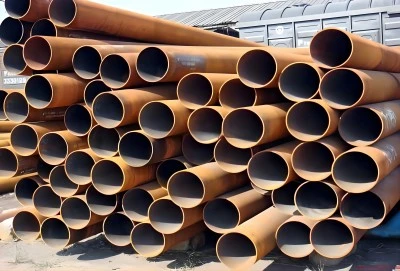
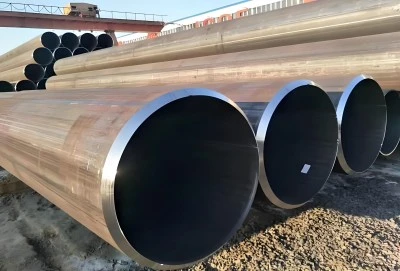
API 5L X46 pipe is a medium-strength carbon steel line pipe that is used to move oil, natural gas, and water in a variety of businesses. This grade has a minimum yield strength of 46,000 psi (320 MPa), which makes it perfect for low- to medium-pressure transmission systems because it hits the best balance between mechanical performance and cost-effectiveness. The X46 pipe name means that it is stronger than Grade B and easier to weld than higher grades like X60 or X70. This meets important needs in pipeline projects where durability, cost-effectiveness, and field building efficiency all come together.
|
|
|
Key Applications of API 5L X46 Pipe in Industry
Oil and Gas Transmission Pipelines
API 5L X46 pipe grade is used in the crude oil gathering systems, natural gas distribution systems and refined product pipelines at moderate pressures. It has a strength to weight ratio that reduces the need for support structures while allowing for safety margins against pressure surges. This grade is often specified for trunk lines connecting wellheads to processing facilities in projects throughout the Middle East and Southeast Asia. It is resistant to hydrogen induced cracking when purchased to PSL2 compliance with NACE MR0175, making it suitable for sour service applications where hydrogen sulfide (H2S) is present in the fluids being transported. Pipeline engineers like it because the grade can be welded in the field, which speeds up construction schedules in remote areas.
Water Distribution and Municipal Infrastructure
Water utilities use API 5L X46 pipe for large diameter transmission mains that serve cities and industrial parks. The material is corrosion resistant and when coated with fusion bonded epoxy (FBE) or three-layer polyethylene (3LPE) can provide over fifty years of service when buried. In Australia, projects including infrastructure supporting MOBIL OIL AUSTRALIA operations have proved the grade to be reliable in potable water systems. The structural strength of the pipe will allow for deep burial and traffic loads without excessive wall thickness, thus keeping the project cost effective and still complying with the public water supply regulations.
Industrial Process Piping Systems
X46 pipe is used in chemical processing plants, refineries and manufacturing facilities to carry process fluids, cooling water and steam up to 400°F. The material does not expand or contract when heated or cooled, so it requires less maintenance than lower grade alternatives. API 5L X46 pipe is utilized in firewater systems and utility headers for offshore platform construction projects where weight and corrosion resistance are a primary consideration in material selection. BE (beveled ends) are easier to field weld, while PE (plain ends) are better for plant environments requiring frequent changes where mechanical coupling systems are used.
Procurement Considerations for API 5L X46 Pipe
Evaluating Global Supplier Capabilities
Check the manufacturer’s capacity, quality systems and delivery reliability to determine API 5L X46 pipe. Longma Group, a Chinese company, has competitive pricing and advanced manufacturing infrastructure. With established logistics networks, they cater to more than ninety countries. If you want to check the credentials of a supplier, first you need to check the authenticity of their API 5L certification in the online registry of the American Petroleum Institute. ISO 9001 certification shows the systematic quality control, and ISO 14001 and ISO 18001 certificates show environmental and safety management maturity. Plant audits show the production capacity of the mills. Multiple-process mills have more flexibility for mixed-spec orders, while single-process mills may have better unit economics for large single-type orders.
Understanding PSL1 versus PSL2 Specification Levels
PSL1 has standard quality requirements and chemical and mechanical property limits that are good for most uses. PSL2 has stricter controls—mandatory CVN impact testing checks the toughness of the notches, maximum yield-to-tensile ratios make sure the pipes are flexible, and stricter chemical limits make them easier to weld. PSL2 also doesn't allow weld repairs on the pipe bodies, which gets rid of any possible weak spots. Projects that have to follow engineering codes like ASME B31.4 or B31.8 are more and more likely to need PSL2, especially for pipelines that go through populated areas or environmentally sensitive areas. Prices vary between specification levels, which is justified by better testing and manufacturing controls that lower the risks of long-term failure.
Navigating Bulk Purchase and Custom Orders
Pricing benefits are unlocked when you commit to buying in bulk—orders over 500 tons usually qualify for mill-direct rates that eliminate distributor margins. However, you need to be able to accurately predict demand in order to avoid the costs of keeping inventory on hand. Custom specifications that address unique diameter, wall thickness, or length requirements incur tooling costs and longer lead times, but they deliver optimized designs that reduce field modifications. Longma Group maintains inventory of common specifications with seven-day delivery for standard 6m and 12m lengths in diameters up to 24 inches, balancing quick-turn availability with custom manufacturing for specialized projects. Payment terms that reflect letter of credit or progress billing arrangements protect both parties during longer fabrication cycles.
Certification Documentation and Traceability
Engineering contractors need complete documentation packages that include Material Test Certificates (MTC) that list the chemistry and mechanical properties for each heat lot, Manufacturing Procedure Specifications (MPS) that list the parameters for welding and heat treatment, and Inspection and Test Plans (ITP) that list the quality assurance steps. Mill test reports should reference both API 5L and ISO 3183 standards, with API 5L X46 pipe corresponding to L320 designation. Traceability systems that connect finished pipe to raw material sources through heat numbers allow for defect investigations and regulatory compliance demonstrations. Reputable suppliers keep records for fifteen years, which is required by liability insurance companies and project financing institutions.
Best Practices for Using API 5L X46 Pipe in Your Projects
Installation Protocols and Field Handling
Proper handling protects the integrity of the pipe from delivery to commissioning. Storage areas should have level supports every three meters to stop oval distortion and sagging. Beveled ends need to be kept safe from mechanical damage and contamination that can lower the quality of the weld. Welding procedures must take into account carbon equivalent values by using the right preheat temperatures—API 5L X46 pipe usually doesn't need as much preheating as higher grades, but installations in cold weather below 32°F need 150°F preheat within three inches of the joint. Qualified welders following ASME Section IX or API 1104 procedures ensure consistent penetration and fusion. Before hydrostatic testing, a nondestructive examination of the welds confirms that the work was done correctly.
Corrosion Protection Strategies
When carbon steel is exposed to water and soil, it breaks down quickly. To protect buried pipelines, fusion-bonded epoxy coatings work well and are resistant to abrasion. Three-layer polyethylene systems add mechanical protection during installation. Cathodic protection, such as sacrificial anode or impressed current systems, stops electrochemical corrosion processes and extends service life beyond coating warranties. For crude oil lines carrying corrosive fluids, internal coatings or inhibitors can be specified. Periodic integrity assessments using inline inspection tools find coating disbondment and wall loss before they happen, which helps with planning maintenance and following the rules.
Maintenance Programs and Lifecycle Management
Proactive maintenance programs and early detection of problems reduce the total cost of ownership. Annual pipeline surveys identify third party encroachments, erosion exposures and coating damage requiring repair. Corrosion rates are quantified by taking ultrasonic thickness readings at regular intervals so predictive replacement can be made before leaks develop. Ten year pressure testing confirms continued suitability for service. Record-keeping systems track maintenance activities, repairs, and inspections and develop asset histories that assist in regulatory reporting and future design decisions. Successful operators link API 5L X46 pipelines to computerized maintenance management systems that record work orders, spare parts inventory and compliance deadlines.
Real-World Performance Data
For fifteen years, Middle Eastern gas gathering projects using API 5L X46 pipe have reported 98% uptime, with failures due to external damage rather than material deficiencies. Southeast Asian water transmission systems coated with 3LPE achieve fifty-year design life with minimal maintenance beyond cathodic protection monitoring. Australian mining operations appreciate the grade's ability to withstand mobile equipment crossings and thermal expansion from desert temperature extremes. These field results back up engineering analyses, giving project stakeholders more confidence when they are deciding which materials to use. Buying materials based on documented performance lowers technical risk and supports project financing approvals.
Conclusion
API 5L X46 pipe is a tried-and-true solution for pipeline engineers and procurement professionals who need to balance performance needs with budget realities. Its mechanical properties make it reliable for use in oil and gas transmission, water distribution, and industrial applications across global markets. To get the most out of your assets, you need to understand the differences between PSL1 and PSL2 levels of specification, spot signs of poor manufacturing quality, and follow the right installation and maintenance procedures. This grade is the best of both basic carbon steel and premium high-strength alternatives, making it a good choice for most moderate-pressure pipeline projects. To be successful in procurement, you need to carefully evaluate suppliers, look over all the paperwork, and be clear about what you need.
FAQs
What distinguishes PSL1 from PSL2 in practical terms?
PSL2 requires Charpy V-notch impact testing to show toughness at certain temperatures, usually 0°C. Chemical composition limits are stricter in PSL2, with maximum carbon and carbon equivalent values ensuring better weldability. PSL2 also sets maximum yield and tensile strength limits, not just minimums, to ensure ductility and avoid unexpected hardness problems. Weld repairs on the pipe body are not allowed under PSL2, which gets rid of potential weak spots. Projects in seismic zones, cold climates, or those with strict engineering codes usually have to use PSL2, even though it costs 10-15% more.
Can X46 pipe accommodate sour service conditions?
For hydrogen sulfide environments, standard API 5L X46 pipe is not suitable. For sour service applications, pipes must be made to NACE MR0175/ISO 15156 standards with controlled chemistry and heat treatment to prevent sulfide stress cracking. Order X46 pipe PSL2 with a specific sour service designation, which is sometimes marked X46MS or X46NS, and make sure that mill test reports confirm compliance. Hardness testing across weld zones, heat-affected zones, and base metal makes sure that values stay below critical thresholds. Being clear about sour service requirements during procurement avoids costly material rejections during project inspection phases.
How does delivery time vary by specification?
Common specifications kept in stock ship within seven days. This includes ERW pipe up to 24 inches in diameter in PSL1 with standard wall thicknesses and 12m lengths. Custom orders requiring specific chemistry, PSL2 testing, or non-standard dimensions add eight to twelve weeks to the lead time, depending on the mill's schedule. Large-diameter LSAW pipe often needs dedicated production runs, which add four to six weeks. Being clear about delivery requirements during the quotation stages lets suppliers commit to realistic schedules, which keeps projects on track.
Partner with a Trusted API 5L X46 Pipe Manufacturer for Your Next Project
Selecting the right supplier determines project success beyond simple material compliance. Longma Group delivers comprehensive pipeline solutions combining API 5L certified API 5L X46 pipe with fabrication services, anti-corrosion treatments, and complete documentation packages tailored to engineering contractor requirements. Our manufacturing capacity exceeds 1,000,000 tons annually, sourcing premium raw materials from Shagang, TISCO, and Bao Steel mills. Multiple welding capabilities—ERW, LSAW, and SSAW—accommodate projects from small-diameter gathering lines to large-diameter transmission mains. Quality systems certified to ISO 9001, ISO 14001, and ISO 18001 standards demonstrate our commitment to consistent production and regulatory compliance. Reach our technical sales team at info@longma-group.com to discuss your specification requirements, delivery schedules, and volume pricing. Whether you need immediate delivery from stock or custom-engineered solutions for demanding applications, our experience serving ninety countries provides the expertise to support your procurement objectives








