
API 5L X56 pipe is an important part of moving oil, natural gas, and water through harsh regions around the world. The American Petroleum Institute specifies API 5L for this line pipe type. It has a minimum yield strength of 56,000 psi, which is about 386 MPa, and can be used in medium- to high-pressure transmission systems.
Engineers and purchasing managers use X56 grade pipes because they are strong, easy to make, and affordable. These pipes are used in pipelines, offshore platforms, water distribution networks, and other industrial settings where reliability under stress is important.
|
|
|
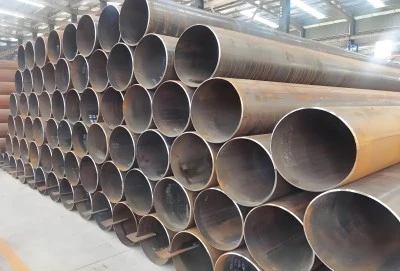
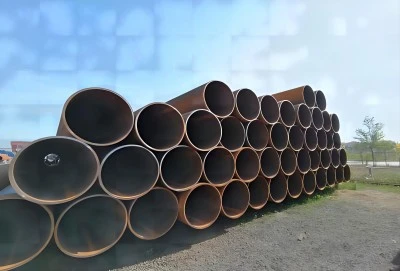
Application Areas: Where and Why API 5L X56 Pipes Are Used
Oil and Gas Transportation Infrastructure
The main places where API 5L X56 pipes are used are in onshore and marine transmission networks. The material can handle internal pressures of more than 1,500 psi and keeps its shape when temperatures change from -20°C to 120°C. The ability of X56 pipe to prevent wear under cyclic loads makes it useful for gathering systems that connect wellheads to processing plants. Its consistent mechanical qualities make sure that hydrocarbons are delivered safely through transmission pipes that are hundreds of kilometers long. The mild carbon equivalent of the grade makes field welding easier without a lot of preheating, which cuts down on installation costs and project timelines.
Water Distribution and Treatment Systems
Municipal water officials are choosing API 5L X56 pipes for long-distance systems more and more. When covered with 3-layer polyethylene (3LPE) or fusion-bonded epoxy (FBE), the material doesn't rust when it comes into contact with dirt. The yield strength of API 5L X56 pipe is what makes elevated water tanks and pressurized delivery networks able to handle pressure spikes during times of high demand. Desalination plants use these pipes for brine drainage lines because chloride exposure needs strong base materials with the right rust protection.
Industrial Manufacturing and Power Generation
API 5L X56 pipes are used in chemical processing plants to move process fluids that don't corrode under mild pressure and temperature. This grade is used in cooling water loops, steam condensate return lines, and other systems that help the turbines work in power plants. The toughness of the steel keeps it from breaking easily during heat cycling, and its ability to be welded makes repairs and upkeep easier. Engineering companies like X56 pipe because it can be used in a wide range of industry settings that need reliable fluid transportation without the higher costs that come with using higher-grade alloys.
Offshore Platform Construction
Marine buildings are put through harsh conditions like being exposed to sea, waves, and hydrocarbons. NACE MR0175 guidelines say that API 5L X56 pipes treated for sour service uses (called API 5L X56MS) don't crack when exposed to hydrogen sulfide (H2S). The high strength-to-weight ratio of this material makes it ideal for use in jacket pile legs, conductor pipes, and underwater flowlines. When paired with cathodic protection systems and marine-grade finishes, X56 pipe has shown that it can last for a long time in the Gulf of Mexico, the North Sea, and the waters around Southeast Asia.
API 5L X56 Pipe vs Other Pipe Grades: Making the Right Choice
Comparing X52, X56, X60, and X70 Grades
When choosing a grade, it's important to balance technical needs with cost concerns.
- X52 has a yield strength of 52,000 psi, which is good for low-pressure uses but might need stronger walls to reach design pressures.
- The yield values of X60 and X70 grades are 60,000 and 70,000 psi, respectively. This means that walls can be smaller and material costs can be lower for high-pressure systems. API 5L X56 pipe is a good compromise between strength and weldability. It is strong enough for most oil and gas jobs while still being easy to work with.
- The lower carbon equivalent compared to X65 or X70 lowers the chance of cold-cracking during field welding. This is especially helpful in remote areas where quality control tools are limited.
Alternative Materials: Stainless Steel and Carbon Steel
Standard carbon steel pipes are less expensive than API 5L X56 pipes, but they are not as strong or resistant to rust, so they need stronger walls and more upkeep. Grades of stainless steel like 304 and 316 are better at resisting rust than X56 pipe, but they cost more than 300% more. When looking at lifecycle costs, X56 pipe with protection coats is often the best choice for uses that don't need the high chemical resistance of stainless steel. When engineers compare these options, they need to think about things like working pressures, fluid chemistry, environmental conditions, and budget limits in order to find the best specs.
Decision-Making Criteria for Project Teams
Systematic review systems that take into account many factors are helpful for procurement managers. Minimum yield strength standards are set by operating pressure, and safety factors and wall thickness estimates are set by design codes. The type of fluid affects whether normal grades are enough or if special materials are needed to stop certain types of corrosion. The conditions of welding affect the carbon equivalent limits. For example, when welding in the field in cold places, lower carbon grades like API 5L X56 pipe work better. The budget analysis should include the original costs of materials, the costs of installation, the cost of coating systems, and the expected costs of upkeep over the life of the asset. These thorough evaluations help teams come up with standards that balance cost, performance, and dependability.
Why Choose Longma Group for Your API 5L X56 Pipe Solution?
Comprehensive Manufacturing Capabilities
Since 2003, Longma Group has been one of the biggest manufacturers in China. Their 230,000-square-meter factories make more than 1,000,000 tons of goods every year. Our production lines make ERW pipes with diameters from 1/2 inch to 24 inches and LSAW pipes with diameters from 16 inches to 80 inches, which is the full range of API 5L X56 pipes. Modern tools for heat treatment makes sure that the mechanical features of the pipe walls are the same all the way through, and automatic ultrasonic testing systems check all weld seams. We get high-quality steel.
Our dedication to quality is shown by the many certificates we have, such as API 5L monogram permission, ISO 9001 quality management, and ISO 14001 environmental systems. Factory Production Control (FPC) approval shows that a product meets European rules for building products. Engineers and procurement managers can be sure that our goods meet international standards for important infrastructure projects because they have these qualifications.
Customization and Technical Support
Each job has its own problems that need custom answers. Our engineering team works with customers to find the best specifications, taking into account both performance needs and price limits. We make pipes with either regular ends (PE) or beveled ends (BE), depending on what the later welding needs. From 6 to 18 meters in length, custom lengths cut down on field joints and construction time. Hot-dip galvanizing, FBE coating, 2PP, 3LPE, and 3PE systems are some of the anti-corrosion services that protect pipes from a wide range of weather conditions. This "turnkey" method makes buying easier and makes sure that all the parts of the project work together.
Technical help goes beyond just delivering the goods. Our metallurgists help choose materials, come up with new ways to weld, and plan for quality assurance. We offer a wide range of paperwork, such as chemical analysis reports, mechanical test results, measurement inspection records, and certifications for non-destructive examinations. These materials meet the standards for engineering study and make it easier for regulators to give their approval. Engineers who work on structure elements and plant equipment like how quickly we answer technical questions (usually within 24 hours).
Global Logistics and Competitive Pricing
To serve clients in 90 countries, you need to be very good at logistics. Our transportation team plans shipping from Chinese ports to places in the Americas, the Middle East, Australia, Southeast Asia, and Europe. Minimum order amounts that are flexible can be used for both big projects and smaller upkeep needs. When an order is confirmed, normal specs ship within seven days, which helps meet tight building schedules. Clear price systems get rid of hidden costs, and incentives based on sales reward partnerships that last a long time. Framework deals set uniform price and priority allocation, which is helpful for engineering contractors who are in charge of multiple projects.
Conclusion
In conclusion, API 5L X56 pipe has been used for many years in oil and gas transmission, water infrastructure, and industry settings that need reliable performance at modest to high pressures. It is widely used on global projects because it has good mechanical qualities, can be welded, and is cost-effective. Knowing the necessary compositions, production methods, and quality control rules lets you make smart design choices. By comparing one grade or material to others, you can find the best one for your unique working conditions. To make a purchase go smoothly, you need to find authorized sellers who offer competitive prices, complete paperwork, and quick logistics support.
FAQs
What distinguishes PSL1 from PSL2 specifications?
PSL1 is used for general processing tasks that need high quality. PSL2 sets tighter limits on chemical makeup, such as maximum carbon equivalent values that stop materials from being too hard. Fracture hardness testing with Charpy V-Notch impact tests is now required for PSL2, which makes sure that the material can be bent at the lowest design temperatures. PSL2 also sets maximum yield strength caps that keep materials from breaking too easily. For extra safety, PSL2 is usually required for projects that use dangerous fluids, high pressures, or strict regulatory settings.
Can X56 pipes handle sour service environments?
For bad service uses with hydrogen sulfide (H2S), standard API 5L X56 pipes need to be changed. Choose API 5L X56MS or PSL2 grades and add extra HIC (Hydrogen Induced Cracking) and SSCC (Sulfide Stress Corrosion Cracking) tests according to NACE TM0284 guidelines. These variations keep the steel's chemistry cleaner by lowering the amounts of sulfur and phosphorus. This means that hydrogen embrittlement processes can't break them down. In sour gas areas and oil sources with high H2S concentrations, catastrophic breakdowns can be avoided by choosing the right materials.
How does X56 compare to international grade designations?
In the ISO 3183 standard, metric yield strength numbers are used to show which grades are comparable. Both Grade L390 and Grade API 5L X56 pipe have a minimum yield strength of 390 MPa, which is about 56,600 psi. European engineers who are familiar with EN standards know that these two things are the same, which makes foreign jobs easier. Specifications may use either name, but it's still a good idea to make sure that all chemical and mechanical properties are aligned before buying.
Partner with a Trusted API 5L X56 Pipe Manufacturer
Longma Group is ready to help you with your pipeline building projects by providing you with high-quality API 5L X56 pipe options. We are your trusted partner for oil and gas transmission, water systems, and industrial applications because we have been making things for 20 years, have all the necessary certifications, and can serve anywhere in the world. Our engineering team is here to help you from the first question you ask until the project is finished, whether you need standard specs or unique solutions with special coatings.
Get in touch with our experts right away at info@longma-group.com to talk about your unique needs. As a direct producer, we can offer reasonable prices, open minimum order amounts, and quick delivery of popular specs. Our detailed paperwork packages meet the strictest engineering standards, and our technical support team makes sure that the right materials are chosen and used correctly. Check out our full line of line pipe goods at longma-group.com to see why contractors in 90 countries choose Longma Group as their top API 5L X56 pipe provider.








