
The American Petroleum Institute (API) 5L standard calls for the use of API 5L X70 pipe, a premium-grade carbon steel line pipe, in high-pressure transmission systems. It has a minimum yield strength of 485 MPa (70,300 psi), which makes it perfect for moving oil, gas, and water over rough terrain and in harsh weather conditions. It is also known as L485 pipe under ISO 3183. This grade is made to two different product specifications levels: PSL1 and PSL2. PSL2 offers better quality control for important uses and comes in both seamless and welded formats, such as ERW (Electric Resistance Welded) and LSAW (Longitudinal Submerged Arc Welded).
|
|
|
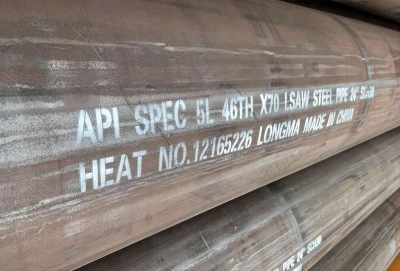
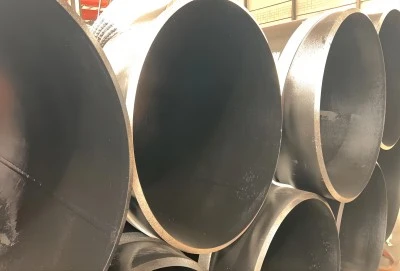
API 5L X70 Pipe Specifications and Properties
It is important to know the technical details of API 5L X70 pipe when we are looking at materials for high-pressure pipeline projects. This grade strikes a perfect mix between strength, weldability, and toughness, and it is used for large-scale building projects all over the world.
Mechanical Properties That Define Performance
API 5L PSL2 standards put a lot of restrictions on how well X70 pipe works mechanically. The yield strength is between 485 MPa and 635 MPa, and the tensile strength is between 570 MPa and 760 MPa. The yield-to-tensile ratio, which is limited to 0.93, is an important factor. It makes sure that the pipe can bend a little before it breaks completely, which is a very important safety feature in places with a lot at stake. Different wall thicknesses have different elongation values, but the material is still very flexible enough to bend during installation. Because of these qualities, the pipe can withstand internal pressures of more than 10 MPa in international gas transportation networks and still stay structurally sound after decades of use.
Chemical Composition and Metallurgical Excellence
In order to achieve high strength without sacrificing field weldability, API 5L X70 pipe has an exact chemical composition. To keep the heat-affected zone during welding from becoming too hard, carbon equivalent (CE) values are carefully managed and must be below 0.43% using the IIW formula. Micro-alloying elements change things. Adding niobium, vanadium, and titanium smooths out the grain structure, making fine-grained ferrite-pearlite or bainitic microstructures that give the material its X70 strength without adding more carbon. Low amounts of sulfur and phosphorus keep impurities that could make weak spots more likely to crack to a minimum. Because of this advanced metalworking, the pipe stays tough even at temperatures below zero, which is very important for Arctic and ocean uses.
Dimensions, Tolerances, and Delivery Conditions
We make X70 pipe in a wide range of sizes, from 1/2-inch to 80-inch outside diameter, and with wall thicknesses that run from SCH10 to SCH160. Larger widths, usually 24 inches or more, are made as LSAW pipes from thermomechanically rolled plates. Smaller sizes can be made as seamless or ERW pipes. The conditions of delivery have a big effect on performance. For welded X70 pipes, the most common state is thermomechanically rolled (M), which gives them the best strength through controlled rolling processes. For seamless pipes or special sour service settings that need more hydrogen protection, quenched and tempered (Q) conditions are required.
Corrosion Resistance and Welding Considerations
In neutral settings, X70 carbon steel has a middling resistance to corrosion. However, in harsh environments, it needs extra protection. To make things last longer in tough environments, we use anti-corrosion treatments like FBE (Fusion Bonded Epoxy), 2PP, 3LPE, and 3PE systems. For welding, you need to follow certain steps. For example, low-hydrogen supplies like E9010 or E10018 electrodes need to be matched to the X70 strength level. Because the material hardens more easily, it is often necessary to heat it first to stop cold cracking in the heat-affected zone. Knowing these standards keeps expensive field failures from happening and makes sure that the system stays intact over time.
Applications and Quality Inspection of API 5L X70 Pipework
API 5L X70 pipe has a good name because it works reliably in the world's toughest infrastructure uses. Knowing where this grade really shines helps buying teams match the qualities of materials to the needs of operations.
Critical Applications Across Industries
The main use for API 5L X70 pipe is for high-pressure gas transportation lines across continents. When pipes run for thousands of kilometers across different types of land, the pressure inside them often goes above 10 MPa. The X70 makes the most of the gas flow while reducing the costs of steel weight and welding supplies. Deep-water marine pipes have to deal with different problems, such as high hydrostatic pressure from the outside and corrosive seawater. Heavy-wall LSAW X70 pipe is used as risers and flowlines in these situations. It can withstand collapse pressure and still stay flexible during S-lay or J-lay installation, which puts a lot of strain on the pipes.
Specialized X70 models are needed for rough work and Arctic conditions. In areas where hydrogen sulfide is found in mining sites, we make X70 to Annex H standards using an ultra-clean steel makeup to stop cracking caused by hydrogen. For use in the Arctic, materials must have low-temperature impact rates according to Annex G. This makes sure that the material doesn't break easily at temperatures as low as -60°C. We've provided X70 pipes for big projects like MOBIL OIL AUSTRALIA infrastructure, where their ability to withstand high pressure, large diameters, and harsh environments was very important.
Rigorous Quality Control Procedures
Quality control for PSL2 X70 pipe includes several checks that keep the project's identity. During hydrostatic testing, each pipe length is subjected to 100% of its minimum yield strength for a minimum amount of time, usually 10 seconds. This makes sure that there is no leaks or damage. Ultrasonic study of the whole body and weld seam scanning to find laminations, inclusions, or fusion flaws are examples of non-destructive testing. Radiographic testing uses X-rays to look at the ends of pipes and longitudinal welds to make sure they are solid inside without hurting the product.
Destructive mechanical testing verifies the qualities of a material by breaking a sample. The drop-weight tear test checks how well the pipe can stop cracks from spreading, which is important for gas transmission lines. For PSL2, the shear area percentages must usually be higher than 85% at the lowest working temperature. Charpy V-notch impact testing checks for toughness and energy absorption at certain low temperatures. Guided bend tests make sure that weld seams can handle twisting stress without breaking. Optical emission spectrometry-based chemical analysis shows that micro-alloying elements are in the right areas to support the X70 classification.
Certification Documentation for Procurement Confidence
We offer complete paperwork packages that meet the needs of engineering companies and follow the rules for foreign trade. For each heat and pipe lot, material test papers list the chemical make-up and mechanical test findings. In manufacturing test records, you can find hydrostatic test pressures, NDT results, and readings of different sizes that can be linked to specific pipes. The fact that we have an API 5L certificate, an ISO 9001 quality management certificate, and a workplace health and safety certificate shows that our manufacturing meets foreign standards. This paperwork makes it easier for customs officials in over 90 countries with which we do business to check that the products we ship are in line with the requirements before they are sent out.
Supplier Certification and Risk Mitigation
Buying from approved makers keeps you from getting low-quality materials that put project safety and compliance at risk. We have API 5L product approval, which means that our manufacturing methods meet the strict standards set by the American Petroleum Institute. Our ISO 9001 quality management certification shows that we keep an eye on quality throughout the whole production process. Other qualifications, like ISO 14001 for environmental management and OHSAS 18001 for work safety, show that the business is doing a great job overall.
In addition to certificates, you should also look at the api 5l x70 pipe supplier's professional and production skills. With specialized tools for both ERW and LSAW production across the full size range, we make more than a million tons of steel every year. We have spectrometers, tension testers, impact testing machines, and ultrasonic flaw detectors in our own testing labs, so we don't have to rely on facilities outside of our company to do all of our quality checks. This cuts down on wait times and makes sure that everything can be tracked from the time the raw materials are received until the final inspection. Procurement managers can check what suppliers say before signing contracts by asking for mill test results, API approval numbers, and customer references.
Conclusion
API 5L X70 pipework has the toughness, strength, and dependability needed for high-pressure transmission lines in building projects around the world. It is the best material for oil and gas transportation, water distribution networks, and building offshore platforms because it has carefully designed metals, a wide range of sizes (from 1/2-inch to 80-inch diameters), and a history of success in harsh environments. To make a good purchase, you need to know about the mechanical features, compare grades carefully, make sure the quality through a thorough check, and work with certified makers who offer full documentation and expert support.
FAQs
What advantages does X70 offer over lower-grade pipes?
API 5L X70 pipe has a 15-20% higher yield strength than X60, which means that walls can be thinner while still holding the same amount of pressure. This cuts down on the cost of materials, the time it takes to weld, and the cost of shipping while keeping safety limits the same. Because it is tougher at low temperatures, this grade is good for use in the Arctic and offshore, where smaller grades might break easily.
Can standard welding procedures be used with X70 pipe?
Standard processes need to be changed. X70 needs low-hydrogen welding supplies that are right for its power level, like electrodes E9010 or E10018. Most of the time, pre-heating is needed to keep the heat-affected zone from cracking from the cold. Specifications for the welding process should be checked against API 1104 or similar standards. Pay special attention to the limits for heat input and interpass temperatures.
What certifications are essential for international X70 purchases?
API 5L product certification makes sure that the production process meets the standards of the specification. Getting ISO 9001 quality management certification shows that you can control production in a planned way. It is necessary to have material test papers that show the chemical make-up and mechanical qualities for each heat. For sour service uses, it is very important to have proof of Annex H compliance and HIC test results to avoid breaking failures caused by hydrogen.
Partner with a Certified API 5L X70 Pipe Manufacturer
Longma Group is ready to help you with your next pipeline project by providing complete X70 pipe options that are made to the strict API 5L PSL2 standards. We've been sending more than a million tons of materials to customers in 90 countries every year since 2003. These tons have been used for big projects in the Middle East, Australia, and Southeast Asia. Our factories make ERW and LSAW pipes with diameters ranging from 1/2-inch to 80 inches. For typical configurations, shipping times are as short as seven days. We only get our raw materials from the best local mills, like Shagang and HBIS. Our consistent quality is backed by API 5L certification, ISO 9001 quality management qualifications, and full recording of all material tests.
We don't just sell pipes; we also do all kinds of manufacturing work, like beveling, coating with FBE, 3LPE, and other safety systems, and changing the sizes to fit your project's needs. As a reputable API 5L X70 pipe manufacturer, we take care of all the tests, coating, and transportation. Email our engineering team at info@longma-group.com to talk about your unique needs, get full technical specifications, or get competitive quotes that are made to fit your project's schedule and budget.








