
API gas lines are the most important part of today's energy infrastructure. They are designed to safely and reliably move natural gas, crude oil, and petroleum products over long distances. The American Petroleum Institute (API) standards, especially the API 5L specification, were used to make these carbon steel pipes. They meet strict requirements for strength, durability, and performance in harsh working circumstances.
One of the types that is most often asked for is API 5L X52 pipe, which is a medium-strength line pipe that has the best mix of mechanical properties, weldability, and cost-effectiveness for both inland and offshore transmission projects. The name "X52" means that it has a minimum yield strength of 52,000 psi (360 MPa), which means that it can be used to move gas at modest to high pressures. X52 pipes are used in energy transportation systems all over the world, from the Middle East to Australia and Southeast Asia. They come in both seamless and soldered forms.
|
|
|
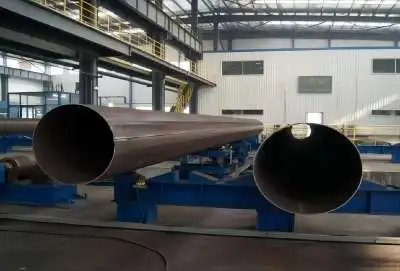
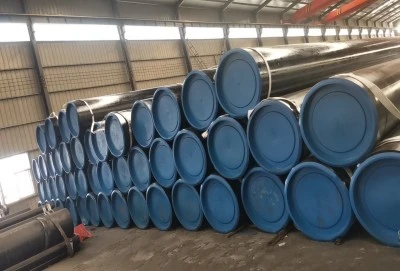
API Gas Pipes and the API 5L X52 Standard
API gas pipes are highly designed items that must follow the API 5L specification. This specification sets the rules for how to make them, what materials they must be made of, and how they must be tested for use in the natural gas and fuel industries. The standard has two levels of pipe quality, which are called PSL1 and PSL2. PSL1 sets standard requirements for chemical composition and mechanical properties. PSL2, on the other hand, requires stricter controls, such as extra tests like Charpy V-Notch impact tests, tighter chemical composition tolerances, and better traceability. These are features that are very important in harsh service environments or applications that require high temperatures.
What Makes X52 Grade Stand Out
The X52 grade number is based on API's method of naming, where the number shows the lowest yield strength in pounds per square inch. This grade is in the middle of the API 5L family. It is between grades with lower strengths, like X42, and grades with higher strengths, like X60 or X65. API 5L X52 pipe performs reliably in long-distance transmission pipes and is easy to weld, which is very important when building networks of pipelines that run for hundreds of kilometers. The grade has a limited amount of carbon (usually no more than 0.28%), manganese (no more than 1.40%), and microalloying elements such as niobium, vanadium, and titanium. These elements smooth out the grain structure and make the steel stronger without making it less flexible.
Seamless Versus Welded Construction
It is possible to get API 5L X52 pipes that are either straight or joined. Piercing solid steel billets is how seamless pipes are made. This gives them regular wall thickness and better strength for high-pressure uses where weld seam weaknesses can't be allowed. Electrical Resistance Welding (ERW), Longitudinally Submerged Arc Welding (LSAW), or Spirally Submerged Arc Welding (SSAW) can be used to make welded pipes. These pipes are cheaper and can be made faster for large-diameter uses. When made and checked correctly, modern welding technology makes sure that welded X52 pipes meet the same high performance standards as seamless versions.
Technical Specifications of API 5L X52 Pipes
Understanding the technical specs of line pipe for gas transfer projects is important to make sure it works with operating needs and follows the rules. The way X52 pipes work in real life is directly related to their chemical and mechanical features.
Mechanical Properties That Define Performance
With a minimum yield strength of 52,000 psi (360 MPa) and a minimum tensile strength of 66,700 psi (460 MPa), API 5L X52 pipe is a strong metal. In PSL2 standards, a maximum yield strength cap is added to ensure ductility and stop brittle failure modes when the material is loaded dynamically. Elongation values, which are usually greater than 20%, show how much the pipe can stretch before it breaks. This is an important safety feature for pipelines that are subject to ground movement, heat expansion, or hydraulic waves. Charpy impact testing at certain temperatures confirms the fracture toughness of PSL2 grades. This is especially important for pipes that work in cold places or move bad gas that contains hydrogen sulfide.
Because of these mechanical features, API 5L X52 pipes can handle mild to high amounts of internal pressure, based on the diameter and thickness of the walls. We make X52 pipes with outside sizes ranging from 1/2 inch to 80 inches (21.3mm to 2032mm) and wall thicknesses ranging from SCH10 to SCH160 (6.35mm to 59.54mm), so we can meet the needs of a wide range of projects. Using standard lengths between 6 and 18 meters makes it easier to move and place.
Chemical Composition and Alloying Strategy
The chemicals that make up X52 steel make it strong while also making it easy to join and resistant to rust. To keep the ability to weld without having to go through a lot of preheating steps, the carbon level usually stays below 0.28%. Manganese, which is generally limited to 1.40 percent, makes things stronger and tougher by strengthening solid solutions. Phosphorus and sulfur are kept at very low levels—often below 0.007% for sulfur—because they make nonmetallic particles that weaken the material when it hits something and help it separate. Adding small amounts of niobium, vanadium, or titanium as a microalloy changes the grain structure through precipitation hardening, making the material stronger without making it less flexible.
Heat Treatment and Enhancement Processes
Some authorized factories use heat treatment to improve the mechanical qualities of the products they make and get rid of any stress that was created during the forming and welding processes. Normalizing heat treatment improves hardness and physical stability by smoothing out the microstructure and finetuning the grain structure. During service, stress-relief annealing lowers locked-in forces that could lead to stress corrosion cracks. These temperature processes, along with controlled cooling rates, make sure that API 5L X52 lines work the same way all the way along their length, meeting the needs of important energy infrastructure projects.
Procurement Guide for API 5L X52 Pipes
It's important to carefully look at sources, certificates, prices, and logistics when looking for good API 5L X52 pipes.
Verifying Supplier Credentials and Certifications
Reputable makers have a lot of certifications that show they can make things and have quality control systems in place. The American Petroleum Institute's API 5L certification shows that production sites meet API's strict standards for making line pipes. Getting certified in ISO 9001 Quality Management Systems means that quality is controlled in a planned way throughout the whole production process. Extra certificates, such as ISO 14001 (Environmental Management) and ISO 18001 (Occupational Health and Safety), show that a company is dedicated to running a responsible business.
API 5L, ISO 9001, ISO 14001, ISO 18001, and FPC (Factory Production Control) certificates are all kept up to date at Longma Group. Our complete documentation package includes Inspection and Test Plans (ITP), Manufacturing Procedure Specifications (MPS), Material Test Certificates (MTC), and detailed mill test reports. These are important documents for engineering contractors who are in charge of complicated projects that need to meet strict compliance standards.
Understanding 2024 Price Drivers and Market Dynamics
The price of API 5L X52 pipe changes depending on a number of factors. The biggest part of the cost is the raw materials, mostly the price of hot-rolled steel sheet, which changes based on the world steel market, the price of iron ore, and the cost of energy. The difficulty of making something depends on its diameter, wall thickness, and the type of welding used. For example, larger LSAW lines need more complicated tools than smaller ERW goods. Unit prices are also affected by coating requirements, testing needs that go beyond normal API processes, and how quickly the delivery needs to happen.
Costs of transportation have become an important issue, especially for foreign transfers that use ocean freight and inland operations. Negotiating a bulk order often leads to big discounts, while custom requirements that need non-standard sizes or faster delivery come with higher prices. Talking to makers about prices in a clear way helps procurement pros make accurate project budgets and find ways to cut costs without sacrificing quality or compliance.
Evaluating Supplier Reputation and Capability
In addition to certificates, when evaluating a provider, you should look at their production capacity, track record of deliveries, expert support, and customer recommendations. Manufacturers who have worked on many global projects know what paperwork, testing, and compliance rules each market needs. Production capacity shows how well a facility can handle big orders while still meeting project deadlines; factories that produce more than 1 million tons of goods each year show industrial-scale capability.
Our 230,000-square-meter factory at Longma Group makes more than a million tons of LSAW and ERW pipes every year. We can make pipes with diameters up to 80 inches and send them in as little as seven days for regular orders. We only get our raw materials from the best mills in China, like Shagang, Shangang, TISCO, BX Steel, Shougang, HBIS, and Bao Steel. This way, we can be sure of the quality and track it all the way from the steel coil to the finished API 5L X52 pipe.
Conclusion
API gas lines, especially the flexible API 5L X52 pipe grade, are an important part of the infrastructure that connects energy sources to markets around the world. Knowing the technical details, pros and cons, buying factors, and best practices for upkeep gives pipeline engineers and procurement managers the power to make smart choices that balance performance, cost, and dependability. Tough manufacturing standards and thorough testing procedures back up the performance of X52 pipes in a wide range of situations, from long-distance natural gas transfer to sour service environments in offshore platforms. The world's energy infrastructure keeps growing, so it's important to choose qualified providers with a track record of success, the right qualifications, and a wide range of support services.
FAQs
What differentiates API 5L X52 from other steel grades?
Yield strength is the main difference: X52 has a minimum yield strength of 52,000 psi, which puts it between lower grades like X42 (42,000 psi) and better grades like X60 (60,000 psi). This amount of strength allows for modest to high-pressure gas transmission while still being easy to weld and affordable. The chemical makeup of API 5L X52 pipe combines the amount of carbon for strength with the amount of controlled alloying elements that make it tougher. This makes it perfect for a wide range of weather and working conditions.
Is X52 suitable for high-pressure gas transmission?
When the right diameter, wall thickness, and working conditions are defined, API 5L X52 pipes work successfully in high-pressure situations. Design experts figure out how thick the wall needs to be by looking at the internal pressure, the diameter, and the amounts of stress that are allowed by pipeline design codes such as ASME B31.8. The 52,000 psi yield strength of X52 is strong enough for many transmission pressures, but for ultra-high-pressure uses, bigger types like X65 or X70 may be needed to get the best wall thickness and weight.
What certifications should suppliers possess?
Reliable X52 pipe providers keep their products certified with API 5L, which shows that they follow API production standards. Getting ISO 9001 Quality Management approval means that you have a method for controlling quality. Other licenses, such as API Monogram licensing, ISO 14001, and ISO 18001, show that the business can do a lot of different things. Suppliers should give full proof, such as Material Test Certificates, mill test records, and third-party inspection certificates that prove the chemical make-up and mechanical qualities.
Partner with Longma Group for Reliable API 5L X52 Pipe Solutions
For more than 10 years, Longma Group has been a reliable builder and seller of API 5L X52 pipes for pipeline projects in over 90 countries. Our cutting-edge factories make more than a million tons of LSAW and ERW pipes every year that meet API 5L PSL1 and PSL2 standards. They are certified by API 5L, ISO 9001, ISO 14001, and ISO 18001. We offer full manufacturing services, including welding, beveling, coating with FBE, 2PP, 3LPE, and hot-dip galvanizing, as well as full paperwork packages that are made to fit the needs of engineering contractors. Our technical team is here to help you through the whole buying process, whether you need standard specs provided within seven days or custom solutions for difficult situations. Email us at info@longma-group.com to talk about your API 5L X52 pipe needs and get a full quote from a company with 20 years of experience in the pipeline business.








