
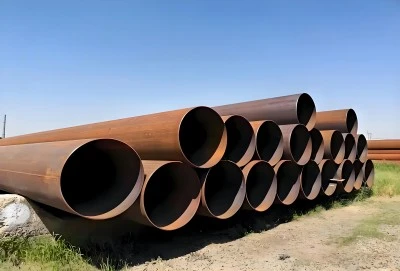
API grade pipe is steel pipe that is made to meet the standards of the American Petroleum Institute and is designed for tough jobs in oil, gas, and industry infrastructure. These pipes go through a lot of tests to make sure they meet the requirements for chemical makeup, mechanical strength, and accuracy of size. There are different types of pipes, but the API 5L X52 pipe stands out as a flexible option that offers both high structural stability and low cost. This makes it especially useful for project procurement managers and pipeline engineers who work in global markets.
|
|
|
Understanding API Grade Pipes
The American Petroleum Institute made its design standards so that the whole supply chain for the oil business would be the same. These specific scientific rules say everything about API grade pipes, from the chemical make-up of the steel to the hydraulic test pressures. The API 5L guideline talks about line pipes that are used in pipelines to move oil and natural gas. It has two different Product guideline Levels (PSL1 and PSL2) that show more strict quality control measures.
The names for pipe grades in API 5L are easy to understand. The word "X" stands for high-strength steel, and the number shows the lowest yield strength in pounds per square inch. When engineers look over project specs, this method makes it easy for them to quickly find out what materials can do. Grades go from X42 to X80, and each one is set for a different range of pressures and working conditions.
Comprehensive Overview of API 5L X52 Pipe
The API 5L X52 pipe name means that the minimum yield strength is 360 MPa and the minimum tensile strength is 460 MPa. This makes this grade a working material that can handle high internal pressures while still having enough safety factors. The chemical makeup is very important for getting these qualities. Carbon content is usually limited to 0.28% at most, which is done carefully to keep the ability to weld while still giving the metal the power it needs. Adding up to 1.4% manganese improves the ability to strengthen and smooth out the grains. Microalloying elements like niobium, vanadium, and titanium create fine-grained microstructures that make the steel stronger without making it less flexible.
Longma Group makes API 5L X52 pipes in two types, PSL1 and PSL2. PSL2 has stricter compositional limits and has to pass Charpy V-notch impact tests. This testing method makes sure that the material is tough at certain temperatures. This makes sure that the pipe won't break easily in cold places or when the pressure drops quickly. Heat treatment steps improve mechanical qualities even more by removing stress from welding and making the material the same all the way through the wall thickness.
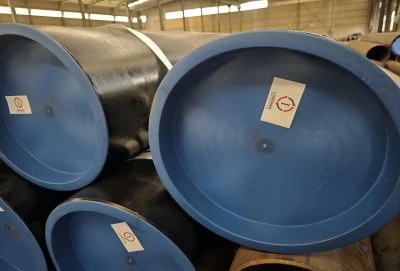
Another big benefit is that manufacturing is very flexible. Our factories make X52 pipes using a variety of welding methods, such as ERW for 1/2" to 24" diameters, LSAW for larger diameters up to 80" (2032mm), and SSAW for specific uses that need spiral weld configurations. Wall thickness options range from SCH10 to SCH160 (6.35mm to 59.54mm), which can be used for everything from low-pressure distribution networks to high-pressure transmission mains. Standard lengths of 6 to 18 meters make transportation easier and reduce the need for welding in the field, but custom lengths can be ordered for specific project shapes.
Its corrosion resistance comes from both the steel itself and the coating systems that can be added on top of it. Coatings like FBE (Fusion Bonded Epoxy), 2PP, 3LPE, and 3PE offer extra protection in harsh soil conditions or underwater environments. Because of this, API 5L X52 pipe can be used for a wide range of tasks, from desert pipelines in the Middle East to subsea flowlines in offshore Australian projects like the MOBIL OIL AUSTRALIA installations.
Why Choose Longma Group for Your API 5L X52 Pipe Needs?
Longma Group has grown since its founding in 2003 to become one of China's largest pipe manufacturers, able to produce more than 1,000,000 tons of pipes every year. Our 230,000-square-meter manufacturing complex is home to advanced LSAW and ERW production lines with automated welding systems, advanced heat treatment furnaces, and full testing laboratories. By controlling quality throughout the entire manufacturing process, we don't have to rely on outside processors whose standards we can't directly monitor.
Our global reach includes more than 90 countries. We are especially strong in tough markets like the Middle East, where harsh temperatures and corrosive soils require high-quality materials. Projects in Australia, like the MOBIL OIL AUSTRALIA infrastructure, have proven that our API 5L X52 pipe products are reliable in harsh offshore environments with cyclic loading and marine corrosion. Installations in Southeast Asia show that we can meet tight delivery deadlines while maintaining quality standards, which are important for fast-tracked EPC projects.
Client testimonials always talk about how quickly we respond to technical questions and how willing we are to work with them to come up with custom solutions. When standard specifications don't perfectly match project needs, our engineering team works with clients to come up with modified chemistry or dimensional tolerances that improve performance without sacrificing compliance. Value-added services like beveling, threading, coating application, and bundling based on customer preferences streamline logistics and lower the need for field labor.
After-sales support doesn't end when the product is delivered; technical advisors are still available during installation to answer questions about the welding process or clarify specifications. If there are any quality issues, our warranty and helpful customer service team make sure they are taken care of quickly, keeping projects on schedule. Our dedication to long-term relationships rather than one-time sales is what accounts for our high customer retention rates and growing referral business.
Conclusion
API grade pipes are an important part of global energy security and industrial growth. The API 5L X52 pipe in particular is in the engineering "sweet spot" where strength, weldability, and economic value all come together to serve the widest range of applications. Procurement professionals can make better decisions that lead to better project outcomes by understanding the technical differences between grades, manufacturing methods, and specification levels. As the world's infrastructure needs continue to grow, especially in developing regions with rising energy needs, it's more important than ever to find qualified suppliers with proven manufacturing skills, full certifications, and helpful customer service. Matching the right material specification with a reliable supply partner is the key to a successful project that meets technical requirements, budget constraints, and deadlines.
FAQ
What distinguishes seamless from welded X52 pipe?
Seamless pipes don't have longitudinal seams, so their properties are the same all the way around. They're best for situations where the pressure changes often or where the pressure is very high. Welded pipes, on the other hand, have longitudinal seams made through ERW, LSAW, or SSAW processes. With today's technology, welds can match the strength of the base metal when they're done right, so welded API 5L X52 pipes are better for most transmission applications and cost less than seamless options.
How does X52 compare to X65 in terms of strength and cost?
X65 has about 25% higher yield strength than API 5L X52 pipe, which means that thinner walls can have the same pressure ratings or higher operating pressures at the same wall thickness. However, this strength advantage comes at a cost of about 15-20% more material and requires stricter welding procedures. API 5L X52 pipe is better for weldability and costs less, so it should be used unless the specifics of the project call for X65's higher performance.
What documentation should I request when procuring X52 pipes?
Mill Test Certificates that confirm the chemical composition and mechanical properties, dimensional inspection reports, NDE records from ultrasonic or radiographic testing, and hydrostatic test results are all important documents. Projects that need better traceability should ask for ITP documentation, MPS records that describe the manufacturing parameters, and photographic proof of testing activities.
Partner with a Trusted API 5L X52 Pipe Manufacturer
If you need premium API 5L X52 pipes for your next pipeline project, Longma Group is ready to help. Our extensive inventory includes diameters from 1/2" to 80", multiple welding configurations, and wall thicknesses from SCH10 to SCH160, so we can match your exact specifications. With API 5L certification, ISO quality management systems, and twenty years of manufacturing excellence, we offer the reliability that procurement managers depend on. Our technical team is happy to talk to you about your specific needs, provide detailed quotes, and create custom solutions that solve unique project challenges. Contact us today at info@longma-group.com or visit longma-group.com to learn more. Working with a well-known API 5L X52 pipe supplier can speed up your project while maintaining the quality standards your reputation requires.